On X — we follow important research papers and explain ideas behind it. In the newsletter, we connect the dots between AI’s past, present, and future ⬇️
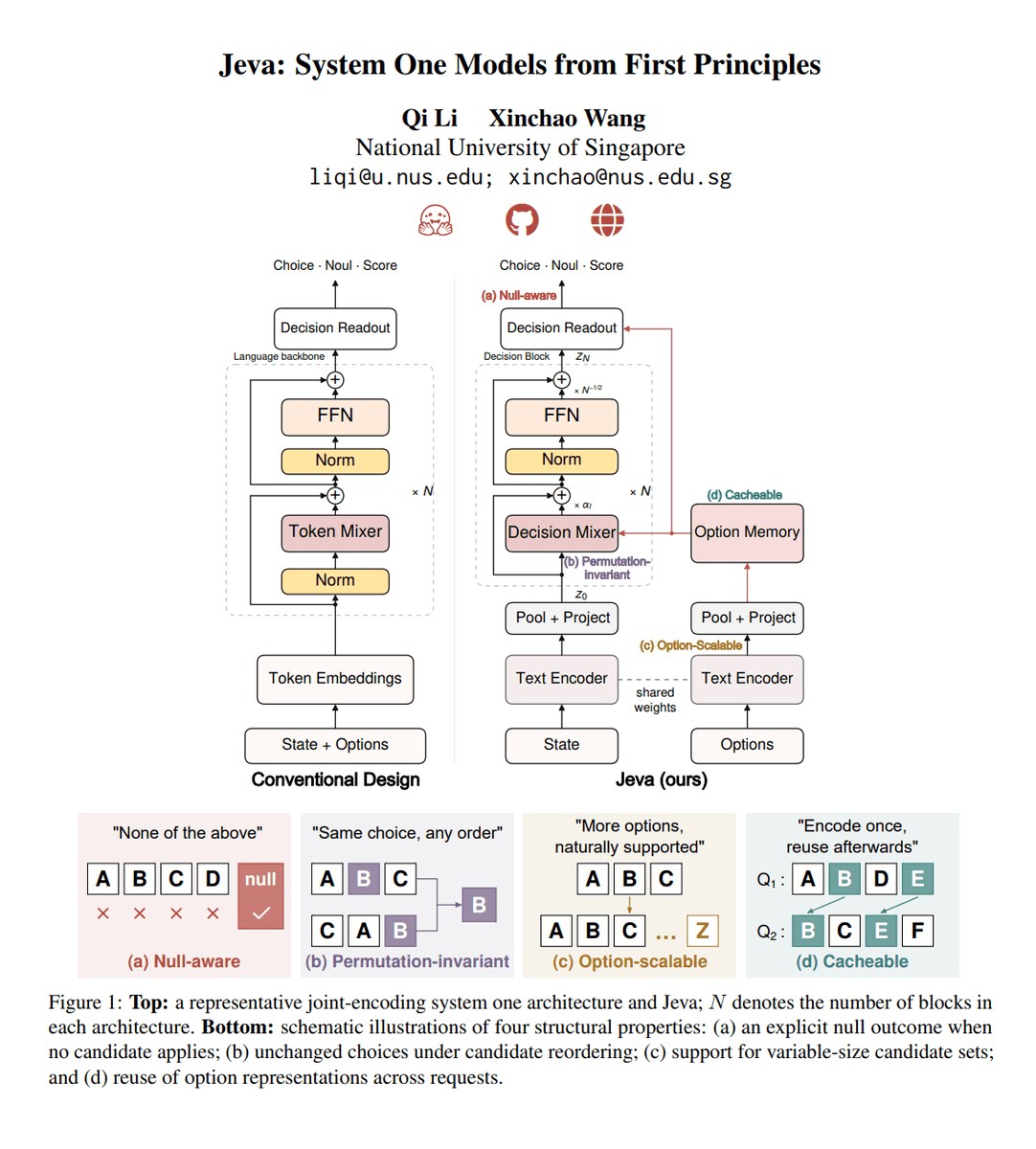
There’s more to System One decision models than Jev.
These 15 models are worth a closer look:
▪️ Jeva
▪️ Prism-1
▪️ Bongard
▪️ Verdict (multi-question)
▪️ VideoJev
▪️ MJev-Spatial
▪️ AudioJev
▪️ MetaEncoder
▪️ FastJEV
▪️ SanSi (looped)
▪️ StartLux-Decision
▪️ System X (decision-to-text hybrid)
▪️ Intern-Decision (multimodal)
▪️ FunDM (distilled)
▪️ LAVOIR
Check out our quick guide to what each brings, how it works, and where it fits: https://t.co/IeKsNZvswJ
JEPA learns what to keep from what it sees, and uses that to predict what comes next.
But what about the details it can’t predict? Wouldn’t it be easier for the model to drop them?
Look at this example
Imagine a traffic light that changes color randomly. Its next color is unpredictable, but its current color helps predict whether a cyclist will stop or move. If we drop the light, the cyclist becomes harder to predict.
▪️ A recent research call this set-level view "predictive closure:" A feature’s value depends on its relationships with the other features the model represents.
Keeping the light makes the cyclist easier to predict, but adds an unpredictable color to the model’s targets. Dropping it removes that target, but loses a useful clue.
The researchers separate these two costs:
1. Aleatoric uncertainty: what remains uncertain even with the full current observation, like the light’s next random color.
2. Predictive leakage: useful information available in the observation but missing from the representation, like the current color if the model drops the light.
An unpredictable detail can therefore be worth keeping because of what it helps predict. Random noise that helps predict nothing else offers no such benefit.
In controlled experiments, unpredictable features became easier to recover from the representation as they became more useful for predicting others.
That doesn’t guarantee JEPA keeps everything important, but it explains why unpredictable doesn’t automatically mean disposable.
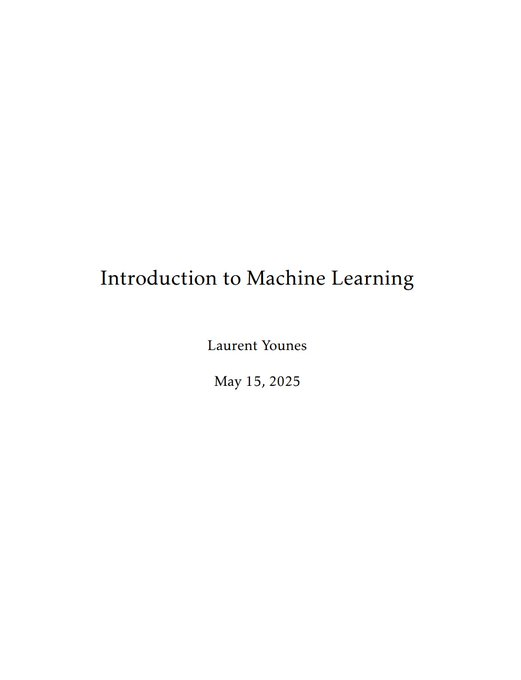
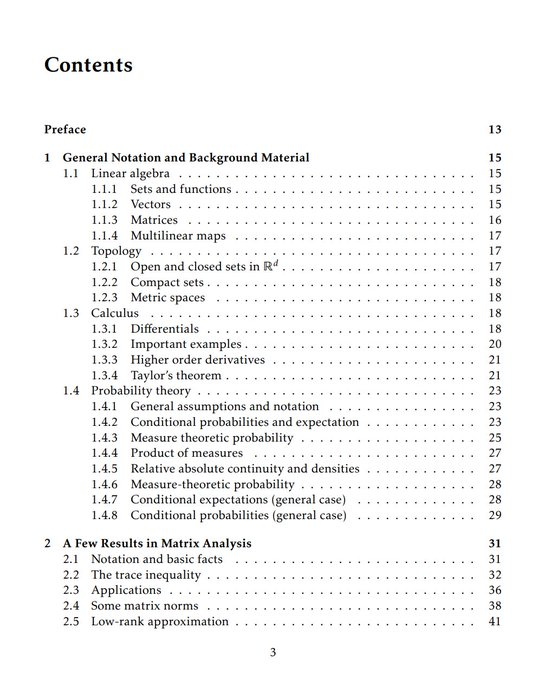
A free book: "Introduction to Machine Learning" by Laurent Younes
It’s a great read to learn math behind core ML concepts or refresh your knowledge of it, and explore some key ML methods along the way.
Covers:
- neural networks, graphical and generative models
- optimization and bias–variance
- regression, SVMs, and kernels
- decision trees
- clustering and generalization bounds
Superintelligence in what, exactly?
Maybe it’s time to be more specific about the domains where we expect AI to go beyond human capabilities.
@MicrosoftAI makes medicine an interesting place to start with its new MAI-DxO research and medical intelligence framework↓
The study, published in Science, explores sequential diagnosis from a partial clinical picture.
MAI-DxO (Microsoft AI Diagnostic Orchestrator) uses a language model to simulate 5 clinical roles: proposing diagnoses, selecting questions and tests, challenging assumptions, checking reasoning, and weighing costs. Its assessment evolves as evidence arrives.
It achieved 83.2% accuracy on complex NEJM cases and 80.3% on emergency-department cases, vs. 36.1% and 46.8% for participating generalist physicians.
→ But what would make this medical superintelligence?
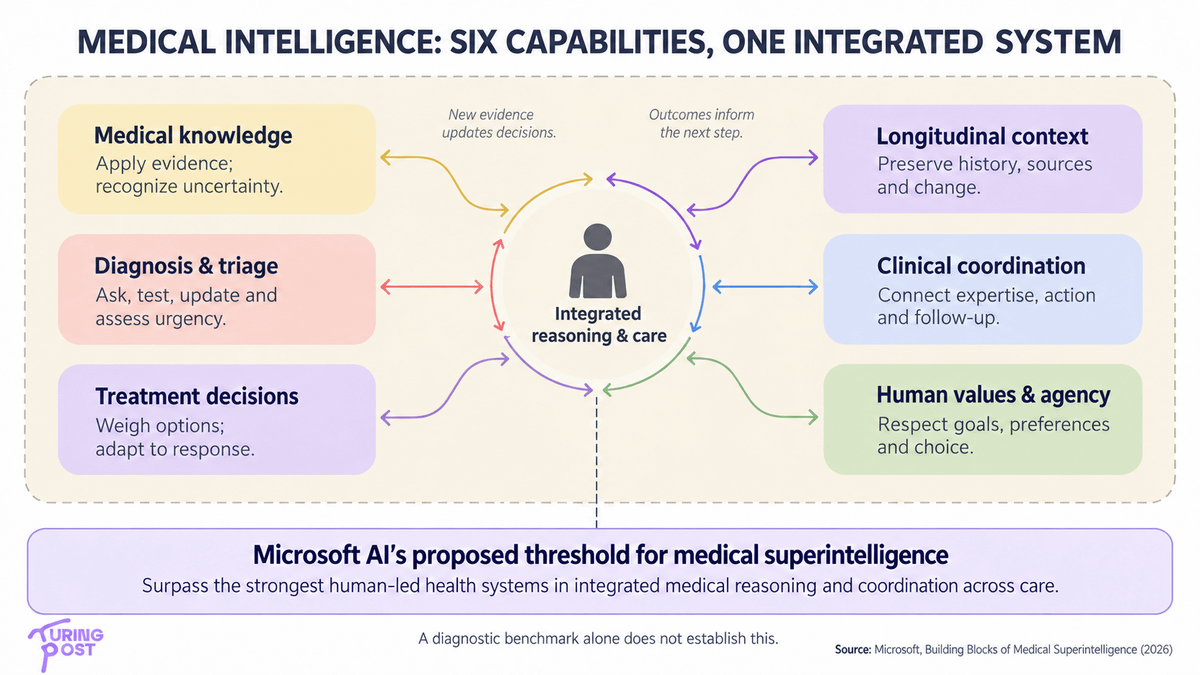
▪️ Microsoft’s framework outlines 6 dimensions of medical intelligence.
Its bar for superintelligence is high: outperforming the strongest human-led health systems in reasoning and coordination across the full course of care.
1. Medical knowledge
It applies current evidence to individual cases and recognizes what it doesn’t know.
2. Diagnostic reasoning and triage
It chooses questions, tests, and urgency, revising its view as evidence arrives. Sequential diagnosis fits here.
3. Therapeutic decision-making
It weighs benefits, risks, costs, and availability, adapting treatment as the patient responds.
4. Longitudinal context
It tracks health over time, preserving sources and uncertainty rather than starting fresh at every visit.
5. Clinical coordination
It brings in expertise, determines who acts next, and checks that follow-up happened.
6. Human values and agency
It respects patients’ goals, preferences, and right to refuse a recommendation.
These capabilities must work together. Treatment responses can change diagnoses; patient priorities can change treatment choices, etc.
That’s why a domain-specific view of superintelligence is useful - we can give a system clear tasks and criteria it needs to meet.
Harness is dead, long live the harness?
I went to @aiDotEngineer NYC and heard some very strong opinions about harnesses. Some engineers are removing parts of theirs because the models no longer need them. Others are building systems that let an agent work for days.
Of course, my immediate instinct was to sort things out and understand what is happening with harness (and if it’s really dead).
So many questions:
- What is an agent actually doing during those days?
- How does it remember what happened without turning an earlier guess into a fact?
- And if it can build its own tools, what are we letting it change?
This episode starts with a coding agent in about 25 lines of code, and then I drew insights from @_philschmid, @dillonrolnick, @aparnadhinak, @akshat_b, and a lot from @jediahkatz who had an amazing talk.
It came out as a full guide with everything you need to know about the current state of harness
Watch the full guide on YouTube: https://t.co/GWt9s6uZCs
A dedicated resource for technical AI breakdowns and analysis – @TheTuringPost
We focus on the underlying engineering:
- guides to emerging AI systems
- research analysis
- what is happening right now
Read by 110,000+ across top AI labs, VC funds & universities
Come join us!
A free book: "Introduction to Machine Learning" by Laurent Younes
It’s a great read to learn math behind core ML concepts or refresh your knowledge of it, and explore some key ML methods along the way.
Covers:
- neural networks, graphical and generative models
- optimization and bias–variance
- regression, SVMs, and kernels
- decision trees
- clustering and generalization bounds
JEPA learns what to keep from what it sees, and uses that to predict what comes next.
But what about the details it can’t predict? Wouldn’t it be easier for the model to drop them?
Look at this example
Imagine a traffic light that changes color randomly. Its next color is unpredictable, but its current color helps predict whether a cyclist will stop or move. If we drop the light, the cyclist becomes harder to predict.
▪️ A recent research call this set-level view "predictive closure:" A feature’s value depends on its relationships with the other features the model represents.
Keeping the light makes the cyclist easier to predict, but adds an unpredictable color to the model’s targets. Dropping it removes that target, but loses a useful clue.
The researchers separate these two costs:
1. Aleatoric uncertainty: what remains uncertain even with the full current observation, like the light’s next random color.
2. Predictive leakage: useful information available in the observation but missing from the representation, like the current color if the model drops the light.
An unpredictable detail can therefore be worth keeping because of what it helps predict. Random noise that helps predict nothing else offers no such benefit.
In controlled experiments, unpredictable features became easier to recover from the representation as they became more useful for predicting others.
That doesn’t guarantee JEPA keeps everything important, but it explains why unpredictable doesn’t automatically mean disposable.
Looped Transformers are hot right now. 10 new papers worth your time:
- Recurrent Looped Transformer
- Looped Prediction Transformer
- Recursive Multi-Agent Systems
- Loop Flow Transformers
- and 6 more
Follow @TheTuringPost for weekly AI paper picks
AI research moves fast. We track the papers worth reading and explain the ideas behind them.
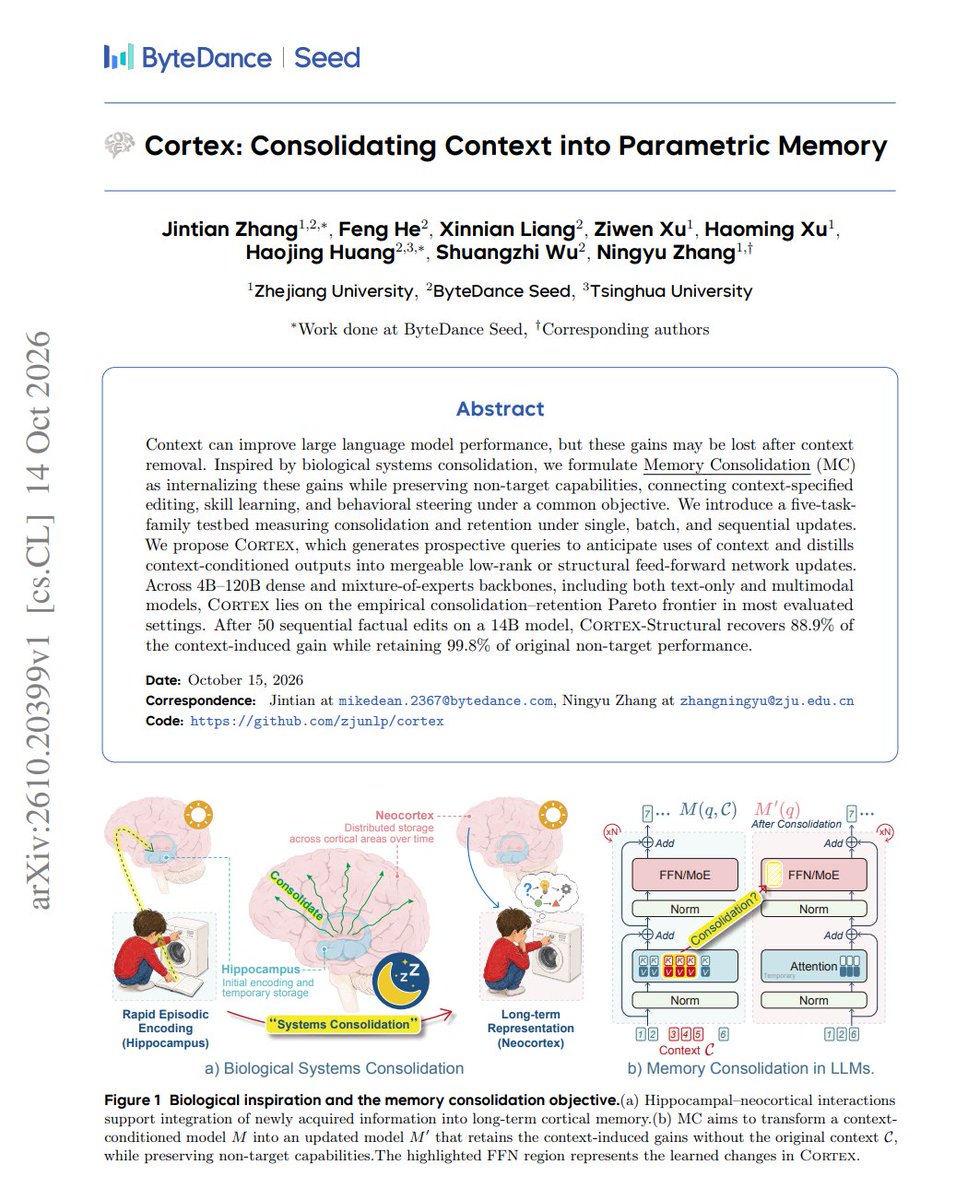
This week: Cortex, Librarian Agents, OpenGCUA, DuoDiscover, and WAVE-0.
Follow Turing Post for your weekly AI research briefing.
New pattern. X bookmark folder to agent sync to kick off jobs. Tuned with descion models and intent so no need to explain what to do. Auto-pilot ideas and side-loops on tap
A robot has a mapping system. It measures the difference between its rendered view and the camera image, then uses that error to adjust the Gaussians.
Plus, separate rules decide what gets removed: nearly transparent or overly large Gaussians can be dropped. Some systems also remove ones that barely contribute to the image or don’t hold up across multiple views.
What is 3D Gaussian Splatting?
In short, it's a method that can give robots a visual and spatial foundation for their 3D memory.
In detail, 3D Gaussian Splatting (3DGS) turns photos or video captured by a robot into a photorealistic 3D reconstruction of its surroundings that it can view from new angles.
This helps robots refer back to places and objects that are no longer in view when a task calls for it.
Here is how photos become a 3D scene for robots:
1. The system matches details across photos/videos to estimate where the cameras were and build a rough map of 3D points.
2. Those points become tiny, soft blobs called Gaussians. Each has a position, shape, color and opacity.
3. The system renders the room and checks it against the photos.
The Gaussians shift, stretch and change color until the views match more closely. Some split to capture finer details, and others are removed.
4. Once the Gaussians have been adjusted to match the photos, the scene can be viewed from new angles.
The GPU projects and blends them fast enough for you to look around in real time.
The result shows a scene from different viewpoints. However, it doesn’t explain its physics or predict motion.
And making it a robot’s memory requires another layer.
We've made a comprehensive guide about this hot topic and how Gaussian Splatting becomes Gaussian Memory.
A must-read about embodied memory: https://t.co/owTV86LDdJ