Elon hates chess because he is bad at it and because chess is serious business he can't cheat to pretend to be good at it. He knows smart people are supposed to be good at chess so it eats at him that he's a pawn pushing mook.
@EricSpracklen I'm so tired of the "But the Derp Donkeys are so much worse than the GOP" sellout argument. What that says, is the GOP can goat-fuck their constituents with reckless abandon, and you have to take it because the other team is worse. I'm voting in my local elections. Fuck national.
The relevant metric in regards to fully “solving” the game is not number of positions. It’s mapping and evaluating the full legal game tree, which is far more complex.
There is obviously some ways to simplify it, as in many paths of the game tree ultimately transpose to the same position. Or in games where a side has a forced mate in like 5, there is no need to evaluate those 5 additional moves, the game is over.
But if you want to “solve” the game you need to efficiently compress and evaluate the practical game tree.
That’s how they play now, but the game is not “solved” like tic tac toe is. Even though the best computers beat the best humans, the game is not solved.
To properly solve the game you’d need to evaluate the full game tree, or at the very least the full game tree net of transpositions.
@KyleKatzen@elonmusk@chesscom To properly “solve” the game as Elon is about, you need to store and evaluate the full game tree of all legal moves and possible games, which is vastly larger than the number of positions
@elonmusk@chesscom There’s a large difference in the number of chess positions and the number of possible games. You know this though, or at least you should.
But hey, whatever helps you feel smart disparaging an “intern” on the internet.
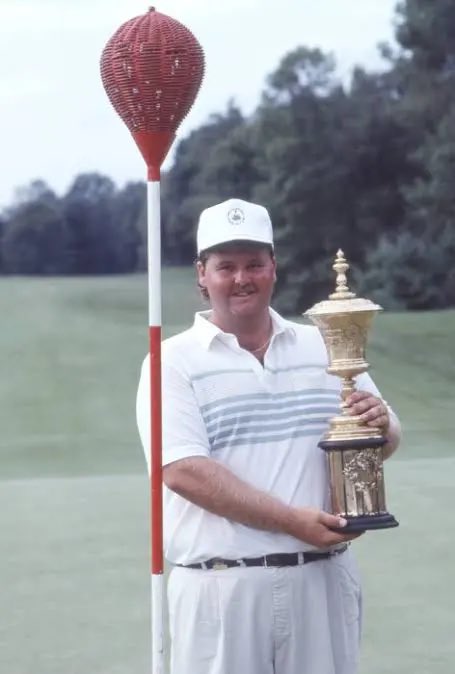
With the U.S. Amateur at Merion this week, it’s worth revisiting Chris Patton, the winner of the 1989 U.S. Am at the same site.
Patton was described in a @usga article as having “the build of a lineman and the touch of a master jeweler.”
When he wasn’t riding a tractor on his family farm in South Carolina, he was hitting golf balls across it.
Patton was a self-taught player whose family didn’t have the funds for him to travel to the biggest amateur events.
He only had enough money to play one big tournament in 1989, so he entered the U.S. Am. It was the first USGA championship for the Clemson All-American.
The next year, Patton played alongside defending champion Nick Faldo at the Masters. It had to be quite the pairing, a study in stark contrasts. The debonaire Englishman atop the golf world and the kid from small-town South Carolina with a homemade swing. Patton made the cut and finished T39 to win low-amateur honors.
Patton went on to win once on the @KornFerryTour (in 1993) but never did earn a PGA TOUR card.
He was one of the more unlikely U.S. Amateur champions, but also one of its most memorable.
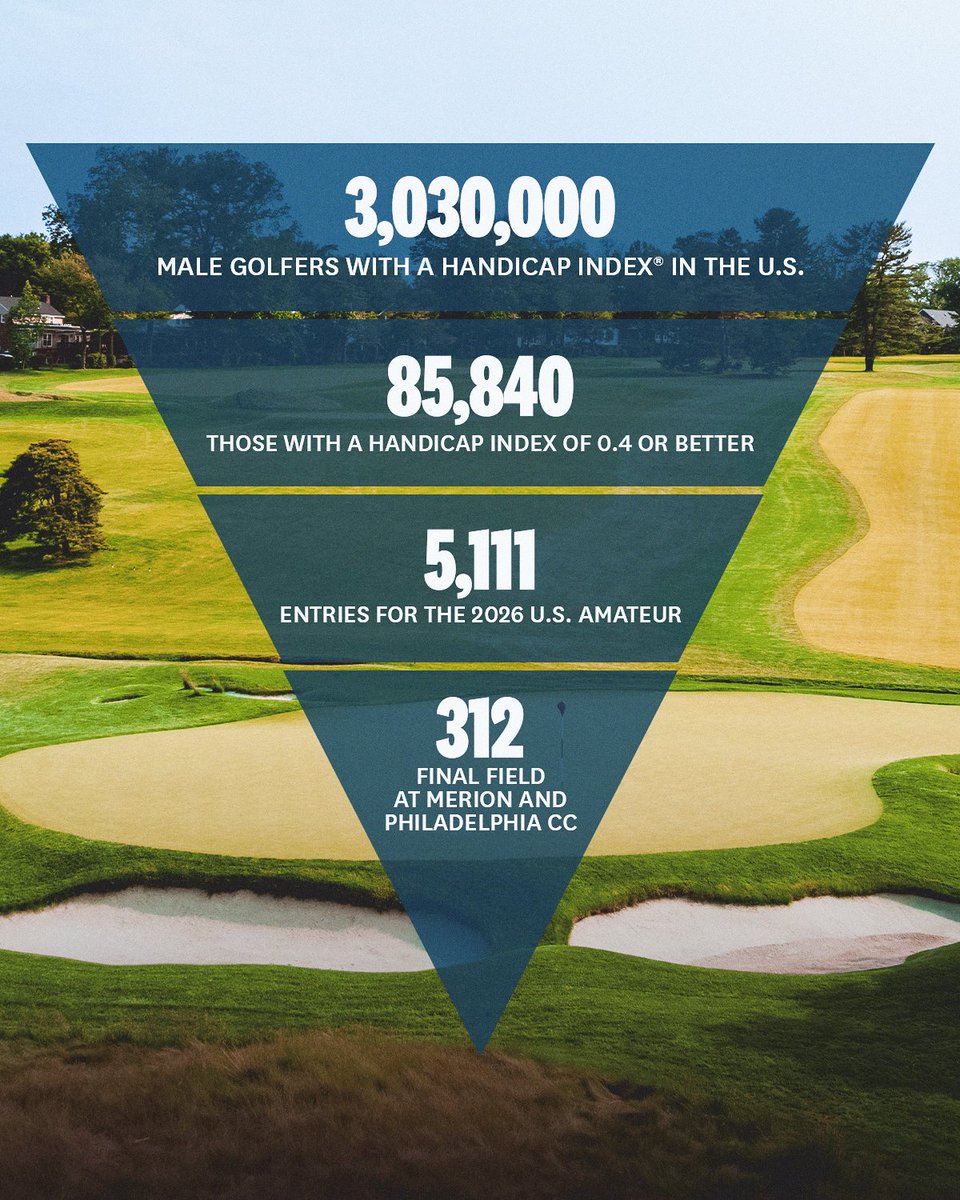
How tough is it to make the U.S. Amateur field? You gotta be a stick! 🏌️♂️
6% of players who entered are teeing it up this week.
0.36% of players with an eligible Handicap Index® made the final field.
The “no gimmes!” hardos are truly some of the most miserable people in golf.
Seriously, who fucking cares? Nothing worse than watching a group of hacks line up a 2 footer holding up the course acting like a US open.
Obviously different in money games, make your birdies, etc.
That’s the point though. Context matters.