Pioneering Voice in Neuroarchitecture in MENA
| Founder - Academy of Neuroscience for Cities, Environments, and Design - ANCED LLC
Podcast: The Neuroarchitect
𝗖𝗹𝗼𝘀𝗶𝗻𝗴 𝘁𝗵𝗶𝘀 𝗮𝗰𝗮𝗱𝗲𝗺𝗶𝗰 𝘀𝗲𝗮𝘀𝗼𝗻 𝘄𝗶𝘁𝗵 𝗮 𝗳𝗲𝘄 𝗺𝗼𝗺𝗲𝗻𝘁𝘀 𝗳𝗿𝗼𝗺 𝗩𝗲𝗻𝗶𝗰𝗲. 𝗦𝗲𝗲 𝘆𝗼𝘂 𝗮𝗴𝗮𝗶𝗻 𝗶𝗻 𝗦𝗲𝗽𝘁𝗲𝗺𝗯𝗲𝗿.
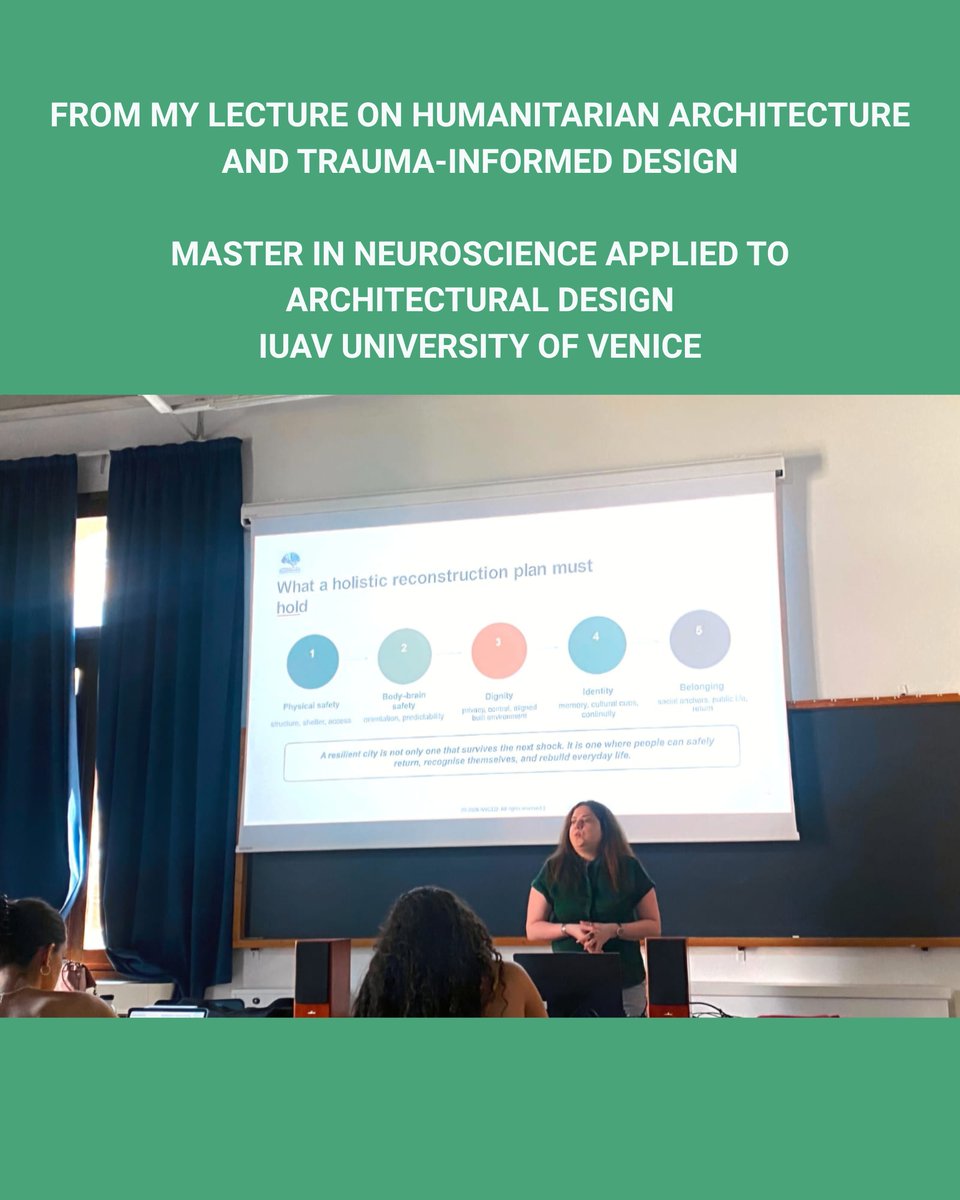
A few moments from my lecture on Humanitarian Architecture and Trauma-Informed Design for the Master in Neuroscience Applied to Architectural Design at IUAV University of Venice.
The lecture explored emergency response, shelters, reconstruction, memory, identity, mourning, accessibility, urban absence, and the role of mixed-method research and biometric evidence in understanding how people reconnect with altered environments.
My presentation revolved around one core idea:
𝑹𝒆𝒄𝒐𝒏𝒔𝒕𝒓𝒖𝒄𝒕𝒊𝒐𝒏 𝒂𝒏𝒅 𝒓𝒆𝒄𝒐𝒗𝒆𝒓𝒚 𝒇𝒐𝒍𝒍𝒐𝒘 𝒅𝒊𝒇𝒇𝒆𝒓𝒆𝒏𝒕 𝒕𝒊𝒎𝒆𝒍𝒊𝒏𝒆𝒔.
Using Beirut as an evidence-rich case, I discussed how architecture and urban design can support identity, safety, dignity, familiarity, orientation, inclusiveness, belonging, and trust after disaster and rapid urban transformation.
In the afternoon, I also moderated Session 2, linking the discussions from Session 1 with the exchange among speakers and participants around neuroscience, architecture, and lived spatial experience.
I’ll leave you with a few unfiltered photos of Venice to enjoy.
𝗘𝘅𝗽𝗹𝗼𝗿𝗲 𝗔𝗡𝗖𝗘𝗗’𝘀 𝗰𝗼𝘂𝗿𝘀𝗲𝘀 𝗶𝗻 𝗻𝗲𝘂𝗿𝗼𝗮𝗿𝗰𝗵𝗶𝘁𝗲𝗰𝘁𝘂𝗿𝗲, 𝗵𝘂𝗺𝗮𝗻-𝗰𝗲𝗻𝘁𝗿𝗲𝗱 𝗱𝗲𝘀𝗶𝗴𝗻, 𝗮𝗻𝗱 𝗲𝘃𝗶𝗱𝗲𝗻𝗰𝗲-𝗶𝗻𝗳𝗼𝗿𝗺𝗲𝗱 𝗽𝗿𝗮𝗰𝘁𝗶𝗰𝗲. 𝗙𝗼𝗿 𝗽𝗿𝗼𝗴𝗿𝗮𝗺𝗺𝗲𝘀, 𝗽𝗿𝗶𝘃𝗮𝘁𝗲 𝗹𝗲𝗮𝗿𝗻𝗶𝗻𝗴 𝗽𝗮𝘁𝗵𝘄𝗮𝘆𝘀, 𝗮𝗻𝗱 𝘂𝗽𝗰𝗼𝗺𝗶𝗻𝗴 𝗼𝗽𝗽𝗼𝗿𝘁𝘂𝗻𝗶𝘁𝗶𝗲𝘀,
📩𝗶𝗻𝗳𝗼@𝗮𝗻𝗰𝗲𝗱.𝗼𝗿𝗴.
#IUAV #Neuroarchitecture #Architecture #Venice #ANCED
Glad to share that 𝗔𝗡𝗖𝗘𝗗 – 𝗔𝗰𝗮𝗱𝗲𝗺𝘆 𝗼𝗳 𝗡𝗲𝘂𝗿𝗼𝘀𝗰𝗶𝗲𝗻𝗰𝗲 𝗳𝗼𝗿 𝗖𝗶𝘁𝗶𝗲𝘀, 𝗘𝗻𝘃𝗶𝗿𝗼𝗻𝗺𝗲𝗻𝘁𝘀, 𝗮𝗻𝗱 𝗗𝗲𝘀𝗶𝗴𝗻 will take part in 𝗡𝗔𝗔𝗗 – 𝘁𝗵𝗲 𝗠𝗮𝘀𝘁𝗲𝗿’𝘀 𝗣𝗿𝗼𝗴𝗿𝗮𝗺 𝗶𝗻 𝗡𝗲𝘂𝗿𝗼𝘀𝗰𝗶𝗲𝗻𝗰𝗲 𝗔𝗽𝗽𝗹𝗶𝗲𝗱 𝘁𝗼 𝗔𝗿𝗰𝗵𝗶𝘁𝗲𝗰𝘁𝘂𝗿𝗮𝗹 𝗗𝗲𝘀𝗶𝗴𝗻 𝗮𝘁 𝗨𝗻𝗶𝘃𝗲𝗿𝘀𝗶𝘁à 𝗜𝘂𝗮𝘃 𝗱𝗶 𝗩𝗲𝗻𝗲𝘇𝗶𝗮, within the conference Humanitarian Architecture: A Challenge for Design.
My lecture examines 𝗵𝗼𝘄 𝗮𝗿𝗰𝗵𝗶𝘁𝗲𝗰𝘁𝘂𝗿𝗲 𝗰𝗮𝗻 𝗿𝗲𝘀𝗽𝗼𝗻𝗱 𝘁𝗼 𝗱𝗶𝗳𝗳𝗲𝗿𝗲𝗻𝘁 𝗳𝗼𝗿𝗺𝘀 𝗼𝗳 𝘁𝗿𝗮𝘂𝗺𝗮, an understanding I have developed more closely throughout my design and research journey.
Through my research on Beirut and my work at ANCED, I examine how disaster, rapid urban change, and spatial rupture affect safety, identity, belonging, and people’s ability to inhabit the city again. This work brings together field observation, lived narratives, identity research, urban walks, and biometric/attention-based readings of the built environment.
I will also speak about 𝗲𝗺𝗲𝗿𝗴𝗲𝗻𝗰𝘆 𝗮𝘀 𝗮 𝘀𝘁𝗮𝗴𝗲𝗱 𝗽𝗿𝗼𝗰𝗲𝘀𝘀, from emergency response to long-term integration.
I will also be sharing concepts I developed and applied, including 𝗧𝗵𝗲 𝗠𝗶𝗻𝗱𝗳𝘂𝗹 𝗛𝗼𝘂𝘀𝗲, a prototype within a neuro-sustainable neighbourhood vision. It explores how shelter can accompany people with PTSD-related needs through body–brain safety, privacy, dignity, familiarity, and recovery.
In this evidence-informed design framework, the house is approached as shelter as a recovery system, and the neighbourhood as a health-supportive environment that considers physical safety, sensory comfort, emotional regulation, identity, belonging, and social connection.
I will also introduce 𝗦𝗽𝗮𝗰𝗲𝘀 𝗼𝗳 𝗥𝗲𝗰𝗼𝗻𝗰𝗶𝗹𝗶𝗮𝘁𝗶𝗼𝗻, an ANCED initiative I developed to open an East–West conversation around the gaps each culture needs to reconcile with in its public space. It looks at reconciliation as spatial and embodied, through safety, dignity, continuity, identity, belonging, and social connection.
Looking forward to sharing this work in Venice and opening this conversation with students, colleagues, and practitioners working at the intersection of architecture, humanitarian response, neuroscience, and human-centred design.
Thank you, Davide Ruzzon, for the invitation and for opening this important conversation at NAAD.
#ANCED #HumanitarianArchitecture #Neuroarchitecture #IUAV
𝗪𝗵𝗮𝘁 𝗕𝗶𝗼𝗹𝗼𝗴𝗶𝗰𝗮𝗹 𝗣𝘀𝘆𝗰𝗵𝗼𝗹𝗼𝗴𝘆 𝗧𝗮𝘂𝗴𝗵𝘁 𝗠𝗲 𝗔𝗯𝗼𝘂𝘁 𝗗𝗲𝘀𝗶𝗴𝗻 𝗦𝗲𝗿𝗶𝗲𝘀:
𝗖𝗵𝗮𝗽𝘁𝗲𝗿 𝟵: 𝗕𝗲𝗳𝗼𝗿𝗲 𝗪𝗲 𝗝𝘂𝗱𝗴𝗲 𝗕𝗲𝗵𝗮𝘃𝗶𝗼𝗿, 𝗪𝗲 𝗦𝗵𝗼𝘂𝗹𝗱 𝗥𝗲𝗮𝗱 𝘁𝗵𝗲 𝗦𝗽𝗮𝗰𝗲
𝗪𝗵𝗮𝘁 𝘁𝗵𝗲 𝗙𝗼𝘂𝗿 𝗘𝘅𝗽𝗹𝗮𝗻𝗮𝘁𝗶𝗼𝗻𝘀 𝗼𝗳 𝗕𝗲𝗵𝗮𝘃𝗶𝗼𝗿 𝗧𝗮𝘂𝗴𝗵𝘁 𝗠𝗲 𝗔𝗯𝗼𝘂𝘁 𝗗𝗲𝘀𝗶𝗴𝗻
The ninth article in my Substack series is now published.
This series grows from the Biological Psychology course I took during the predoctoral stage of my doctoral studies, where early coursework began shaping the questions I now bring into neuroarchitecture and design.
I wrote this chapter around one design question:
𝗪𝗵𝗮𝘁 𝗶𝘀 𝘁𝗵𝗲 𝘀𝗽𝗮𝗰𝗲 𝗮𝘀𝗸𝗶𝗻𝗴 𝘁𝗵𝗲 𝗯𝗼𝗱𝘆 𝘁𝗼 𝗺𝗮𝗻𝗮𝗴𝗲?
Biological psychology reads behavior through physiological, developmental, evolutionary, and functional explanations.
That framework changed how I observe behavior in architectural and urban settings.
A person’s response to a place may carry fatigue, sensory load, previous experience, the need for orientation, or an attempt to regain control. What looks like withdrawal, restlessness, silence, avoidance, or difficulty may be the body working with the conditions around it.
Behavior often carries the body’s attempt to solve a condition.
𝘐𝘯 𝘵𝘩𝘪𝘴 𝘤𝘩𝘢𝘱𝘵𝘦𝘳, 𝘐 𝘶𝘴𝘦 𝘵𝘩𝘪𝘴 𝘪𝘥𝘦𝘢 𝘵𝘰 𝘵𝘩𝘪𝘯𝘬 𝘢𝘣𝘰𝘶𝘵 𝘸𝘢𝘪𝘵𝘪𝘯𝘨 𝘢𝘳𝘦𝘢𝘴, 𝘴𝘤𝘩𝘰𝘰𝘭𝘴, 𝘩𝘰𝘴𝘱𝘪𝘵𝘢𝘭𝘴, 𝘴𝘩𝘦𝘭𝘵𝘦𝘳𝘴, 𝘱𝘶𝘣𝘭𝘪𝘤 𝘴𝘱𝘢𝘤𝘦𝘴, 𝘢𝘯𝘥 𝘦𝘷𝘦𝘳𝘺𝘥𝘢𝘺 𝘦𝘯𝘷𝘪𝘳𝘰𝘯𝘮𝘦𝘯𝘵𝘴 𝘸𝘩𝘦𝘳𝘦 𝘵𝘩𝘦 𝘣𝘰𝘥𝘺 𝘪𝘴 𝘢𝘴𝘬𝘦𝘥 𝘵𝘰 𝘵𝘰𝘭𝘦𝘳𝘢𝘵𝘦 𝘦𝘹𝘱𝘰𝘴𝘶𝘳𝘦, 𝘶𝘯𝘤𝘦𝘳𝘵𝘢𝘪𝘯𝘵𝘺, 𝘯𝘰𝘪𝘴𝘦, 𝘤𝘰𝘯𝘧𝘶𝘴𝘪𝘰𝘯, 𝘰𝘳 𝘭𝘰𝘴𝘴 𝘰𝘧 𝘤𝘰𝘯𝘵𝘳𝘰𝘭.
The design question then shifts:
How much effort is this space asking from the person?
Before we judge behavior, we should read the space.
Read the full article on Substack:
https://t.co/wN2rzw8k6W
👉 What would happen if design observation began with curiosity and care?
#Neuroarchitecture #TheNeuroarchitect #ANCED
I am honoured to share that I will be joining 𝗚𝗔𝗼𝗦 𝗠𝗼𝗱𝘂𝗹𝗲 𝟭𝟮 as a guest speaker, as part of the 𝗚𝗹𝗼𝗯𝗮𝗹 𝗣𝗿𝗼𝗳𝗲𝘀𝘀𝗶𝗼𝗻𝗮𝗹 𝗙𝗲𝗹𝗹𝗼𝘄𝘀𝗵𝗶𝗽 𝗶𝗻 𝗚𝗿𝗲𝗲𝗻 𝗨𝗿𝗯𝗮𝗻 𝗜𝗻𝗻𝗼𝘃𝗮𝘁𝗶𝗼𝗻 & 𝗥𝗲𝘀𝗶𝗹𝗶𝗲𝗻𝗰𝗲.
“𝗠𝗼𝗱𝘂𝗹𝗲 𝟭𝟮: 𝗚𝗿𝗲𝗲𝗻 𝗨𝗿𝗯𝗮𝗻 𝗜𝗻𝗻𝗼𝘃𝗮𝘁𝗶𝗼𝗻 𝗮𝗻𝗱 𝗥𝗲𝘀𝗶𝗹𝗶𝗲𝗻𝗰𝗲”
✨ I will be joining with a contribution on bridging neuroarchitecture into green urban innovation: 𝗙𝗿𝗼𝗺 𝗥𝗲𝘀𝗶𝗹𝗶𝗲𝗻𝗰𝗲 𝘁𝗼 𝗥𝗲𝗰𝗼𝗻𝗻𝗲𝗰𝘁𝗶𝗼𝗻.
➡️ My contribution will address how cities can reach resilience through measurement: by studying what the built environment does to attention, stress regulation, perceived safety, orientation, mobility, memory, identity, belonging, and everyday health.
I will also address different layers of urban trauma, including daily sensory stress, exclusion, disorientation, loss of safety, post-disaster rupture, weakened belonging, and identity disruption.
👉 Through my research findings and their translation into project-based design solutions at 𝗔𝗡𝗖𝗘𝗗 – 𝗔𝗰𝗮𝗱𝗲𝗺𝘆 𝗼𝗳 𝗡𝗲𝘂𝗿𝗼𝘀𝗰𝗶𝗲𝗻𝗰𝗲 𝗳𝗼𝗿 𝗖𝗶𝘁𝗶𝗲𝘀, 𝗘𝗻𝘃𝗶𝗿𝗼𝗻𝗺𝗲𝗻𝘁𝘀, 𝗮𝗻𝗱 𝗗𝗲𝘀𝗶𝗴𝗻, I aim to show how human experience can become design evidence, and how this evidence can guide real spatial and urban decisions for healthier, safer, more inclusive, and more human-centered cities.
I am grateful to 𝗚𝗹𝗼𝗯𝗮𝗹 𝗔𝗺𝗯𝗮𝘀𝘀𝗮𝗱𝗼𝗿𝘀 𝗼𝗳 𝗦𝘂𝘀𝘁𝗮𝗶𝗻𝗮𝗯𝗶𝗹𝗶𝘁𝘆 for the invitation and for creating this meaningful platform for sustainability, resilience, green innovation, and human-responsive urban futures.
#Neuroarchitecture #ANCED
I am honoured to share that ANCED – Academy of Neuroscience for Cities, Environments, and Design will participate in the International Scientific Symposium:
“𝗜𝗻𝘁𝗲𝗿𝗱𝗶𝘀𝗰𝗶𝗽𝗹𝗶𝗻𝗮𝗿𝘆 𝗔𝗽𝗽𝗿𝗼𝗮𝗰𝗵𝗲𝘀 𝘁𝗼 𝗨𝗿𝗯𝗮𝗻 𝗛𝗲𝗮𝗹𝘁𝗵 𝗮𝗻𝗱 𝗚𝗼𝘃𝗲𝗿𝗻𝗮𝗻𝗰𝗲
𝗛𝗲𝗮𝗹𝘁𝗵, 𝗘𝗻𝘃𝗶𝗿𝗼𝗻𝗺𝗲𝗻𝘁𝗮𝗹, 𝗦𝗼𝗰𝗶𝗮𝗹, 𝗘𝗰𝗼𝗻𝗼𝗺𝗶𝗰, 𝗮𝗻𝗱 𝗜𝗻𝘀𝘁𝗶𝘁𝘂𝘁𝗶𝗼𝗻𝗮𝗹 𝗗𝗶𝗺𝗲𝗻𝘀𝗶𝗼𝗻𝘀”
[Approches interdisciplinaires en santé urbaine et gouvernance
Dimensions sanitaires, environnementales, sociales, économiques et institutionnelles]
📷 Keynote: Tuesday, 30 June 2026
14:25 (UTC+1)
https://t.co/tZC5QKUxKR
ANCED is pleased to take part alongside several organising and partner institutions, including Laboratoire Afrique du Nord - Laboratoire 5 Afrique of École de Hautes Études Politiques et Juridiques | Université de Kinshasa (EHEPJ - UNIKIN), Université Internationale de Rabat, EPFL, Université de Carthage, Sorbonne University Abu Dhabi, Haute École Condorcet, and other academic partners.
📷I will be joining as a keynote speaker with a talk entitled:
“𝗠𝗲𝗮𝘀𝘂𝗿𝗶𝗻𝗴 𝗪𝗵𝗮𝘁 𝗖𝗶𝘁𝗶𝗲𝘀 𝗗𝗼 𝘁𝗼 𝗣𝗲𝗼𝗽𝗹𝗲: 𝗔 𝗡𝗲𝘂𝗿𝗼𝗮𝗿𝗰𝗵𝗶𝘁𝗲𝗰𝘁𝘂𝗿𝗮𝗹 𝗔𝗽𝗽𝗿𝗼𝗮𝗰𝗵 𝘁𝗼 𝗛𝗲𝗮𝗹𝘁𝗵𝗶𝗲𝗿 𝗨𝗿𝗯𝗮𝗻 𝗙𝘂𝘁𝘂𝗿𝗲𝘀 𝗶𝗻 𝗡𝗼𝗿𝘁𝗵 𝗔𝗳𝗿𝗶𝗰𝗮𝗻 𝗖𝗶𝘁𝗶𝗲𝘀”
📷 My contribution will address how neuroarchitecture can support a deeper understanding of the relationship between urban environments, health, and human experience, using quantitative, qualitative, and biometric methods.
Cities are usually assessed through infrastructure, economy, mobility, density, and development indicators.
𝗠𝘆 𝗳𝗼𝗰𝘂𝘀 𝗶𝘀 𝗼𝗻 𝗮𝗻𝗼𝘁𝗵𝗲𝗿 𝗹𝗮𝘆𝗲𝗿 𝗼𝗳 𝘂𝗿𝗯𝗮𝗻 𝗿𝗲𝗮𝗹𝗶𝘁𝘆: what the built environment does to the body, the nervous system, memory, perceived safety, belonging, social connection, and everyday life.
Through ANCED’s research-based work, I will speak about the need to understand urban health through everyday urban trauma: the often-overlooked ways in which spaces can place repeated pressure on people through stress, sensory overload, insecurity, exclusion, disorientation, and loss of spatial trust.
📷 North African cities offer a particularly important context for this discussion. Their urban futures are deeply connected to history, identity, climate pressures, accessibility, public space, governance, and the lived experience of people moving through the city every day.
I am grateful to Dr. Nawal Benabdallah, the Laboratoire Afrique du Nord - Laboratoire 5 Afrique, and all organising partners for the invitation and for opening this important interdisciplinary space.
Looking forward to contributing to this conversation on how healthier urban futures can be understood, measured, and designed with greater attention to the human body, mind, and lived experience.
#Neuroarchitecture #ANCED #HealthyCities #NorthAfrica #Architecture #MENA #HumanCentredDesign #Architecture #UrbanDesign
𝗪𝗵𝗮𝘁 𝗕𝗶𝗼𝗹𝗼𝗴𝗶𝗰𝗮𝗹 𝗣𝘀𝘆𝗰𝗵𝗼𝗹𝗼𝗴𝘆 𝗧𝗮𝘂𝗴𝗵𝘁 𝗠𝗲 𝗔𝗯𝗼𝘂𝘁 𝗗𝗲𝘀𝗶𝗴𝗻 𝗦𝗲𝗿𝗶𝗲𝘀:
𝗖𝗵𝗮𝗽𝘁𝗲𝗿 𝟴: 𝗦𝗮𝗺𝗲 𝗦𝗽𝗮𝗰𝗲, 𝗗𝗶𝗳𝗳𝗲𝗿𝗲𝗻𝘁 𝗪𝗼𝗿𝗹𝗱𝘀
The eighth article in my Substack series is now published.
This series grows from the Biological Psychology course I took during the predoctoral stage of my doctoral studies, where early coursework began shaping the questions I now bring into neuroarchitecture and design.
This chapter follows the evolutionary story of brain and behavior: how living organisms developed through long relationships with their environments, and how perception, movement, attachment, protection, curiosity, and social life carry biological histories older than the spaces we design today.
One idea stayed with me strongly:
people may share the same physical place, while their nervous systems receive it differently.
A public space is hence a sensory encounter. It is read through the body’s thresholds, memories, rhythms, fears, fatigue, culture, age, ability, and previous experiences.
This is where the “average user” begins to limit the design question.
The drawing may describe one place, while lived experience reveals several. Sound, exposure, orientation, memory, fatigue, age, ability, and personal history can change the way a public space is received long before a person says anything about it.
𝗔 𝘀𝗲𝗻𝘀𝗼𝗿𝘆 𝘄𝗼𝗿𝗹𝗱 𝗶𝘀 𝘁𝗵𝗲 𝘄𝗮𝘆 𝗮 𝗯𝗼𝗱𝘆 𝗺𝗲𝗲𝘁𝘀 𝗿𝗲𝗮𝗹𝗶𝘁𝘆.
For public spaces, this asks design to move beyond one generic public and toward environments with more bodily choice. A healthier square, park, street, or waterfront gives people ways to approach gradually, orient themselves, pause, observe, connect, withdraw, and remain with less unnecessary strain.
The question is consequently whether different bodies can stay there with dignity.
This chapter brings evolution into direct conversation with neuroarchitecture, because design is part of the long relationship between body, behavior, and world.
Read the full article on Substack:
https://t.co/oBFwHGRSSn
👉 What would change in our cities if public spaces were designed for many sensory worlds?
#Neuroarchitecture #BiologicalPsychology #Architecture #UrbanDesign #PublicSpace #EnvironmentalPsychology #SensoryDesign #HumanCenteredDesign #EvidenceBasedDesign #TraumaInformedDesign #InclusiveDesign #NeuroSustainability
📽️ 𝗧𝗵𝗶𝘀 𝗲𝗽𝗶𝘀𝗼𝗱𝗲’𝘀 𝗴𝘂𝗲𝘀𝘁 𝗶𝘀 𝗣𝗿𝗼𝗳𝗲𝘀𝘀𝗼𝗿 𝗠𝗶𝗰𝗵𝗮𝗲𝗹 𝗔𝗿𝗯𝗶𝗯 🎙️
In this episode of The Neuroarchitect, we explore with Professor Michael Arbib some of the foundational questions behind the use of neuroscience in architectural design, often discussed today under neuroarchitecture.
➡️ How did neuroarchitecture emerge at the intersection of neuroscience, computation, psychology, and design?
➡️ Why are mirror neurons often misunderstood in architectural discussions?
➡️ How is AI reshaping architectural thinking and design responsibility?
➡️ What could “language-ready buildings” mean for the future of the built environment?
This conversation invites us to think more carefully about how buildings, bodies, brains, habits, technologies, and cultures interact.
It also points towards a stronger evidence-based practice, where architecture is understood as an active environment shaping perception, behaviour, emotion, communication, and wellbeing.
Professor Arbib shares his journey from mathematics and computational neuroscience into architecture, reflecting on the early challenges of neuroarchitecture and the ethical responsibility of applying neuroscience to design.
We discuss evidence-based design, AI, mirror neurons, language evolution, and the importance of avoiding oversimplified myths in neuroscience-based design.
We also speak about one of his powerful ideas:
“𝗧𝗵𝗲 𝗵𝗮𝗻𝗱 𝗱𝗼𝗲𝘀𝗻’𝘁 𝘁𝗵𝗶𝗻𝗸. 𝗦𝗼 𝗶𝘁 𝗻𝗲𝗲𝗱𝘀 𝗮 𝗯𝗿𝗮𝗶𝗻.”
A sentence that opens a larger reflection on tools, technology, buildings, intelligence, and the future of architectural practice.
Building on this idea, I asked Professor Arbib a question that he found both engaging and worth developing:
➡️ 𝗪𝗵𝗮𝘁 𝗱𝗼𝗲𝘀 𝗶𝘁 𝗺𝗲𝗮𝗻 𝘁𝗼 “𝗴𝗶𝘃𝗲 𝗮 𝗯𝗿𝗮𝗶𝗻 𝘁𝗼 𝗮 𝗯𝘂𝗶𝗹𝗱𝗶𝗻𝗴”?
He found the question interesting to unfold, and his answer opened a rich discussion on architectural intelligence, responsive environments, and the future relationship between humans, buildings, language, and technology.
Professor Michael Arbib is an American computational neuroscientist, adjunct professor of psychology at UC San Diego, professor emeritus at USC, and Fellow of the Association for the Advancement of Artificial Intelligence.
💫 His perspective is deeply relevant for architects, designers, researchers, educators, neuroscientists, technologists, and anyone interested in how intelligence, language, evidence, and human wellbeing may shape the future of the built environment.
👉 𝗡𝗼𝘁 𝘀𝘂𝗯𝘀𝗰𝗿𝗶𝗯𝗲𝗱 𝘆𝗲𝘁 𝘁𝗼 𝗧𝗵𝗲 𝗡𝗲𝘂𝗿𝗼𝗮𝗿𝗰𝗵𝗶𝘁𝗲𝗰𝘁?
🌐 https://t.co/3TP2evRiEM
🖥 YouTube: https://t.co/Wb2vVBvTS5
🎧 Spotify: https://t.co/LmnHKDnk6S
✅ 𝗜𝗻𝘁𝗲𝗿𝗲𝘀𝘁𝗲𝗱 𝗶𝗻 𝗴𝗼𝗶𝗻𝗴 𝗱𝗲𝗲𝗽𝗲𝗿 𝗶𝗻𝘁𝗼 𝗻𝗲𝘂𝗿𝗼𝗮𝗿𝗰𝗵𝗶𝘁𝗲𝗰𝘁𝘂𝗿𝗲, 𝗲𝘃𝗶𝗱𝗲𝗻𝗰𝗲-𝗯𝗮𝘀𝗲𝗱 𝗱𝗲𝘀𝗶𝗴𝗻, 𝗮𝗻𝗱 𝗵𝘂𝗺𝗮𝗻-𝗰𝗲𝗻𝘁𝗿𝗲𝗱 𝗱𝗲𝘀𝗶𝗴𝗻 𝗲𝗱𝘂𝗰𝗮𝘁𝗶𝗼𝗻? 𝗘𝘅𝗽𝗹𝗼𝗿𝗲:
🌐 https://t.co/ZEZOjMpzO1
📩 [email protected]
#TheNeuroarchitect #Podcast #ANCED
𝗪𝗵𝗮𝘁 𝗕𝗶𝗼𝗹𝗼𝗴𝗶𝗰𝗮𝗹 𝗣𝘀𝘆𝗰𝗵𝗼𝗹𝗼𝗴𝘆 𝗧𝗮𝘂𝗴𝗵𝘁 𝗠𝗲 𝗔𝗯𝗼𝘂𝘁 𝗗𝗲𝘀𝗶𝗴𝗻 𝗦𝗲𝗿𝗶𝗲𝘀:
𝗖𝗵𝗮𝗽𝘁𝗲𝗿 𝟳: 𝗧𝗵𝗲 𝗔𝗿𝗰𝗵𝗶𝘁𝗲𝗰𝘁𝘂𝗿𝗲 𝗼𝗳 𝗟𝗼𝘄𝗲𝗿 𝗟𝗼𝗮𝗱
The seventh article in my Substack series is now published.
This series grows from the Biological Psychology course I took during the predoctoral stage of my doctoral studies, where early coursework began shaping the questions I now bring into neuroarchitecture and design.
After Chapter 6, where I wrote about hormones, the brain, and behavioral endocrinology, I found myself following a deeper thread: what happens when the body keeps adjusting for too long?
That question led me first to the subject of stress, and from there to homeostasis, allostasis, and environmental load over time.
At first, adaptation can look like success.
People keep working, waiting, studying, healing, walking, or surviving inside spaces that ask too much from them. The body adjusts. It braces. It filters. It tolerates. It continues.
From the outside, the person may look functional.
Inside, regulation is becoming expensive.
This is where the chapter began to open for me.
Homeostasis taught me to think about the body’s search for internal stability. Allostasis took that further. It showed me that stability is achieved through change, through prediction, adjustment, and the mobilization of resources in response to demand.
👉 Then came the design question I could not leave behind:
What if many spaces are praised because people have adapted to them, while the cost of that adaptation remains invisible?
A person may feel impressed at first and exhausted later, especially when awe is pursued through sensory intensity that the body has to keep processing after the first impression has passed. A space may photograph beautifully while creating daily strain. A workplace may look open, healthy, and collaborative while producing vigilance, fatigue, and social pressure.
This chapter is about that hidden afterlife of space in the body.
For me, this part of the course opened a question I could not leave behind:
𝗛𝗼𝘄 𝗺𝘂𝗰𝗵 𝗮𝗱𝗮𝗽𝘁𝗮𝘁𝗶𝗼𝗻 𝗱𝗼𝗲𝘀 𝘁𝗵𝗶𝘀 𝘀𝗽𝗮𝗰𝗲 𝗿𝗲𝗾𝘂𝗶𝗿𝗲 𝗲𝘃𝗲𝗿𝘆 𝗱𝗮𝘆?
I now see this as one of the deepest questions for architecture; in hospitals, schools, workplaces, shelters, public spaces, trauma-informed design, and cities.
While architecture cannot remove all stress from human life, it can reduce avoidable stressors. It can offer clearer rhythms, softer transitions, more dignity, and fewer unnecessary demands.
A humane space helps the body carry less.
👉 Read the full article on Substack:
https://t.co/pmCRJBNr1c
#Neuroarchitecture #BiologicalPsychology #TraumaInformedDesign #EnvironmentalPsychology #SensoryDesign #HumanCenteredDesign #ANCED
A room can be beautifully designed and still leave the person inside it emotionally confused.
Neuroarchitecture helps us name that confusion, so we can understand what the space is asking from the body, the mind, and the heart.
𝗪𝗵𝗮𝘁 𝗕𝗶𝗼𝗹𝗼𝗴𝗶𝗰𝗮𝗹 𝗣𝘀𝘆𝗰𝗵𝗼𝗹𝗼𝗴𝘆 𝗧𝗮𝘂𝗴𝗵𝘁 𝗠𝗲 𝗔𝗯𝗼𝘂𝘁 𝗗𝗲𝘀𝗶𝗴𝗻 𝗦𝗲𝗿𝗶𝗲𝘀:
𝗖𝗵𝗮𝗽𝘁𝗲𝗿 𝟲: 𝗧𝗵𝗲 𝗕𝗼𝗱𝘆 𝗜𝘀 𝗔𝗹𝘄𝗮𝘆𝘀 𝗥𝗲𝗴𝘂𝗹𝗮𝘁𝗶𝗻𝗴 𝗦𝗼𝗺𝗲𝘁𝗵𝗶𝗻𝗴
The sixth article in my Substack series is now published.
This series grows from the Biological Psychology course I took during the predoctoral studies in psychology, where early coursework began shaping the questions I now bring into architecture and design.
This chapter moved me from neurotransmitters to hormones, from chemical messages across synapses to slower signals that travel through the bloodstream and influence energy, sleep, stress, appetite, fatigue, pain, rhythm, and behaviour over time.
Chapter 5 was about chemical communication and nervous-system states. Chapter 6 is about endocrine regulation over time: energy, rhythm, stress, lethargy, recovery, and the hidden labor the body performs while inhabiting space.
A person enters a room already regulating temperature, hunger, sleep, fatigue, pain, stress, social readiness, and recovery.
A phrase from the course stayed with me:
𝗹𝗶𝗳𝗲-𝘁𝗵𝗿𝗲𝗮𝘁𝗲𝗻𝗶𝗻𝗴 𝗹𝗲𝘁𝗵𝗮𝗿𝗴𝘆.
It made me think about how easily design culture misreads tired bodies.
A person who moves slowly may be labelled unmotivated.
A child who cannot focus may be labelled difficult.
A worker who cannot perform may be labelled inefficient.
A patient who withdraws may be labelled passive.
Yet sometimes the body is conserving what remains.
A waiting room may look calm and still exhaust a person. A shelter may provide cover and still disrupt sleep through noise, exposure, temperature, and lack of privacy. A workplace may look healthy while asking the body to perform through fatigue, social pressure, and insufficient recovery.
Hormones teach design to think in patterns, durations, and states.
They ask us to look beyond first impressions and consider the hidden labor of bodily regulation: how long a person can stand, focus, wait, walk, listen, tolerate heat, sleep, or feel safe enough to rest.
𝗔 𝗿𝗼𝗼𝗺 𝗶𝘀 𝗮𝗹𝘄𝗮𝘆𝘀 𝗿𝗲𝗰𝗲𝗶𝘃𝗲𝗱 𝗯𝘆 𝗮 𝗯𝗼𝗱𝘆 𝗶𝗻 𝗮 𝘀𝘁𝗮𝘁𝗲.
For me, this is where architecture moves closer to the integrated human organism.
The ethical question I return to in the article is:
Does this space add to what the body is already carrying, or help the body carry less?
In other words: How much the body has to regulate in order to remain there?
Read the full article on Substack:
https://t.co/dvjVkBCo6y
#Neuroarchitecture #BiologicalPsychology #Architecture #Neuroscience #EvidenceBasedDesign #ANCED




![The_Neuroarchi's tweet photo. I am honoured to share that ANCED – Academy of Neuroscience for Cities, Environments, and Design will participate in the International Scientific Symposium:
“𝗜𝗻𝘁𝗲𝗿𝗱𝗶𝘀𝗰𝗶𝗽𝗹𝗶𝗻𝗮𝗿𝘆 𝗔𝗽𝗽𝗿𝗼𝗮𝗰𝗵𝗲𝘀 𝘁𝗼 𝗨𝗿𝗯𝗮𝗻 𝗛𝗲𝗮𝗹𝘁𝗵 𝗮𝗻𝗱 𝗚𝗼𝘃𝗲𝗿𝗻𝗮𝗻𝗰𝗲
𝗛𝗲𝗮𝗹𝘁𝗵, 𝗘𝗻𝘃𝗶𝗿𝗼𝗻𝗺𝗲𝗻𝘁𝗮𝗹, 𝗦𝗼𝗰𝗶𝗮𝗹, 𝗘𝗰𝗼𝗻𝗼𝗺𝗶𝗰, 𝗮𝗻𝗱 𝗜𝗻𝘀𝘁𝗶𝘁𝘂𝘁𝗶𝗼𝗻𝗮𝗹 𝗗𝗶𝗺𝗲𝗻𝘀𝗶𝗼𝗻𝘀”
[Approches interdisciplinaires en santé urbaine et gouvernance
Dimensions sanitaires, environnementales, sociales, économiques et institutionnelles]
📷 Keynote: Tuesday, 30 June 2026
14:25 (UTC+1)
https://t.co/tZC5QKUxKR
ANCED is pleased to take part alongside several organising and partner institutions, including Laboratoire Afrique du Nord - Laboratoire 5 Afrique of École de Hautes Études Politiques et Juridiques | Université de Kinshasa (EHEPJ - UNIKIN), Université Internationale de Rabat, EPFL, Université de Carthage, Sorbonne University Abu Dhabi, Haute École Condorcet, and other academic partners.
📷I will be joining as a keynote speaker with a talk entitled:
“𝗠𝗲𝗮𝘀𝘂𝗿𝗶𝗻𝗴 𝗪𝗵𝗮𝘁 𝗖𝗶𝘁𝗶𝗲𝘀 𝗗𝗼 𝘁𝗼 𝗣𝗲𝗼𝗽𝗹𝗲: 𝗔 𝗡𝗲𝘂𝗿𝗼𝗮𝗿𝗰𝗵𝗶𝘁𝗲𝗰𝘁𝘂𝗿𝗮𝗹 𝗔𝗽𝗽𝗿𝗼𝗮𝗰𝗵 𝘁𝗼 𝗛𝗲𝗮𝗹𝘁𝗵𝗶𝗲𝗿 𝗨𝗿𝗯𝗮𝗻 𝗙𝘂𝘁𝘂𝗿𝗲𝘀 𝗶𝗻 𝗡𝗼𝗿𝘁𝗵 𝗔𝗳𝗿𝗶𝗰𝗮𝗻 𝗖𝗶𝘁𝗶𝗲𝘀”
📷 My contribution will address how neuroarchitecture can support a deeper understanding of the relationship between urban environments, health, and human experience, using quantitative, qualitative, and biometric methods.
Cities are usually assessed through infrastructure, economy, mobility, density, and development indicators.
𝗠𝘆 𝗳𝗼𝗰𝘂𝘀 𝗶𝘀 𝗼𝗻 𝗮𝗻𝗼𝘁𝗵𝗲𝗿 𝗹𝗮𝘆𝗲𝗿 𝗼𝗳 𝘂𝗿𝗯𝗮𝗻 𝗿𝗲𝗮𝗹𝗶𝘁𝘆: what the built environment does to the body, the nervous system, memory, perceived safety, belonging, social connection, and everyday life.
Through ANCED’s research-based work, I will speak about the need to understand urban health through everyday urban trauma: the often-overlooked ways in which spaces can place repeated pressure on people through stress, sensory overload, insecurity, exclusion, disorientation, and loss of spatial trust.
📷 North African cities offer a particularly important context for this discussion. Their urban futures are deeply connected to history, identity, climate pressures, accessibility, public space, governance, and the lived experience of people moving through the city every day.
I am grateful to Dr. Nawal Benabdallah, the Laboratoire Afrique du Nord - Laboratoire 5 Afrique, and all organising partners for the invitation and for opening this important interdisciplinary space.
Looking forward to contributing to this conversation on how healthier urban futures can be understood, measured, and designed with greater attention to the human body, mind, and lived experience.
#Neuroarchitecture #ANCED #HealthyCities #NorthAfrica #Architecture #MENA #HumanCentredDesign #Architecture #UrbanDesign](https://pbs.twimg.com/media/HLZQQ9eXoAA5tGL.jpg)


