@antonjw Yes, https://t.co/koRCdZ3IYq is based on this. It assumes that the proposal is the thing which should be forced to change, not the positions of participants.
Democracy failed when it defaulted to majority rule rather than being forced to update the proposal.
@OpenLearningCC have various tools for different kinds of conversations, ranging from slower-deliberate pacing to a faster-ephemeral pacing. Cooperation can be conducted in public, or in semi-private spaces.
https://t.co/8xuOvA4OYP
https://t.co/0y4B7V0PN9 is a free and open source platform that supports real-time sense-making, distributed collaboration, and the creative intelligence of individuals, organizations and communities.
A peer-2-peer scholarly commons/network is totally possible with @holochain
Distributed repo + social network for knowledge artefacts would be relatively easy. Publishing / peer review in a p2p context much more complex
Keen to discuss with people deeper in publishing industry
A little reminder that social networking sites are not the same as #openaccess repositories.
Also, the reasons why I ditched academiadotedu and researchgate already quite some time ago. Image here CC-By-SA, feel free to reuse :)
Thinking about concept maps lately.
Imagine a tool which stores your personal knowledge as a graph, and also merges your knowledge with other people you trust.
Is there something better than concept mapping which would benefit from a graph database structure? #holochain#happ
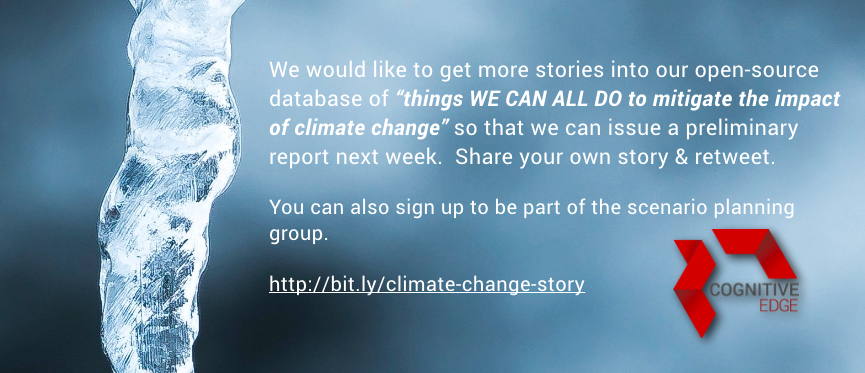
Help us gather stories about how small local actions influence attitudes towards #climatechange. Share your own story & spread the word. RT.
Read about it here: https://t.co/tnP1UsGkmw…
Share your story here: https://t.co/IzMyIF8Wth
In case you’re late to the party, @LetterWiki lets people have long-form online conversations without interference from trolls, Russian spam-bots, & the like. I welcome it as a new venue for civil discourse in these polarized times.
If the emphasis was on asking users to very clearly define how they see things being related, that might be interesting.
Concept maps typically have links between concepts which are only a couple words in length. I'd love to see people focus more on the interrelationships.
Concept maps are quite static, so maybe there's something that allows for more nuance, especially for complex system sense-making.
Still, I like the idea of one deliberately creating a personal knowledge graph which is highly interoperable with other personal knowledge graphs.