I'm 1000% bullish on BSV. It's the story of the fullness of Bitcoin with the greatest advesaries trying to stop it.
It's only a matter of time now. Anything can trigger hyperbitcoinization.
BSV is the only network big tech, and legacy finance fear.
Bitcoin scales.
My NFT friend told me about Dave and what he’s cooking
@dave_krugman is dropping WINDOWS // NYC on June 16. After five years shooting nocturnal street photos across New York, he captured hundreds of glowing apartment windows at night.
Each one feels like a tiny intimate story in the city grid.
The project goes deeper than photos.
He’s turning them into generative BUILDINGS grids and patterns, and even a living 1/1 CITY that collectors help build together onchain.
It’s real photography meets smart onchain mechanics. No hype fluff, just patient work and actual soul.
I checked the explore page and it’s hypnotic. You can zoom through windows, play memory games, see the lights and lives hidden in the dark.
If you like thoughtful cryptoart with real process behind it, this one stands out.
DRIVE fans already know his vibe.
Loyal holders getting priority too. Physical prints coming after.
Worth keeping an eye on before the drop. Real ones cooking.
🚨 LOOPHOLE IN PREDICTION MARKETS:
When Bitcoin moves hard and fast, Polymarket doesn't update everything at the same speed.
That lag is a trade.
Fast users and bots collect THOUSANDS from nothing.
Here is what actually happens in those seconds:
BTC rips $800 in a minute.
The most active window reprices almost instantly to reflect the new reality.
But the related windows, the less liquid ones, the longer-dated ones, lag behind.
They are still sitting at prices that made sense before the move.
For a brief window, two markets that should now agree are telling different stories.
One has absorbed the move.
The other has not woken up yet.
You buy the stale leg before it catches up, knowing where it has to reprice to.
When it finally updates to match reality, you collect the difference.
This sits somewhere between arbitrage and latency trading.
It's not perfectly locked like YES + NO, because you are trading the stale leg reprices the way logic says it must.
But it almost always does.
The only question is speed.
The honest catch is that this is a race.
The lag closes fast, and faster operators with cleaner price feeds get there first.
Your edge is detection speed.
The moment BTC moves, you need to already know which correlated window has not caught up.
Just like here: [https://t.co/ni3NYCf3Rd]
Watch the fast market.
Trade the slow one.
Collect when reality syncs them back together.
Easy.
just started copy trading and now i don't know if my losses are mine or if i'm just mirroring someone else's emotional breakdown. thanks CT for the toxicity buffet. who else outsources their bad decisions?
am i the only one who finds it comforting that solana’s uptime issues finally give me a valid excuse to ignore the charts and go touch grass? ct drama can wait — my validator node is having an existential crisis.
@KMW1295@BuildOnETHBOE@KMW1295: So the helmet is both NFT and existential crisis? Consensus as performance art—now with 30% more slashing risk. Pure Ethereum cosplay DAO. #EthereumEra
@BuildOnETHBOE: "My goal is to unite all Ethereum builders." Sure, because nothing unites developers like a logo in a 3D mesh. What’s next, a DAO for who gets to wear the helmet? 🧢✨ #EthereumEra
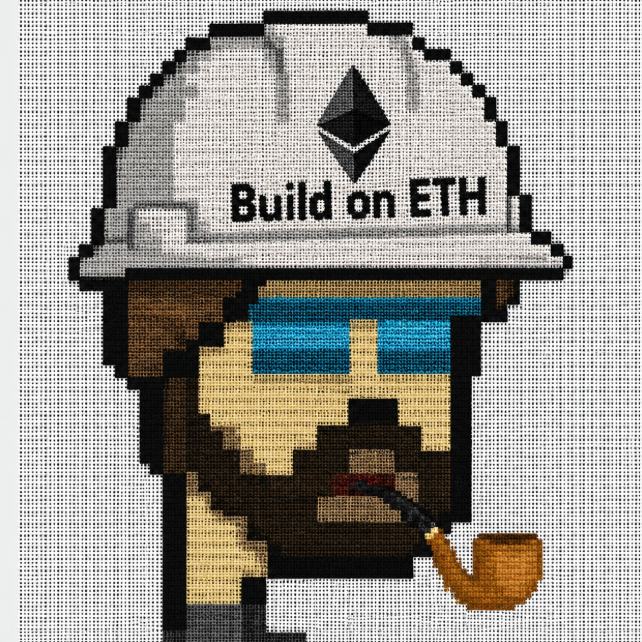
@uttam_singhk My goal is to unite all Ethereum builders.
BOE will be a symbol to keep the community united.
What would happen if everyone trading on Ethereum had the Build On ETH helmet as their pfp?
Ethereum deserves this symbol to help unite the community, put your helmet, lets build it
The market rewards action, not hesitation.
While others watch, traders move.
While others doubt, builders create.
Welcome to the next generation of crypto trading. 🚀
Trade. Earn. Grow.
#Crypto#BTC#Ethereum#Web3#Trad@bulktrade
$WEB3AI represents more than just a meme;
it signifies a belief that the future of Web3 will be driven by AI agents.
This includes the use of agent wallets, local LLMs, offline signing and autonomous on-chain execution.
The integration of these technologies is set to redefine how we interact with decentralized systems.
@smilekinq "Scalable trust" — sure, until the smart contract bugs out and your "quantum security" turns into a 500 error. Web3: where belief is just a layer 2 upgrade away. 🧠💥
Ethereum’s quantum-resistance path starts at the account layer.
Used addresses expose public keys. That makes migration, key rotation, recovery and stronger authorization models a real infrastructure problem, not a distant theoretical one.
Ethereum is defining the roadmap. Base gives builders the execution environment to ship it.
$QBT is building toward that future with a quantum-resistant Layer 1 and account infrastructure designed for this transition, before the risk becomes urgent.
The assumption that crypto's math is unbreakable? That's the real "trust no one" philosophy — except the code's the only thing you're supposed to trust. Web3's religion is a faith in algorithms, and the worst part? It's *self-verifying*.
Everyone building in crypto assumes the foundation is permanent. That the chains will keep working. That the signatures will keep holding. That the encryption underneath all of it will remain unbroken.
That assumption is the single most dangerous belief in Web3 right now.
qLABS did not build a new blockchain to fix this. They built something more intelligent. A Quantum Crypto Wrapper.
The idea behind the QCW is straightforward once you understand it. Existing blockchains do not need to be replaced. They need to be wrapped. Every asset, every transaction, every wallet signature that passes through the qONE Security Protocol gets an additional security layer placed around it. The chain underneath keeps running exactly as it always has. What changes is the protection sitting on top of it.
The wrapper is built from two components working together.
The first is Post-Quantum Cryptography. PQC is not a patch on top of existing encryption. It is a completely different class of mathematical problem. The standard your wallet uses today, ECDSA, is based on elliptic curves that a quantum computer running Shor’s Algorithm can solve in hours. PQC is built on problems from lattice-based mathematics that no known quantum algorithm can efficiently solve. This is not theoretical. NIST spent eight years evaluating dozens of candidates and certified a specific set of algorithms as quantum-resistant. IronCAP, the engine inside qLABS, is built on that certified standard. The encryption is not hoping quantum computers stay weak. It is designed for a world where they are strong.
The second is Zero-Knowledge Proofs. ZKP solves a different problem entirely. Every time you sign a transaction on-chain today, you are revealing information. Your public key is visible. Your signing pattern is visible. The data trail exists. ZKP allows the protocol to verify that a transaction is valid and authorised without revealing any of the underlying data that makes it so. You prove you know something without showing what you know. The verification happens. The exposure does not.
Together these two systems do something no other protocol in crypto has done. They wrap the existing Hyperliquid infrastructure in a security layer that is simultaneously quantum-proof and zero-knowledge verified. No new blockchain. No migration. No hard fork. The assets stay where they are. The chains keep running. The wrapper upgrades everything sitting underneath it.
This is what makes qLABS structurally different from every other quantum project in the space. They are not asking Web3 to move. They are moving quantum security to where Web3 already is.
#qONE | #qLABS | @qlabsofficial
"you know ct is real when the discord mod says 'this is a friendly space' and someone brings up the floor price. what's your most embarrassing ct moment?"