Archaeogenetics at Max Planck Institute for Evolutionary Anthropology
Max Planck - Harvard Research Centre for the Archaeoscience of the Ancient Mediterranean
Svante Pääbo and colleagues used AlphaGenome as a time machine to reconstruct the evolution of human gene regulation. An impressive new bioRxiv preprint! 🧬⏩
Fifty years ago, scientists proposed that the differences between humans and chimpanzees might be driven less by changes in genes themselves and more by changes in how those genes are regulated.
The authors revisited this hypothesis using deep learning and identified more than 71,000 genomic regions predicted to have gained regulatory activity along the human lineage. But the most interesting finding is how these changes happened!
In 71% of cases, evolution repurposed existing regulatory elements rather than creating new ones. A single mutation could introduce a tissue-specific transcription factor binding site, activating an existing element in another tissue.
To investigate this, the researchers used AlphaGenome to predict the regulatory effects of 17 million nucleotide substitutions, linking them to gene expression differences between humans and other great apes.
Interestingly, the vast majority of these regions fell outside known Human Accelerated Regions, genomic regions that evolved unusually rapidly along the human lineage. This suggests that the rate of sequence evolution does not necessarily reflect its functional impact.
Comparisons with Neanderthal and Denisovan genomes revealed that 99.6% of the regulatory gains fixed in modern humans and successfully dated arose before our evolutionary split from these archaic lineages.
There are also fascinating examples involving individual genes. One is SLC47A1, which encodes a transporter involved in eliminating drugs and toxins. The researchers identified five regulatory gains associated with increased expression in the human liver. Reverting these changes to their ancestral states in silico reduced predicted gene expression by 60%.
Of course, many of these predictions still require experimental validation. But the broader idea is remarkable: ancient DNA has allowed us to discover which mutations occurred in the past. Now, deep learning is beginning to reveal how those mutations may have changed the way genes worked.
https://t.co/LIUmvkZr3J
#aDNA #evolution #regulation #AlphaGenome
This is completely irrelevant to my point and this discussion in general. However, it confirms that after 1478, the city did experience an influx of Muslims from Anatolia, which reduced the Greek element to a minority of just 22%. This description is congruent with the shift in the genetic profiles of the city's popuplation in the Papageorgopoulou presentation, despite that according to this account this happened after 1453, so technically in the Ottoman period and not the Late Byzantine period.
New insights into the population genomic history of the Iberian peninsula by Pablo Carrión! Turns out 80+% of Roman-period individuals in Spain carried ancestry from Eastern Mediterranean (particularly the Western Anatolian coast). https://t.co/8BmJi87BMz
No. First of all it is incorrect that this "West Anatolian" profile existed only within Greek contexts. But even if it seemed so, it would still be wrong to conclude that. You can not a priori generalise an ancestry profile to an ethnicity. That would be the same as what these Albanian trolls are doing with the southern Balkan ancestry profile, which they label as "Illyrian". It doesn't work like that.
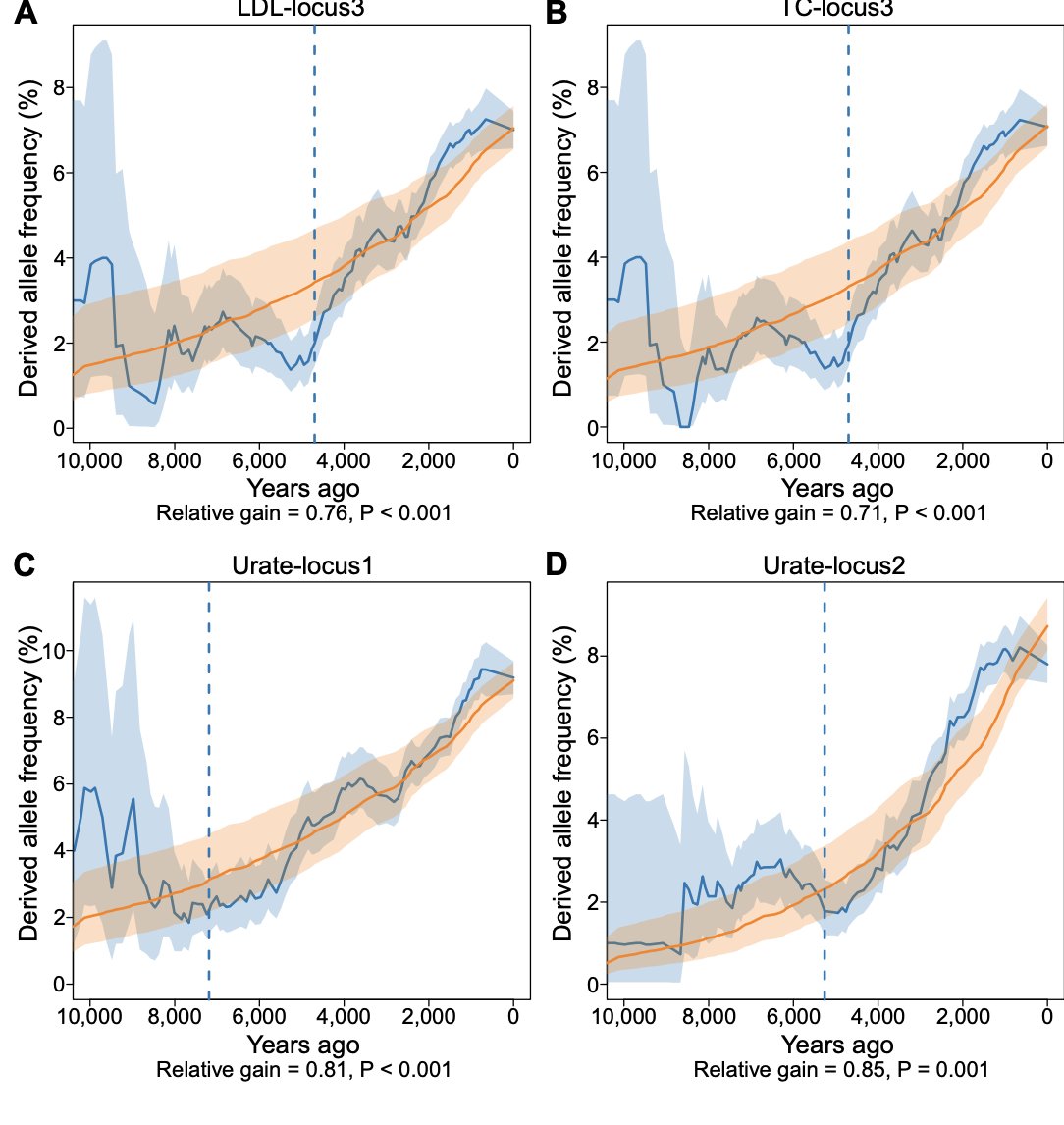
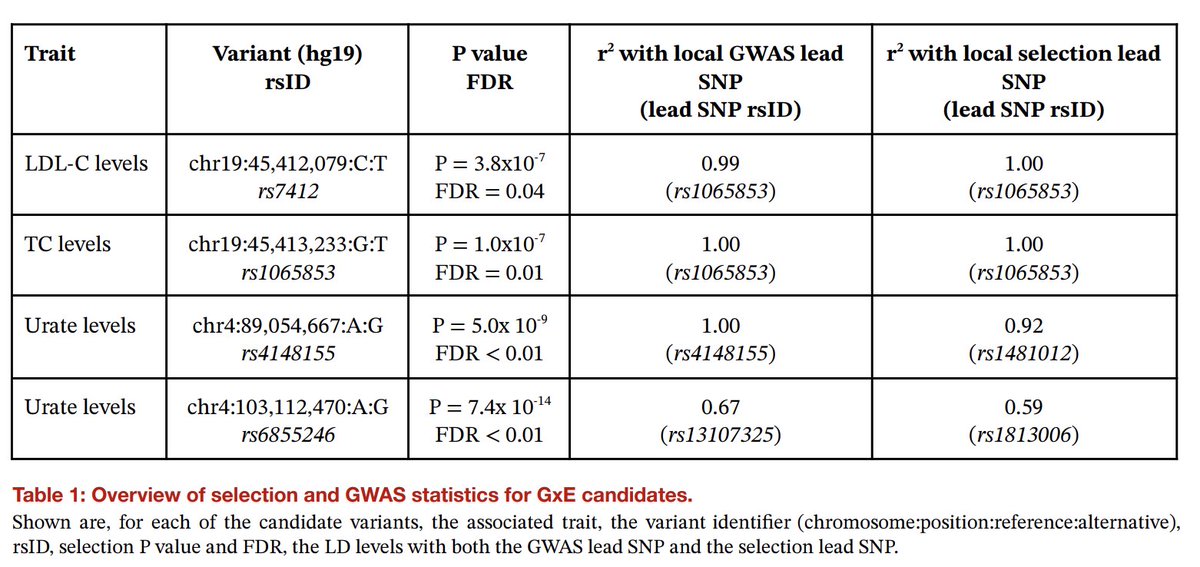
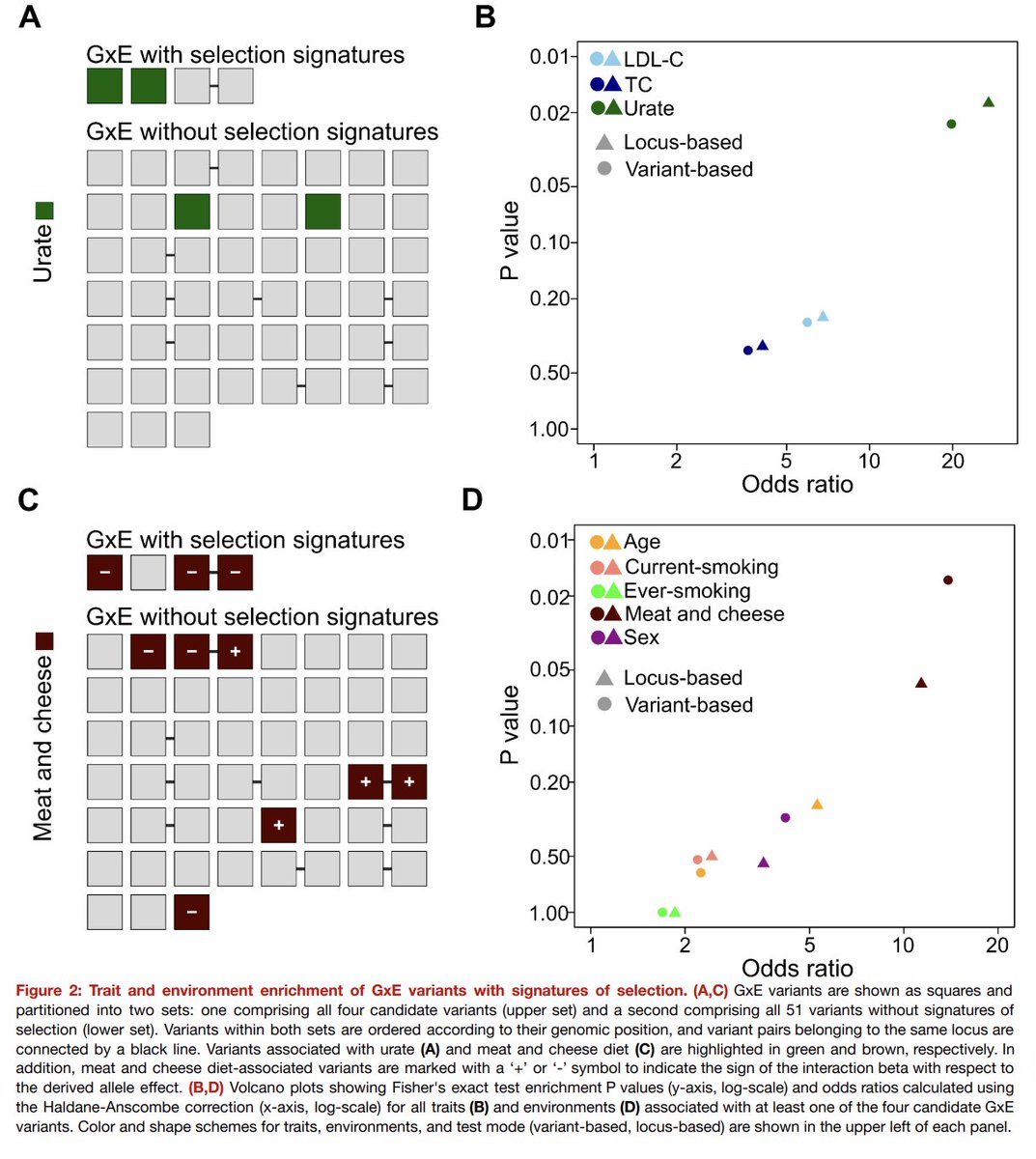
Interesting recent preprint uses genome-wide gene-environment interaction information and the Akbari et al selection trajectories to test if of directional selection at GxE associated SNPs reflects adaptation to environmental changes
Link here:
https://t.co/gSibJmcdYX
You are wrong, again. Population was indeed replaced in Thessalonika after the Ottoman conquest, but today's Greek population of Thessalonika, let alone Macedonia in general, is not the same, as Turks fled after the Balkan Wars and World War I, and those that remained were later exchanged.
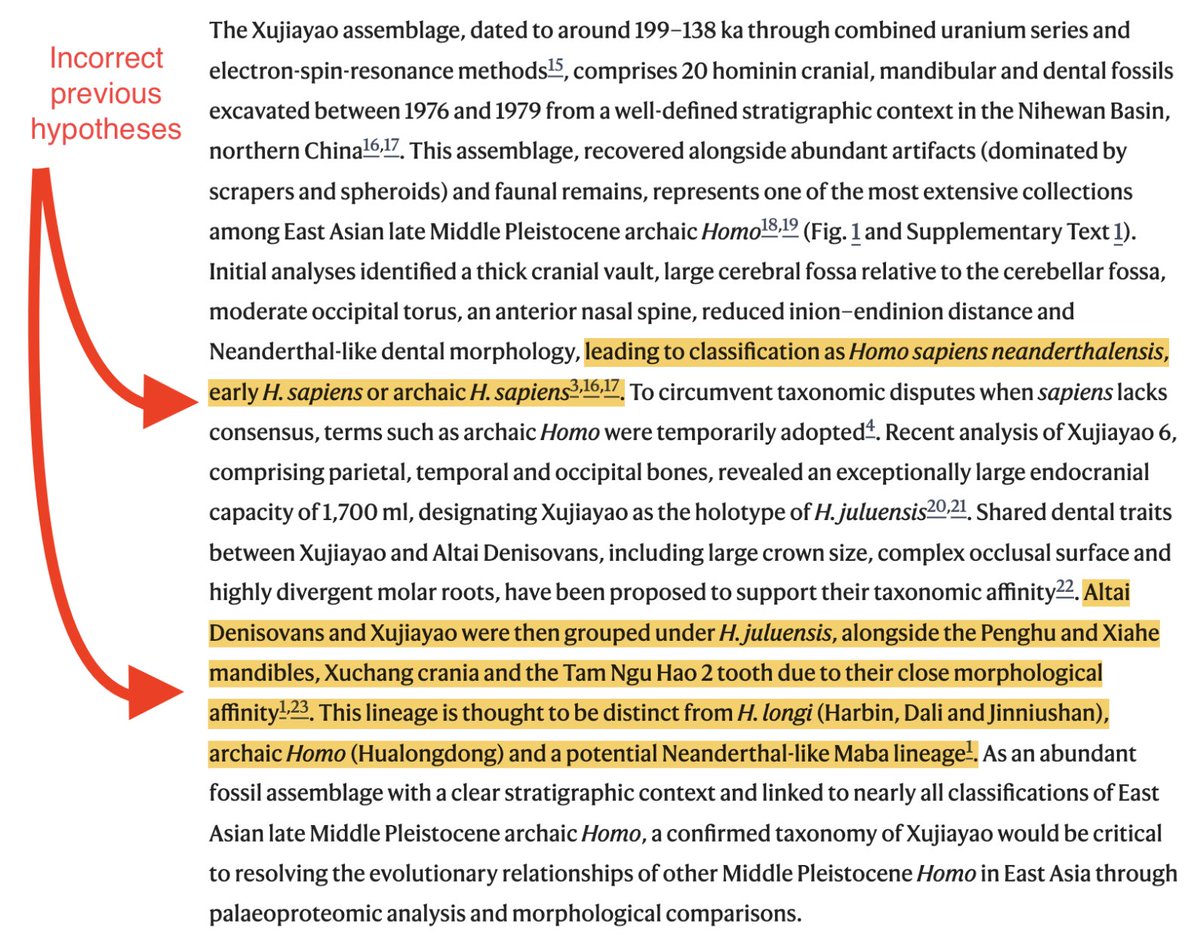
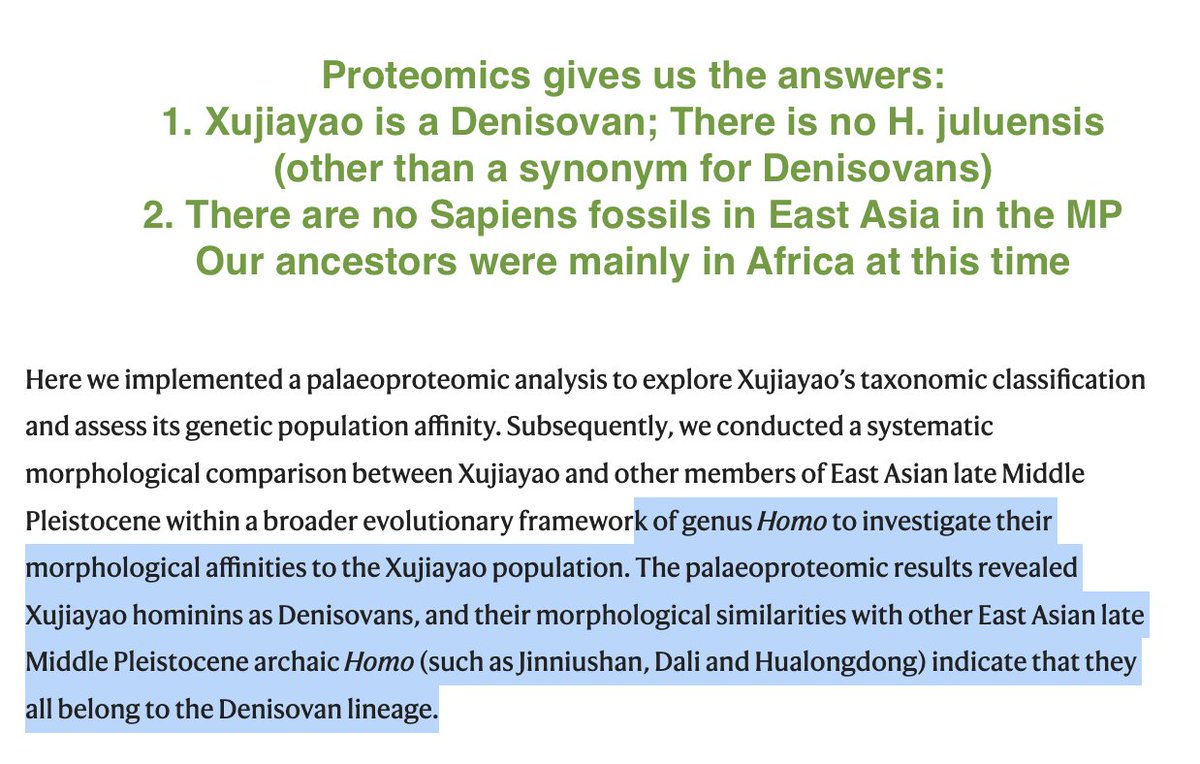
With so many Denisovans identified, I'm not that surprised that Xujiayao is a Denisovan; however this is a highly important paper as it refutes claims about it being a different species than the Harbin cranium, and refutes it being an early Sapiens (reinforcing OOA)
During the reconquista, the southern parts of Iberia were largely repopulated by incoming Northern Iberians, which resulted in modern Southern Iberians having *less* North African ancestry and more IA Iberian ancestry than pre-Islamic Roman-era Southern Iberians
Fascinating research by Christina Papageorgopoulou's group on Late Byzantine Thessaloniki. These findings align closely with the established multi-ethnic character of the city during the Late Byzantine and Ottoman eras. Historical estimates indeed suggest that the Greek population comprised only 15–20% of the total at that time, with the remainder consisting of sizeable Bulgarian, Italian, Jewish, and other minorities.
1) No, it doesn't show anything like this. 2) The bulk of the "Late Byzantine" individuals do indeed look western Anatolian-like (I am not refering to the outliers of course). But this doesn't tell you whether these are Greeks or not. 3) No, I am not trying to hide any slavic element in any way, nor Papageorgopoulou does to my knowledge. 4) No, I never said that "the two major components observed were Balkan and West Anatolian", which is something that can not be determined by a simple PCA. This is your interpretation, not what I said.
1) No, it doesn't show "the opposite of what I claim".
2) There is absolutely nothing revisionistic about either my post or this research.
3) You got any evidence that these were specifically "Bulgarians" and "Byzantines"? Because I assure you this PCA doesn't prove anything of this sort. (And by the way, you are wrong, the centre of the modern Bulgarian cluster is not where you have it noted, but slightly higher on both PCs. In fact, what they call "Middle Byzantine Core" seems to overlap much more with the modern Greek cluster, even though this also doesn't prove these were "Greeks".)
4) "Mycenaeans" and "Illyrians" are completely irellevant to this post.
5) Relevant samples are very limited and there is ongoing research on the population genomic dynamics of the Byzantine period. But it looks like you have figured out everything already and you are very confident about it as well. I hope you got a chaired professorship already, and your genious is not wasted on X.