Together, we can work towards: Changing Behaviors; Establishing and Maintaining Relationships; Enhancing Your Ability to Cope; and Reaching Your Goals.
I’m Priya Roshan, LCSW-S, MSSW. I LOVE counseling and working with individuals, couples and families. Together, we can work towards: Changing Behaviors; Healthy Relationships; Enhancing Your Ability to Cope; Decision-Making; Recognizing Unhealthy Patterns and Reaching Your Goals!
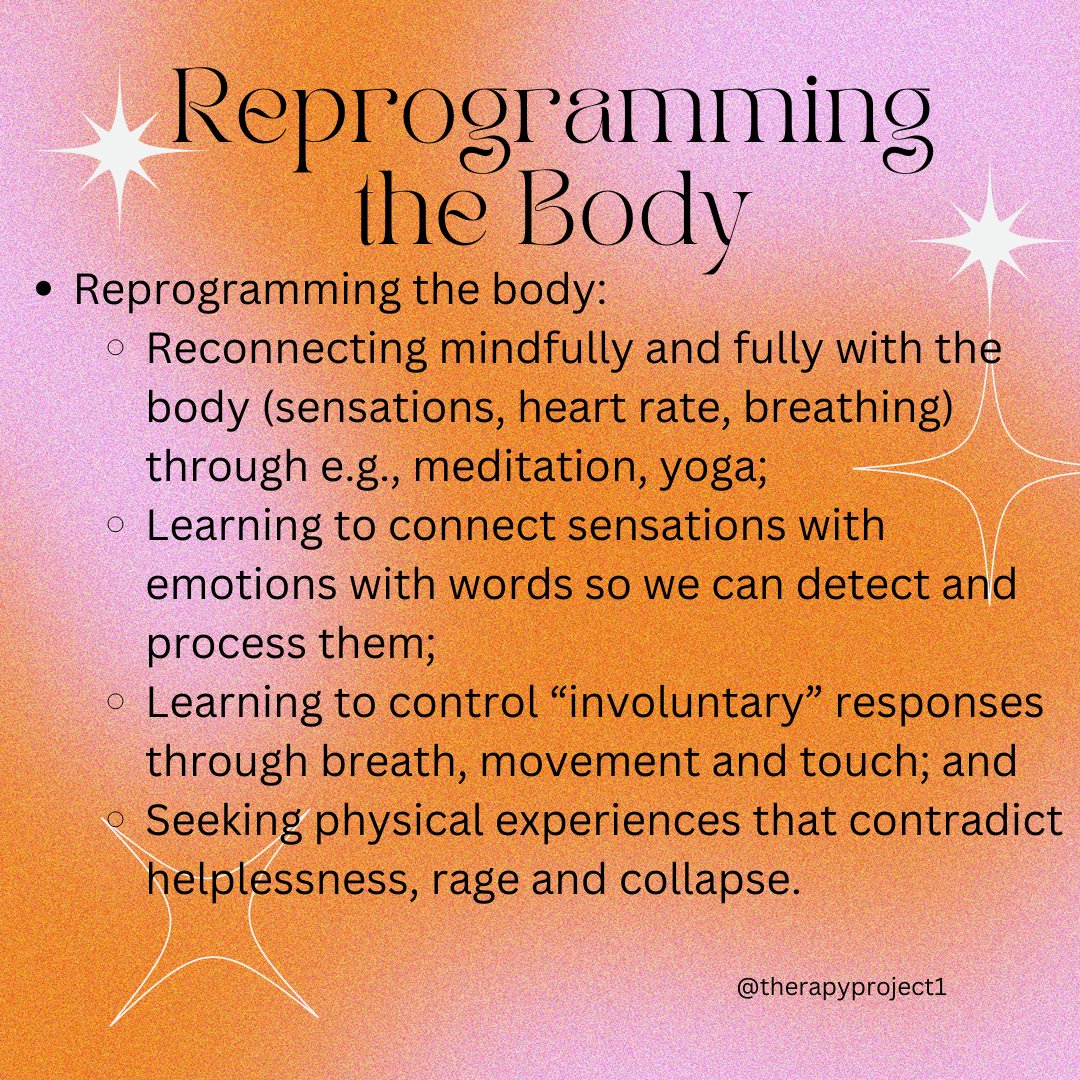
Hello Friends! This final post in the trauma series is on reprogramming.
Reconnect mindfully with the body (sensations, heart rate, breathing). Learn to control “involuntary” responses. Seek physical experiences that contradict helplessness, rage and collapse. #therapyproject
Hello Friends! A second path to recovery after trauma is rewiring the brain. Rewiring the brain: Strengthen top-down monitoring of signals; Change how we organize information; and Use meds to dampen hyperactive internal alarm systems. #therapyproject#mentalhealth#trauma#rewire
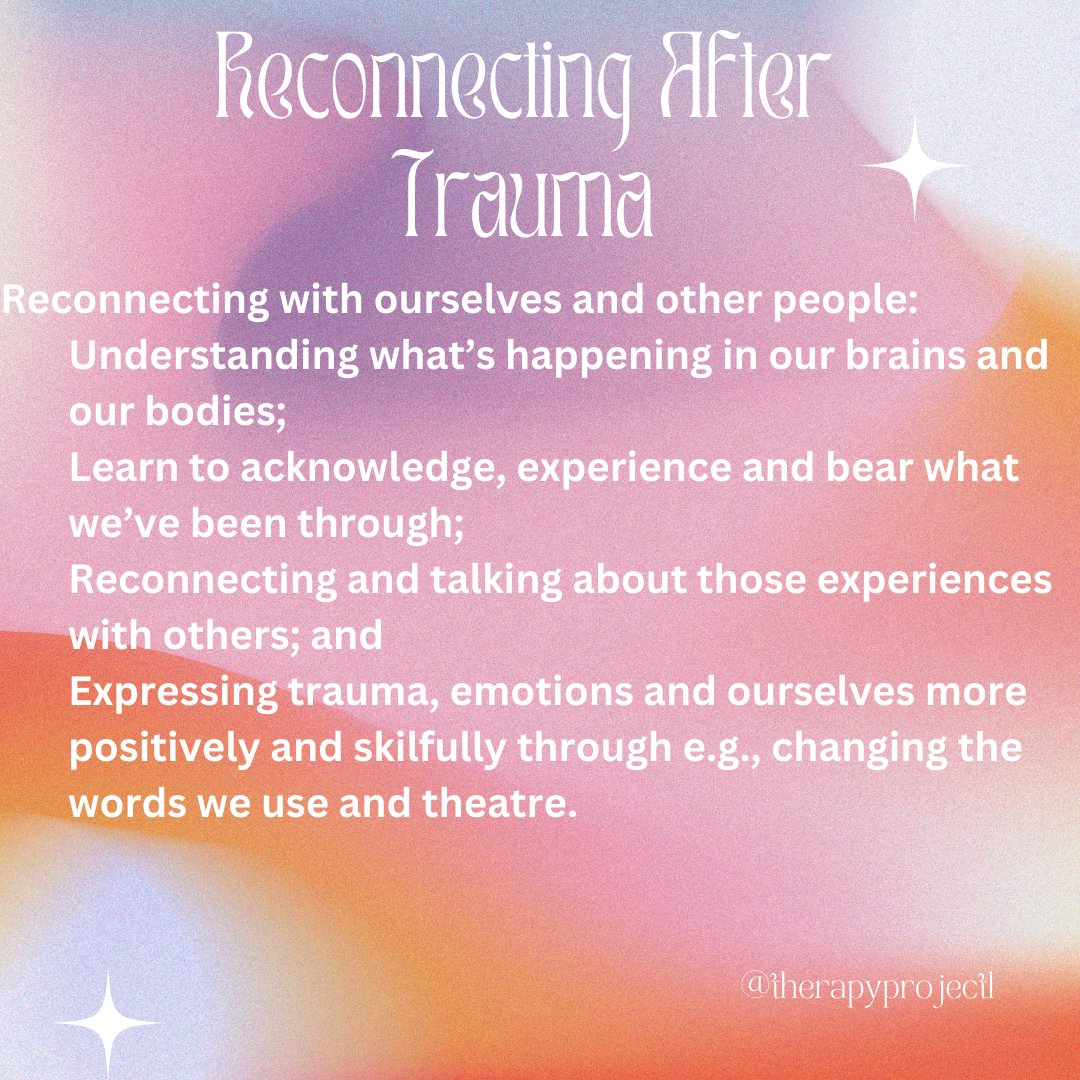
Hello Friends! One path to recovery from trauma is reconnecting with ourselves and others. Strive to understand what happened in our brains and our bodies; Acknowledge, experience & bear the trauma; talk about those experiences & express ourselves positively. #therapyproject
Hello Friends! There is good news! Once a trauma is surfaced there are 3 possible pathways to recovery: reconnecting with ourselves & other people, rewiring the brain, and reconnecting with & reprogramming the body. Trauma is something you have to put up with! #therapyproject
Hello Friends! Trauma interferes with our body's ability to manage in a healthy way. Trauma also interferes with the ability of our mind to interpret signals from and connect with our bodies. This can lead to a diminished ability to connect mind and body. #therapyproject#trauma
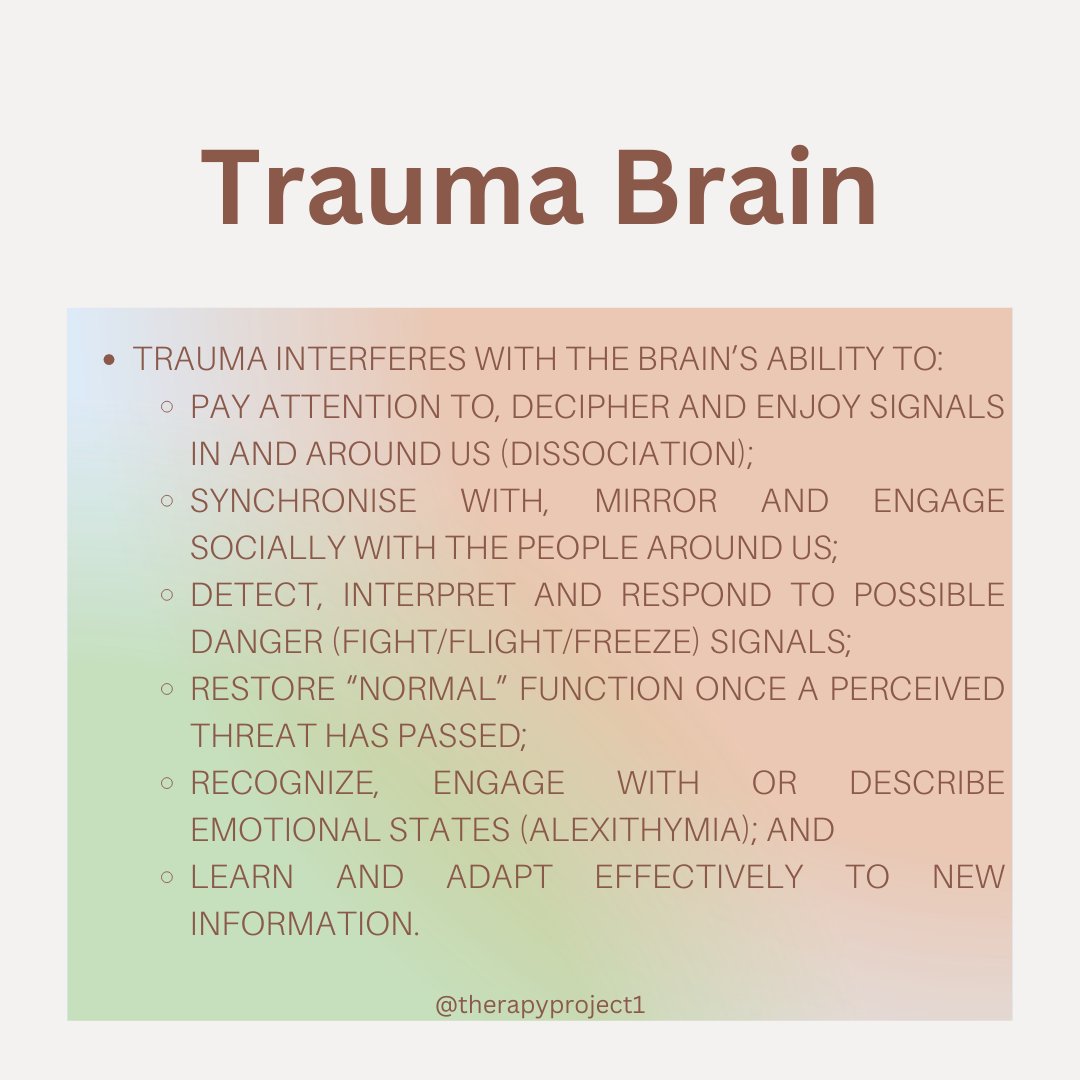
Hello Friends! Trauma interferes with the brain’s ability to: pay attention to signals in and around us; synchronize & engage socially with the people around us; detect, interpret and respond to possible danger signals; recognize emotions and adapt effectively. #therapyproject
Hello Friends! Let's discuss how the triggers, symptoms, and the secondary effects of trauma can complicate and prevent psychiatric problems from resolving themselves. #therapyproject#mentalhealth#trauma
Hello Friends! Some statistics about trauma: 1 in 5 was molested as a child; 1 in 4 beaten by a parent; 1 in 4 grew up with alcoholic relatives; and 1 in 3 couples have physical violence. Someone you know well is at least partly defined by a history of trauma. #therapyproject
Hello Friends! Let's start a series on Trauma. Trauma is an emotional response to a terrible event like an accident, rape, or natural disaster. Reactions include unpredictable emotions, shock, denial, flashbacks, strained relationships, and headaches or nausea. #therapyproject
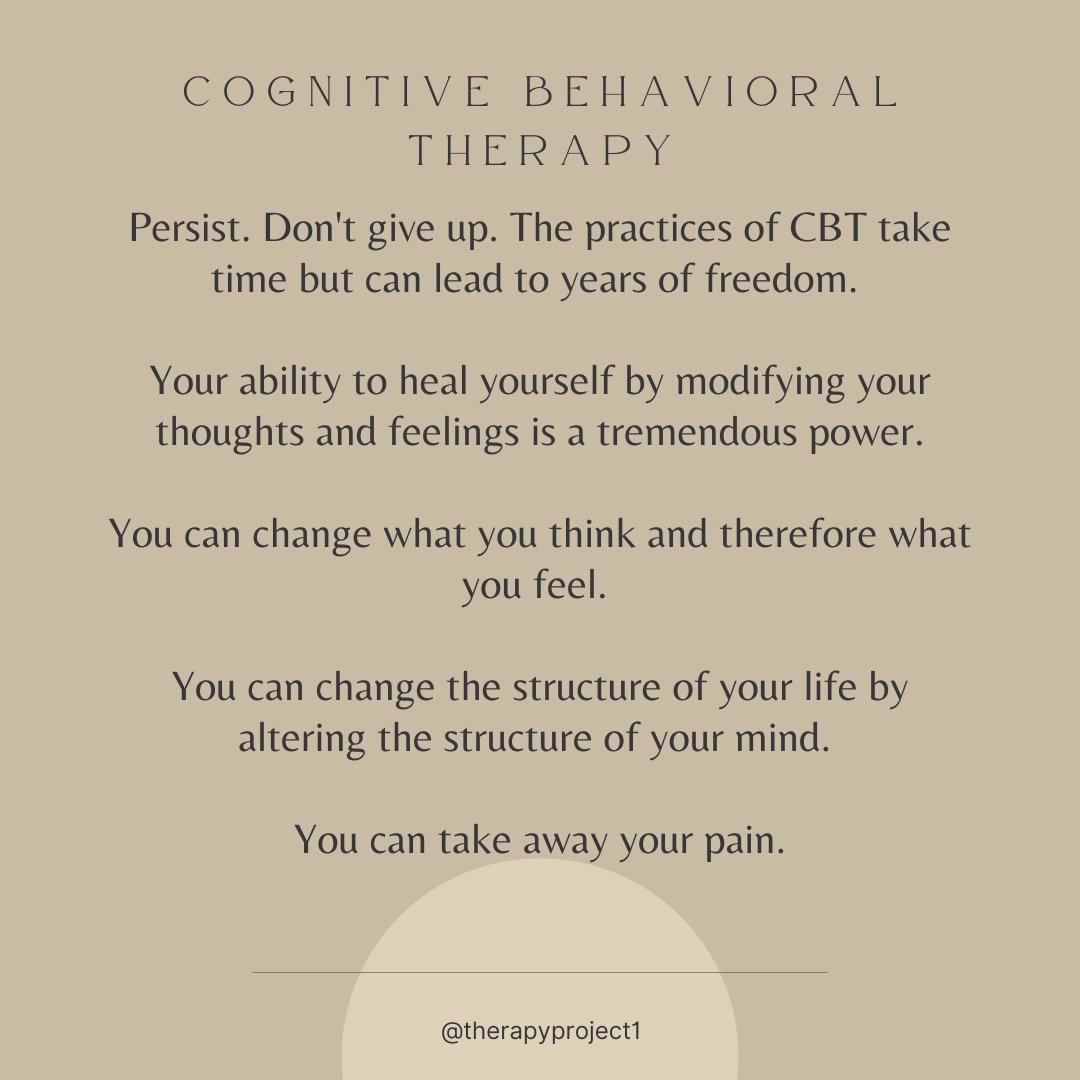
Hello Friends! This is the last from our CBT series. Change happens when you do something. Be diligent in your practices. Persist. Don't give up. The exercises we've covered take time but can lead to years of freedom. #therapyproject#mentalhealth#CBT#therapy#cognitive
Hello Friends! Activity scheduling can reenergize you and offer help in overcoming depression. Focus on adding two different types of activities to your schedule: activities that are pleasurable and activities that give you a sense of mastery. #therapyproject#mentalhealth#move
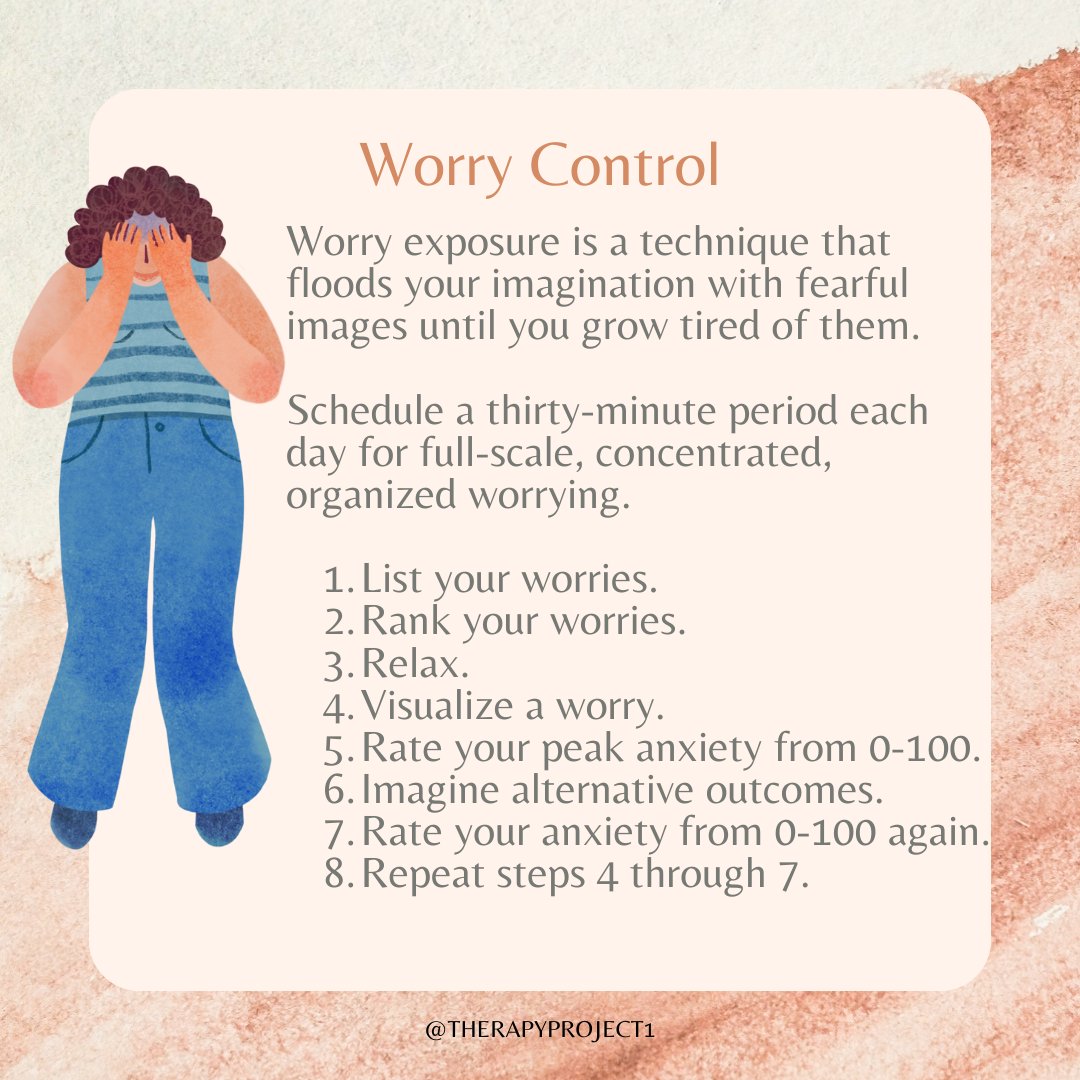
Hello Friends! Everybody worries now and again. When worry gets out of hand, it can really preoccupy your thoughts. Try to control the worry by scheduling a daily 30-minute period for full, scale, concentrated and organized worrying. #therapyproject#mentalhealth#worry#CBT
Hello Friends! Learning to relax means practicing techniques that have been proven to release the muscular tension that the body stores in times of stress. When your body is completely relaxed, it's impossible to feel fear or anxiety. #therapyproject#mentalhealth#relaxation
Hello Friends! Hot thoughts trigger an emotional response. We can learn to create healthier thoughts through practice. Read through these eight steps to create a more realistic perspective using a thought and evidence journal. #therapyproject#mentalhealth#CBT#thoughts
Hello Friends! Have you heard of thinking traps? Here are the most common examples of limited thinking. Look through this list and write down which pattern fits your thoughts. Then, re-write your thoughts with a more balanced alternate. #therapyproject#mentalhealth#CBT#thought
Hello Friends! Automatic thoughts are often: believed, seem spontaneous, are "should," "ought," or "must," tend to "awfulize," repeat themes and are learned. Keep a thought journal and rate your feelings for at least a week to identify your ATs. #therapyproject#mentalhealth
Hello Friends! Cognitive Behavioral Therapy (CBT) helps with many things, including depression, anxiety, anger, perfectionism, low self-esteem, shame, procrastination, etc. The next few weeks we will learn more about CBT skills to improve our mood. #therapyproject#mentalhealth
Hello Friends! This is the last in our crucial relationship conversations series! Conversation eight is about dreams. We need to dream! In our dreams we find our greatest joy and discover the unique gifts we have to share with the world. #therapyproject#mentalhealth#dreams
Hello Friends! The seventh crucial conversation for strong relationships is about growth and spirituality. Be curious about spirituality! Make it safe for your partner to share by being truly curious about the growth they're experiencing. #therapyproject#mentalhealth#growth