An internet Snek focusing on biobehavioral and biocultural approaches in research on deviant human behavior. Biosocial criminology, anthropology, and biology.
Does mental illness really cause crime? The answer is much stranger than “yes” or “no.” A review of the criminalization hypothesis, direct offenders, symptom-crime linkage, and causal identification.
https://t.co/fZWZ8ZZafi
🧵The history and origins of probation can actually be traced back to the middle ages; however, it's first statutory creation in the US was in 1878 in Massachusetts. Probation would be subsequently extended to the criminal courts in 1891. 1/4
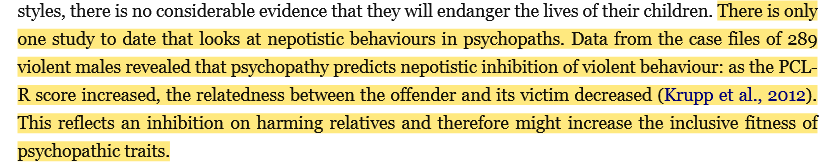
Ene I, Wong KK-Y, Salali GD. 2022. Is it good to be bad? An evolutionary analysis of the adaptive potential of psychopathic traits. Evol Hum Sci. 4:e37. https://t.co/MHCCBjBrTa
Very interesting to find that there is at least some evidence that the harmful disinhibition associated with psychopathy may be notably more restrained for kin and relatives. This presents some potentially interesting inclusive fitness prospects...
@lextorias Awesome work here. I was wondering about the genealogy of the pseduo-scientific claims being thrown around. Hardly surprising unfortunately.
New BJS report: Preliminary Victimization Estimates from the NCVS, 2025. The report presents preliminary 2025 estimates from BJS’s redesigned National Crime Victimization Survey. Read more: https://t.co/K3Cq4zgexn
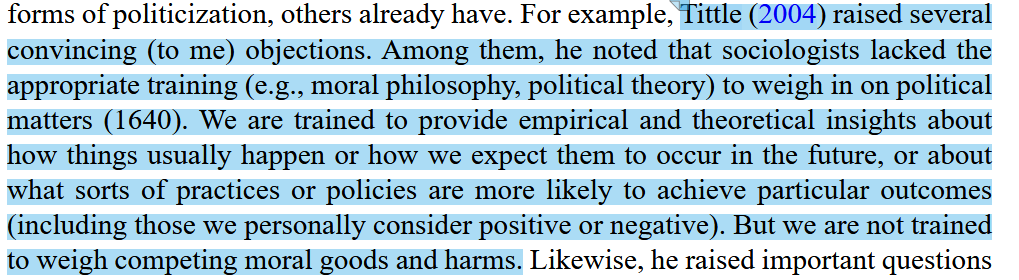
Two rather excellent papers on the shortcomings of normativity in social science. The reality is that social scientists have no particular qualifications, training, education, or other facets which necessarily privilege their normative judgements above those of any other.
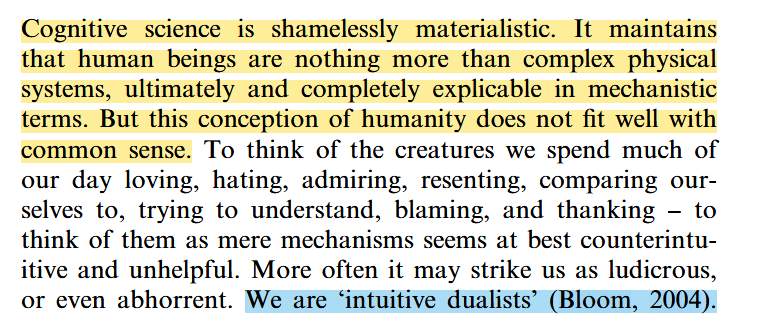
Humans are intuitive dualists, in part because the mechanistic alternative appears absurd under the human experience.
This seems to parallel critiques of the explanatory autonomy thesis which challenges the explanatory split between mechanistic neurosci and functionalist psych.