Thermocapillary-driven control of a free surface in microgravity.
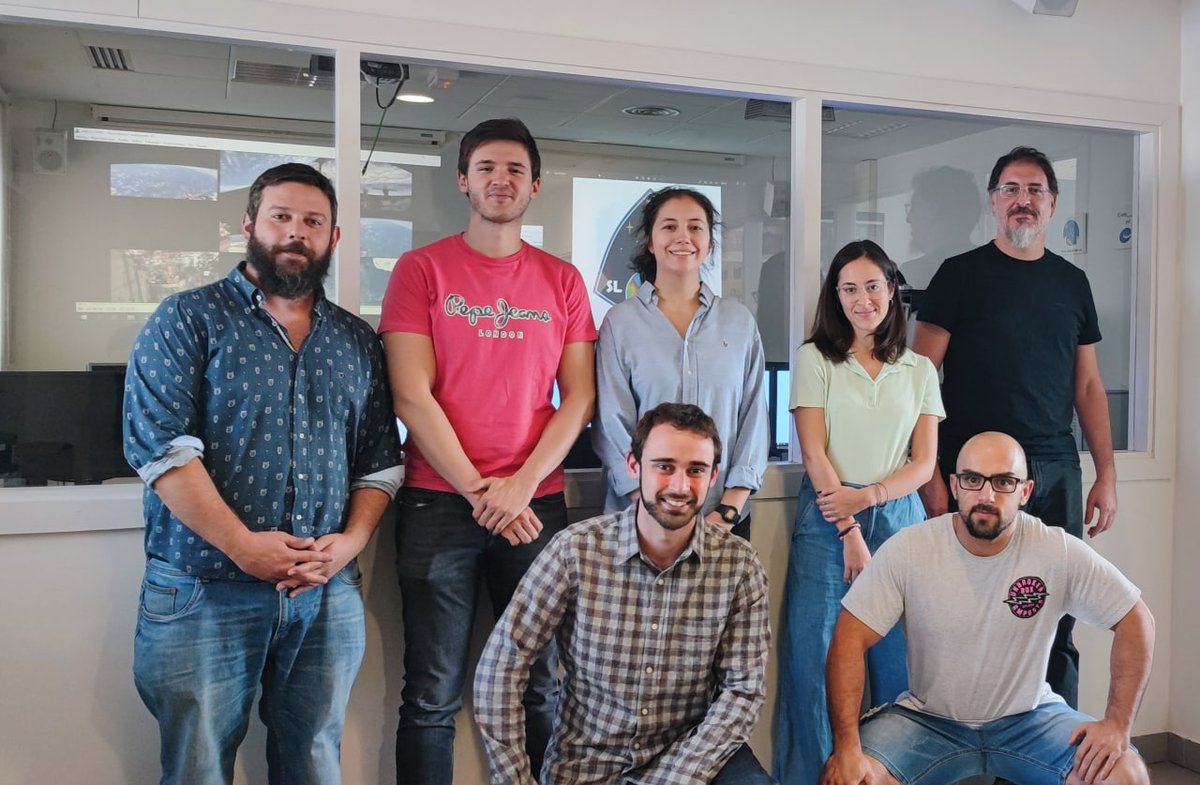
Research team from Escuela Técnica Superior de Ingeniería Aeronáutica y del Espacio (ETSIAE).
We are presenting #ThermoSlosh on the final stage of the 1st International Space Science and Scientific Payload Competition! @aeroespacialUPM@La_UPM
Our poster is now competing! You can have a look at it, and vote for us on the following link:
https://t.co/VW1VayoXLR
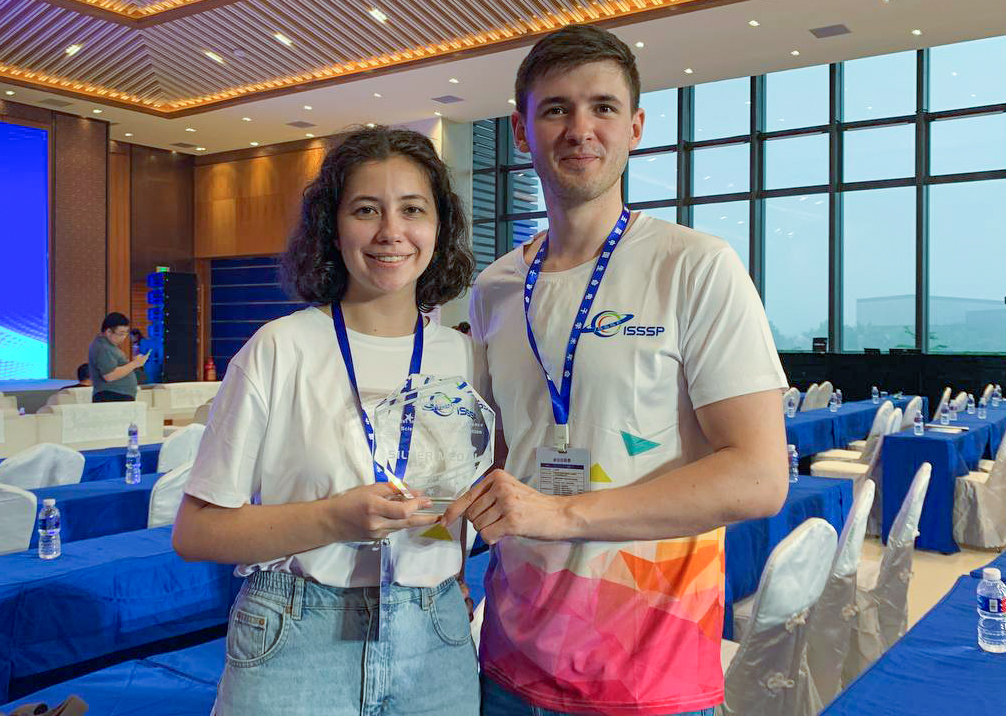
El equipo @ThermoSlosh, con su experimento sobre control de fluidos en microgravedad, 2º premio en el concurso de experimentos de la Estación Espacial China #ISSSP. Ha sido desarrollado por estudiantes de #ETSIAE e investigadores del @eusoc.
📰 https://t.co/tPOUJUpRwo
#somosUPM
We are presenting #ThermoSlosh on the final stage of the 1st International Space Science and Scientific Payload Competition! @aeroespacialUPM@La_UPM
Our poster is now competing! You can have a look at it, and vote for us on the following link:
https://t.co/VW1VayoXLR
You can now find out more about the ThermoSlosh project in our recently published article: The “Thermocapillary-based control of a free surface in microgravity” experiment.
Link to the open access article:
https://t.co/CtasiSdQqs
Due to the recent impact of COVID-19 in China, The Final of the 2022 ISSSP Competition has been postponed to March 2023. Nevertheless, as our work progress has almost concluded, we are glad to share with you our final poster for the competition.
More simulations have proved the potential of the method in the presence of a real microgravity scenario, where perturbations measured during an ISS re-boosting maneuver have been considered.
The numerical work of our project is finally concluded. Simulations have demonstrated the effectiveness of the proposed control strategy, showing an improved performance in the control of the free surface when combining both thermal and vibrational forcing.
To ensure the appropriate level of containment and safety of our experiment, an aluminum box has been designed to hold all electronic components and integrate the whole experiment: the on-board computer, the experiment cell, the optical system, and the motor.
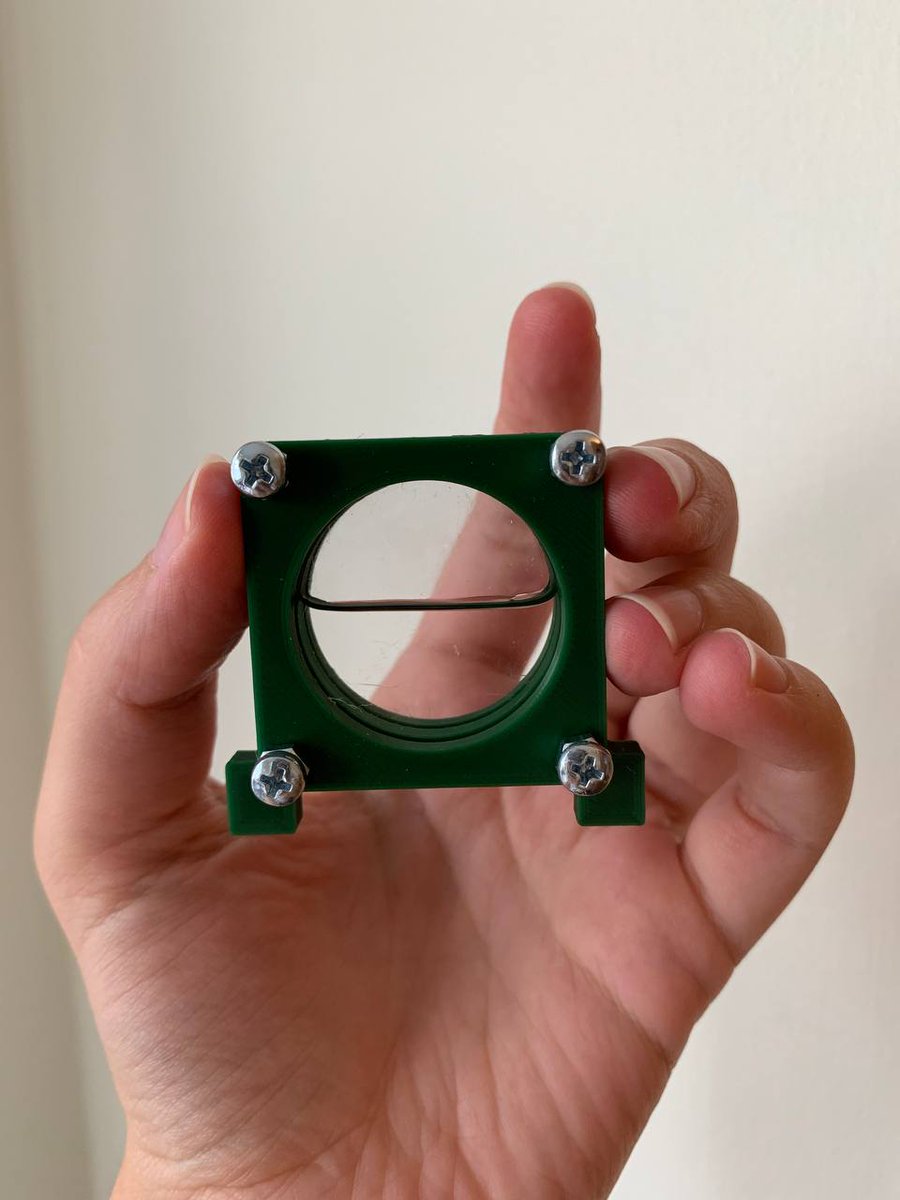
Although a silicone oil would be more appropriate for the experiment, water makes a suitable choice for the prototype as it presents the slightly lower to 90º contact angle desired.
Our prototype is almost finished and we want to show you what the experiment cell looks like. With a diameter of 30 mm and 5 mm of depth, we have selected water as the the prototype test fluid
¡Enhorabuena al equipo de @La_UPM que irá a la final del concurso! En el proyecto #ThermoSlosh trabajan conjuntamente 4 estudiantes y 3 profesores de #ETSIAE. ¡A por todas! 💪
Un equipo de estudiantes e investigadores de @La_UPM seleccionado para la final de un concurso de experimentos para la Estación Espacial China.
ThermoSlosh ha presentado un experimento sobre control de fluidos en microgravedad.
📰 https://t.co/xXO7ssOKbF
#somosUPM@ThermoSlosh
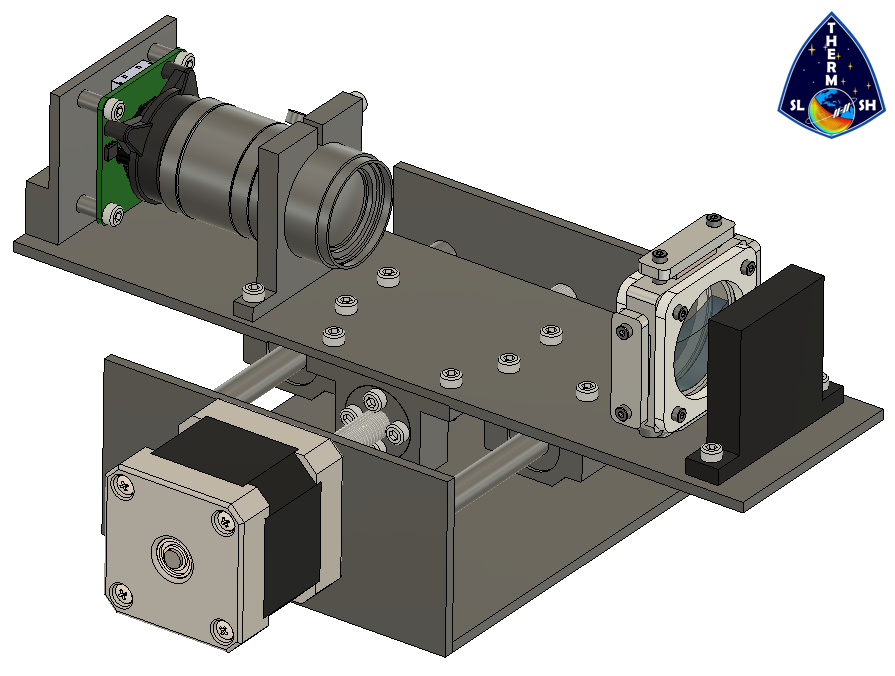
The sketch of our experiment final set-up. The experiment cell and optical system are mounted on a base plate that is attached to the stepper motor (which drives controlled translations of the base plate), and the thermal system is embedded within the aluminum body of the cell.
Thermal modulations proved to be an attractive fluid control strategy, and now we are working on the modelling of its realistic control implementations for our experimental setup!
The potential of the thermomechanical coupling to mitigate the effect of the perturbation-induced sloshing motion, measured during an ISS reboosting maneuver, was demonstrated in this numerical analysis developed by Gligor et al. (https://t.co/7I4wr2uoZF).