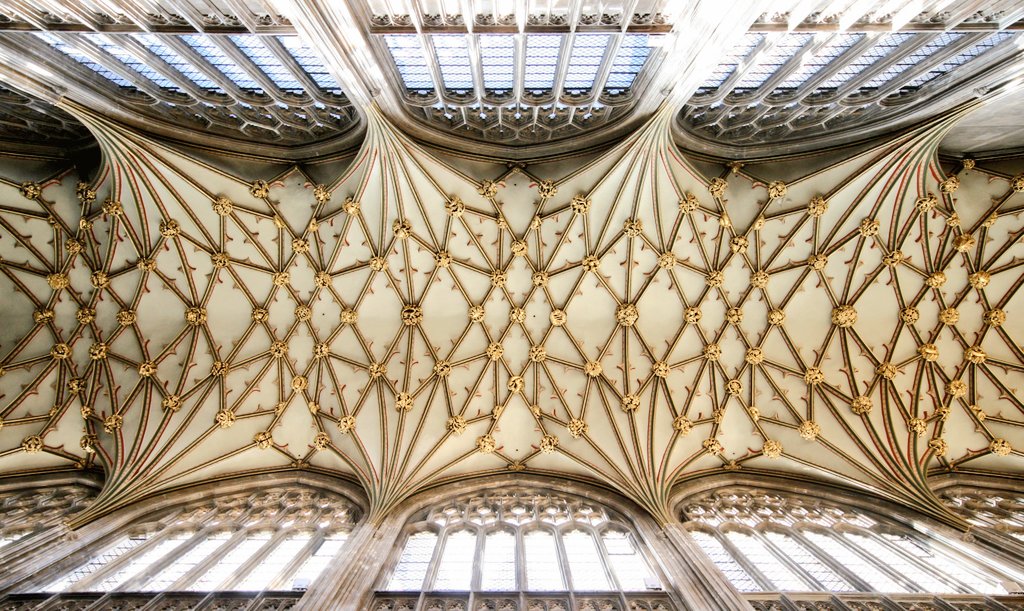
The beautiful vaulted nave of St Mary Redcliffe, Bristol, is one of several designs of gothic vaulting that covers the entire ceiling of the church. This section was built between 1337 & 1342. The many, many bosses alone are of note, let alone the overall design. #medievalmonday
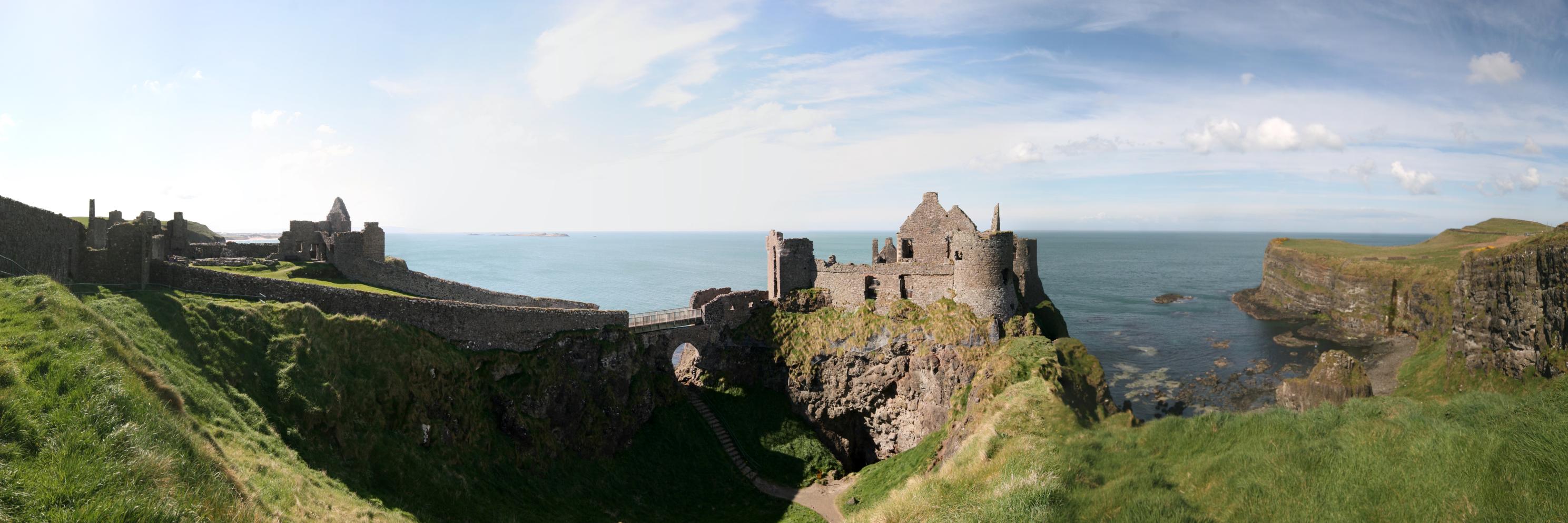
@Chefsfleming @BodiamCastleNT It is a great place. I do plan to do a couple of threads about it in due course, but haven't really gone through any of my photos from my last visit. Here is an amuse bouche for you now though.
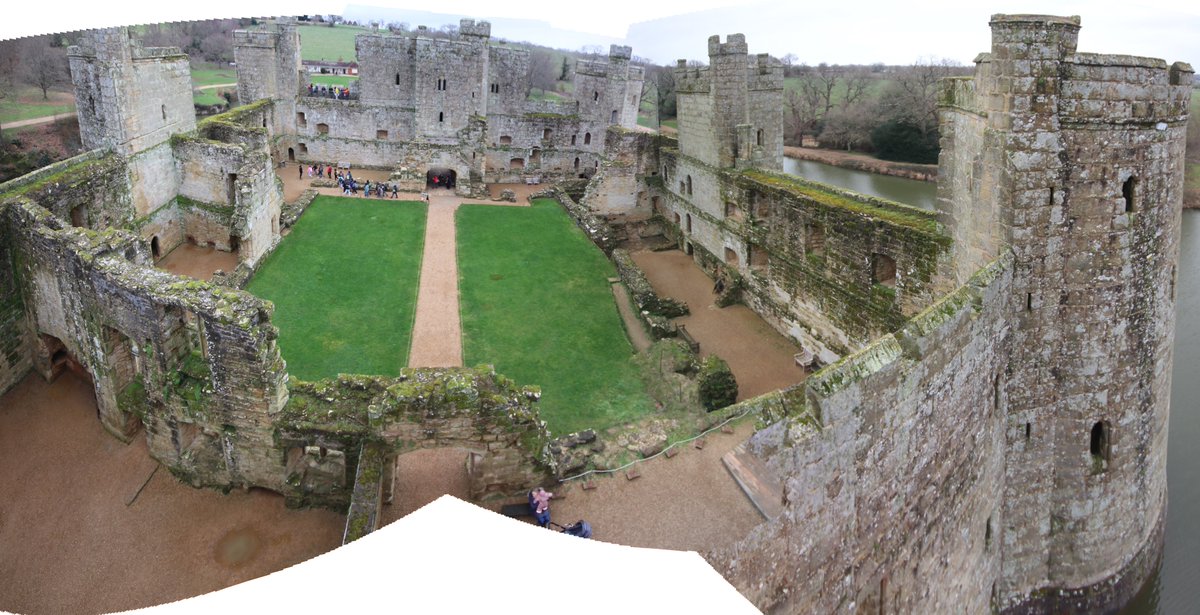
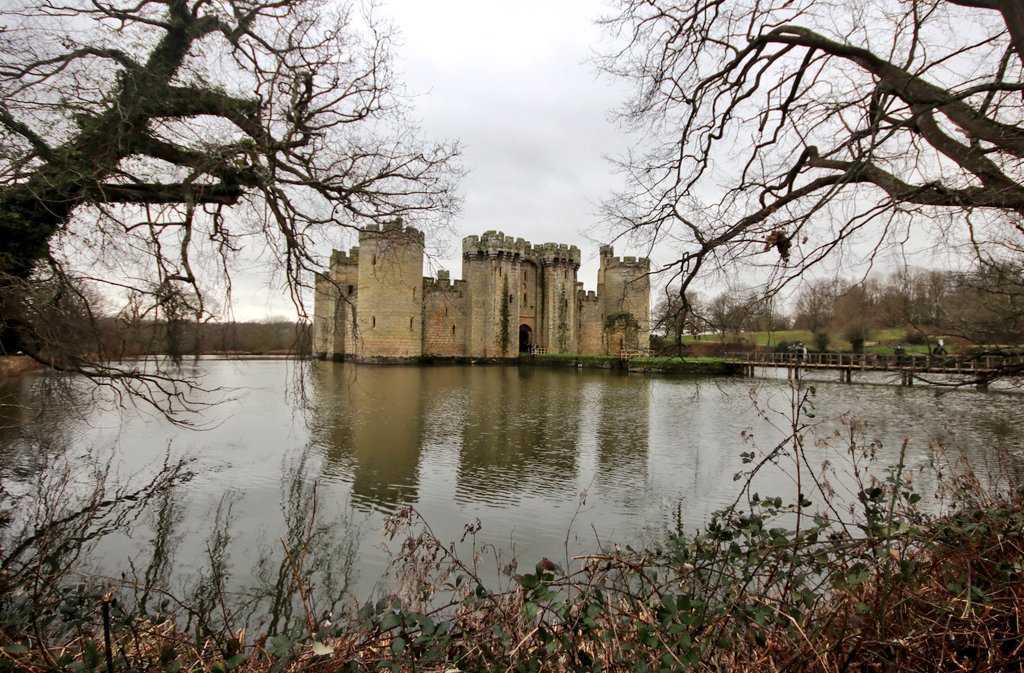
Bodiam Castle, E. Sussex. It is a challenge to take a bad photo of this C14 castle. It was built in the centre of a designed landscape for Sir Edward Dalyngrigge, who made much of his money during the Hundred Years. #castlesaturday
Another technological feature is that the table was electrified and connected to the scoreboard. Players would push buttons on the table to record their scores. The scoreboard was probably made by the same maker of the billiard table, James Plunkett & Co 3/3
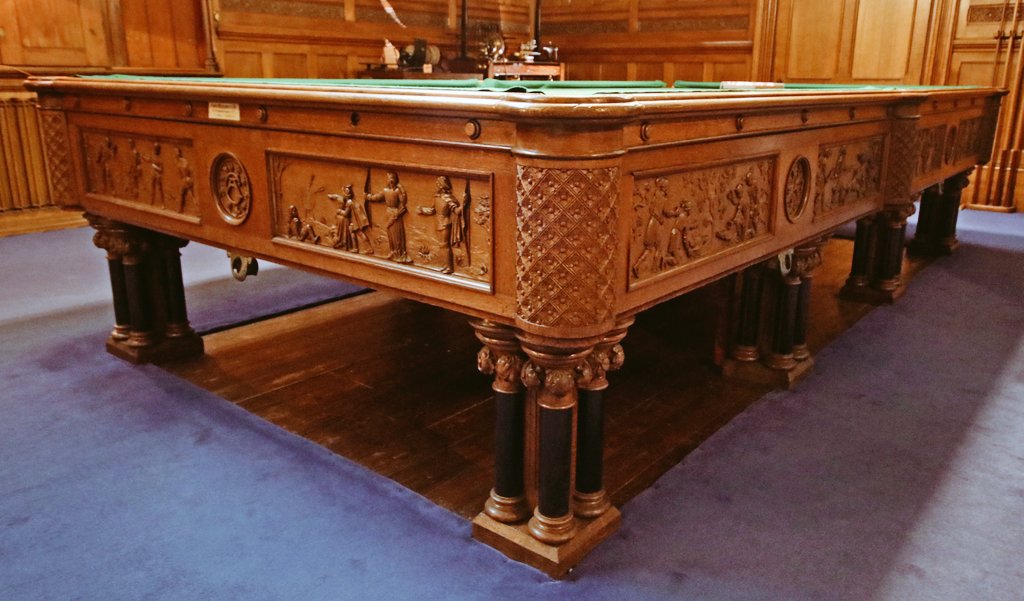
The wonderful billiard table in Tyntesfield (Somerset) was made by James Plunknett & Co in 1884 for Antony Gibbs. On the sides are 12 carved oak panels depicting traditional sports and pastimes such as archery, bowls, & wrestling. 1/3
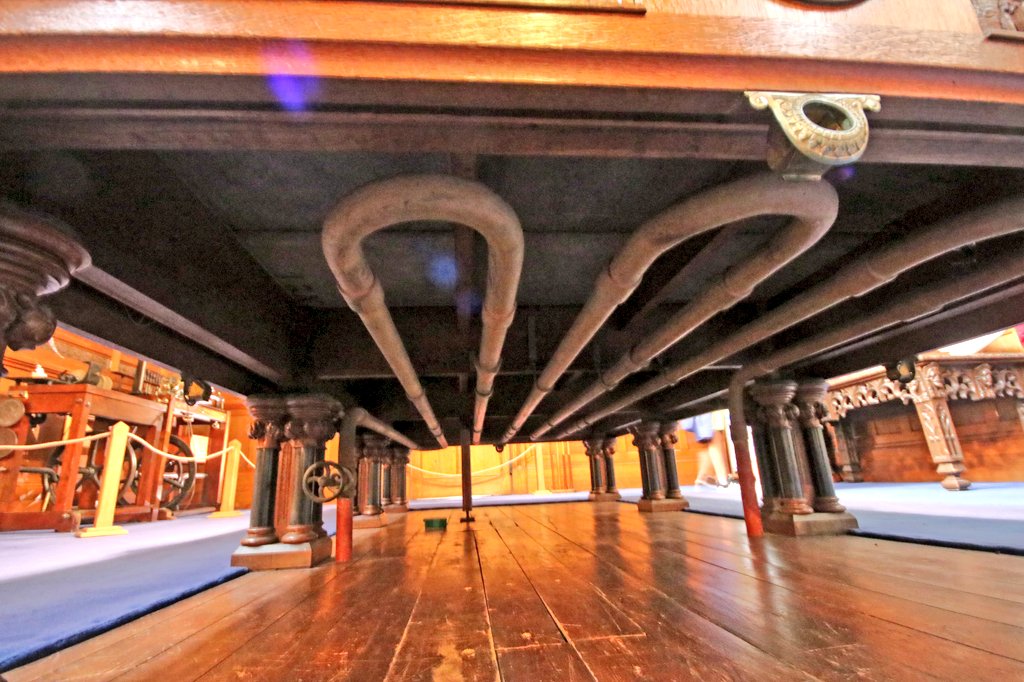
Antony Gibbs incorporated the latest mod-cons in Tynesfield incl. heating the billiard table. The slate bed was heated by iron hot water pipes, which in turn are connected to the central heating system. The heat kept the cushions & baize free from damp. #ironworkthursday 2/3
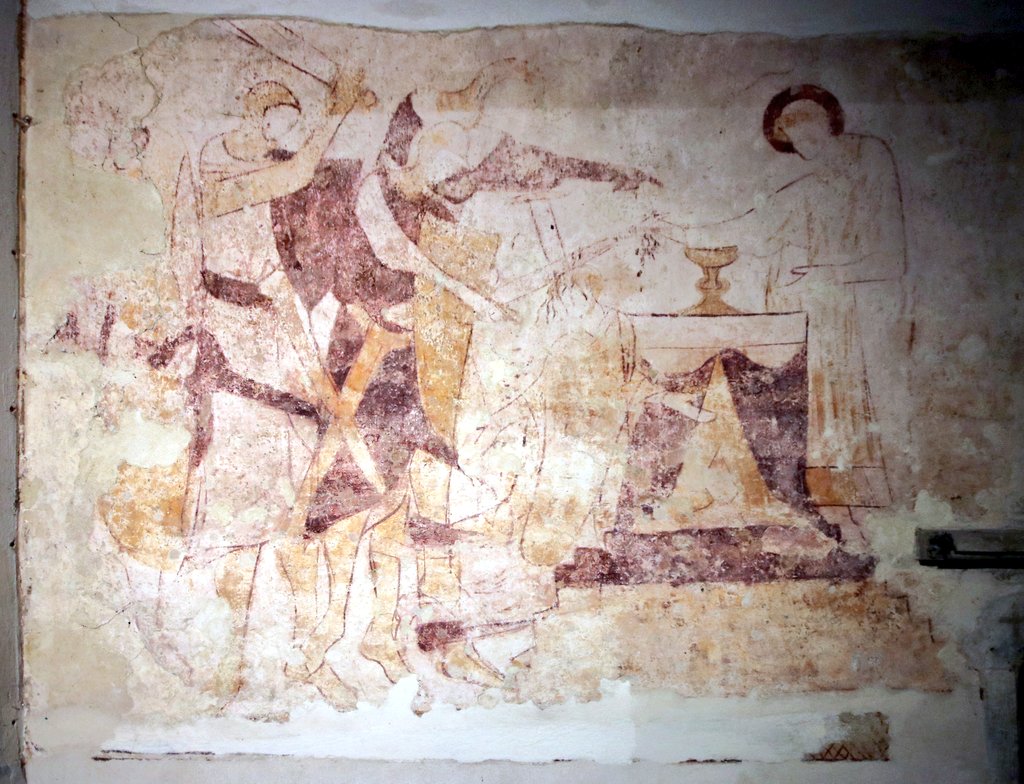
St Peter's Church, Preston, Brighton. A c.1260 painting of the murder of Thomas Becket. Although the painting is fairly well preserved, it along with the rest of the church, was damaged in a fire in 1906. #wallpaintingwednesday
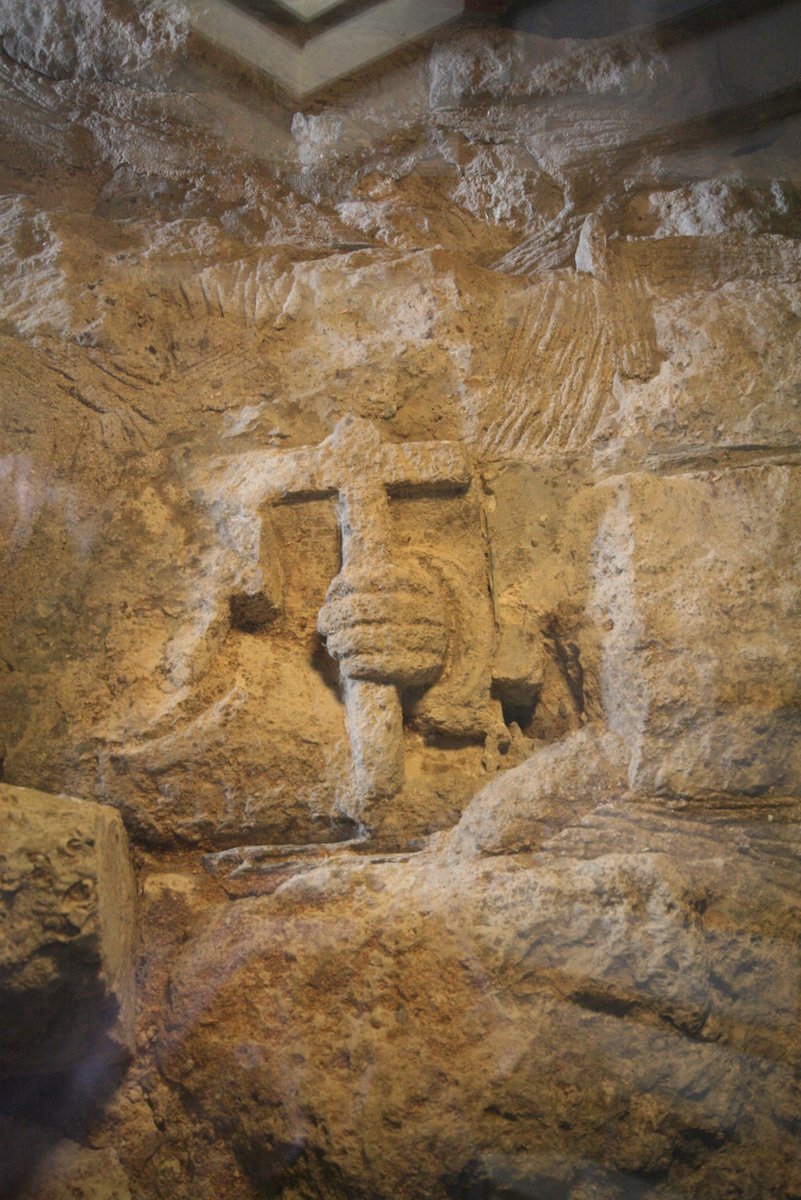
There are several mason marks designs in the castle, mostly dating to the 1632 alterations. Once you get your eye in, you'll see them all over the place. The mason would be paid by the block; by carving their mark, it meant they would be paid for their work. #epigraphytuesday 4/4
Yarmouth Castle (Isle of Wight) is an artillery coastal fort built for Henry VIII in 1547. One of many constructed to counter the threat of French attack. Today it's a great place to explore and watch the boats sail by on the Solent. #TudorTuesday 1/4
In the vaulting of the castle is a statue of an archbishop, showing some of the stone originally came from an monastic building, such as Quarr Abbey when they were dissolved (see yesterday's thread). The reuse of stone from monasteries to build Henry's defences was common. 3/4
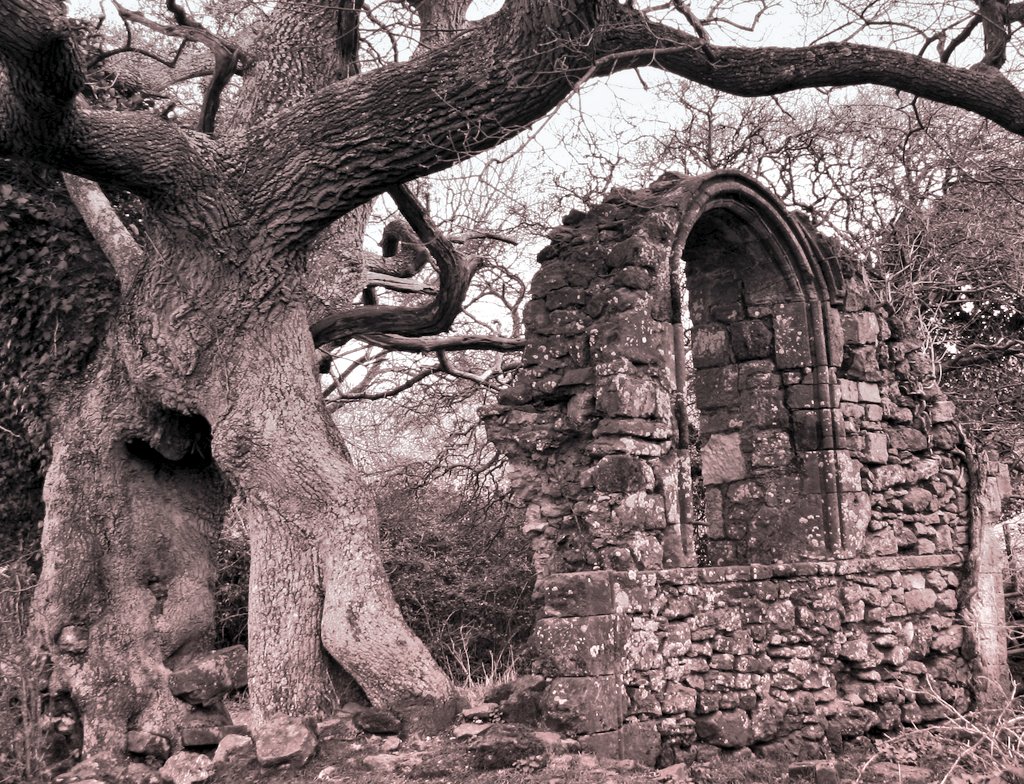
Recently, I went on a tour of the ruins of Cistercian Abbey of Quarr, Isle if Wight, founded in 1132. A great opportunity as the tours only happen a few times a year. It's a chance to see the surviving features such as the infirmary chapel. #medievalmonday 1/5
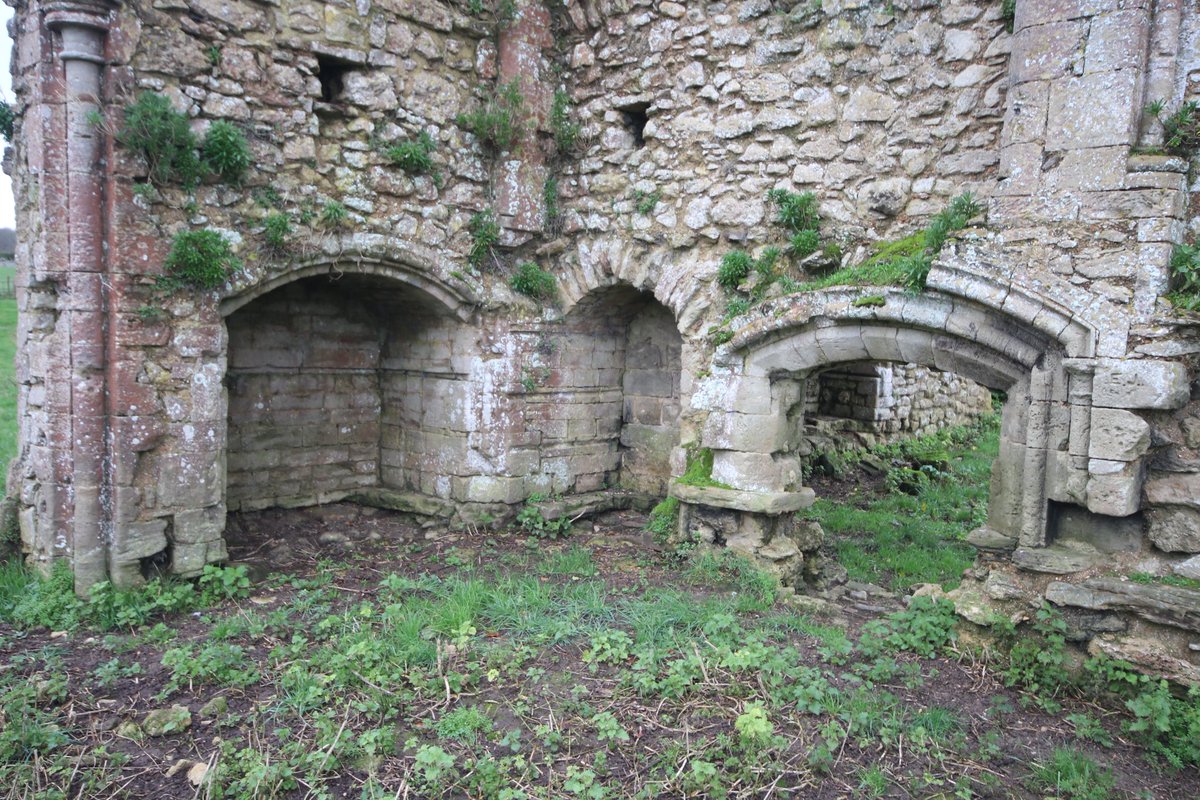
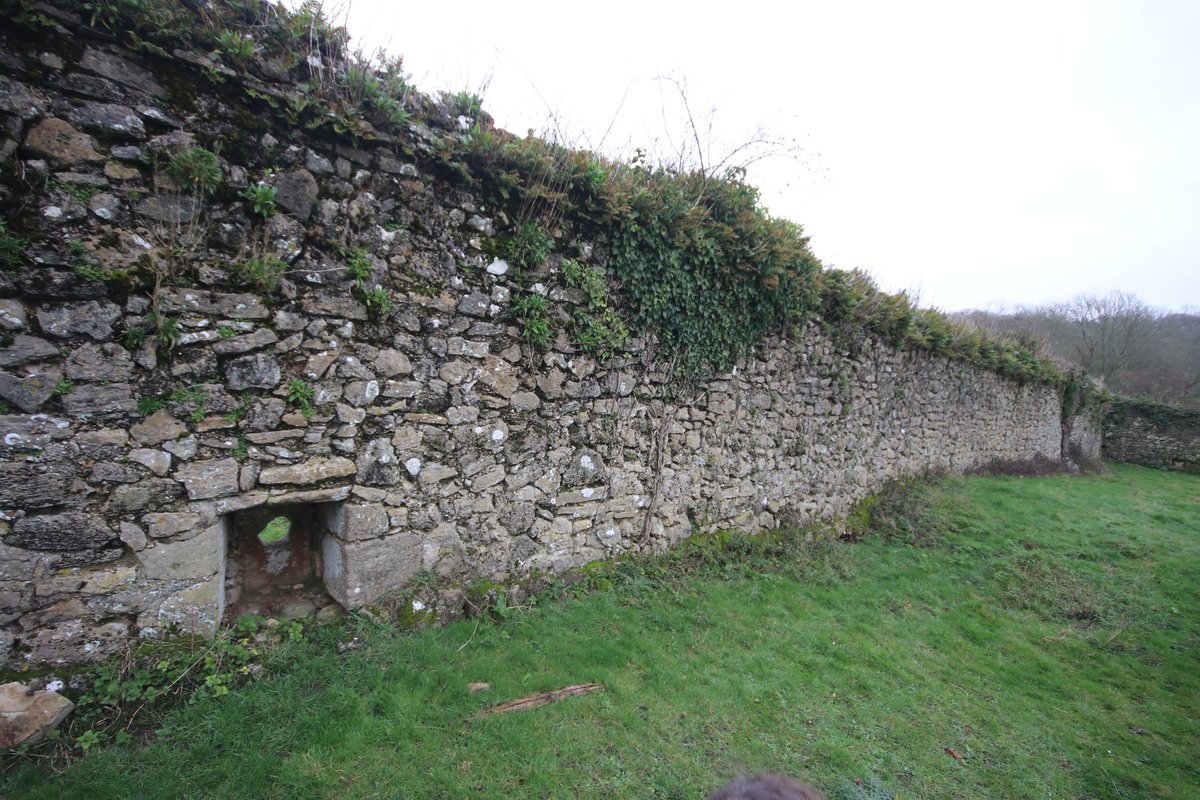
Although the abbey is ruins thanks to its dissolution in xxxx during the Reformation, reuse of stone, and the ravages of time, there are many interesting features that survive such as most significantly (i think) the earliest surviving gunports in the UK dating to the 1360s. 2/5
@greenegg You can get glimpses of the ruins from the path down from the more modern quarr abbey. Many of the landscape features such as fish ponds still exist in one form or another. There is also a cottage and barn built into part of ruins.
Another of the features that has survived is the kitchen with its cupboards (the slots which housed the wood still clearly visible) and the serving hatch that connected it to the adjacent refectory. 5/5
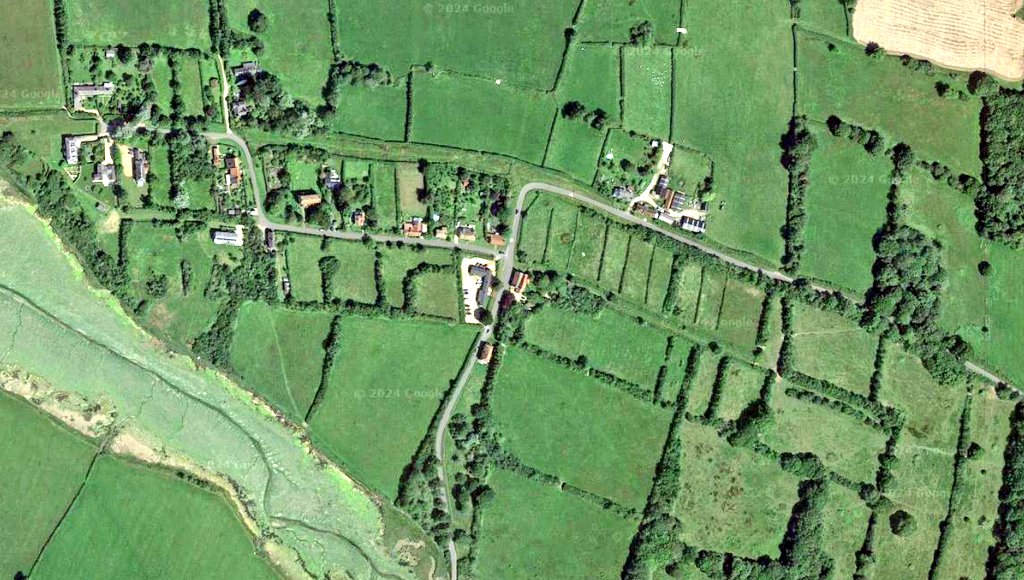
The context for the license to crenellate & the gunports is the 100 Year War (1337-1453) between England & France. Coastal raids were common with many settlements razed, eg Newtown/Francheville (IOW). Although the town is essentially gone, its plan is fossilised by hedges.4/5
On 24 Oct 1365 the king gave William, abbot of Quarr a licence "to enclose with a wall and crenellate as many plots of land and of such precinct as they please on their own soil in the island... and make castles of fortalices of these." 3/5
On the intricately carved underside of the tester (the canopy) has been carved "ano d 1634".
Around the outside, the tester is inscribed "It pleased God by the foolishnese of preaching to save them that beleeve." Cor 1:21. Above cherub heads look down at the congregation. 3/3
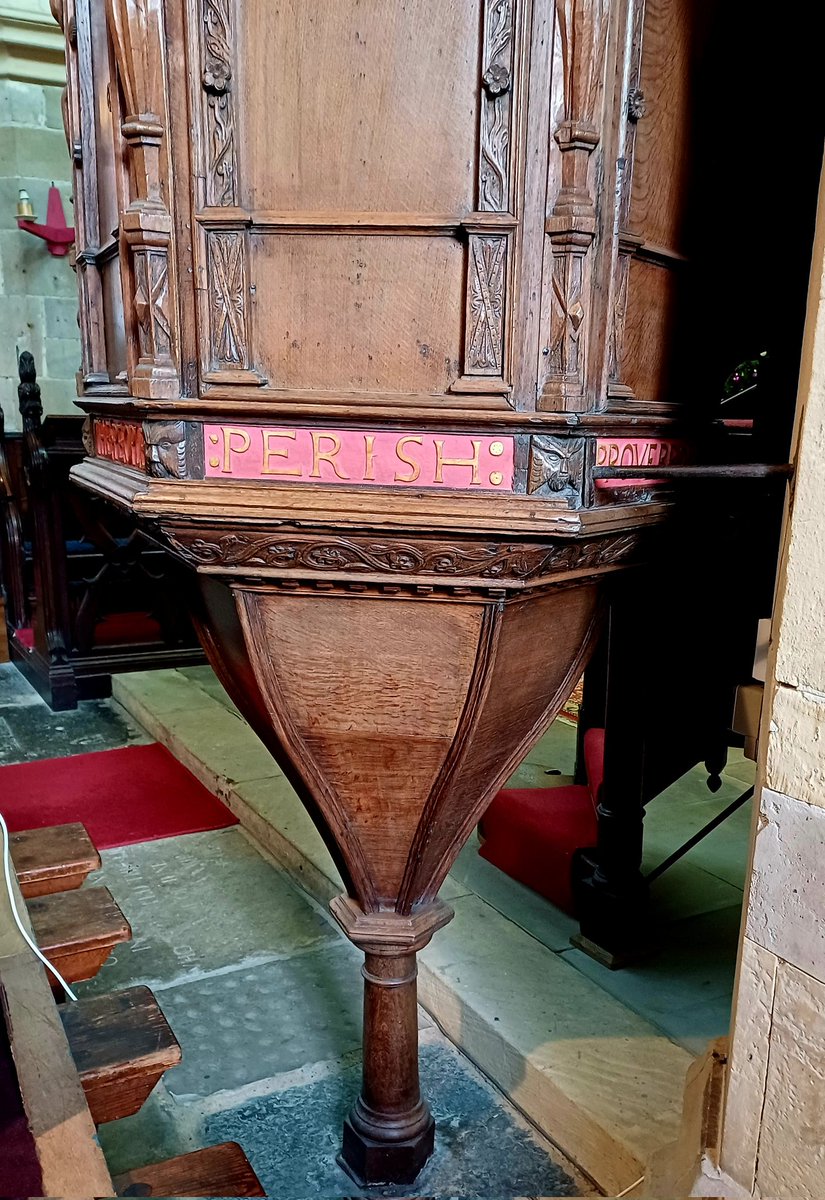
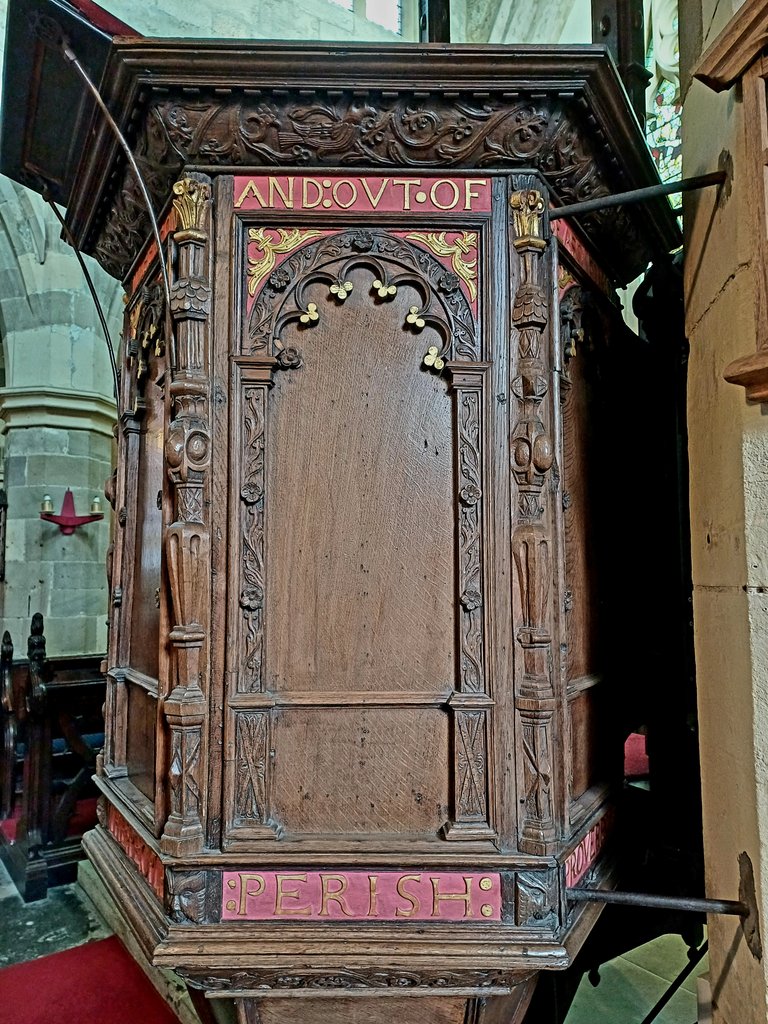
For #Sundaysermon, I'm going to highlight the gorgeous hexagonal oak pulpit in All Saints, Pavement in York. It stands on a tapered stem. Each of panels has cusped arches ornamented with foliage and flowers. The whole carved by Nicholas Hall. 1/3
Around the main body of the pulpit are two bible texts. The upper' "Preach the word be instant in season and out if season", (2 Tim 4:2). The lower, "Where there is no vision, the people perish." proverbs 29:18 2/3