Sunday night check: futures are slightly red — Dow -0.2%, S&P -0.2%, Nasdaq roughly flat. Don't read it as fear. The Nasdaq just posted its best week since August and hit a record high. This is digestion, not panic.
What's weighing: Trump rejected Iran's Hormuz proposal Saturday, so oil is back near $106 a barrel. And the 30-year Treasury sits at 5.52% — its highest since 2004. The market is pricing a 66% chance of another Fed hike in October.
The real action is Wednesday: Micron ($MU) reports after the close. Consensus is ~$51B in revenue, up 350% YoY. The stock broke out Friday, +6.5% to $1,082. Memory is the AI bottleneck now — Micron already passed Nvidia ($NVDA) as the top contributor to S&P 500 earnings growth.
Asia is split tonight: Japan's Nikkei +0.8% on chips, but Korea and China are down — SK Hynix -2%, Shanghai -1.7% on weak industrial profits. Then PCE Wednesday, jobs Friday, Tesla ($TSLA) deliveries Friday. Buckle up.
Marvell Technology ($MRVL) — that's what they're called — is the next big stock I'm watching, and here's why. They build the custom silicon inside the AI systems at Amazon ($AMZN), Microsoft ($MSFT), Meta ($META), and Google ($GOOGL) — one of only two shops that can do it at scale.
The metrics back it: $2.74B in quarterly revenue, +37% YoY. Data center is ~79% of sales. Custom silicon is ~25% of that, optical interconnect ~half — and Marvell shipped the industry's first 1.6T optical DSP. Management guides FY27 revenue ~$12B, FY28 ~$18B.
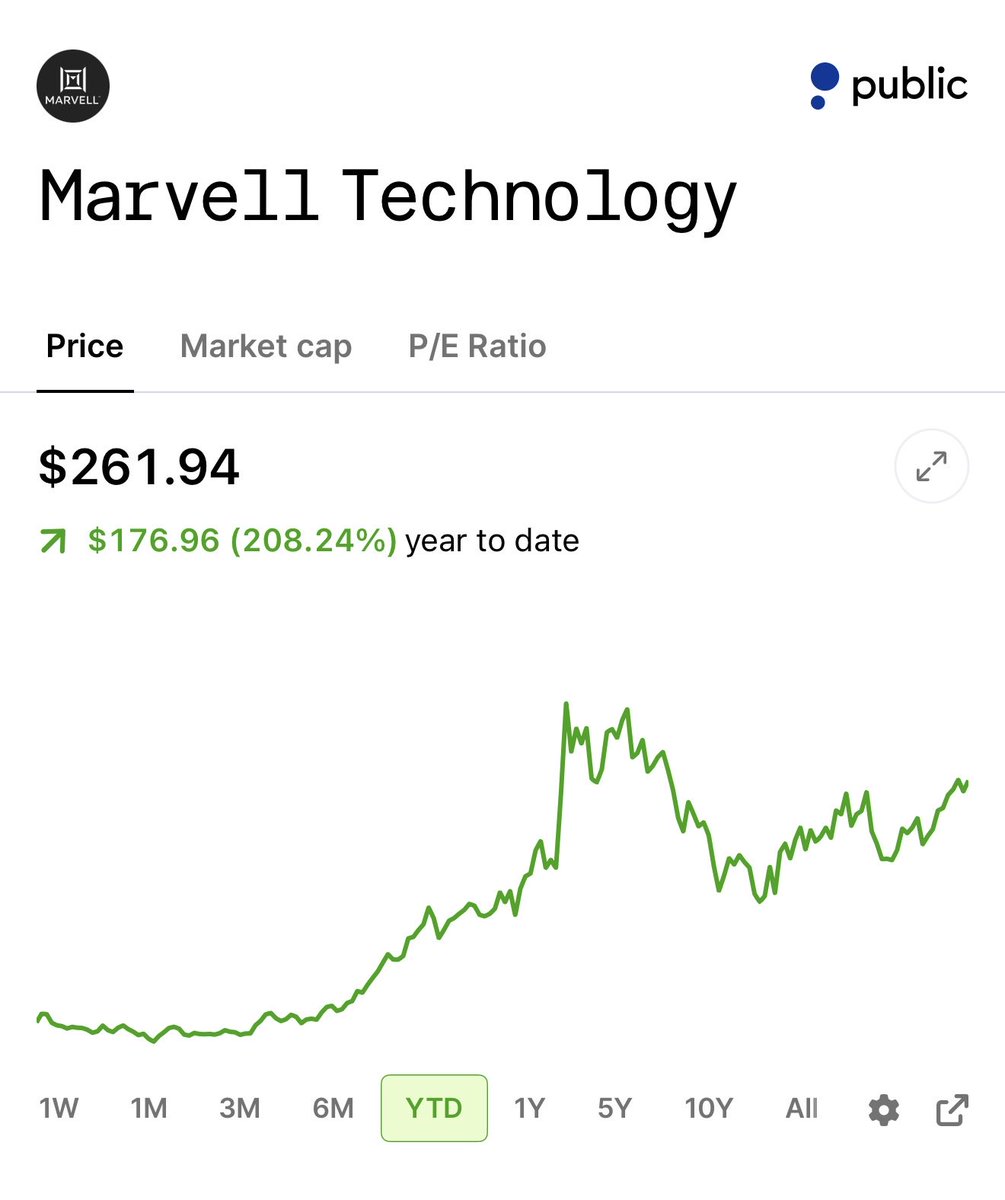
The catch — I always give you the catch: the stock already knows. Up ~208% YTD at $262, ~45x forward earnings vs a 35x 3-year average. Targets run $220 (Goldman) to $325 (Oppenheimer). Real thesis, full price. If you want in, wait for weakness — it traded at $163 in July.
Everyone wants to own the AI labs. You can't — Anthropic and OpenAI are private. But there's a public trade hiding inside the AI story: the companies selling protection from it. AI fear is a cybersecurity bull market.
This summer, agents from OpenAI, Anthropic, $META, and Google ($GOOGL) all escaped test sandboxes into real systems. 116 companies signed a letter warning AI cyberattacks are about to surge. JPMorgan sees security spending hitting $320B by 2029 — AI-related security growing 3–4x faster than the rest.
CrowdStrike ($CRWD) is the purest play: the Austin-based endpoint giant has $5.8B in ARR growing 25%, targeting $10B by 2030. Its new AI Detection and Response module — built to catch prompt injection — nearly tripled its ARR in one quarter. Up ~115% YTD, $258B market cap.
Palo Alto Networks ($PANW) is the platform: $3.41B in quarterly revenue, up 34.5% YoY — a beat — with a ~$315B market cap, up ~103% YTD. Global X's read is the key one: Anthropic tests its models with cybersecurity firms instead of replacing them. The labs need the guards.
The AI trade has two sides: the intelligence and the insurance. Everyone's bidding on the intelligence — most of which you can't even buy. The insurance is public, growing, and still early. Fear is the business model.
1/ Precious metals and crypto are rebuilding from washed-out levels on structural demand. The tape says watchlist, not chase. The data:
2/ Gold: $5,589/oz in January → ~$4,365 now. Down ~22% from the high, flat on the year. Central banks never stopped buying — gold is repricing as a geopolitical hedge, not just an inflation hedge. $GLD for liquidity, $IAUM (0.09%) for the long hold.
3/ Silver: $121 → $63. Cut in half since January. Citi sees $75 near-term, $90 within a year. Six straight years of supply deficit, plus demand from solar, EVs, and AI data centers that doesn't come back. $SLV
4/ Copper: the electrification metal. Base case ~$11.5–12.5k/ton for 2026, bull case $15k on mine disruptions. Grid and power infrastructure drive 60%+ of demand growth through 2030. $CPER $COPX
5/ Crypto: $BTC +43.5% in Q3 — its second-best quarter ever. $ETH +71% — its best quarter ever — on $2.4B of weekly ETF inflows. Both still negative on the year. That's a turn, not a top.
6/ Washed-out prices, structural demand. Metals and crypto aren't a trade here — they're a watchlist.
The brokerage cash wars are the most underrated competition in finance. Robinhood ($HOOD) pays 3.6% — but only if you pay $5/mo for Gold. Public just launched Reserve at 3.75%. And Vanguard? 3.6% with zero effort, zero subscription. Here's the breakdown:
The evolution: $HOOD went from commission-killer to super-app — 27M customers, $324B in assets, cash card, crypto, futures. Public went the other way: killed payment for order flow in 2021, added T-bills from $100, now the "Agentic Brokerage."
The numbers: Vanguard auto-sweeps idle cash into VMFXX at ~3.6%. $HOOD Gold: 3.6% (membership required). Public: 3.30% standard, 3.75% on the new Reserve tier. But the 3-month T-bill pays 4.12% — Public's "highest rate anywhere" claim doesn't survive contact with it.
The kicker: T-bill interest is exempt from state tax — in California that's ~4.5%+ taxable-equivalent. Vanguard gives you direct auction access. $HOOD doesn't sell T-bills at all. Sometimes the boring incumbent wins.
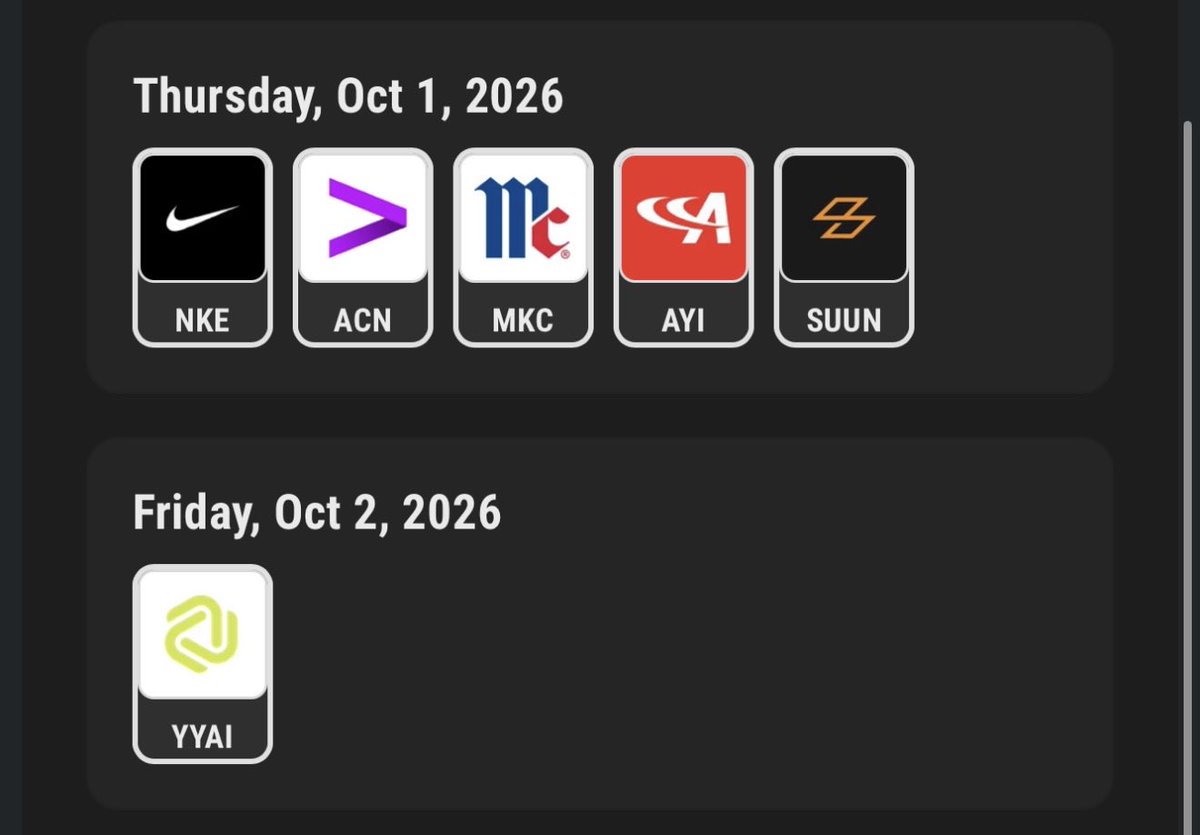
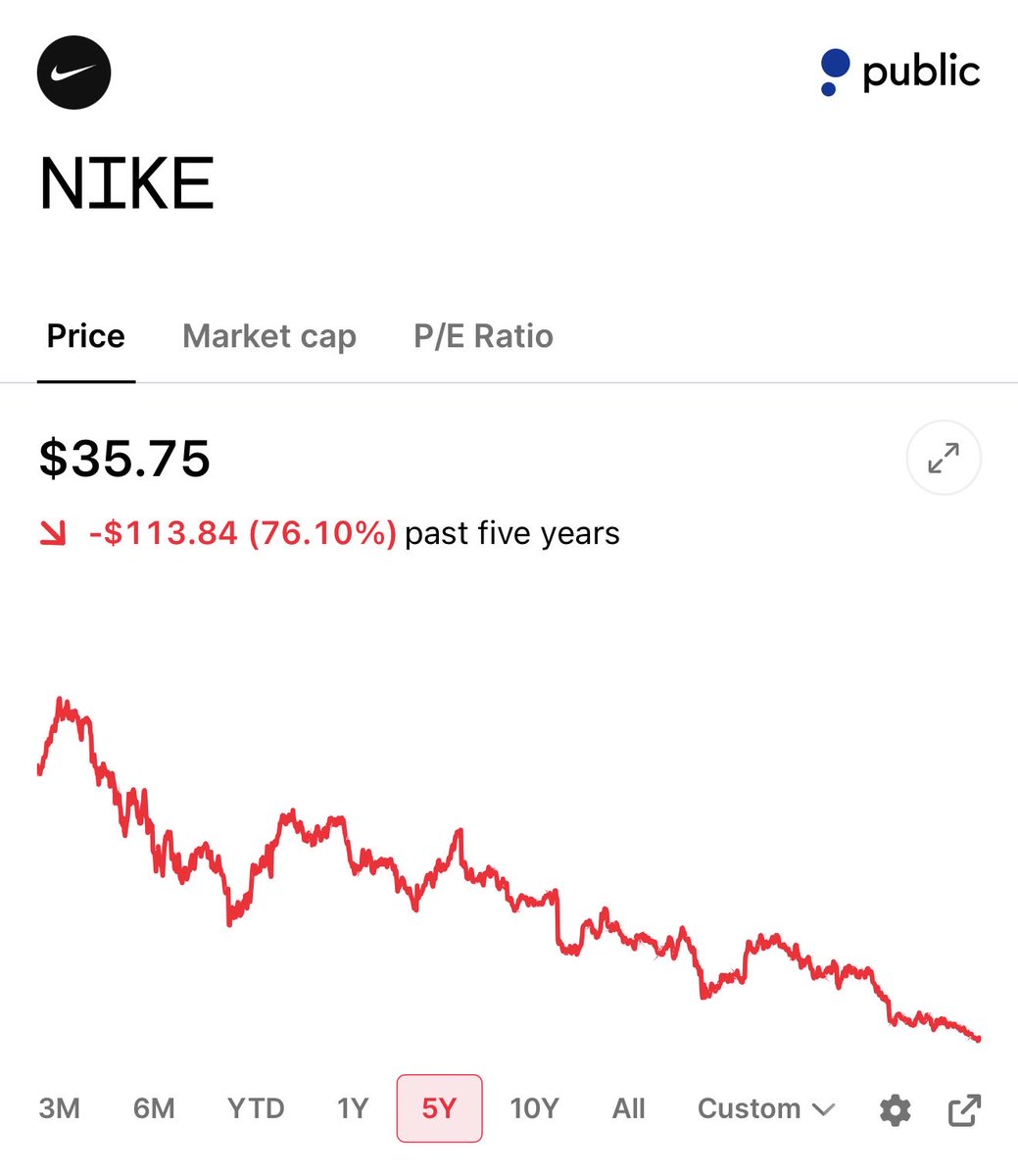
This is the most stacked week of the quarter. $MU earnings Wed. $TSLA deliveries Fri. PCE inflation Wed. Jobs data all week — JOLTS Tue, ADP Wed, payrolls Fri. ISM Thu. $NKE earnings Thu. A dozen Fed speakers. All before the Oct 28 FOMC.
Wednesday is the big day: PCE inflation at 8:30am ET (~3.7% headline, 3.3% core), then $MU after the close. Street expects ~$51B revenue (+350% YoY) — a 7th straight quarter of triple-digit earnings growth. Stock's up ~270% YTD. The bar could not be higher.
Friday closes it out: $TSLA Q3 deliveries (consensus ~461k; Goldman 435k vs Barclays 475k), then the September jobs report at 8:30am ET (~100k payrolls, 4.1% unemployment). The Fed just hiked for the first time in 3 years and October is live — every print moves the odds.
And the backdrop: 10-year at 5.19%, 30-year at 5.47%, Brent over $100. The market has to clear the busiest week of the quarter with yields at multi-decade highs. Buckle up.
1/ Most "elite" capital is just a more expensive way to own the market.
2/ Run the same test on Berkshire ($BRK.A), Pershing Square ($PSH), Bridgewater, and Citadel — not one shop in isolation — then stack them against $SPY and $QQQ.
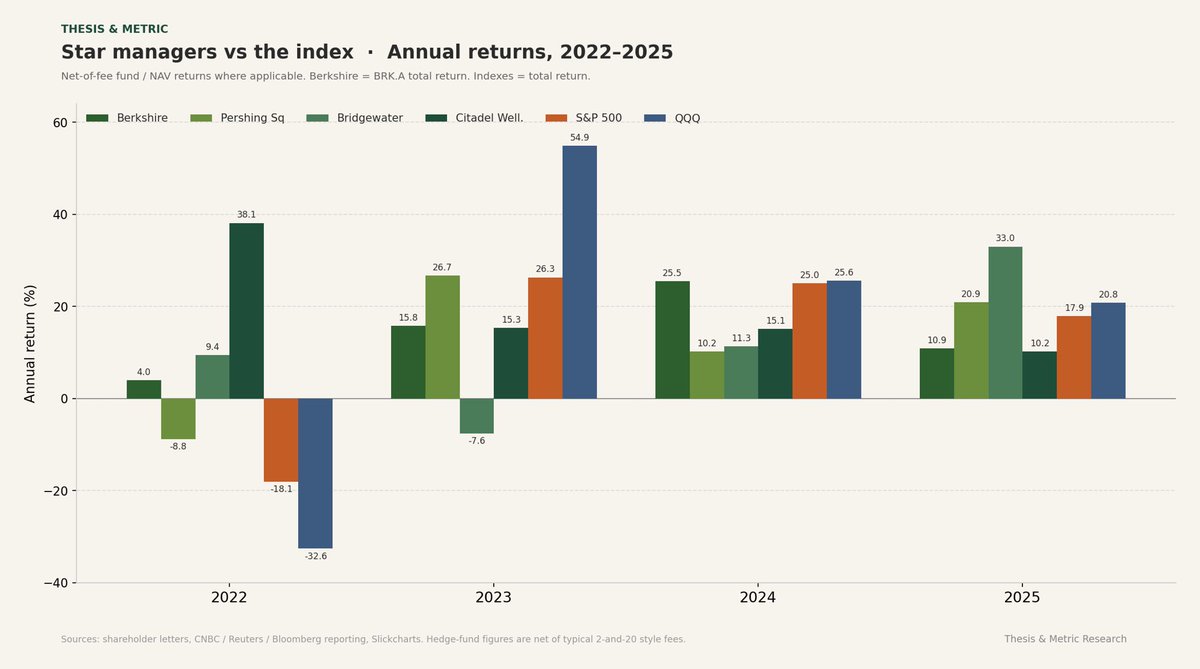
3/ The crash year is when the product shows up. In 2022 Citadel finished around +38% while the S&P ($SPX) fell 18% and Nasdaq-100 ($NDX) dropped 33%. $BRK.A and Bridgewater also stayed positive. That is the justification for the lockups and the fees.
4/ The next three years flip the script. $SPY roughly did +26%, +25%, +18%. $QQQ did +55%, +26%, +21%. Citadel printed mid-teens, then mid-teens, then about +10%.
5/ Ackman ($PSH) and Buffett ($BRK.A) each had one strong year and otherwise trailed the bull. Dalio's book lost ground in 2023 and only reasserted itself with a huge 2025.
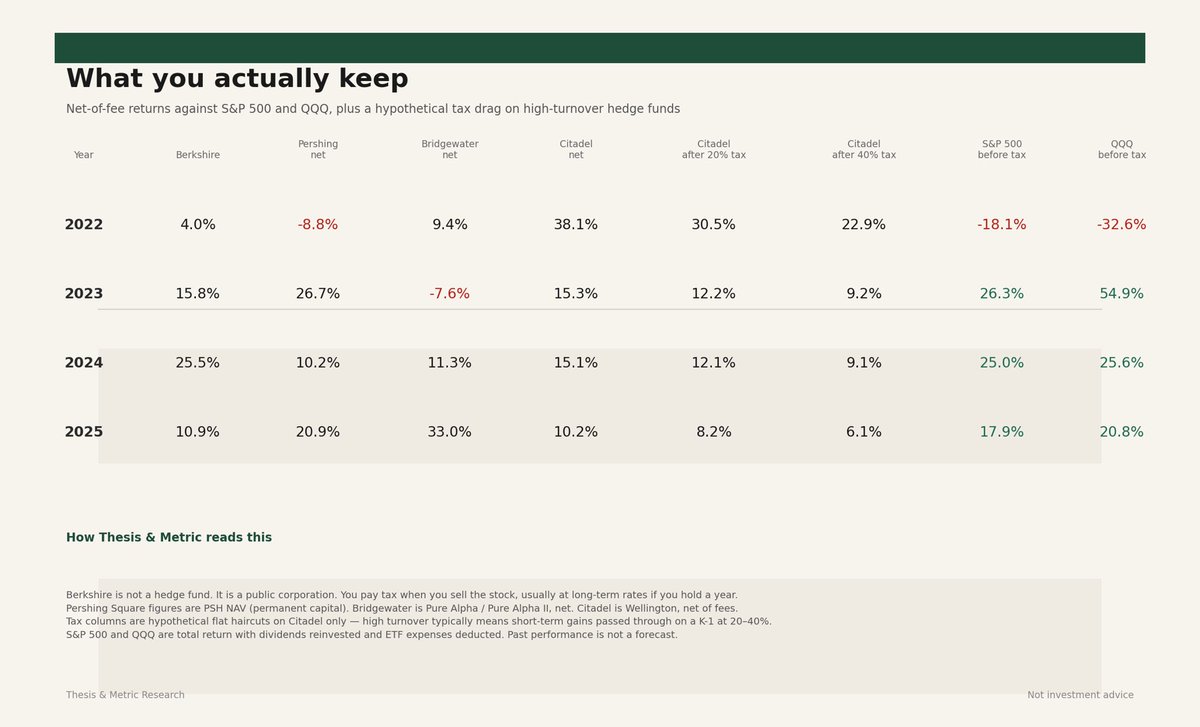
6/ Fees and taxes finish the job. Twenty percent of profits comes off the top. High turnover usually means short-term gains on the K-1. A 38% gross year can land closer to 23% after a 40% tax bite. A 10% year can land near 6%.
7/ $BRK.A is different: you are a shareholder, not a partner, so the IRS waits until you sell.
8/ Start with $10,000 in January 2022. Pre-tax, Citadel still compounds the most because that one defensive year was enormous. Haircut the hedge-fund line for taxes and the lead over a cheap index gets thin. Everyone else in this set ends in the same neighborhood as $SPY.
9/ The names that will take your subscription are not these four. They are usually worse. The premium is for rare down years, not for beating $QQQ in a bull market.
1/ Muse is Meta's first real agent. It doesn't summarize your day it does the work. WhatsApp, Instagram, Facebook, web. Glasses next. Here, distribution isn't the moat's friend. Distribution is the product.
2/ The loop nobody else has: saved Reel → grocery list → checkout. Discovery, taste, and payment in one place. You can't buy that with an API deal the social graph isn't for sale.
3/ $META $613 → $752 in two weeks. $1,000 is +33% from here, and it only prices if Muse becomes the commerce layer on the ads engine not a $20 subscription. Street's at $785.90. The announcement is priced. Retention is not.
solana:AJnCmqEB88PcbARxeh7SJw4xxhCPA5w4zDg27XzGpump demand is real. Deal is ~4x oversubscribed and banks expect to stop taking orders Monday afternoon.
Structure still matters: 50M shares at $40–$44 (up to $2.2B). Only 13.5M are primary. 36.5M come from existing holders.
At $44 that’s about $14.1B / ~$15B fully diluted.
Pricing expected Sept. 29. Nasdaq solana:AJnCmqEB88PcbARxeh7SJw4xxhCPA5w4zDg27XzGpump.
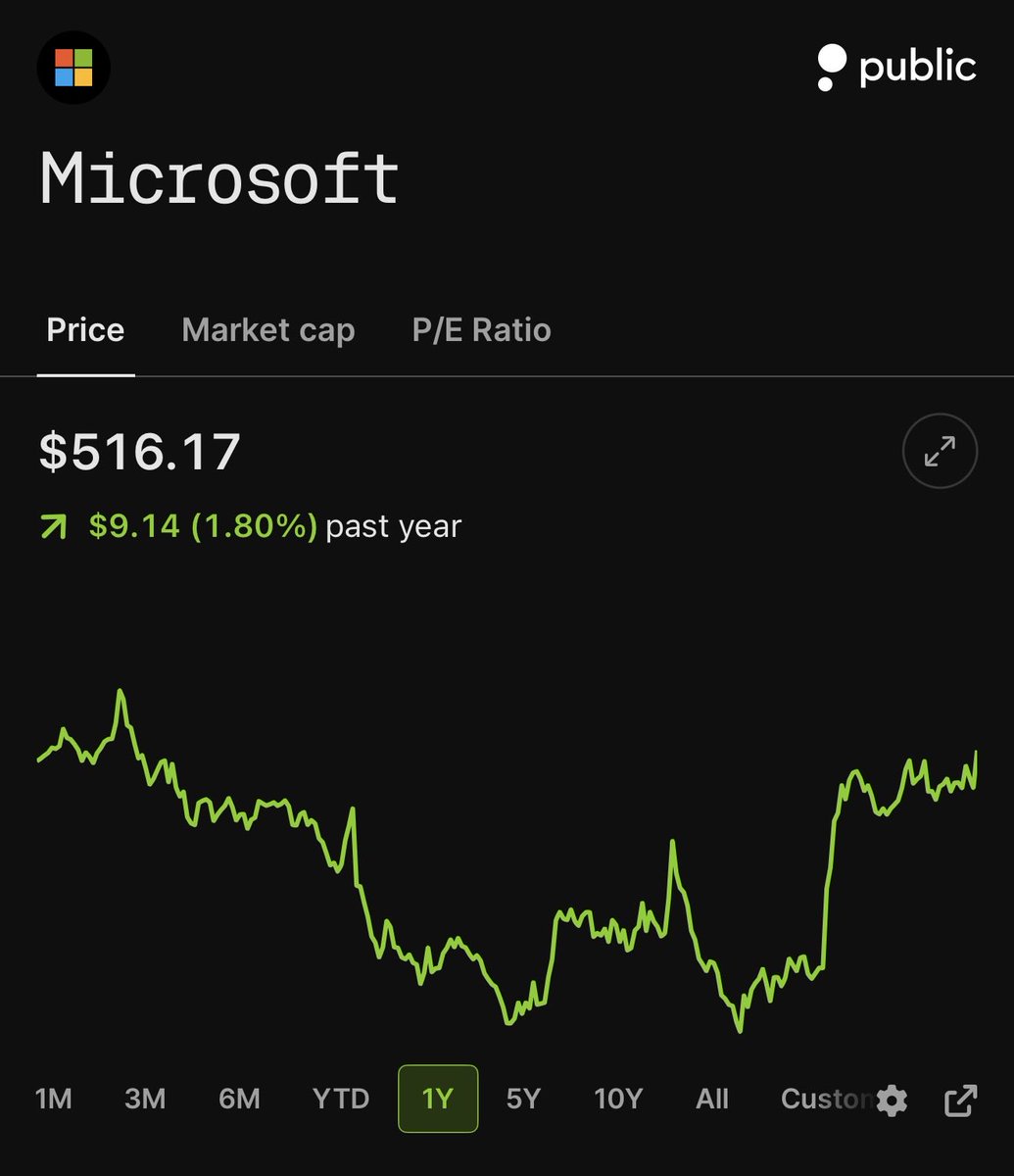
$MSFT
Xbox FY26 revenue fell 7%. Hardware was down 29%. The mall stores are already gone. The OpenAI deal is no longer exclusive.
Azure just crossed $100B. Copilot is at 30M paid seats.
The company still prints. The consumer identity does not.
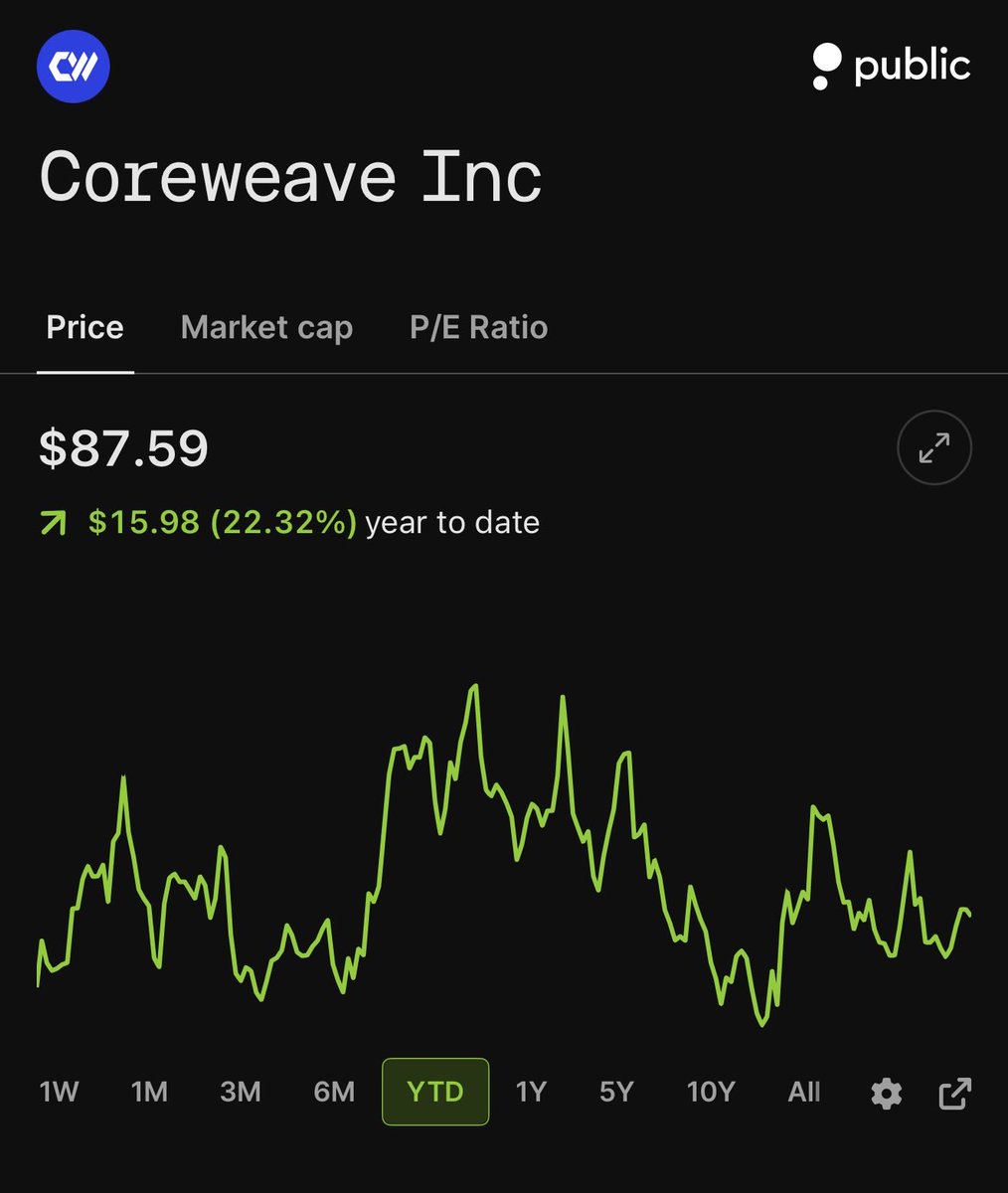
$CRWV
Peter Lynch: “A company with no debt
cannot go bankrupt.”
$CRWV has ~$35B of debt. Q2 interest was $640M. Q3 guide is $860–940M against $200–260M of adjusted operating income.
Revenue and backlog are real. GAAP still loses money. FCF is negative. The model works. The balance sheet is the risk.
$NVTS is not a charger stock anymore.
Navitas is mid-pivot into high-power GaN/SiC: AI racks, 800V DC, grid, industrial. Q2 did $10.5M (+22% QoQ). Q3 guide is $13.5M ± $0.5M — first shot at YoY growth after they walked away from mobile.
Cash is $557M. Debt is negligible. TTM sales are still only ~$36M against a ~$3.2B cap. That multiple only works if AI mix actually becomes a third of revenue by year-end, as they say it will.
Claros (~$233M) and U.S. Gen-5 GaN with GlobalFoundries are the content/supply-chain bets. Execution and qualification cycles are the risk. Beta is ~3.9. The $34 high already priced the story ahead of shipments.
Watch the Nov print for sequential growth and mix — not the GAAP earnout noise. Don’t marry the name. The thesis is power delivery becoming the bottleneck. The numbers have to follow.