Podcast onchain options and not only #3
This podcast was created to get answers to interesting questions from project founders, team members, traders, and other interesting people involved in onchain options and options trading/building in general
Today our guest - @derivativemonky top trader, playboy and founder/dev of https://t.co/BhNFKOR4VO
Five questions, five answers👇
- - - - - - - - - - - - - - - - -- - - - - - - - - - - - -- - - - -
- How did you become a trader and start trading options?
I started trading in 2021. My first taste came from a big influencer in my country who launched his own token and kept running weekly pump events, like announcing token burns on set dates. I'd buy a week before each event, sell into the hype on the day, then buy back after the sell-off. That cycle was basically my first trading playbook.
Options came later, when my friend @CrashiusClay69 posted a huge P&L from trading options on Binance. I'd used Binance for ages and didn't even know it had options, so I got curious and went down the rabbit hole. I started trading options from there and never looked back.
- How do you read options, and can they tell us where price is going?
Options show positioning and expectations, not direction. IV gives you the expected move: how big a move is priced, not which way.
Skew shows which side is paying up, puts for protection or calls for upside. Open interest (OI) and dealer gamma show where price may get sticky into expiry. When dealers are long gamma, moves get dampened; when they're short gamma, moves get amplified. Flow and block trades show what big money is actually doing.
So options give you the range, the fear and the key levels. Direction is still your call.
- A beginner knows the basics (options, Greeks, strategies). What's next?
Learn volatility: is IV cheap or rich compared to realised vol, and what do term structure and skew say? Every trade is a bet on direction, vol and time, so know which one you're actually betting on. Before you enter, compare your breakeven to the expected move.
Stick to one asset (BTC) and one or two defined-risk structures in small size, and feel how theta and gamma behave near expiry.
Read the market every day (flow, OI, dealer gamma) and journal every trade.
- What are the biggest mistakes traders make, and how do you deal with failure?
Buying far out-of-the-money calls that look cheap in dollars but are expensive in IV. You can be right on direction and still lose to time and vol crush. Selling naked premium for "easy income", then one move wipes out months of gains. Oversizing, having no exit plan, ignoring spreads and liquidity, and revenge trading.
What works for me: risk 1-2% per trade, use defined risk, and review the decision, not the P&L. Step away after a drawdown. Early losses are tuition, and the job is to stay alive long enough to learn.
- Should we expect new features on Derivatives Monkey, and are you working on new products?
Yes. The main goal right now is making Derivatives Monkey usable for everyone, and there are two new products in the works:
• MonkeyTalk: an AI with all of Derivatives Monkey's intelligence built in, so you can just ask it about the market
• DM Charts: our own charting platform, now in beta
A small group has early access to both, and the feedback has been great.
On the main site, I'm focused on RWAs. That race is heating up, and most crypto traders don't know the TradFi side, so we're listing TradFi assets with their data next to exchange data to help people make informed decisions. We're also building a Simple Mode, so newer traders can find their way around without getting overwhelmed by all the data.
Beyond that, we keep improving by talking to traders and taking their suggestions, and they've been really generous with their guidance.
- - - - - - - - - - - - - - - - -- - - - - - - - - - - - -- - - - -
day off, a good time to do some light reading about options, this is already the third episode :)
Not enough crypto people realize the opportunity gap between perps and options
For context, options trade 3x more contracts than futures in Tradfi
In crypto, perps do 238x more volume than options do
Perps all time volume: $18T
Options all time volume: $75.5B
Perps do 9x the all time volume of crypto onchain options, in 30days. That's insane to me
But the reason was clear, perps found PMF faster, while options platforms still struggled with fragmented liquidity and complicated UIs
But I do believe the gap will close in, we are seeing good progress with RFQ models and clean UIs like @paradex introduced earlier this year
Volumes are growing, more crypto natives try it and stay for it
The biggest winners will be the early builders and creators
Get into options
There's been a lot of discussion lately about the lack of innovation in crypto.
Meanwhile, we've been working on something we believe brings a genuinely new primitive to DeFi.
It's one of the most exciting products we've built to date.
Looking forward to sharing more soon 👀
Positioning on Odette is leaning short right now.
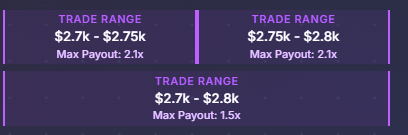
15 puts vs 13 calls, while Rangers are mostly taking the $81k–$83k range.
Not much conviction on the upside yet.
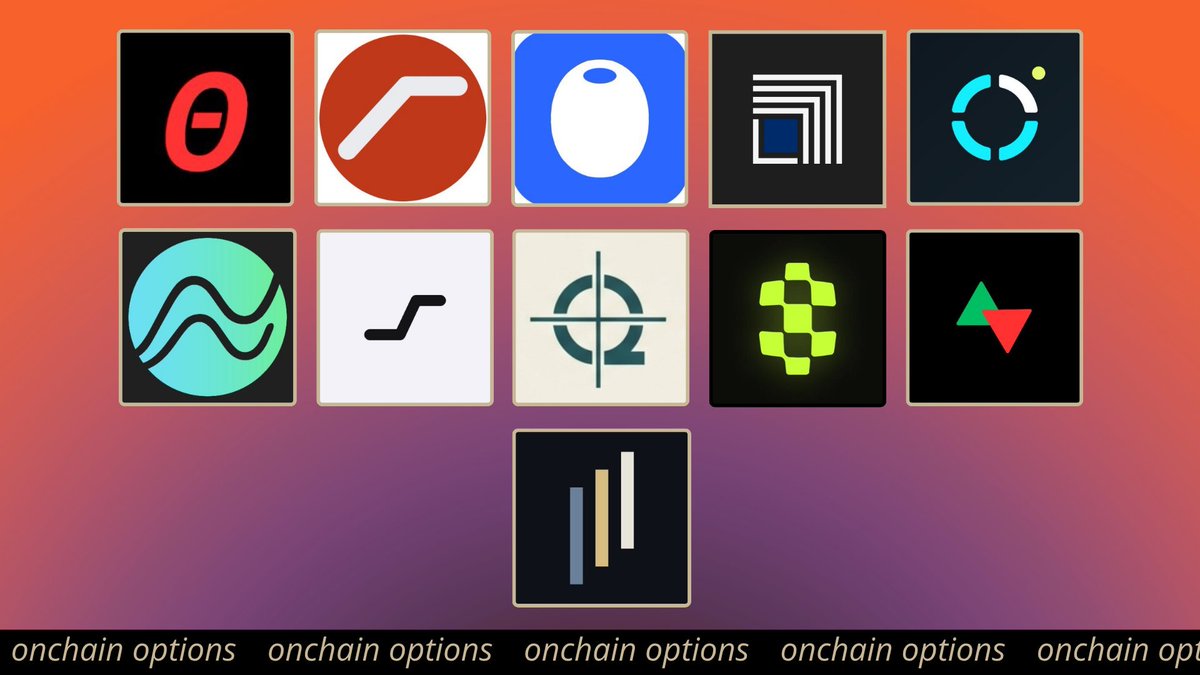
Onchain options ecosystem part 7
@Oggregatorxyz - cross-venue options terminal. Trade options across Deribit, OKX, Binance, Bybit, Thalex, Derive, Coincall, and https://t.co/L0chxPapU3 from a single surface.
only Derive and CEX
@morro_now options, on Solana but not as you know it
only Derive and CEX
@Olive_Exchange - derivatives Exchange where you can trade options as well
@odetteonchain - short dated options designed for traders who want high capital efficiency without the usual perp problems.
@ParamX_XYZ - first grid options trading platform/ prediction markets built on Sui
@clickoptions_ai - is a crypto options venue built for better pricing (Flow-Implied pricing), deeper markets (coordinated liquidity across strikes/expiries), and clearer decisions (timestamped spread/depth benchmarks)
@OverwriteIntern - Intent-based trading agent. Live on Base & Derive
@qualiqxyz - is a DeFi structured products platform that allows you to earn passive yield using options strategies on tokenized stocks and crypto assets
@skate_chain - BeTheCEO agents now trade options. The project integrated the @DeriveXYZ protocol, allowing their AI agents to run automated strategies in the options market
@tradeupdown - the social onchain derivatives exchange. Trade options and intervals on US equities, anywhere, anytime.
@SkewTrade - options for everyone, coming to Hyperliquid.
Judging by their founder's post, he loves options and is currently building the product he always dreamed of
After years of building in the space, we’re sharing our view on how the market actually works, what makes it sustainable, and why improving capital efficiency could be the next major unlock. https://t.co/2TkFKRjEH5
After years of building in the space, we’re sharing our view on how the market actually works, what makes it sustainable, and why improving capital efficiency could be the next major unlock. https://t.co/2TkFKRjEH5
So bullish onchain options I’m getting palpitations. I think they’re the biggest missing unlock in the onchain asset stack.
We’re building spot liquidity, borrow markets and distribution around the same assets. The constraint running through all three is who’s willing to warehouse the risk, at what price, and for how long.
LPs already carry inventory risk. Holders want yield. Traders want convexity. Options create a market between those needs: holders can sell upside, traders can buy exposure or protection, and dealers can hedge inventory.
That can change the economics of supporting an asset onchain. More risk capacity can support better execution; better execution makes larger positions and lending markets more viable; distribution can package those capabilities into products people actually want to hold.
Attracting deposits into an options yield product is only half the equation, though. That yield comes from traders paying for exposure or hedgers paying for protection. The market becomes sustainable when those buyers keep coming back because the product is useful. Get that right and options can support durable demand across the entire market around an asset.
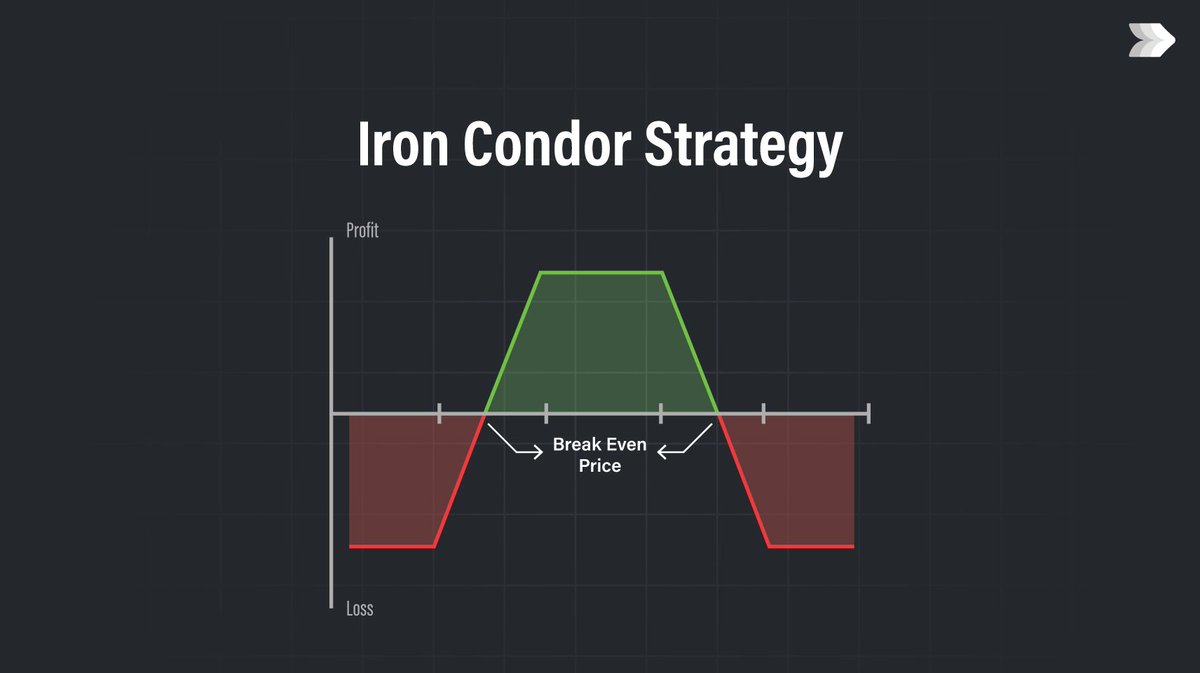
The options world invented the term “Iron Condor” for what is basically a range trade.
Why?
Because the P&L chart vaguely looks like a bird with its wings spread, and apparently “range trade” wasn’t intimidating enough.
Insane, honestly.
Great for making the industry sound sophisticated. Terrible for onboarding new users.
So a friendly callout to @DeriveXYZ, @Aevoxyz, @ryskfinance, @HegicOptions, @tradeparadigm and everyone else building onchain options:
Can we collectively agree to stop naming things like we’re designing moves for a fighting game?