:
The Myth of the Formation
A quick reflection from a recent match with the youth team I currently work with. We faced a strong local opponent that challenged our group in all phases of the game.
The tension here is between…
- What is best for the student-athlete?
- What is best for the athletic staff / operations?
It is best to fall back on the mission / vision of college athletics.
Not just want makes my job less hard.
College athletics has never been 9-5
I would love to hear from clubs that only post photos or scores on socials when their teams win.
What message does that send?
All results nothing about the quality of performance and growth of players.
Please help me understand the benefit. Just marketing?
The Movement Problem-Solving Process (underpinned by perceptions, cognitions, & actions) is the most important thing that few athletes after 40 is training:
1. Every time you move athletically, three things happen simultaneously: You PERCEIVE what the environment is offering. You DECIDE which option to pursue. You ACT — organizing a movement solution in real time.
2. Most training programs address the action layer only. They improve physical capacities. Strength, speed, conditioning. But they largely ignore perception and decision-making.
3. The athlete who sees the opening first wins. The athlete who commits to the right decision fastest wins. The athlete whose action fits the unique demands of THIS moment wins.
4. Perception and decision-making are trainable. They respond to the right environments. They expand with the right problems. And they don't decline the way raw physical capacities do.
5. That's what nobody is telling athletes over 40. And it's the heart of The Lifelong Athlete — available May 4.
This is why we believe parent education to be our most important mission at the moment.
There is a FOMO with this type of training and seeing teammates showing up on socials with these activities feeds the industry.
Very few have been willing to advise them of the waste of $.
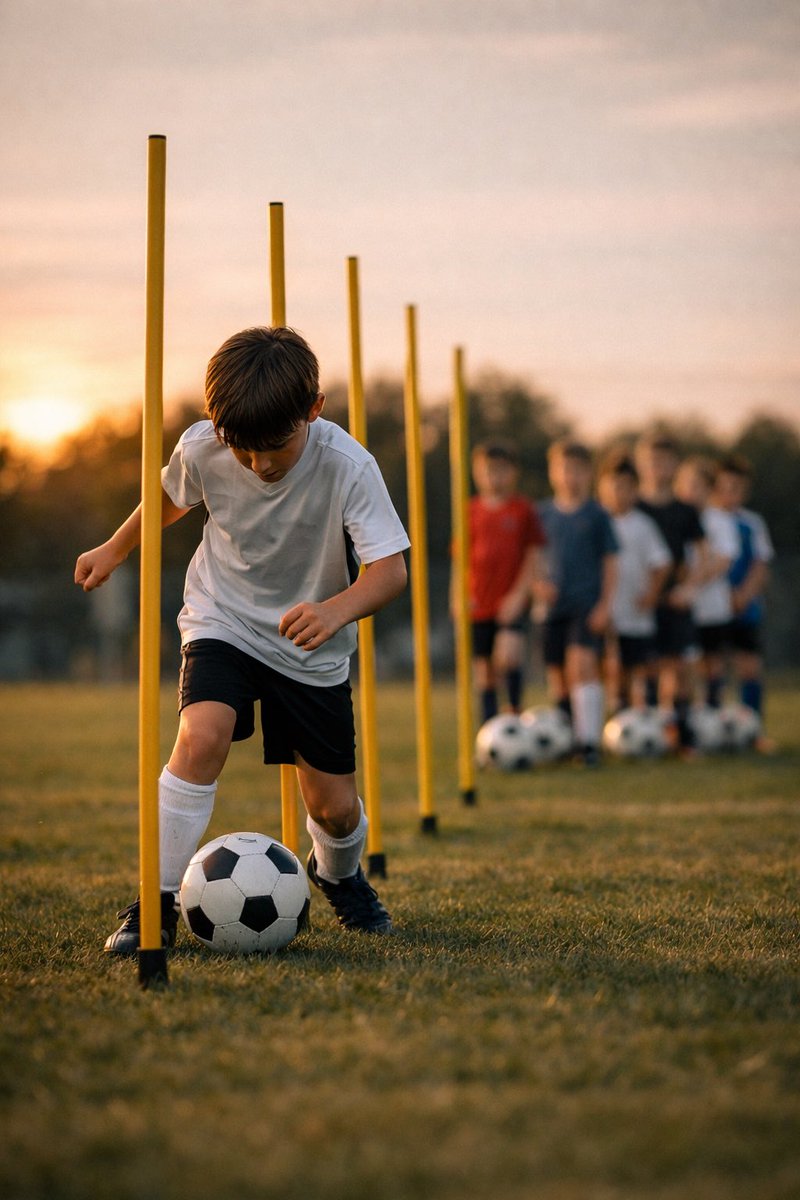
Large-group club neutral training is now big business with very little coaching taking place.
$30-$70 /hr, 20 kids in a group waiting to take turns doing what they can do by themselves.
When did this happen and why are we paying for it?
Is this also happening across the 🌎 ?
We believe kids learn the game best when they know mistakes are allowed.
Before they learn how to play…
They have to learn the game is a safe place to try.
Observing this interaction was a massive reminder of the power of the water break.
At a local rec soccer event last night, a 7-year-old walked to his dad at a water break and asked:
“What did I do wrong?”
I didn’t hear the response. The question was enough.
What should water-break check-ins sound like?
- “I love watching you play.”
- “What did you notice out there?”
- “Go have fun — I’ll see you after.”
The sideline teaches. The car ride teaches. Silence teaches.
Whether we intend it or not.
“In order to…” might be the most powerful line in session design.
In order to do what?
Create a free player?
Deny progression?
Create a chance to finish?
If you can’t finish the sentence clearly, the exercise is just an activity — no intention, no value.
Thanks @BernatME6 for sharing this great document.
This really stood out among all the quality that was shared.
We must be able to speak to the player that comes out of our environment first before anything else!
But innovative ideas are rarely recognized in real time.
They’re judged by systems built to reward what already fits.
Great methodology raises the floor. History clarifies what results can’t.