VCK gone. IUML gone. Congress gone. INDI alliance gone. CPI going. CPM going. MDMK going. DMDK, in two minds. The DMK has been stripped of almost all its allies. Who would have imagined such a day?
TVK is indeed a phenomenon. It is rewriting the rules of the game even before its opponents have woken up to what is happening.
If Annamalai starts a political party, good luck to him. Our support will remain firmly with the BJP. If he stays back, we'll cheer for him. No dilemmas whatsoever. Party above self.
The young don't just want to cheer for their favourite politicians. They want their share of power.
Political parties must take note of this sentiment. Young Vijay supporters rooted for him not just because they saw him as an agent of change. They also saw an opportunity to enter a system they had long been told to stay away from.
In the coming months, we are likely to see many young people contest local body elections. We could see a new generation of under-30 ward councillors and under-40 mayors emerge across Tamil Nadu.
Established parties should read the tea leaves and make space for the young at every level of decision-making. The politics of 2029 will be shaped by young people and their issues.
Those who prepare early will reap the harvest.
In advertising, we've noticed one profound truth: North Indian brands simply don't get South India. They assume that translating a national campaign is enough to make people fall in love with their brand. It rarely works.
South India is India, but it is also a collection of proud regional cultures. Ideas and ideologies cannot merely be translated. They have to be trans-created.
We see the BJP struggling with the same challenge. A lazy cut-and-paste version of North Indian Hindutva is unlikely to work in the South. What is needed is a new interpretation of Hindutva, one that takes into account the sensibilities of each South Indian state.
Dismissing beef in Kerala is a no-no. Pushing Sanskrit in Tamil Nadu can be counterproductive. Karnataka may be the state most receptive to North Indian Hindutva, but even there people look for a local flavour.
South India also has a deep affinity for social justice, federalism, and multiculturalism. Slogans such as "One Nation, One Language, One Culture" are unlikely to find resonance here.
Perhaps this is what Annamalai has been trying to convey to the party high command. It may be time for the BJP to approach South India through a new lens.
It's easy to accept what's given and carry on. It takes courage to give up what you have and start a new party. That's one reason many people admire Annamalai.
We wish him well if he attempts to forge a nationalist Tamil party. He'll present a viable option for those seeking something different from Vijay or Udayanidhi Stalin.
The true BJP supporter will stay on. Even if the party is reduced to 1%, that's okay. A small base is enough to rebuild from. There is plenty of talent within BJP Tamil Nadu beyond the established names. One hopes they are given the opportunity to lead.
And for those who write off the BJP, remember: the lotus blooms best when the water is muddied.
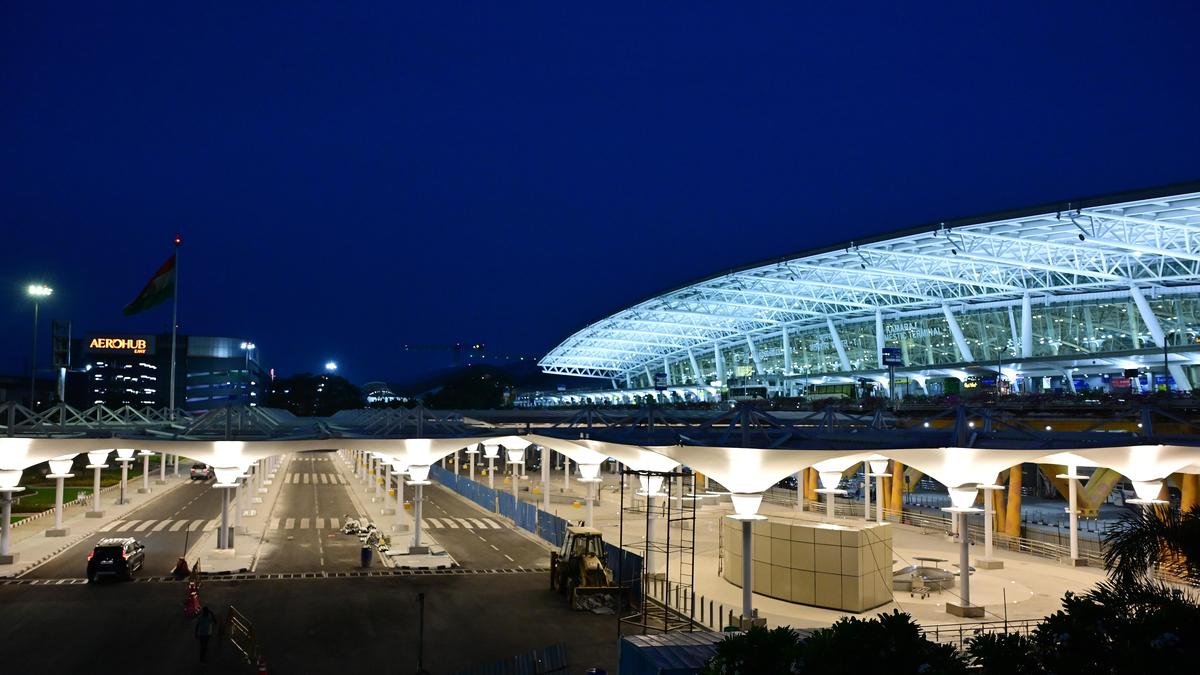
Chennai airport's arrival plaza has been ready for months. It's not been put to use despite requests from thousands of irate passengers. I beseech everyone on my timeline to tag @aaichnairport and ask the one the question that matters: When can passengers expect the arrival plaza to be open?
The BJP is a party with a hundred-year horizon. It does not depend on one or two leaders. There are many who are writing off BJP in my state in case a leader moves on.
With him at the helm, things would have been great. Without him, we start afresh and groom new leaders.
The thing is, one has to find a story that resonates with voters. The state BJP hasn't found one yet.
Work harder, and think smarter. Don't aim for 5% vote share. Think of 50%.
It's not impossible to win the hearts of people. You just gotta believe that you can.
Political leaders across India need to take note of one message from the Tamil Nadu Assembly polls.
Two of the state's largest parties were shown the door by voters. Experience was given the boot. Why? Because people were tired and looking for change.
Along came TVK, a rookie party started by actor Vijay. The party wasn't ready. It didn't have candidates for all 234 seats. Money was limited. Even its leader didn't seem convinced he would win. He hit the road somewhat half-heartedly. But the voters embraced TVK like family and carried it to victory.
DMK, arguably the most organised political party in India after the BJP, didn't know what hit them. Gen Z played a major role in this shift in mood.
Never take them lightly.
The biggest Gen Z issue is education. NEET was botched up. The on-screen marking system roll out by CBSE had several errors. The BJP government must take these issues seriously. And appoint a credible and capable person as the Education Minister.
Something rotten about the On-screen marking system vendor selection used by CBSE. A teen named Sarthak has done all the heavy lifting in investigating how the tenders were manipulated to favour a firm with not-exactly the right credentials. The education minister needs to be made accountable for all that's happening. Playing with millions of lives is unacceptable.
This is an unbelievable piece of work by Sarthak and something that requires amplification.
Let me explain what he found, in simple terms.
Sarthak is a Class 12 student from the 2025-26 batch, one of the 17 lakh students whose answer sheets went through CBSE's new On-Screen Marking system.
He spent days reading through CBSE's evaluation tenders, scraped all 576 tenders CBSE has issued, and tracked how the rules changed across three versions of the same tender.
The core finding is that the company that won the contract to scan and grade 17 lakh students' answer sheets is Coempt Eduteck.
Coempt used to be called Globarena Technologies. Globarena was the company behind the 2019 Telangana intermediate exam disaster, where software failures led to 3.8 lakh students getting wrong or missing marks, and 23 students died by suicide.
A government committee found systemic failure and negligence. Six months later, Globarena rebranded to Coempt Eduteck.
So a company with that track record won a contract to handle 17 lakh CBSE students. Sarthak's investigation is about how the rules were rewritten to let that happen.
The tender was issued three times.
> First tender, February 2025. It existed, then disappeared from the public GeM portal. Sarthak scraped all 576 CBSE tenders and this one was missing from the archive entirely.
> Second tender, May 2025. Four companies applied including TCS and Coempt. All four failed the technical evaluation. Cancelled.
> Third tender, August 2025. Coempt won. Between the second and third tender, a series of rule changes happened, and every single one made it easier for Coempt to qualify.
Here is what changed, one by one.
01. The old rules disqualified any company with a history of abandoning work, failing to complete contracts, or financial weakness. The new rules deleted this clause entirely. Coempt's Telangana history stopped being a barrier.
02. The old rules disqualified any company that was "blacklisted earlier." The new rules changed this to "currently blacklisted." Because Globarena rebranded after Telangana, removing the word "earlier" effectively erased their past.
03. The rules required Rs 50 crore average turnover over three years. Coempt's exact average came to Rs 50.86 crore. They cleared the bar by less than 1%. Earlier, a smaller company had asked CBSE to lower the bar to Rs 30 crore for fairer competition. CBSE refused. So the bar was kept high enough to block small players, but sat exactly low enough for Coempt to scrape through.
04. Software maturity is measured on the CMMI scale, 1 to 5. The old rules required Level 5. The new rules dropped it to Level 3. Coempt is a Level 3 company.
05. The cooling-off period for engaging retired CBSE officials was cut from two years to one. This makes it easier to use recently retired insiders to influence the process.
06. The old rules required experience with large projects of at least 5 lakh students each. The new rules removed the student count and counted cumulative answer-book volume across small projects instead. Coempt has many small fragmented university contracts. This helped Coempt and hurt TCS.
07. The old rules required bidders to own their own data centre and disaster recovery centre on Indian soil. The new rules allowed third-party MeitY-empanelled cloud hosting. Coempt runs on AWS and Azure. This helped Coempt and hurt TCS, which owns its own data centres. It also means student data is no longer on sovereign, Indian infrastructure.
08. The old rules required the bidder to own or control the complete source code of its software. The new rules deleted this. Coempt's platform runs on Microsoft's proprietary IIS, which they don't own.
09. A last-minute corrigendum, issued right before bid submission, removed CBSE's own power to blacklist the firm if its software failed catastrophically. So even a Telangana-scale failure couldn't get Coempt banned from future government tenders.
10. The penalty structure shifted from punishing mistakes to punishing delays. The old rules fined the vendor for wrong scanning, merged pages, and unscanned books. The new rules dropped those and instead levied Rs 50,000 per day for delays. This incentivises rushed scanning over accurate scanning.
11. The old rules had a hard accuracy threshold, error rate not to exceed 0.5%. The new rules removed this number entirely.
12. The old rules specified proper book and robotics scanners. The new rules just say "sufficient scanners." The definition was vague enough that, as Sarthak notes, the scanning could be done with a phone on a stand.
13. On the security side, the contract required a VAPT (vulnerability and penetration test) certified by CERT-In before go-live, and a restricted beta phase before launch. The system clearly wasn't restricted, because the other researcher, Nisarga, was able to access it and find vulnerabilities four days before go-live. So the mandatory security audit appears to have been bypassed.
These are more than a dozen rule changes, all between the failed tender and the winning tender, all pushing in the same direction, all benefiting the one company with the worst track record in the field.
The security holes Nisarga found last week now have an explanation. The system was built by a vendor that was specifically allowed to skip the security certification, the source code ownership, the data sovereignty, and the quality thresholds the original rules demanded.
Following things need to happen immediately;
1. An immediate CAG audit of the tender process.
2. A parliamentary debate on the topic.
3. An independent investigation into
> Why the first tender vanished?
> Why the disqualification clauses were deleted?
> Why the turnover bar was held exactly where it was?
> Why the security level was dropped?
> Why the blacklisting power was removed at the last moment?
Sarthak, this is genuinely exceptional investigative work. Far better than most journalists with full resources ever manage. Take a bow. :)