What happens in the Gulf doesn't stay in the Gulf.. Yesterday I joined @BeckyCNN on @CNN from Abu Dhabi to talk through where the region stands.
Yemen: The Saudi defense minister's visit to Abu Dhabi matters. Riyadh and Abu Dhabi have more in common on Yemen than before, and the Houthis are pushing a two-front war on Iran's behalf.
Russia: It's no longer speculation that Moscow gave Iran equipment and targeting capacity early in the war..
Capital: I'm not worried about Gulf sovereign wealth funds in the year ahead. They are long-horizon investors with strong, successful bets. But the longer the war runs, the more budgets and reconstruction bills could come under strain. Watch 2027.
AI Infrastructure: The fundamentals haven't changed: abundant energy, capital, political commitment, and proximity to markets that need compute. The world needs about 150 GW online in three years, at roughly $50B per gigawatt. Few places outside the US and China can fund that. What has changed is the security profile, so data centers will go underground and inside air defense umbrellas.
Ukraine Playbook: Kyiv doubled its compute capacity, and that is a big reason Ukraine is still in the fight. Without AI, it would have lost the war. The Gulf is now facing its own confrontation with Iran, and it will need to follow the same playbook.
@MiddleEastInst
Thrilled to have joined the Security Futures Lab at the @oxmartinschool University of Oxford as Director of Global Policy and Systemic Risks. I’ll focus on reshaping international policy responses to challenges that increasingly transcend national & institutional boundaries. 1/2
One of the things the data analysts on our side obsessed over was "composition"—whether the electorate looked close enough to 2024 for Republicans to win. And despite polls that showed a Democrat blowout, the data kept on telling us the same story: in some states turnout was merely OK, in other states it was downright amazing, and in no state was it catastrophic. There was a genuine sense of optimism on our team: our people were showing up.
So, I asked the smartest data guy I know, does that mean we're going to shock the world? "No," he told me. "We might do better than the polls suggest. But the data is telling us that a lot of Trump/Vance 2024 voters are pissed and planning to vote for the other guys. Our voters are turning out, but they may not vote for us."
Well, that looks prophetic now. Our voters did show up. In Florida, for example, the electorate was 9 points more Republican than Democrat, just a couple points worse than 2024. Undoubtedly there were places we could have done better on turnout. But the main problem is not turnout. The main problem is that many people who voted for Trump/Vance in 2024 voted for Democrats in 2026.
There will be a lot of infighting and arguing over what happened and why that is. One of the pollsters I really respect told me that our economic messaging wasn’t sharp enough down the stretch. I’m sure that’s true.
But the real reason we lost is obvious to almost everyone.
Another pollster—one of the smartest people I know in politics, told me yesterday we’d lose the generic ballot by 13 points. I felt negative going into Tuesday, but even I was shocked by this. In his polling, he saw that a lot of Trump 2024 voters were angry and planning to vote for Democrats. He asked those voters who had abandoned us what would cause them to come back on our team. The top four answers, accounting for nearly all of the responses were:
1) End the war
2) Focus on cost of living/inflation
3) Put America First
4) Change our relationship to Israel
Our voters showed up. And the above four reasons are why many of them voted for Democrats. This is according to a pollster who nailed the results. While many spent Monday attacking Rachel Campos Duffy for calling for a diplomatic resolution to the conflict, it turns out her political advice was sound. (She’s also a great person.)
In the next few months, there's going to be a lot of gaslighting. Expect to hear any number of establishment politicians say the solution to our woes is amnesty. I'm open to the idea that we should change enforcement—by focusing more on businesses that hire illegal labor, for instance. But anyone pushing amnesty is lying to you.
The reason we lost is the war. The president himself said so last night.
If you'd like to argue it was worth it, that losing the Senate for the next 6 years was worth it, then do so. Argue it was a worthwhile cost to pay. Agree or disagree, that's at least honest.
But everyone knows why we lost. And any honest conversation about where we go from here must start there.
I remain hopeful about our country. To the people who are pissed off and want to say, “I told you so”: you’re right, you did tell us so. Take that energy into electing Republicans who share your worldview. To the people who are just pissed at the results, you should be. Let’s take that anger and get back to the work of saving our country.
🇮🇷🇺🇸 The Iranians should be cautious as well. The Admin already paid for the Iran war at the ballot box. A man with his back against the wall might lash out, or he might not. Either way, don’t expect Trump to capitulate anytime soon.
The Iranians basically Carter-ed Trump. Tehran’s feeling pretty good about the midterms. Dragging the war out long enough to hammer the American economy clearly paid off. Trump’s been humiliated, reduced to a lame duck, and handing Democrats the power of the purse.
The Iranians basically Carter-ed Trump. Tehran’s feeling pretty good about the midterms. Dragging the war out long enough to hammer the American economy clearly paid off. Trump’s been humiliated, reduced to a lame duck, and handing Democrats the power of the purse.
🇮🇷🇺🇸 The Iranians should be cautious as well. The Admin already paid for the Iran war at the ballot box. A man with his back against the wall might lash out, or he might not. Either way, don’t expect Trump to capitulate anytime soon.
The Iranians basically Carter-ed Trump. Tehran’s feeling pretty good about the midterms. Dragging the war out long enough to hammer the American economy clearly paid off. Trump’s been humiliated, reduced to a lame duck, and handing Democrats the power of the purse.
Here’s a thought from a region still on edge abt whether or not Trump decides to attack Iran - again: Doha talks get a lifeline. Trump needs a deal before January, when the new Congress arrives. That's real leverage. .
The Iranians basically Carter-ed Trump. Tehran’s feeling pretty good about the midterms. Dragging the war out long enough to hammer the American economy clearly paid off. Trump’s been humiliated, reduced to a lame duck, and handing Democrats the power of the purse.
Thank you to @BeckyCNN and the Connect the World team at @CNN for having me on yesterday from Abu Dhabi during @ADIPECOfficial .
We discussed where the Iran talks stand, how the Gulf is trying to protect its economic model, growth, and security, and what a workable path out of this war could look like for a region that didn't start it but bore the brunt of the damage.
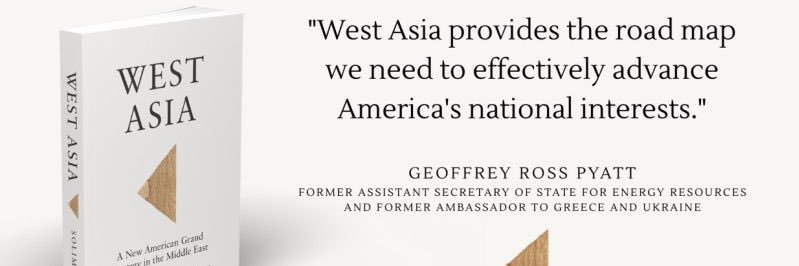
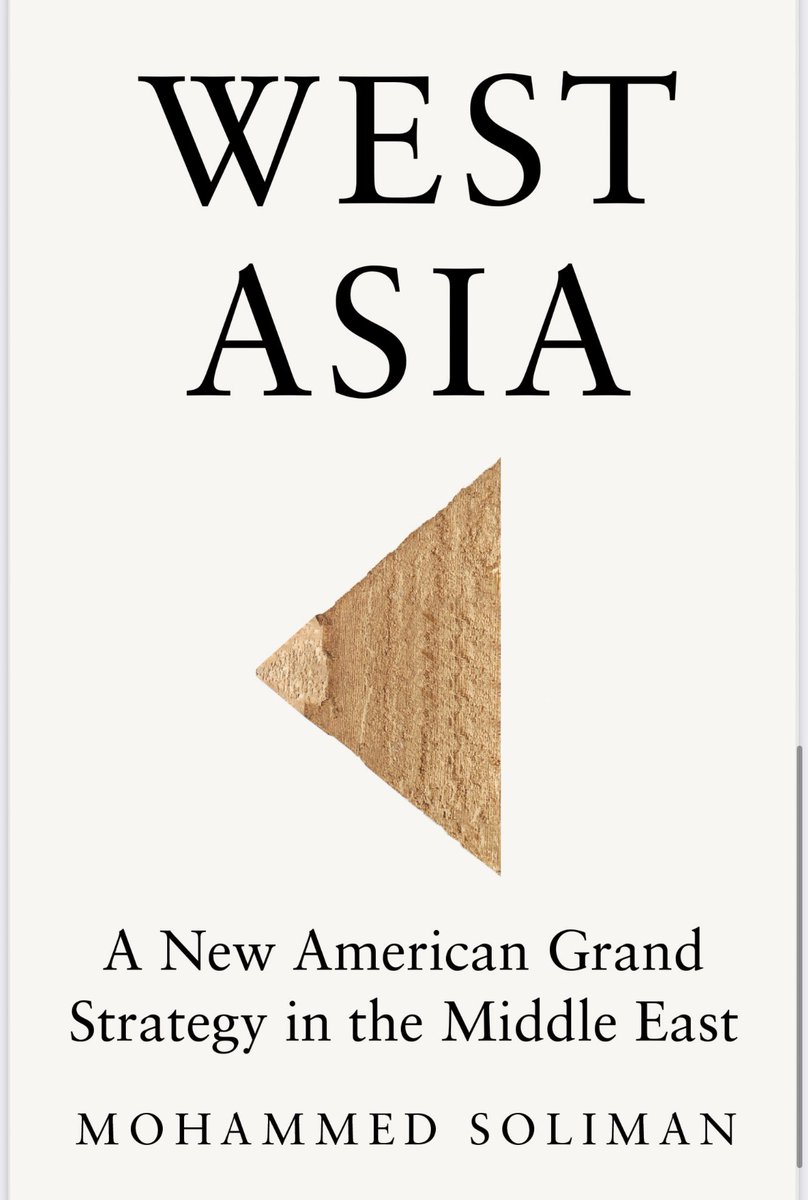
I also reflected on the thesis of my book, West Asia: A New American Grand Strategy in the Middle East, which rests on three arguments. First, the Middle East frame no longer explains the region we have today. The borders that once separated South Asia, the Middle East, and the Mediterranean have dissolved. That is why Turkey is active in the Indian Ocean and why India is active in the Mediterranean.
Second, the Gulf states now sit at the center of the global economy, as a trade network linking Asian and European markets. Third, If the Gulf wants to keep exporting energy, its next commodity is compute.
@politybooks
MEI Senior Fellow @ThisIsSoliman joined @CNN's @BeckyCNN from Abu Dhabi’s ADIPEC to discuss the Iran talks, the future of US-Gulf relations, and the thesis of his book, West Asia: A New American Grand Strategy in the Middle East.
FT Exclusive: The world’s largest chipmaker has told cloud computing providers that they must now sell at least 51% of their services to non-Chinese companies. What does the move mean for the US-China AI race? https://t.co/9HqAZL5Yka
AI is energy, and energy is AI. This nexus cannot be decoupled, and the link is becoming especially clear in the UAE and Gulf, increasingly so because of the war. The coming shift is toward exporting compute rather than crude, and by extension, reducing dependence on Hormuz.
OpenAI signed deals to deploy its technology across energy companies, investment firms and government agencies in the UAE, deepening ties as it seeks billions of dollars in funding from the country’s state-backed investors https://t.co/oYTxwP4Wcm
AI is energy, and energy is AI. This nexus cannot be decoupled, and the link is becoming especially clear in the UAE and Gulf, increasingly so because of the war. The coming shift is toward exporting compute rather than crude, and by extension, reducing dependence on Hormuz.
Abu Dhabi has signed four strategic agreements with OpenAI to strengthen its AI ambitions and drive innovation across government, energy, investment and education