You cannot run an economy on weather forecasts.
Every winter, New Zealanders turn on the heating, flick on the lights, and trust the power will be there. Most of the time it is. Our electricity is now almost entirely renewable, reaching 96 per cent at the end of 2025, the highest level ever recorded.
But some winters the lakes run low and the wind drops. We call this a dry year, and when one hits, we need a back-up to keep the power flowing.
We have seen what happens without one. In 2024, power prices shot up and some businesses closed for good. Behind every closure was a real person - a worker who lost their shifts and then their job, a family watching the plant that paid their mortgage fall silent, and a business someone spent decades building, gone in a single bad winter.
That is not an outcome we are willing to accept.
The natural gas we have long relied on for back-up is running out fast, so we need another way to be ready.
Today I can share that we have shortlisted two providers to build a liquefied natural gas - also known as LNG - import facility at Port Taranaki.
It will let us bring in LNG from overseas and have it ready for those tough winters. Officials advise that it's the fastest, cheapest and most flexible way to keep the power on when the weather does not play along, and it helps us build even more wind and solar, because developers know there is a safety net.
I want to make one thing clear.
This facility will not be funded by a levy on power bills. This Government believes that the responsibility for keeping the lights on sits squarely with the big power companies, and that is the principle guiding our decisions on funding.
We are also putting that obligation into law. When the big power companies see a dry year on the way, a new rule will require them to be ready, with real penalties if they fall short. It means they have to plan ahead and invest in back-up, so the country is never caught out the way it was in 2024.
National is keeping the lights on, taking pressure off power bills, and keeping New Zealanders in work.
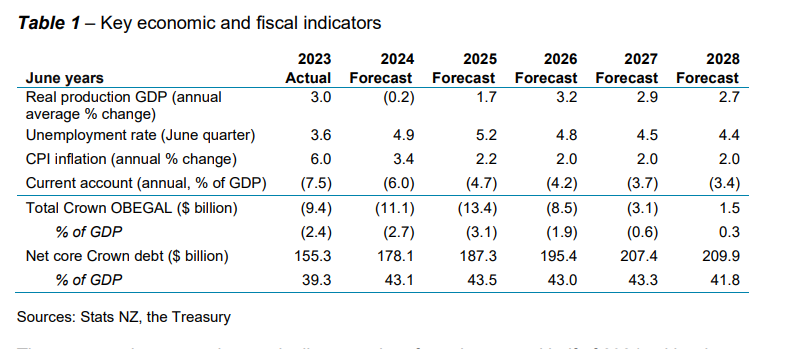
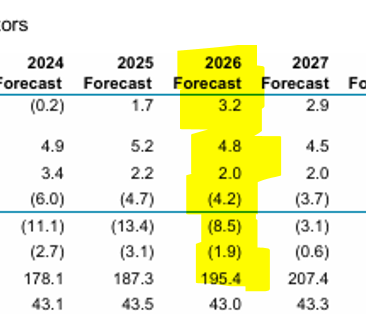
@GraemeEdgeler Of course, all the other projections, such as growth, inflation and unemployment for this year were also entirely wrong - and on the downside
The one plan for growth seems to be to reduce red-tape. It's not exactly bearing fruit yet - and likely will end up adding more costs - in 'externalities' like injured workers & polluted rivers
There are lots of stories in the budget, but one of the basic ones that i don't see being told much, is the gap between forecasts and reality, over and over again. Table 1 in the BEFU every year has the main indicators & forecasts - this is 2024
And these are connected. This govt has prioritized managing its debt over the investments that would have actually kept growth and employment higher - and inflation has remained high anyway. What's the plan here?
Unless St John's 2026/27 annual budget is smaller than last year in real terms, this won't meet a higher proportion of their costs. Another @nz_first fail
Good morning everyone, a quick update from me.
Today, we're boosting ambulance services right across New Zealand, with more crews, upgraded technology, and stronger frontline support on the way.
For too long, ambulance crews have been stretched as demand has climbed.
Now, National is backing our paramedics with the investment they need to respond faster and save more lives.
Budget 2026 delivers $35 million over four years to strengthen road ambulance services.
That includes two new ambulance hubs in Auckland, with one confirmed for South Auckland, plus a new electronic Patient Clinical Record system that lets crews share real-time patient information with health providers.
And that's on top of additional Health New Zealand and ACC funding that is currently being worked through for more frontline crews, more 111 call handlers, and stronger recruitment and retention of volunteers in rural and high-deprivation areas.
Demand is expected to grow by 95,000 incidents over the next four years, to an estimated 735,000 incidents a year.
This investment will help reduce avoidable emergency department transports by around 23,000 each year by 2029/30, while putting more crews on the road where they're needed most.
This builds on the record investment National has made in ambulance services since taking office, because responsible fiscal management means we can keep funding the frontline services New Zealanders rely on.
This is what fixing the basics and building the future looks like, making sure when New Zealanders call an ambulance, help is on its way.
Let's get on with it.
@secondzeit They should fit out one of those large state house apartment blocks in Newtown for our MPs. 100 little apartments for out of town MPs. Save the govt a lot of money and give the MPs a dose of reality.