Why John 6 Is the Catholic “Proof Text” for the Eucharist🇻🇦
Among all the passages in Scripture, few are as central to Catholic teaching on the Eucharist as John 6. Known as the “Bread of Life Discourse,” this chapter records Jesus’ shocking teaching that He is the true bread come down from heaven, and that His flesh and blood must be consumed for eternal life. For Catholics, John 6 is not just symbolic, it is the biblical foundation for the Real Presence of Christ in the Eucharist.
1. The Context: Multiplication of the Loaves
John 6 begins with the miracle of the loaves and fishes, where Jesus feeds thousands with just a few loaves of bread. This miracle sets the stage for something greater: not just feeding hungry stomachs, but offering food for eternal life.
2. Jesus Calls Himself the Bread of Life
Jesus declares:
“I am the bread of life; whoever comes to me shall not hunger, and whoever believes in me shall never thirst” (John 6:35).
Here, He begins to reveal that He Himself is the food God provides for the world, not merely symbolic bread, but something far deeper.
3. The Shocking Words: Eat My Flesh, Drink My Blood
Later, Jesus makes His teaching even clearer:
“Unless you eat the flesh of the Son of Man and drink his blood, you have no life in you. Whoever feeds on my flesh and drinks my blood has eternal life” (John 6:53–54).
The Greek word used for “eat” (trogo) literally means to “gnaw” or “chew,” emphasizing a real, physical eating, not a metaphorical one.
4. The Reaction of the Disciples
Many of Jesus’ listeners were scandalized. “This is a hard saying; who can listen to it?” (John 6:60). If Jesus had only meant His words symbolically, He could have clarified. Instead, He let people walk away, showing He was speaking literally.
5. The Eucharistic Connection
At the Last Supper, Jesus fulfills what He promised in John 6: “This is my body… This is my blood” (Matthew 26:26–28). The Bread of Life discourse finds its completion in the institution of the Eucharist, where bread and wine become the Body and Blood of Christ.
6. Why Catholics Take John 6 Literally
From the earliest centuries, Christians believed in the Real Presence of Christ in the Eucharist. The teaching of John 6, combined with the Last Supper and St. Paul’s warnings in 1 Corinthians 11:27–29 against receiving the Eucharist unworthily, makes it clear: this is no mere symbol.
Conclusion
John 6 is rightly called the Catholic “proof text” for the Eucharist because it leaves little room for symbolic interpretation. Jesus is the Bread of Life, truly present in the Eucharist, offering Himself as food for our salvation.
✅ Final Thought: To believe in the Eucharist is to take Jesus at His word in John 6. The question is not whether His teaching is difficult, but whether we, like Peter, will respond: “Lord, to whom shall we go? You have the words of eternal life” (John 6:68).
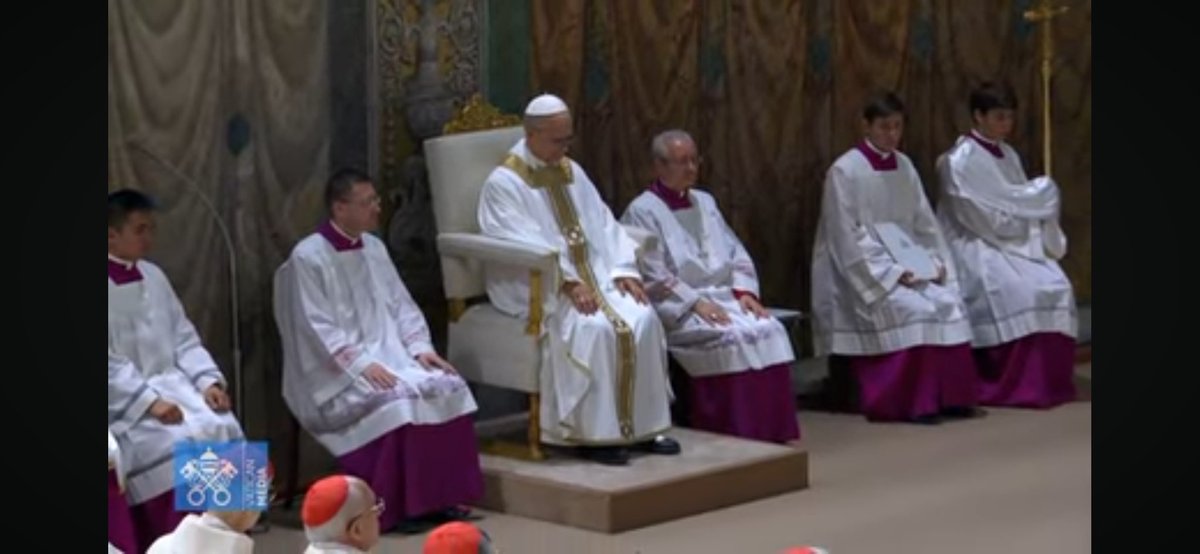
Pope Leo XIV in his first homily, to the entire college of cardinals: "Even today, there are many settings in which the Christian faith is considered absurd, meant for the weak and unintelligent. Settings where other securities are preferred, like technology, money, success, power, or pleasure.
These are contexts where it is not easy to preach the Gospel and bear witness to its truth, where believers are mocked, opposed, despised or at best tolerated and pitied. Yet, precisely for this reason, they are the places where our missionary outreach is desperately needed. A lack of faith is often tragically accompanied by the loss of meaning in life, the neglect of mercy, appalling violations of human dignity, the crisis of the family and so many other wounds that afflict our society.
Today, too, there are many settings in which Jesus, although appreciated as a man, is reduced to a kind of charismatic leader or superman. This is true not only among non-believers but also among many baptized Christians, who thus end up living, at this level, in a state of practical atheism."
WE ARE SO BACK
The bells of Notre Dame Cathedral in Paris rang out this morning for the first time today since 2019's fire
The Cathedral reopens with Mass on December 8th
https://t.co/aKH2MDLoCA The MAP paper is out for peer review. Funded by private donors this research from @KingsCollegeLondon is now in the public domain.
Our sincere thanks to all who have contributed.
#KCL#CrohnsDisease#ibd#ibdawareness#mycobacteria#crohns
Jordan Peterson receives blessings from a Catholic priest at the Easter vigil, where his wife Tammy officially converted to Catholicism.
@jordanbpeterson@Tammy1Peterson
As easy as parking: payment of EV-charging and parking in one go 🔋
Did you know that parking and e-charging fees can be paid in one go using the same identifier – no extra ticket required?
Find out how this could work in your parking garage: https://t.co/lGwvIZ9e6Q
https://t.co/FbGrhE3T6O We're delighted to share the long awaited news that the first 💉has been given at @GSTTnhs@GSTTresearch! You can read Sean's story here. It's time to retweet & rejoice!