My article on Njáls saga, Skarpheðinn, and the utility of insults is out! I hugely enjoyed writing this and would love to know what you all think of it.
https://t.co/w6iOqltzNc
My article in Gripla dropped just in time for Christmas! Here's my take on the sources, dating & composition of Íslendingabók, the oldest surviving history of Iceland. https://t.co/EzsmFizppD
Many thanks to the Gripla team, they do an incredible job! #medieval
The first CSVA seminar of the year is fast approaching! Join us to hear Dr Alexander Wilson from University of Leicester's @bodypoliticsERC talk about ‘Marks of non-personhood: violence against unfree bodies in the Viking world’. #Vikings
18 November @ 5pm | Trent B40
Prepping a Comparative Literature class tomorrow and I’m blown away by Lorna Goodison’s poem about the translation of Cuthbert to Durham. While it’s not constrained to imitation you can still hear echoes of old English alliterative metre and kenning, a faint sense of elegy
It’s the start of term and I’m gearing up for a year as Associate Lecturer in Old Norse at UCL. After a couple of years of pure research, I’m genuinely excited to be back teaching: a heady blend of old Norse, Nordic history, history of the book, and comparative literature!
Old English will only ever be Kennings for Beginners. Old Norse skalds will casually drop rausnarsamr Gripnis ríðviggs gnapsólar gnýstœrandi — ‘the magnificent increaser of the noise of the jutting sun of the riding horse of Gripnir’ to describe a warrior and not break a sweat..
I'm writing today about kennings in Old English. Essentially these are two word-metaphors that were used instead of concrete nouns, and they are exquisite. A ship was a 'wave-horse', the sea was a 'whale-road', the mind was a 'thought-chamber', and the sun was a 'sky-candle'.
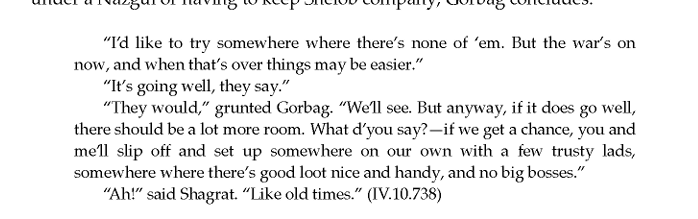
@npctk421 The issue of moral depth doesn’t mean ‘does good’ as orcs invariably do bad in Lotr, but rather ‘has the capacity to discern good from evil’ and thus can be Saved just like a fallen person, a situation Tolkien realised with some trepidation, would require treating them with mercy
Strange how everyone is presenting the morality of Tolkien's orcs in the books as cut and dry, as if Tolkien didn't find the problem he'd caused of a sentient, speaking race (fallen elves!) being wholly evil as perhaps THE major incompatibility between LotR and his Catholic faith
@npctk421 Tolkien in a 1954 letter described orcs as ‘fundamentally a race of rational incarnate creature though horribly corrupted, if no more so than many Men to be met today.’
My article on the construction of masculinities in Wulfstan’s homilies is out (and open access)! Massive thanks to @quothgareth and Caz Batten for all their work as editors: https://t.co/R9MUneUZzn
This isn't a woke reinvention of the source material - the redeemability of orcs is an issue anyone creating in Middle Earth has to grapple with and the issue plagued Tolkien and was obvious to his earliest critics. RoP seems to have just picked one of the few available solutions
Tolkien throws so many different solutions at the problem of orcish morality and the result is an unholy mess of both bestial, demonic, and personlike traits. But as a more sentimental man than some watchers of the Rings of Power, he also often gifts orcs with real moral depth: