⚠️ Takeaway:
✅ Imidacloprid harms insectivorous birds (also shown in 🇺🇸 & 🇳🇱).
❗️But banning a pesticide alone isn’t enough—habitat restoration and ecosystem recovery actions are essential to help insects 🐞 and birds 🐦 bounce back.
🚨 New paper in Environmental Pollution
“Weak recovery of insectivorous bird populations after ban of neonicotinoid in France, hinting at lasting impacts” 👉 https://t.co/lKNUCvFhFZ
📊 Key finding:
Before the ban, sites without imidacloprid hosted 12.7% more insectivorous birds than treated sites.
After the ban, the gap narrowed to 9% → a slight recovery, but far from a full population rebound.
Why it matters 👉 TAT identifies the most toxic molecules + hotspots where biodiversity policies should focus.
Recent bans (e.g. diquat, neonicotinoids) reduced pressures, but impacts on biodiversity still need to be confirmed. 🌍 #biodiversity#TAT
🚨 New study out in Journal of Hazardous Materials (https://t.co/7mQTv49m98): we tracked pesticide pressures across France using the new Total Applied Toxicity (TAT) index. Unlike older indicators, TAT accounts for both pesticide amounts and their toxicity. 🌱🐝🐟 #pesticides
Our findings:
⬇️ Pressure decreased for 4 groups (terrestrial vertebrates, pollinators, soil organisms, aquatic plants)
⬆️ Increased for 1 (aquatic invertebrates)
➡️ Stable for 3 (fish, terrestrial arthropods, terrestrial plants)
Spatially, highest pressures = N & W France.
New publication in Proceedings B: https://t.co/JbrknddRcE. We show that the use of insecticides reduces rapeseed yields beyond a threshold of 36g/ha. The reason is that insecticides reduce natural regulation, leading to an increase in insect pests and weeds!
[Vie de la FRB ☀️] Retour du séminaire annuel de la @FRBiodiv
🤝 La semaine dernière, quatre jours riches dans la Drome ont permis de réunir l’équipe FRB, parisienne et montpelliéraine!
+ d'infos : https://t.co/m62dNcwSvE
Post-doctorat @INRAE_France : Analyse de données en #écologie des communautés (#abeilles sauvages) Mission dans le cadre du projet Life « Wild bees » (2021-2026) pour améliorer les connaissances sur les communautés d’abeilles sauvages https://t.co/bEAWQx9rAK
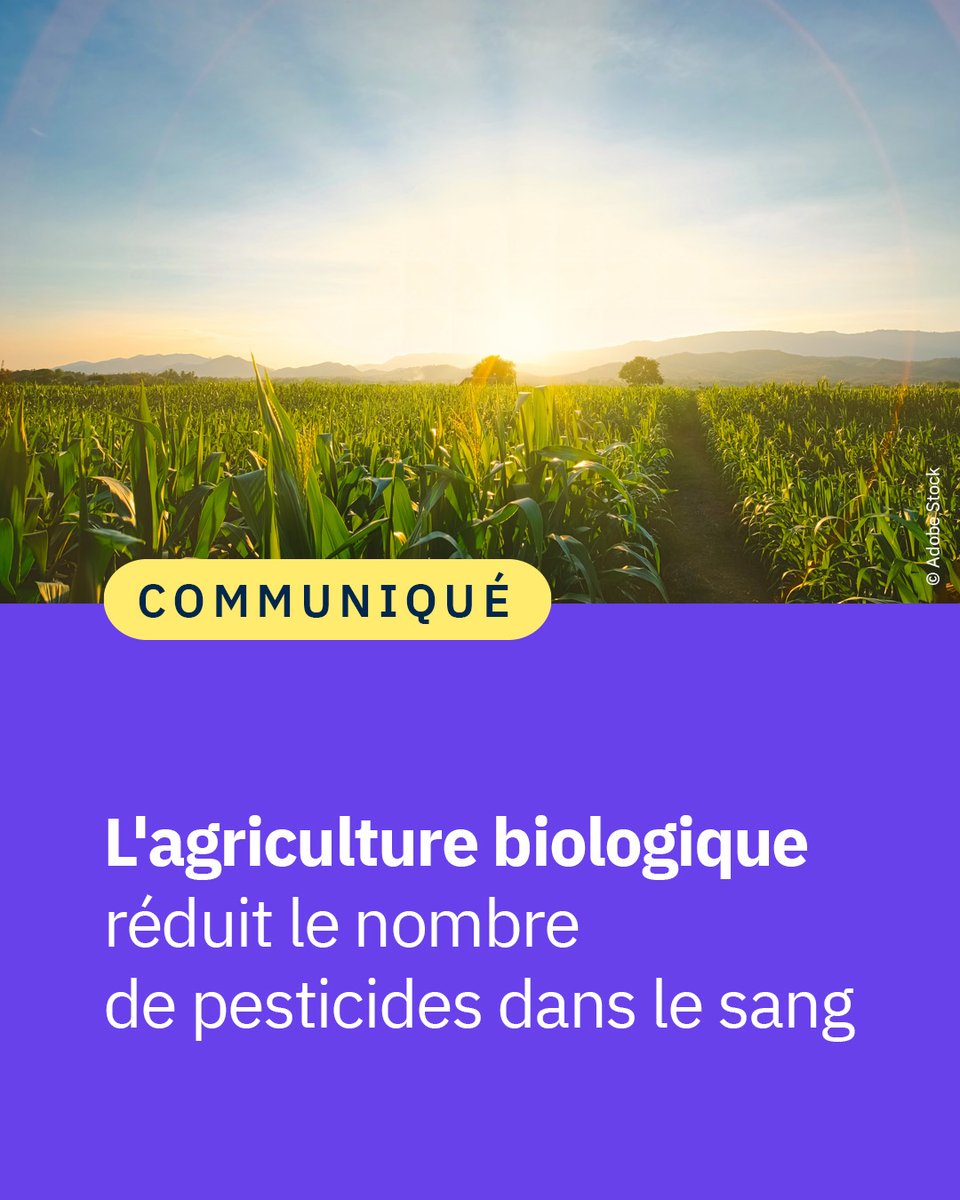
#Communiqué 🗞️ Une étude menée chez un rapace sauvage, et réalisée dans la Zone Atelier Plaine & Val de Sèvre du @CNRS, montre que l’agriculture biologique réduirait le nombre de pesticides dans le sang.
👉 https://t.co/RPhYHulp5t
[📝Publication] Enjeux de gouvernance : pouvoirs, justice bleue, places des parties prenantes... les nouveaux défis de la transition écologique
🔎 Retour sur les derniers articles issus des travaux de la @FRBiodiv publiés ces dernières semaines :
https://t.co/xpOkt3uIhL
Notre nouveau article sur les tendances temporelles et spatiales de l'utilisation de l’imidaclopride en France est paru ! @STOTEN_journal
https://t.co/PbnyZ98O5n
[Publication]🐞Pour la première fois, des scientifiques ont évalué le niveau de contamination des milieux par l’imidaclopride afin de donner une estimation de la pression que l’utilisation de cet insecticide exerce sur la biodiversité.
https://t.co/db8POqFCqi
Delighted to present our first keynote speaker @ThomasPerrot19🤩
Postdoc at the Foundation for Biodiversity Research and hosted by @ZA_PVS, he will present his most recent work on farming practices and land use to promote biodiversity and its services in agricultural production.
Interested in how and why to apply the concept of phenology to plant pathogenic fungi?
Take a look at our latest review, it was such a fun project with a stellar team!
https://t.co/2rCCUEjL6f


![FRBiodiv's tweet photo. [Vie de la FRB ☀️] Retour du séminaire annuel de la @FRBiodiv
🤝 La semaine dernière, quatre jours riches dans la Drome ont permis de réunir l’équipe FRB, parisienne et montpelliéraine!
+ d'infos : https://t.co/m62dNcwSvE https://t.co/E6kwVdPDgr](https://pbs.twimg.com/media/GaEzWnlXUAAa2mW.jpg)
![FRBiodiv's tweet photo. [Vie de la FRB ☀️] Retour du séminaire annuel de la @FRBiodiv
🤝 La semaine dernière, quatre jours riches dans la Drome ont permis de réunir l’équipe FRB, parisienne et montpelliéraine!
+ d'infos : https://t.co/m62dNcwSvE https://t.co/E6kwVdPDgr](https://pbs.twimg.com/media/GaEzWnfWgAA_tGt.jpg)
![FRBiodiv's tweet photo. [Vie de la FRB ☀️] Retour du séminaire annuel de la @FRBiodiv
🤝 La semaine dernière, quatre jours riches dans la Drome ont permis de réunir l’équipe FRB, parisienne et montpelliéraine!
+ d'infos : https://t.co/m62dNcwSvE https://t.co/E6kwVdPDgr](https://pbs.twimg.com/media/GaEzWnfWAAA-OBg.jpg)



![FRBiodiv's tweet photo. [Vie de la FRB ☀️] Retour du séminaire annuel de la @FRBiodiv
🤝 La semaine dernière, quatre jours riches dans la Drome ont permis de réunir l’équipe FRB, parisienne et montpelliéraine!
+ d'infos : https://t.co/m62dNcwSvE https://t.co/E6kwVdPDgr](https://pbs.twimg.com/media/GaEzWnnWoAAk5cg.jpg)
![FRBiodiv's tweet photo. [📝Publication] Enjeux de gouvernance : pouvoirs, justice bleue, places des parties prenantes... les nouveaux défis de la transition écologique
🔎 Retour sur les derniers articles issus des travaux de la @FRBiodiv publiés ces dernières semaines :
https://t.co/xpOkt3uIhL https://t.co/YQqEPeI8jB](https://pbs.twimg.com/media/GSMPzKbXsAAoMgL.jpg)


