EMD portfolio manager/economist at Janus Henderson Investors. To be found somewhere in EM! Enjoying life. All tweets are personal views. #EmergingMarketDebt
Very good Michael McNair piece on the various confusions in Maurice Obstfeld's latest piece on global imbalances. Investors, business managers, workers, policymakers and even the IMF (albeit kicking and struggling) increasingly understand the adverse impacts of large, persistent trade imbalances driven by wage-and demand-suppressing policies, even if it will still be many years before mainstream economists do. The latter seem ideologically averse to any explanation of global imbalances that don't conclude with calls for more fiscal and wage discipline in the US.
https://t.co/5j8gaIg5LN
1/9
Brilliant article by Martin Wolf on global imbalances. Wolf is one of the few economists who have an intuitive sense of the global economy as an economic system, which means he is also one of the few who understands how global imbalances work.
https://t.co/ZUieevOun5
A new measure of global policy uncertainty has surged amid geopolitical rifts and trade tensions, yet sentiment about economic prospects remains positive. See our blog for more. https://t.co/UO8a812lJf
The role of the dollar.
US treasuries as the dominant safe asset. Will it last?
Dollar pricing, increasing the demand for dollar assets. Will it last?
Dollar stablecoins, increasing the demand for US treasuries. Will it happen?
A nice panel discussion (in French). I learned a lot from my fellow panelists, @Helen_Rey, Eric Monnet, dans l’emission de Christine Okrent https://t.co/rJCnoppBrH
The IMF has warned of currency risks arising for nations such as Kenya and Ethiopia that are swapping dollar loans from China into yuan to tame debt costs https://t.co/NeMkql1niA
China is further opening up several major state-dominated industries to private capital by raising the ownership limit and removing some investment barriers. https://t.co/iheNsbVUWy
IMF staff held constructive talks with the Senegalese authorities in Dakar on a new IMF-supported program. Discussions will continue in the coming weeks to finalize agreement on the remaining policies and reforms that could support a new arrangement.
https://t.co/RDkRVA2hlR
President Javier Milei’s party is on track to finish first in Argentina’s midterm vote in early counting, putting him on the brink of a major comeback from a September local election defeat that prompted a market selloff and a US financial lifeline https://t.co/GvG6K2UqD1
1/2
Interesting article by Lian Ping, director of the China Chief Economist Forum, who argues that "China continues to face risks and perils on multiple fronts, all of which threaten to undermine its economic growth prospects."
https://t.co/QM2XmX8tgM
NEW: The IMF projects global growth to slow from 3.3% in 2024 to 3.2% in 2025. The global economy held up well in the first half of this year, but now shows signs of a moderate slowdown, with the pressures from higher tariffs becoming more visible in recent data.
https://t.co/Kt6UoJ7BZ4
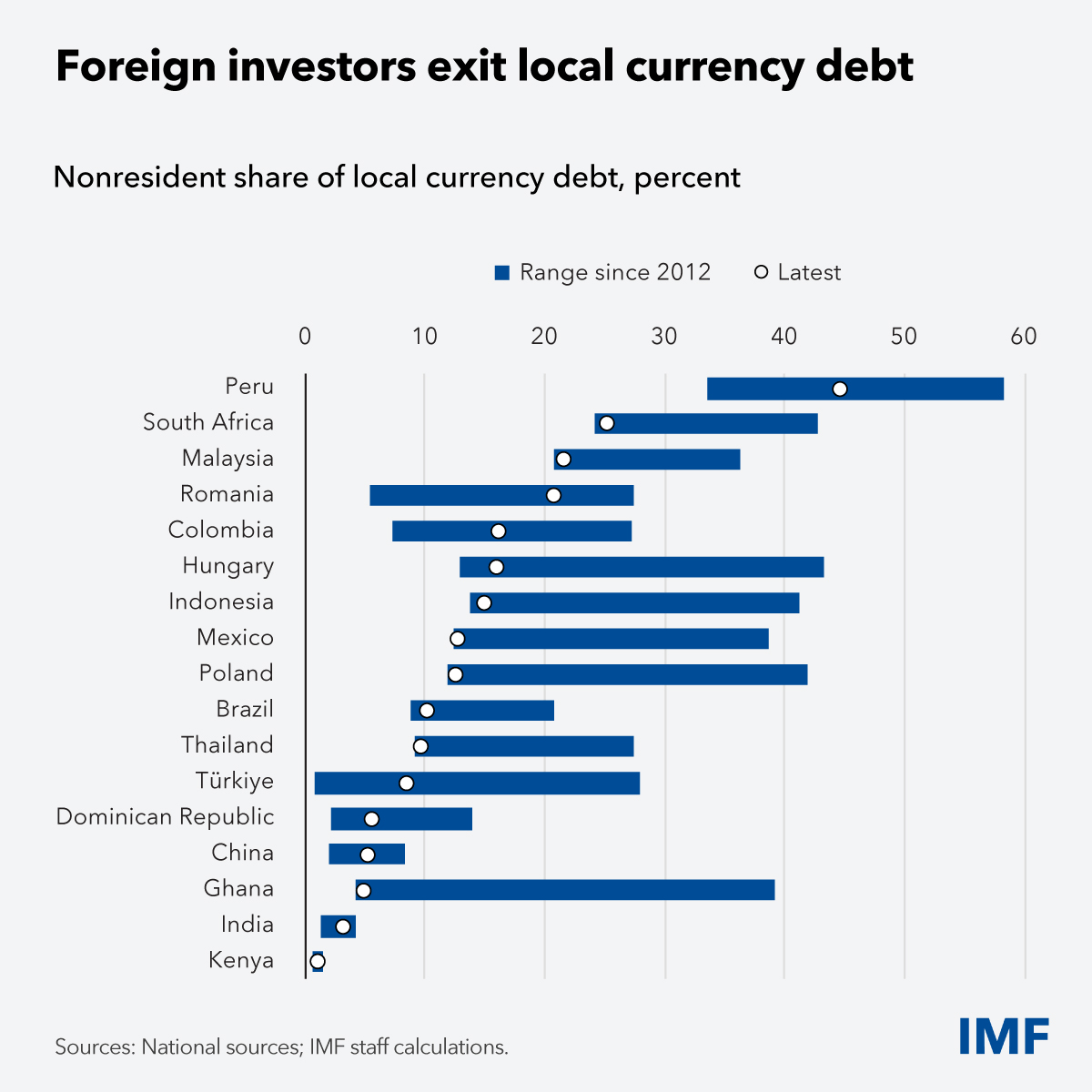
Our new analysis in the Global Financial Stability Report reveals that in emerging economies, greater domestic ownership of local currency debt reduces the impact from global shocks, and bond yields rise less than they would otherwise amid turbulence: https://t.co/glm1q8GR4n
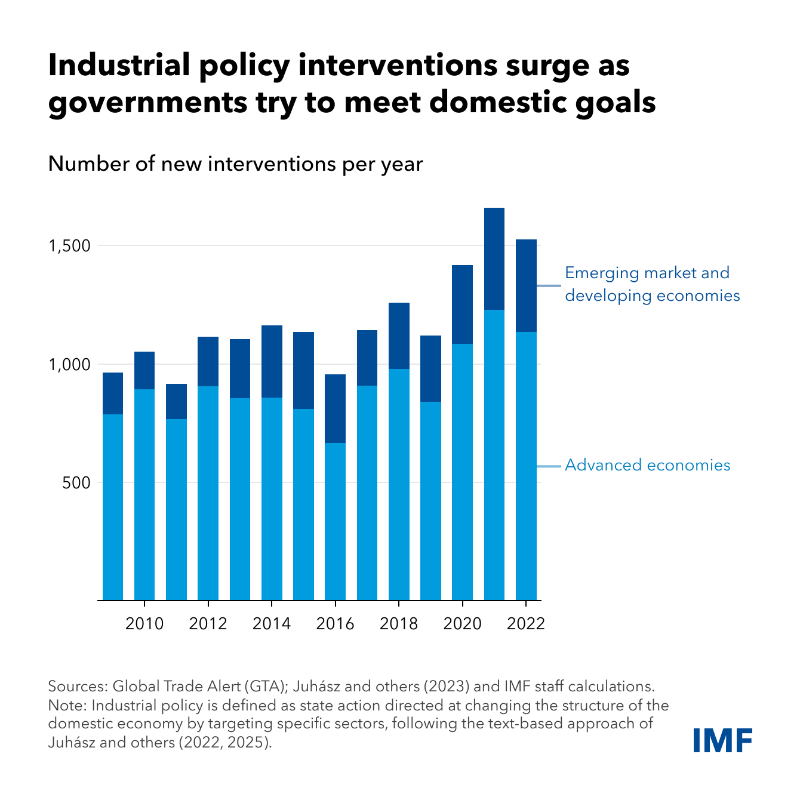
Industrial policies are making a comeback. Our new research shows how government actions aimed at shifting an economy's sectoral structure by targeting specific industries can deliver, but also present trade-offs: fiscal costs, higher prices, and spillovers on other sectors.
Fiscal rules are not new—but they’re more important than ever. With record debt and rising spending demands, countries need clear anchors, correction mechanisms, and oversight to keep public finances on track. Read the new IMF report on fiscal guardrails: https://t.co/1A4N0cnOHm