Cryptography is world changing, but post-quantum cryptography makes the old engineering rule even more important: use as much cryptography as needed, but not more than that...
So, do BFT protocols really need that many signatures?
New on DT: a signature free Simplex style protocol 🔥
With @sourav1547@ElodinStorm@komasito55 and Gilad Stern
https://t.co/FusncFhhbN
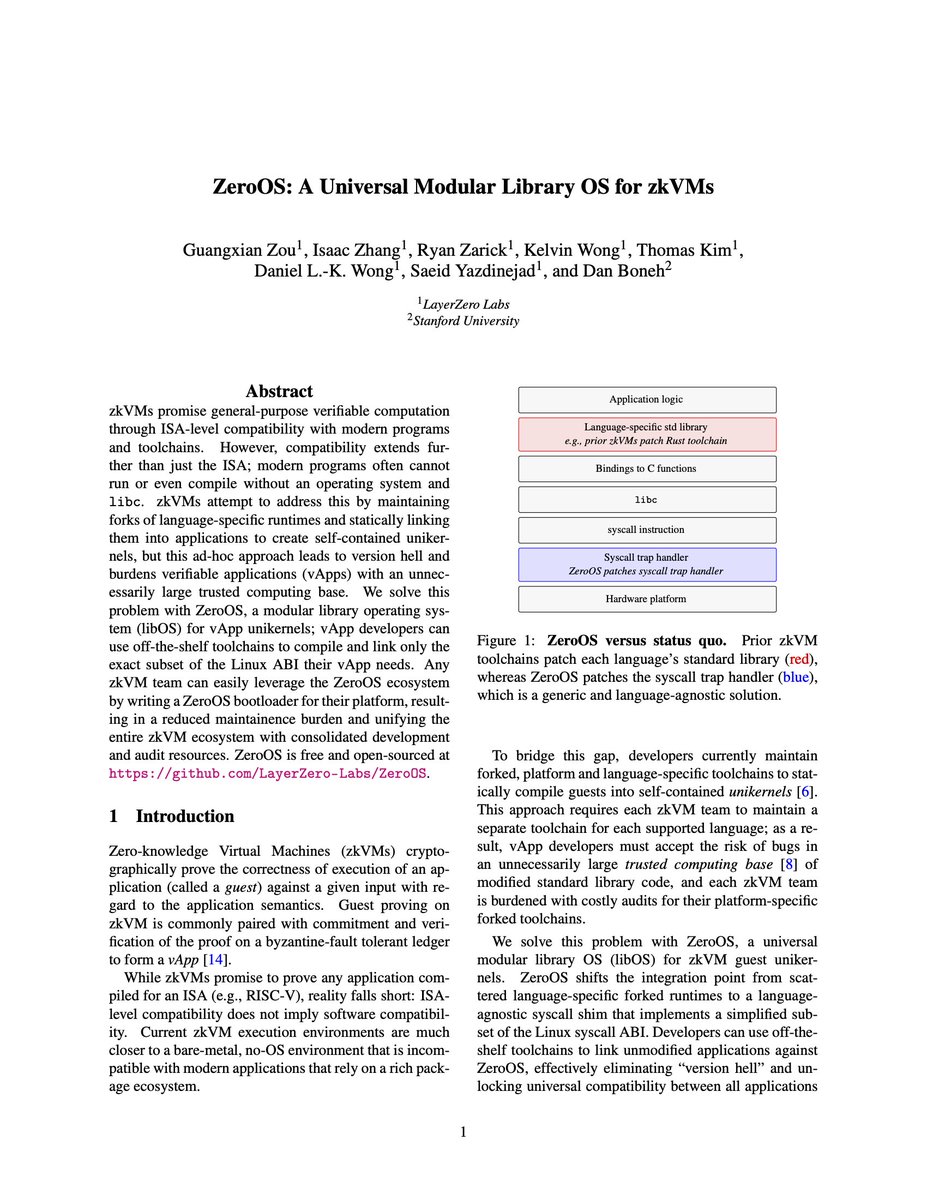
The zk ecosystem has never had its Linux moment - until now.
Introducing ZeroOS, a universal modular Library OS for zkVMs.
We’re releasing ZeroOS today as a public good, and are honored to have @danboneh as a co-author of the whitepaper, linked in the thread below.
1/ New post: Jolt now proves RISC-V programs with 64-bit registers (RV64IMAC), at speeds exceeding those we previously reported for 32-bit.
1.5M cycles/sec on a 32-core CPU, 500k cycles/sec on a MacBook.
Here’s why this matters 🧵
Whitepaper on our consensus algorithm just dropped thanks to @AndrewLewisPye
✨ state of the art SIMPLE
🏎️ state of the art FAST
My talk on the algorithm is accessible for most engineers and is linked in-thread
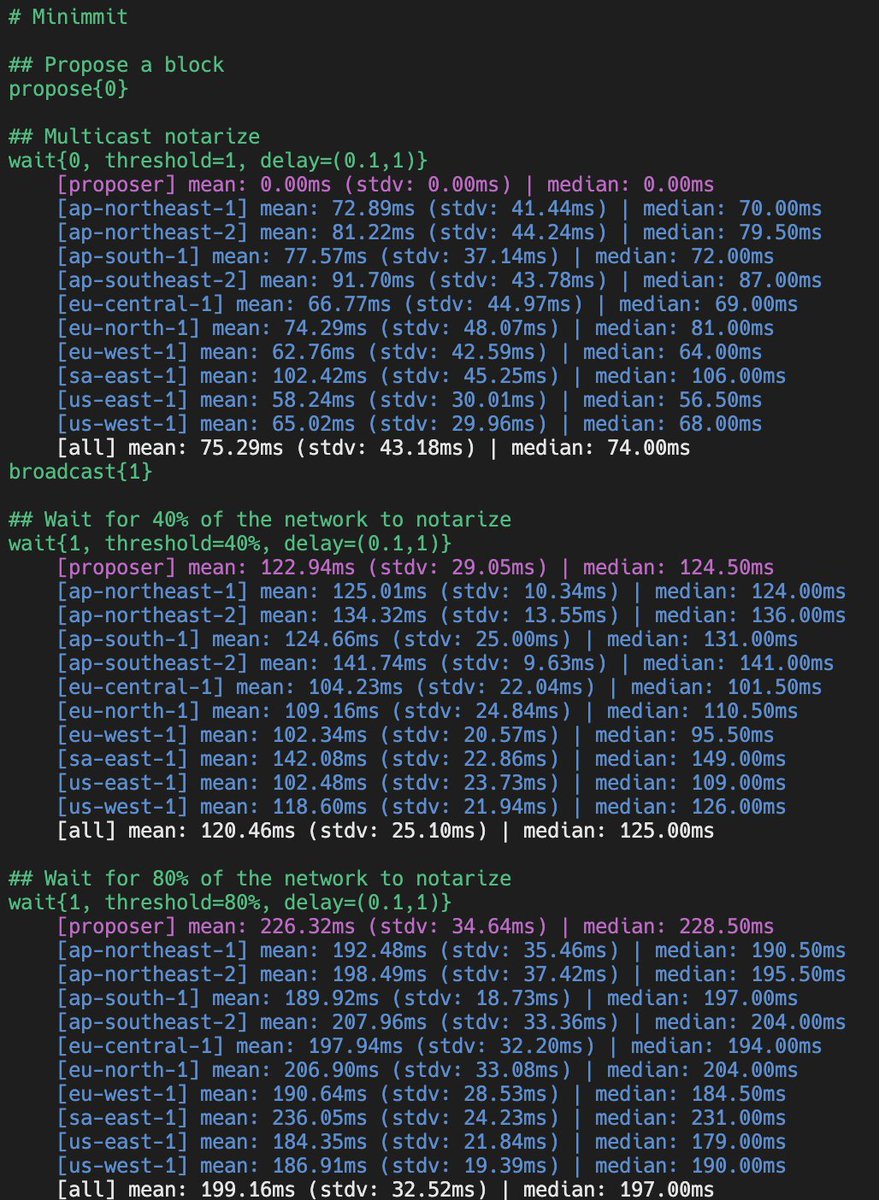
What if you could capture the performance of a new mechanism before implementing it? Or even estimate how much "juice is left to squeeze" from further optimization?
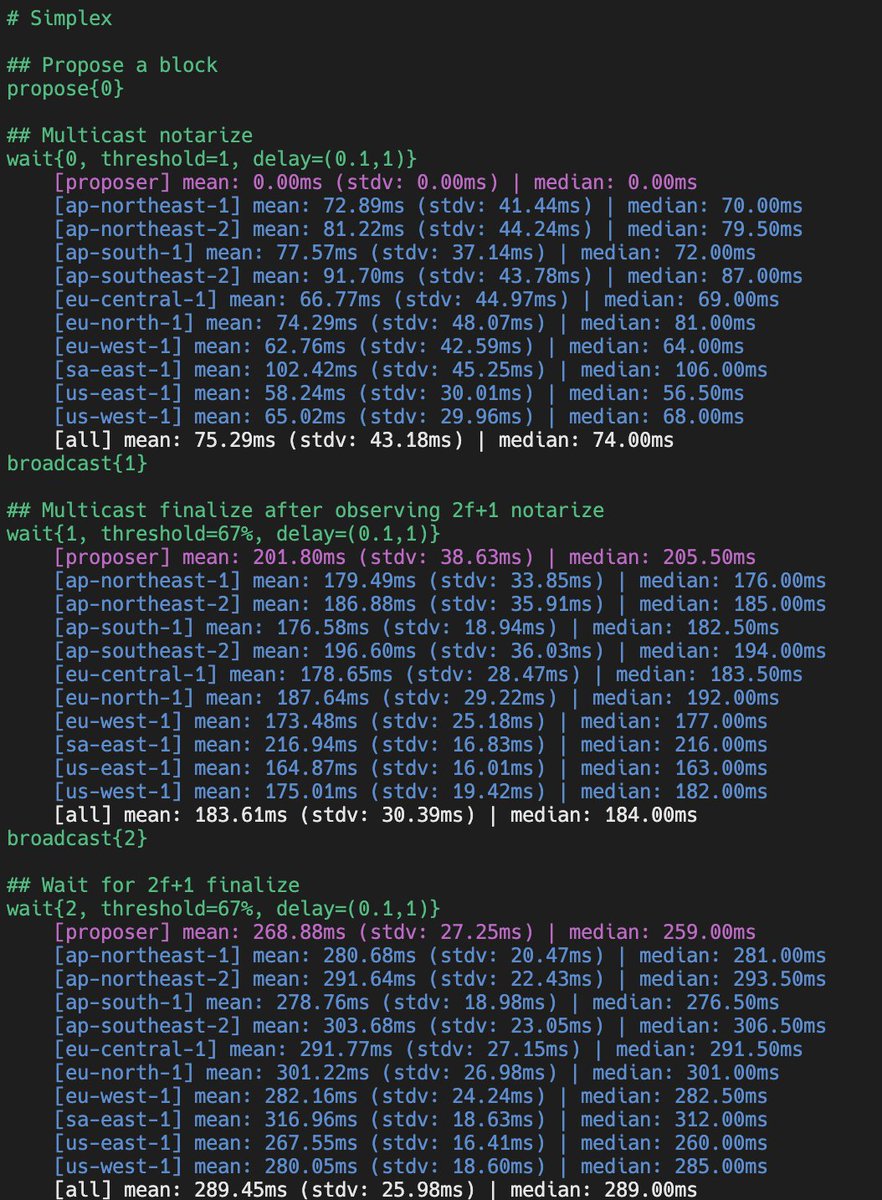
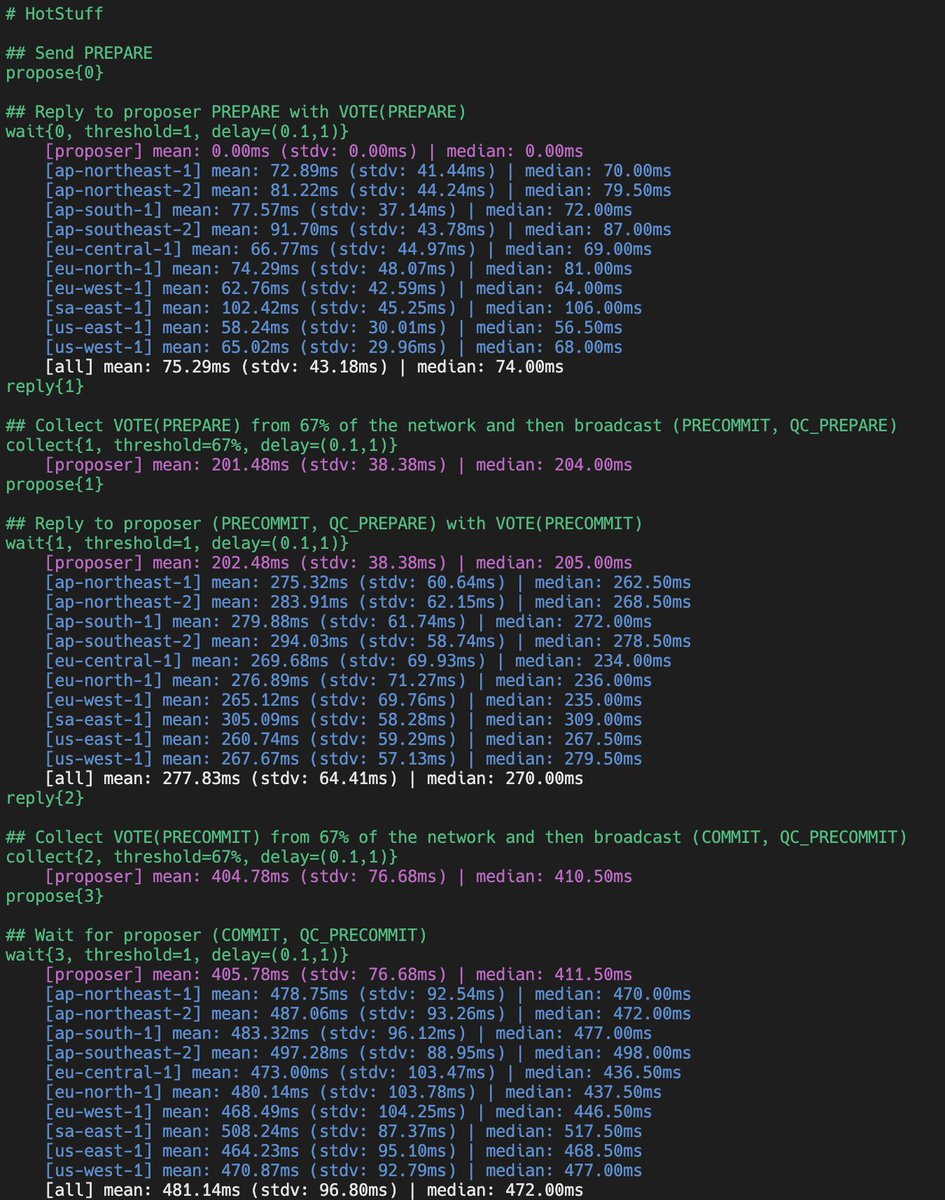
Meet @commonwarexyz's newest primitive: commonware-estimator (and the .lazy DSL)
To compete effectively with high-performance centralized blockchains, decentralized networks must deliver an equally responsive and seamless user experience. Achieving this demands overcoming persistent performance bottlenecks.
QMDB and FAFO tackle the core challenges in storage and execution, advancing us toward decentralized blockchains that can truly have their cake and eat it too.
Excited to share our new paper, "Accountable Liveness", w/ @AndrewLewisPye@Tim_Roughgarden@luca_zanolini.
We explore when and how adversarial nodes can be punished if they stall transaction confirmation in blockchains.
https://t.co/HYZgklVcNf