My new op-ed: the end of the luxury of a cost-free foreign policy for Canada
"Canada has benefitted from an incredible luxury for the past three decades: we have been able to make mistakes in major foreign and national security policy decisions...
https://t.co/DkK7tyCVAm
Applications are now open for the 13th Yemen Exchange.
Join Yemeni and international experts for an intensive online course offering first-hand insight and analysis on Yemen’s conflict, politics, economy, regional dynamics, and peace efforts.
Apply now: https://t.co/4n40saqrFa
A servicemember on active duty has no business using the uniform to carry water for a party, a candidate, or a partisan cause. Of course, troops can and ought to be able to vote. They can and ought to be able to hold views, including fierce ones.
But once rank or uniform gets put to work in a partisan fight, the line has been crossed. This is enshrined in UCMJ, defense regulations and policy (that are still on the books in the current admin), and norms.
No campaigning for a party in uniform, no public endorsement of a partisan cause that trades on one's active duty status, and certainly no demanding the resignation of a public official while in uniform. Nothing that could reasonably lead the public to conclude the military has taken a partisan side is acceptable.
Institutionalized corruption:
In his first year back in office, Trump "has collected about $1.4 billion in new revenues from cryptocurrency businesses that directly benefited from his actions as president."
https://t.co/ewB0FdboEr
There is a new forthcoming edition of my book "Hope & Despair"
It includes a new epilogue ("Victory or Peace") - taking stock of everything that has happened since the book was launched.
I might be biased, but I think you should pre-order it
https://t.co/cuIhdEicJ1
With Ottawa expected to announce its preferred supplier for the Victoria-Class submarine replacement, Dr. Paul T. Mitchell discusses the competing bids and the long-term strategic, operational, and institutional implications of the decision. https://t.co/BZpchQrCC9
لماذا لم تنجح الولايات المتحدة في هزيمة إيران؟ وما الذي يعنيه ذلك لمحور المقاومة، وللحوثيين تحديدا؟
في هذا التحليل، يجيب توماس جونو @thomasjuneau، زميل غير مقيم في مركز صنعاء، عن هذين السؤالين، في حين يرى أن واشنطن لم تحقق أهدافها، ،وأن الحرب كشفت تغيرا في وظيفة محور المقاومة الذي برز الحوثيون فيه كاستثناء.
المزيد:
⬇️
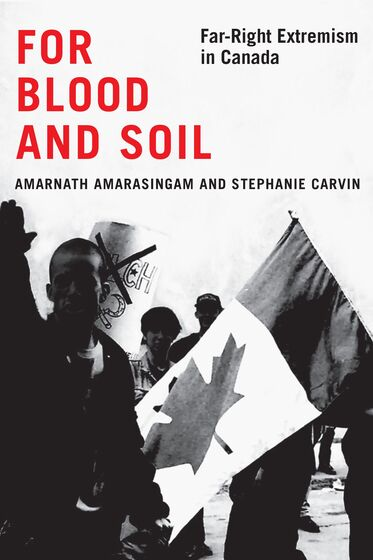
Book of the week - For Blood and Soil: Far-Right Extremism in Canada by my friends and frequent co-authors @AmarAmarasingam & @StephanieCarvin. Great and unique analysis of the historical and current landscape of far-right extremism in Canada and of efforts to counter it.
The Shadow War part 17695. Iran and Israel are not likely to abandon their addiction to proxies soon, with consequences for everyone, i argue here:
https://t.co/Gf0LKFDu97
Great to see the New York Times writing on Bukhara in Uzbekistan. A beautiful, fascinating, absolutely unique city.
I spent a week there in 2002 and, with Sana'a in Yemen, it is probably my favorite city in the world:
https://t.co/mBEuQELaTJ
Iran will not forget the tremendous leverage it gained by closing the Strait of Hormuz. Neither will it agree to permanently forego the option of resorting to this tactic again. Rather, it will integrate it into its strategy, writes @thomasjuneau.
https://t.co/B6b8TUaAaG
🚨🎙️In light of the events in Montréal this week, we recorded a special episode of Secure Line, bringing together all our analysis of the attack and the manifesto. A critical listen for anyone trying to make sense of this:
The Axis of Resistance failed to deter Israel and the US. Whatever deal emerges, Tehran will rebuild its deterrence around the threat Iran poses to the Strait of Hormuz and Gulf states.
Read @thomasjuneau's (@CH_MENAP) analysis for Chatham House⤵️
https://t.co/RrkguulFnC