Please join us in welcoming our 2026–2027 Executive Board and Committee Leadership!
We’re excited for the impactful programming these student leaders will spearhead throughout the academic year to further medical student engagement and interest in cardiothoracic surgery.
Here’s to a great year ahead!
@keyanazahiri@BuchwaldJuli@riyabhasin_@ReannonSuzuki
🫀 Join us THIS THURSDAY!
TSMA welcomes Dr. Michael E. Mitchell of @MedicalCollege for our Bread & Butter Series on aortic valve options and the Ross procedure.
📅 Nov. 12 | 7 PM EST
💻 Virtual + Live Q&A
Register here: https://t.co/W0V6AdOQxI #CardiacSurgery #MedTwitter
When is the Ross procedure the right choice for aortic valve replacement?
Join TSMA's Bread & Butter Series with Dr. Michael E. Mitchell of @MedicalCollege on Nov. 12 at 7 PM EST to explore aortic valve options, patient selection, and surgical considerations!
https://t.co/W0V6AdOQxI
Quiz Question! What is the primary cause of sudden hypotension immediately after going on CPB?
A) Sudden hemodilution from prime volume
B) Protamine reaction
C) Aortic dissection
D) Inadequate heparinization
Drop your answer below!
It’s #ThoracicThursday! Today, we’re breaking down Cardiopulmonary Bypass (CPB), a vital part of many cardiothoracic surgery cases. Here is how the flow circuit works with arterial and venous cannulation:
Cardioplegia is crucial to stop the heart to create a field with minimal blood and less movement. High-potassium cold solution depolarizes cardiac cell membranes, arresting the heart in diastole to protect myocardial energy stores.
Want to mentor the next generation of 🫀🫁 surgeons? The TSRA is collaborating with @ThoracicStudent to connect residents with medical students seeking mentorship in cardiothoracic surgery. Sign up today to contribute and shape the next generation of CT surgeons!
#TSRAEd@TheHub_STS
Sign up here: https://t.co/SrkUanAgxA
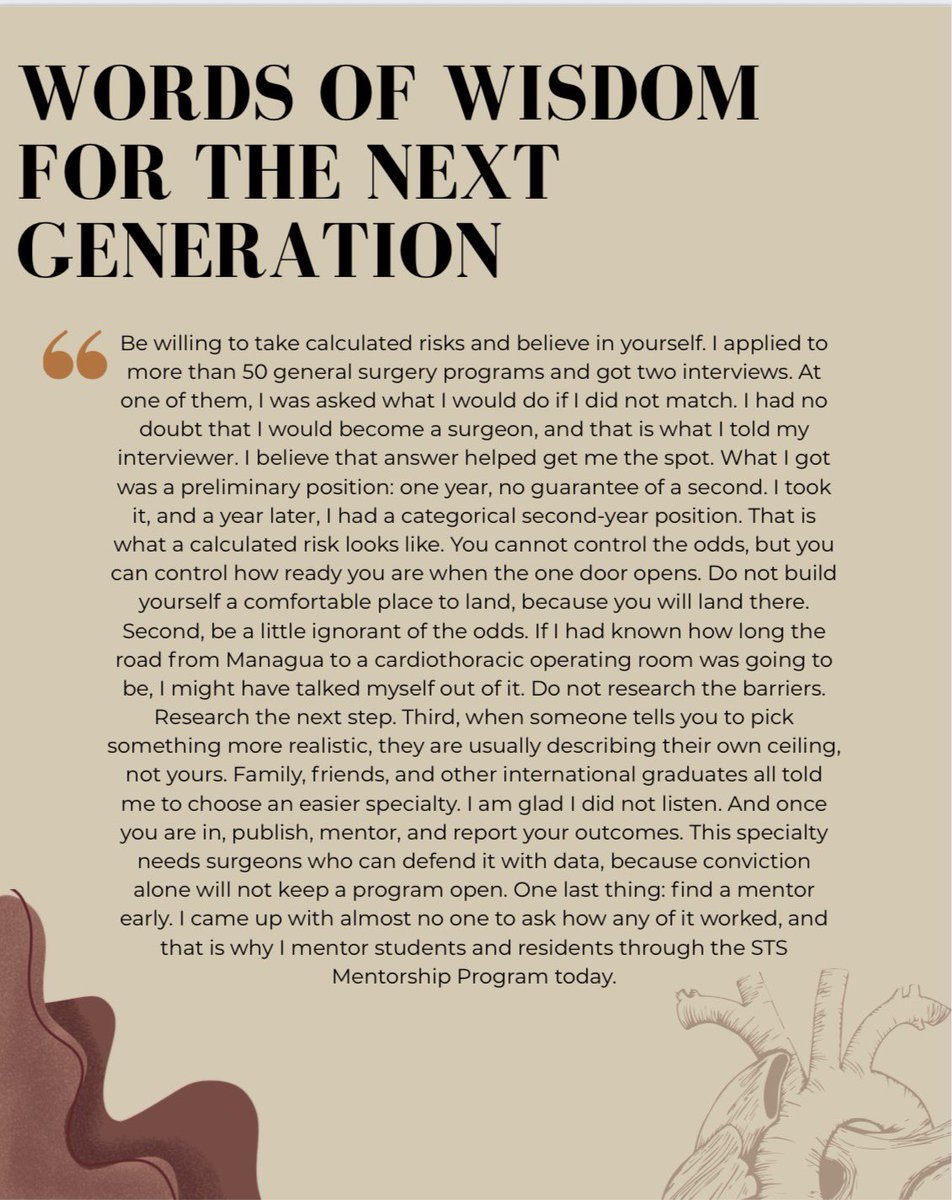
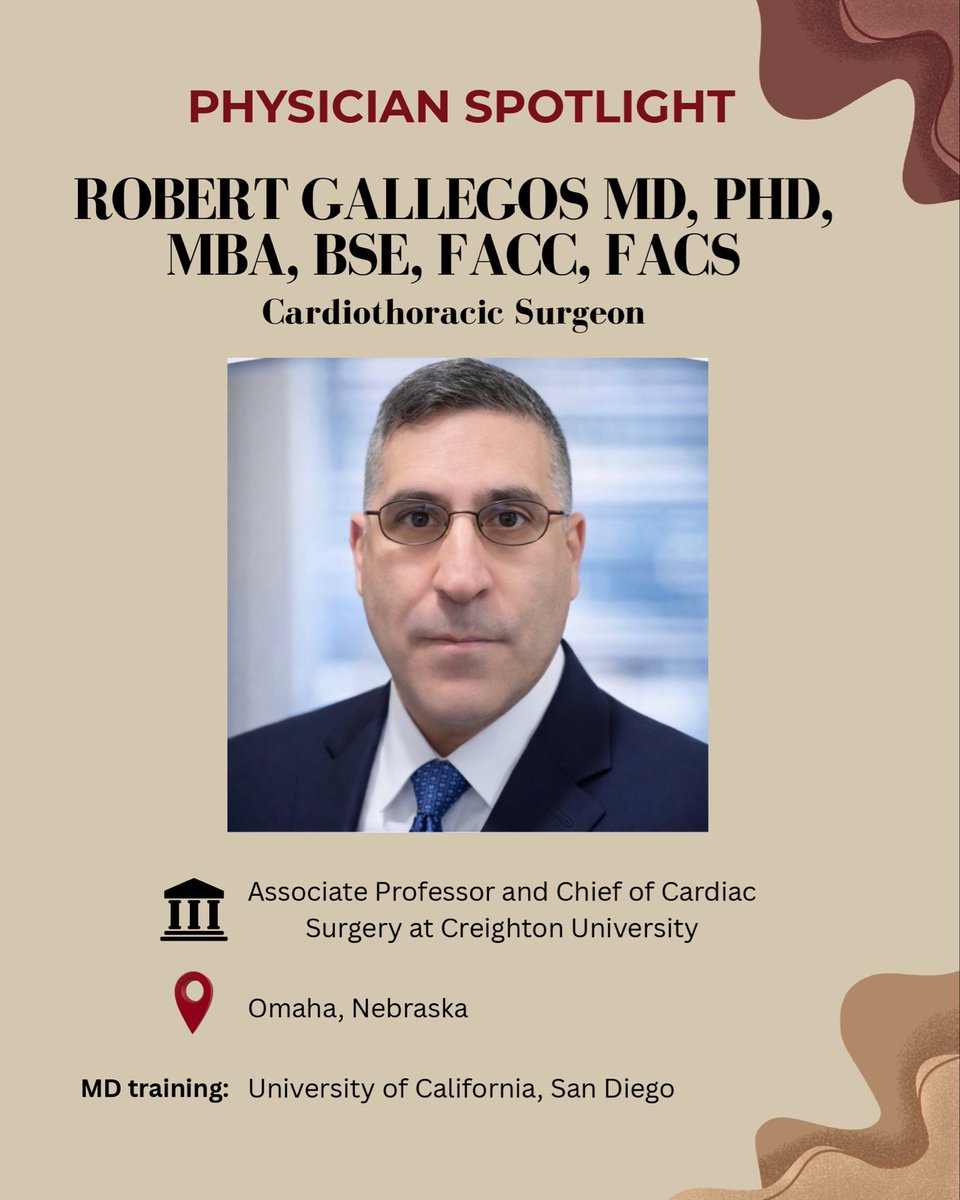
In celebration of National Hispanic Heritage Month, the TSMA Diversity and Inclusion Committee is proud to highlight Hispanic cardiothoracic surgeons and the stories behind their journeys to the field. 🫀🫁
Representation matters. Each surgeon brings a unique background, experience, and path to cardiothoracic surgery. By sharing their stories, we hope to celebrate their accomplishments, learn from the challenges and experiences that shaped them, and inspire students who may see a part of themselves in their journeys.
In celebration of National Hispanic Heritage Month, the TSMA Diversity and Inclusion Committee is proud to highlight Hispanic cardiothoracic surgeons and the stories behind their journeys to the field. 🫀🫁
Each surgeon brings a unique background, experience, and path to cardiothoracic surgery. By sharing their stories, we hope to celebrate their accomplishments, learn from the challenges and experiences that shaped them, and inspire students who may see a part of themselves in their journeys.
Representation matters. By sharing these stories, we hope students can see what is possible, learn from those who came before them, and feel empowered to pursue their own path in cardiothoracic surgery. 🌎✨
In celebration of National Hispanic Heritage Month, the TSMA Diversity and Inclusion Committee is proud to highlight Hispanic cardiothoracic surgeons and the stories behind their journeys to the field. 🫀🫁
Representation matters. Each surgeon brings a unique background, experience, and path to cardiothoracic surgery. By sharing their stories, we hope to celebrate their accomplishments, learn from the challenges and experiences that shaped them, and inspire students who may see a part of themselves in their journeys.
In celebration of National Hispanic Heritage Month, the TSMA Diversity and Inclusion Committee is proud to highlight Hispanic cardiothoracic surgeons and the stories behind their journeys to the field. 🫀🫁
Representation matters. By sharing these stories, we hope students can see what is possible, learn from those who came before them, and feel empowered to pursue their own path in cardiothoracic surgery. 🌎✨
#HispanicHeritageMonth #CardiothoracicSurgery #ThoracicSurgery #LatinosInMedicine #HispanicPhysicians #FutureSurgeons #TSMA #DiversityInMedicine #RepresentationMatters
Quiz Question!
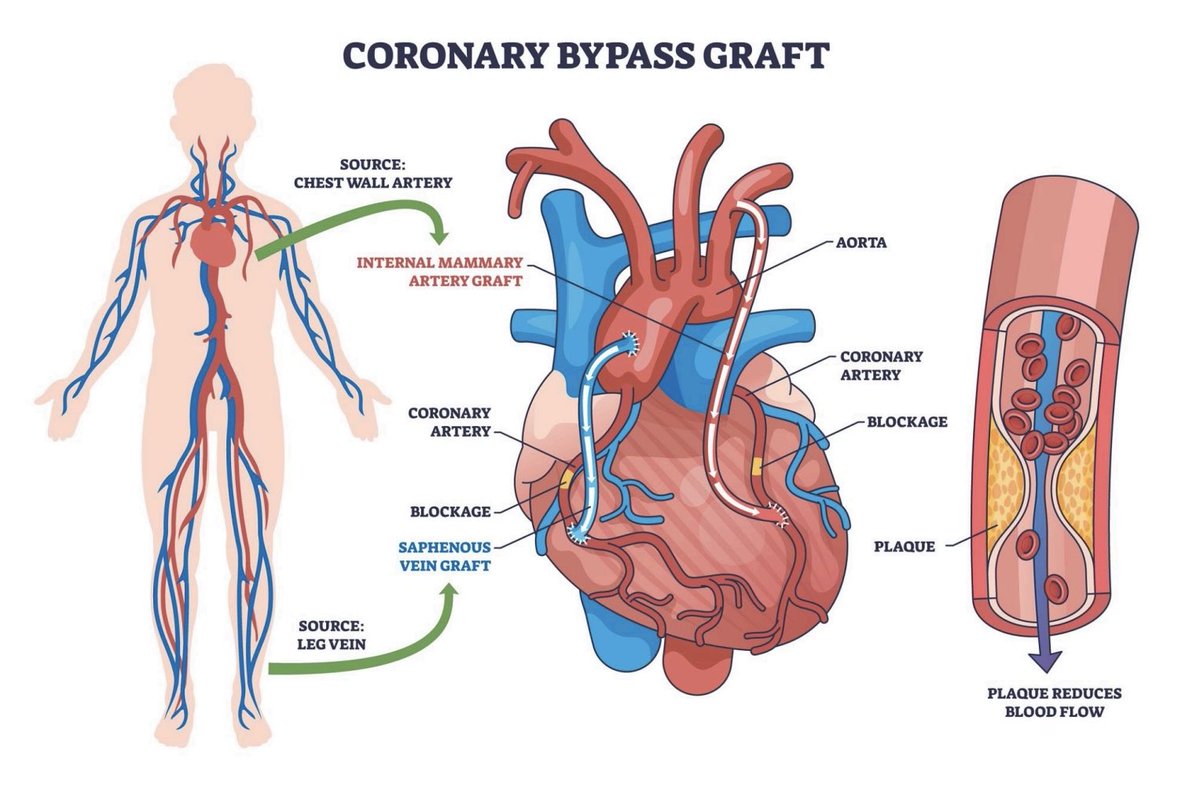
A 62-year-old male undergoes three-vessel coronary artery bypass grafting (CABG). The surgical team selects the left internal mammary artery (LIMA) to bypass a 90%
stenosis in the proximal left anterior descending (LAD) artery. Which mechanism primarily accounts for the superior long-term patency of the LIMA graft compared to a
saphenous vein graft (SVG)?
A. Thicker muscular tunica media resistant to high pressure
B. Complete absence of intrinsic smooth muscle cells
C. Endothelial production of nitric oxide and prostacyclin
D. Reduced structural exposure to systemic arterial flow
Correct answer: C. The LIMA endothelium actively produces vasodilators such as nitric oxide and prostacyclin, which protect against intimal hyperplasia, vasospasm, and
progressive atherosclerosis, resulting in long-term patency rates exceeding 90% at 10 years
● LIMA (Left Internal Mammary Artery) to LAD (Left Anterior Descending Artery): The gold standard. Patency rates >90% at 10 years due to nitric oxide production by the endothelium & resistance to atherosclerosis.
● SVG (Greater Saphenous Vein): Great for length/versatility, but lower long-term patency (~50% at 10 yrs) due to higher rates of intimal hyperplasia. Reversing vein grafts helps prevent valve obstruction!
● Radial Artery: Excellent arterial alternative; requires pre-op Allen's test to prevent ischemic complications in the hand & post-op CCBs for spasm prevention.