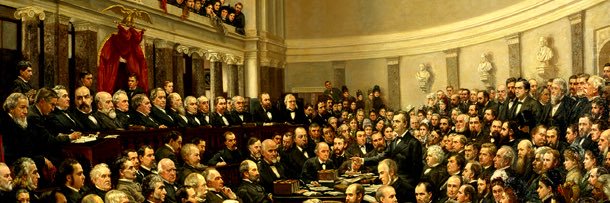
Congress has increasingly been described as chaotic! In a new piece for @BPC_Bipartisan, @ThorningMichael & I argue that the nature of the chaos is in the eye of the beholder stemming from the model that one prefers the institution operate under. 🔗👇
Getting better people to run for political office is maybe our single most important governance problem today. I wrote a book about this back in 2019 called "Who Wants to Run?" It was about why Congress was getting more polarized in part because more-moderate people were not running for Congress very often anymore.
To encourage better candidates, here are some of the policies I argued for:
--Pay legislators more (yes, really)...but not our current legislators. Our future legislators!
--Reduce fundraising demands so that people can run for Congress without spending all their time begging for money
--Enhance congressional capacity so that being a member of Congress is appealing for people who actually care about governing
Some things have held up better than others in the book. If nothing else, I think the title diagnoses the key problem in American politics: who wants to run?
https://t.co/shuX3EMI4A
No one is happy with Congress--voters, the president, SCOTUS, or even its own members.
@BPC_Bipartisan@JDRackey and I explore what's causing the tension: Congress is trying to be two different kinds of legislatures, and succeeding at neither. 🔗⬇️
@maustermuhle And if only the OP worked for someone who could have done something about it and definitely didn’t spend their time and power working toward the opposite.
Reasons not to vote for McDuffie:
> property tax breaks for seniors
> won’t remove parking for bike lanes
> wants more historic districts
Reasons not, JLG:
> against curfews and evicting violent tenants
> bought out by unions, anti Waymo
> makes perfect enemy of good w housing
@mehdirhasan@ConorLambPA@malcolmkenyatta Yet we have to imagine you’ll continue to treat those who were on the other side of this as unprincipled, corrupt shills…
@colinrcase@AJPS_Editor One anxiety about American democracy is that congressional campaigns have become fully nationalized, with candidates adopting identical party positions. We find little support for this: fewer than 1/2 of candidates take consistent positions across all issue areas we examine