🔐 When problem-solving gets harder physically, learning gets smarter. #SCIoI researchers show that higher effort leads to slower, more focused, and more efficient exploration in a virtual lockbox task. Intelligence is embodied.
🔗 https://t.co/mYQSqcR7zy
Just published @JHealthEcon /w @ThorstenPachur!
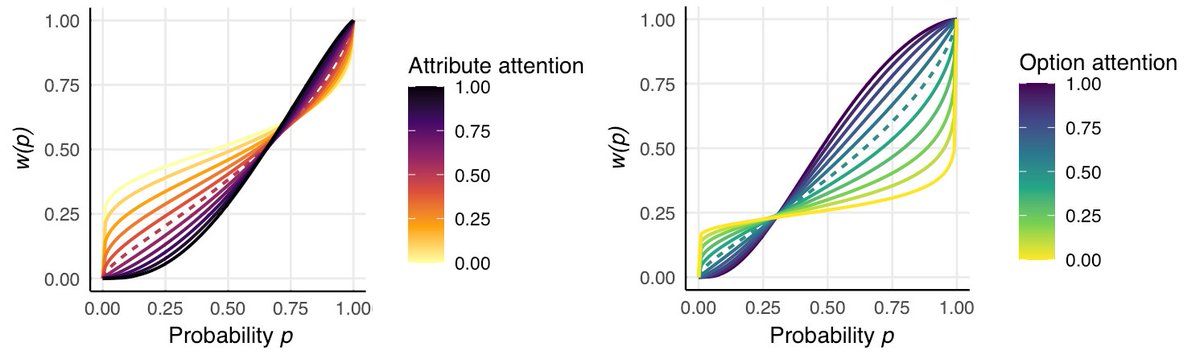
Attention drives the gap between TTO/SG health valuations.
🔍 TTO: equal focus on health & duration
🎲 SG: focus shifts to probability& health
👁️ Less attention to trade-offs = bigger TTO–SG utility gap
https://t.co/xNbbqujabf
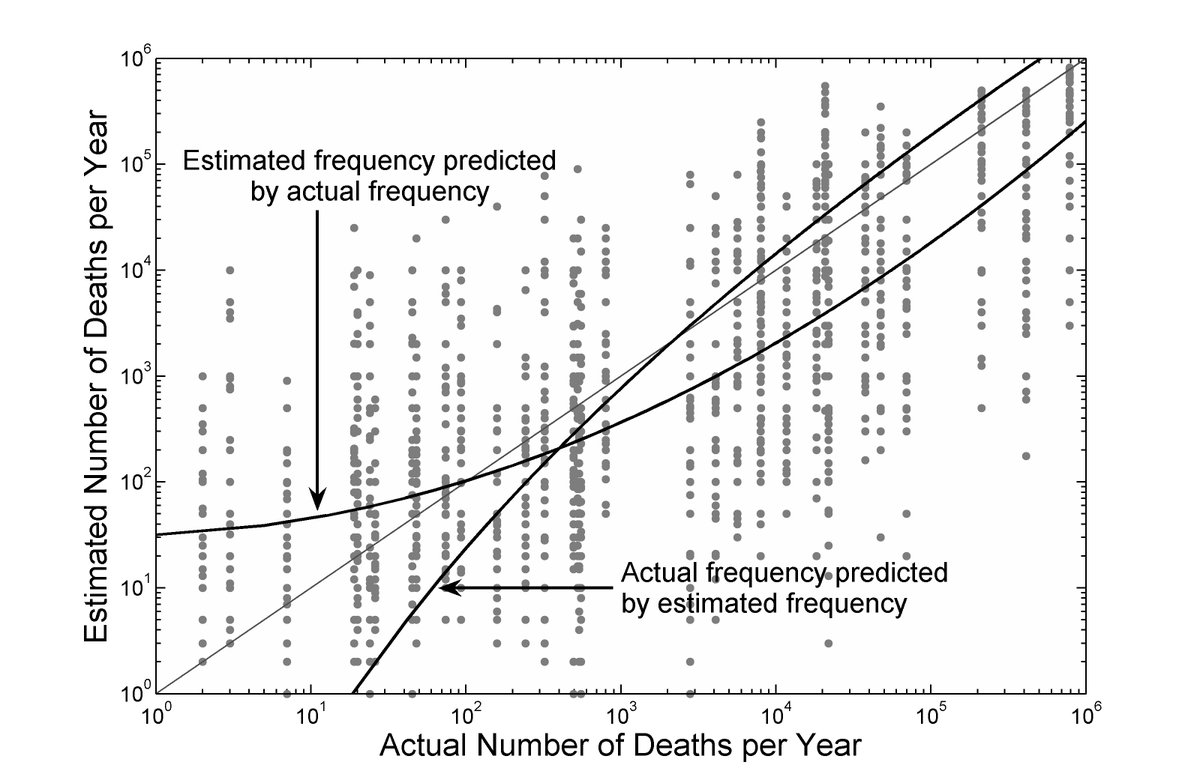
@dggoldst Such patterns also arise simply from regression to the mean, following from two variables being imperfectly correlated with each other. Therefore, as we discuss in this paper https://t.co/XbgQgHEASK, one can reverse the apparent pattern by changing the direction of analysis.
Many thanks to my great coauthors, Ralph Hertwig and @ThorstenPachur, and to @arc_mpib & @mpib_berlin.
Full read: https://t.co/1hIuUJTnUg
Here are our main findings in a thread:
These findings speak against a direct link from media coverage to public risk perception. Further analyses reveal that rather than relying on media reports, people recruit knowledge about occurrences of the risks in their personal social circles (that is, social sampling). 5/5
The widely cited study by Lichtenstein et al. (1978) concluded that people overestimate the frequency of dramatic causes of death (e.g., Tornado). A new article in @CognitionJourn finds that these results do not replicate (Open Access):
https://t.co/BzPGjbBfeT
🧵1/5
… of dramatic risks in the media. This distortion, however, is not reflected in people’s frequency judgments. In fact, across all datasets, Bayes factors indicate evidence for the absence of a difference in the distortion of the judgments for dramatic and nondramatic risks. 4/5
Although dramatic risks are overreported in the media, this does not warp people’s perception of the risks’ frequencies. People seem to be able to mentally shield themselves from distorted media influences
📢New from: @ThorstenPachur
https://t.co/xYxt8dfsQ8
These improvements in transfer outsize the distortion in retrospection: hindsight bias might be a price worth paying. Our results represent theory integration of two major research programs on quantitative estimation: hindsight bias and seeding effects https://t.co/1oHEpKYx0l 3/3
New publication in JEP:General (with J. Groß, @bk_kreis, H. Blank) demonstrating that hindsight bias—commonly viewed as reflecting a mental flaw—results from beneficial knowledge updating. 1/3
We show that when making estimations about real-world quantities (e.g., country population), information about the actual quantities not only distorts people’s retrospective views on their initial estimates; it also improves their estimates for other objects of the domain. 2/3
We are hiring! The Chair of Behavioral Research Methods @TU_Muenchen has openings for 2 postdoc or predoc positions (100%) on computational modeling of behavior. Application deadline is September 22. For more information: https://t.co/FXlxhnZUgO
How do attribute attention and option attention shape preferences in risky choice?
New paper with @ThorstenPachur, out now in Cognition:
https://t.co/GdNmGUYcba
1/8