Cet automne, pour la première fois depuis 250 ans, ma famille ne récoltera pas d'olives au Liban.
Nos 600 oliviers ont été arrachés du sol par l'armée israélienne, racines comprises, et emportés. Les plus vieux avaient 500 ans !
Cette terre, mon grand-père la tenait de son arrière-grand-père. En deux siècles et demi, ma famille a acheté de la terre. Elle n'en a jamais vendu un mètre, pas un seul jour. Chez nous, on ne construit pas sur la terre. On y plante. Ces arbres ont survécu à plusieurs guerres. Ils ont survécu à tout.
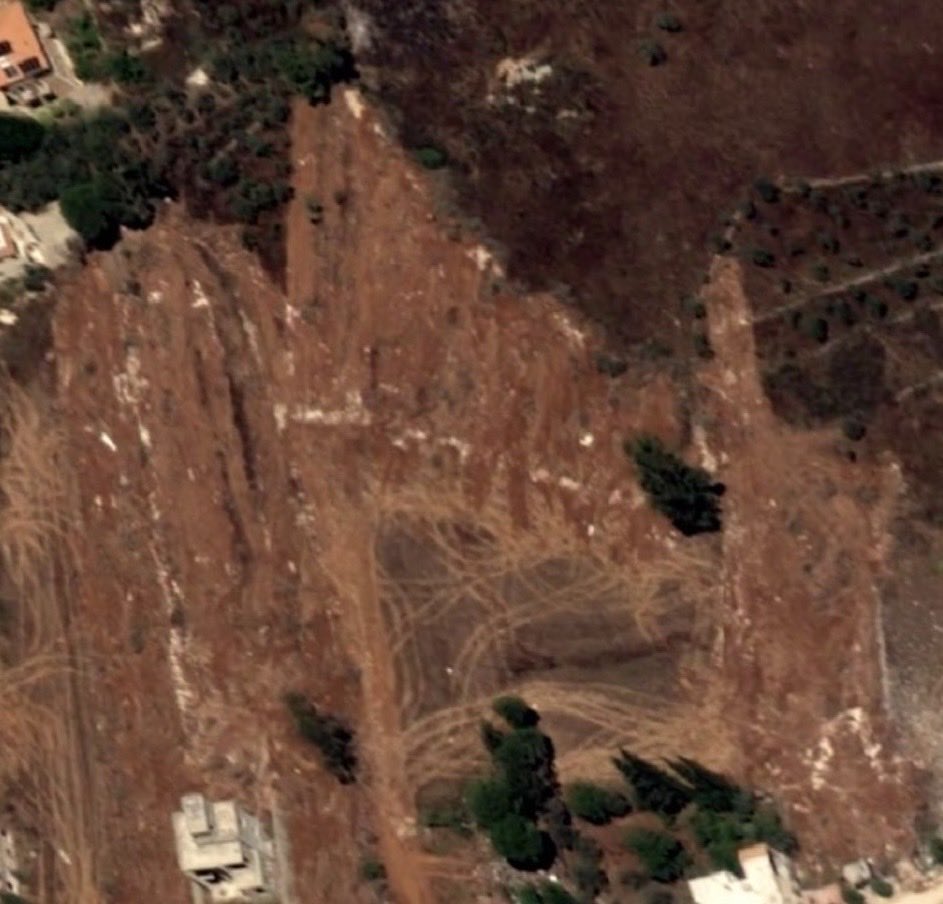
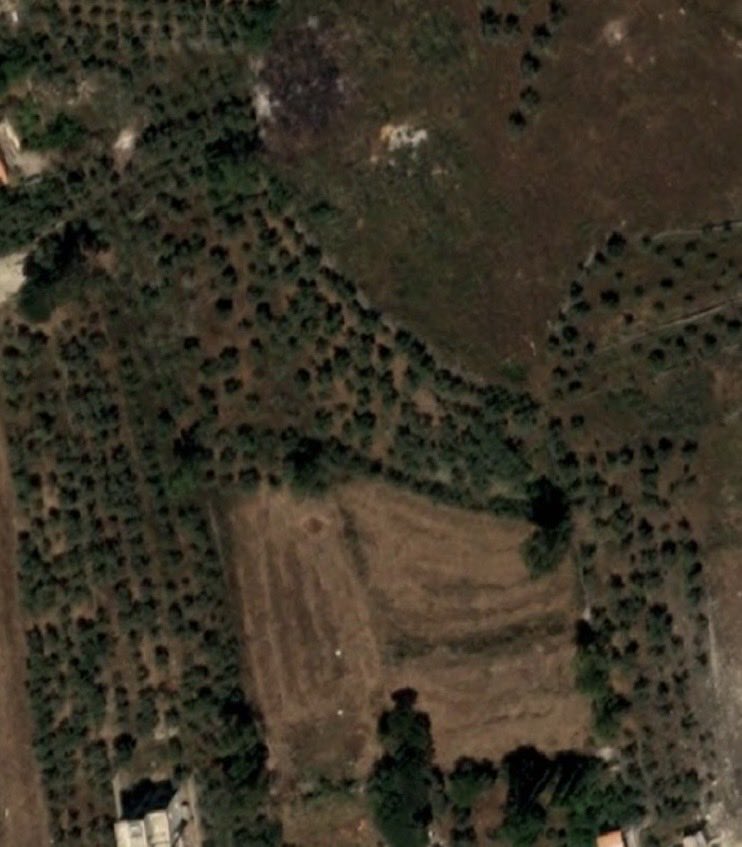
Regardez les deux photos. À gauche, notre terre le 25 juin, la veille de la signature de l'accord entre le Liban et Israël. À droite, la même terre le 20 juillet.
Il ne reste rien. Et c’est justement ça, la preuve. Un incendie laisse des troncs noirs debout. Une frappe laisse des cratères. Ici, pas un tronc calciné, pas une souche, pas un débris. Une terre nue, raclée, griffée par les chenilles des engins. Déterrer un olivier de 500 ans sans le tuer demande des pelleteuses, un savoir-faire, des camions et une destination. Ce n’est pas un dégât de guerre. C’est une opération, sur une terre où il n’y avait ni armes, ni combattants, ni présence militaire. Ma famille n'a jamais été liée de près ou de loin au Hezbollah, et elle ne le sera jamais. Il n'y avait que des arbres, et des gens qui les taillent depuis huit générations.
D'après les témoignages qui nous parviennent, ces arbres auraient été emportés de l'autre côté de la frontière, vers Israël.
L'accord signé entre le Liban et Israël, censé préparer la paix, protège les biens des civils. Je demande simplement qu'il soit appliqué : que le sort des arbres déterrés soit établi, que ceux qui sont encore vivants soient rendus. Si nos arbres sont vivants quelque part, ils peuvent revenir. Je ne cherche pas une vengeance. Je cherche une adresse !
J'ai hésité à écrire ces lignes, pour ne pas provoquer des réactions d'un côté comme de l'autre. Mais je refuse de faire le deuil de ces oliviers. Dans ces arbres vit l'âme de mon grand-père, ancien général de la police libanaise, un homme qui a toujours cru dans la paix, dans les humains et dans la lumière. Il taillait ces arbres à mains nues. Il répétait : “on ne vend pas la terre, on la transmet”
Je lui dois de ne pas me taire.
A fundamental lesson from my posts these last two weeks on modernization, industrial policy, and development is that development economics should be about understanding why South Korea got rich but Bolivia did not.
The current field has largely given up on that question. Sharply identified RCTs on small micro programs are a fine way to publish in the AER and get tenure at a fancy university, but a profession that knows everything about microfinance impact evaluations and almost nothing about industrialization has misallocated its own intellectual capital on a pretty heroic scale.
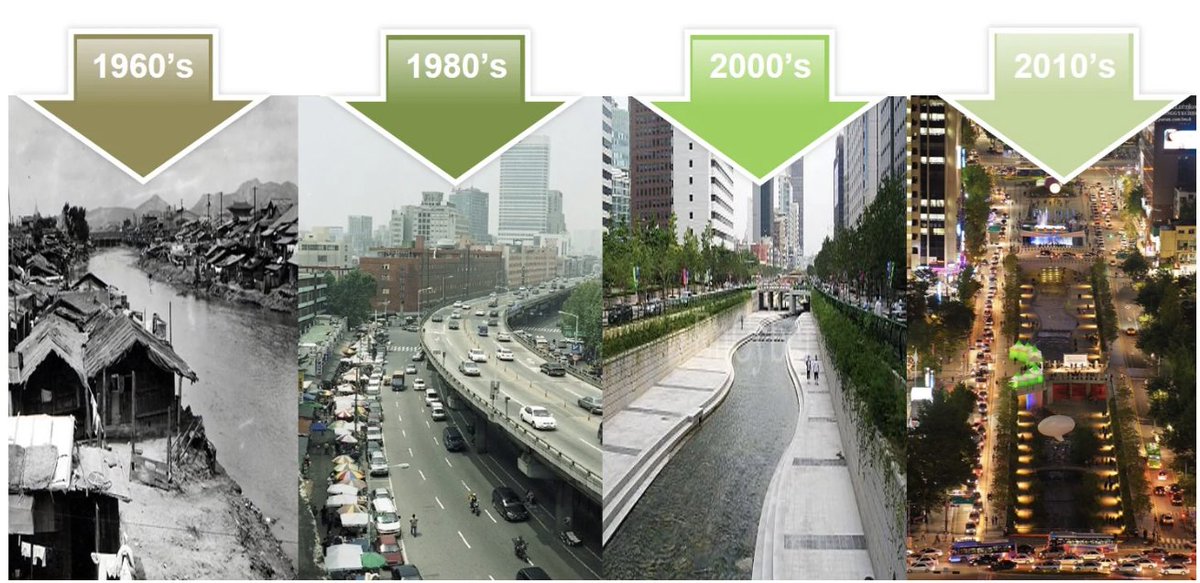
Four images of Seoul:
@GrimmVeronika And why is that. The US-israeli intervention has had a huge cost on Europe that is just going to grow as this war turns into a war of attrition, not the opposite. Economists commenting on current affairs is always a catastrophe.
@aniketapanjwani I recently extracted yearly sector by region data from tabulations in pdfs for an econ project using claude. It did it pretty well, by using the pdfplumber package in python. but i guess doing tabulations after specifying what to extract should be easier than reading papers.
@drescamillag Cool. I tried doing something similar with Egyptian data. But the quality was much worse than this and the numbers were in Arabic numerals. It didn’t work. But i didn’t try long enough i guess.
@joefrancis505@I4Replication Interesting! My experience with the scm is also pretty negative. It is very sensitive to the choices one makes not only to the reference year but also to the donor pool, and to the number of pre treatment years one matches on.
@MichaelARothman The dumbest argument ever.
The difference in avg IQ btwn low & high income countries is approx 30 points. Cousin marriage could potentially explain 5-10pts, the rest is explained by socioecon factors. Thats why low income christian and muslim countries have similar IQ levels.
I like this blog post. You often see people “well identifying” the effect of x on y, but it doesn’t really explain much of what happening. So why should i care!?
"Causation does not imply variation." A lovely saying coined by Tyler Muir with applications to price pressure in stocks and the causality revolution in applied micro. Just because x causes y does not mean most variation in y is caused by x.
https://t.co/8CIpeREBth
@policytensor Conclusion isn't precise. To conclude that Islam offers little resistance to fertility decline, you'd need to look at fertility by religious groups and by religiosity not countries . Islam does not stop fertility decline yes but it might make it milder. DHS data is available.
@omar_dddg nice thread but you should be aware of the literal tafsir of this verse as well, because in the classical tafsir it talks about something physical
@AbuDaraja History does not always unfold as such… who would have imagined that Mao winning in china, who a lot of people thought would create a terrible future and it did on the short run, would eventually take china to its current development, pulling hundred millions out of poverty