It’s almost 24hrs we haven’t heard from my sister, she was going to Epe from Ajah around 1pm yesterday (Thursday) for her jamb exam today…. The last msg she sent her other sister was that “I’m scared I Tink I enter rong car my eyes is itchy e be like I want to slip.
Une maman motivée est en pleine reconversion et cherche un CDD ou CDI en comptabilité pour valider sa formation diplômante. Un simple partage peut l’aider à trouver son opportunité.
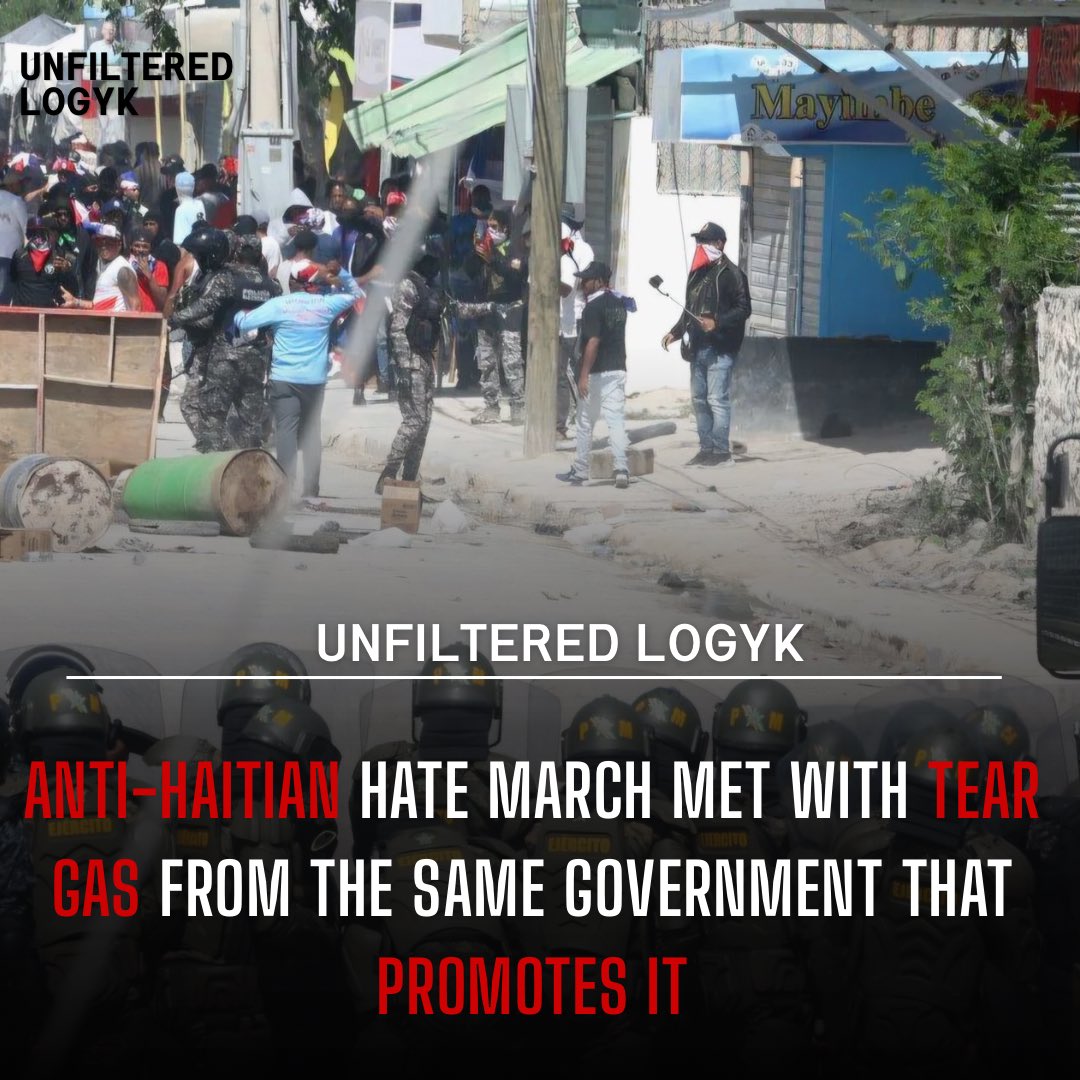
On March 30th, a Dominican nationalist group called Antigua Orden marched in Fruisa to protest the presence of Haitian migrants in the area—many of whom are over-exploited laborers working in construction. The demonstration was fueled by rising anti-Haitian sentiment, amplified by Dominican media figures such as Santiago Matías (Alofoke), who openly encouraged participants to carry weapons—including guns and machetes—in case of Haitian resistance.
In response to the planned march, Dominican authorities deployed police forces to monitor and intervene if necessary. Although Antigua Orden framed the protest as a “peaceful demonstration,” the event quickly descended into chaos, forcing law enforcement to disperse the crowd with tear gas. According to Listín Diario, government officials later claimed that Dominicans “infiltrators” were responsible for provoking clashes between protesters and the police. Additionally, videos circulating on social media shows Dominican men waving national flags harassing and shoving a Haitian man, reinforcing the violent undercurrent of the demonstration.
Ironically, before the march, several news outlets had reported that Dominicans and Haitians in Fruisa were living together peacefully. Haitian migrants, despite being subjected to low wages and harsh working conditions, had coexisted with their Dominican neighbors without major incidents. The protest, therefore, was not a response to real community tensions but a politically charged effort to ignite anti-Haitian hostility against a workforce that Dominican society heavily depends on.
The march had already drawn criticism prior to the event. The head of the Haitian transitional council publicly condemned it, arguing that it was not organized in good faith and expressing concern for the Haitian laborers in Fruisa.
This incident exposes a stark contradiction in the Dominican government’s handling of anti-Haitian sentiment. While authorities have historically enacted policies that marginalize and deport Haitian migrants, they also cracked down on an openly anti-Haitian protest. This raises critical questions: Is the government attempting to control nationalist groups to maintain order, or is it fearful of the consequences of escalating xenophobic violence? The state appears to be walking a tightrope—fueling anti-Haitian rhetoric through policy and media influence while struggling to prevent it from spiraling into uncontrollable conflict.
Meanwhile, the Haitian government remains eerily silent. Since 2024, Haitian officials have failed to address the worsening conditions faced by their citizens in the Dominican Republic—just as they have failed to respond to the deepening gang crisis in Port-au-Prince. This latest episode is yet another glaring example of the Haitian state’s neglect, abandoning its people to face discrimination and violence abroad with no diplomatic intervention. The absence of any official response only solidifies the perception that the Haitian government has utterly abdicated its responsibility to protect its own citizens, whether at home or in exile.
Ce document met en lumière des disparitions forcées et des arrestations arbitraires, notamment dans le nord du #Togo, placé sous état d’urgence sécuritaire depuis 2022. https://t.co/8GDdpfE59O via @AfrikInfo