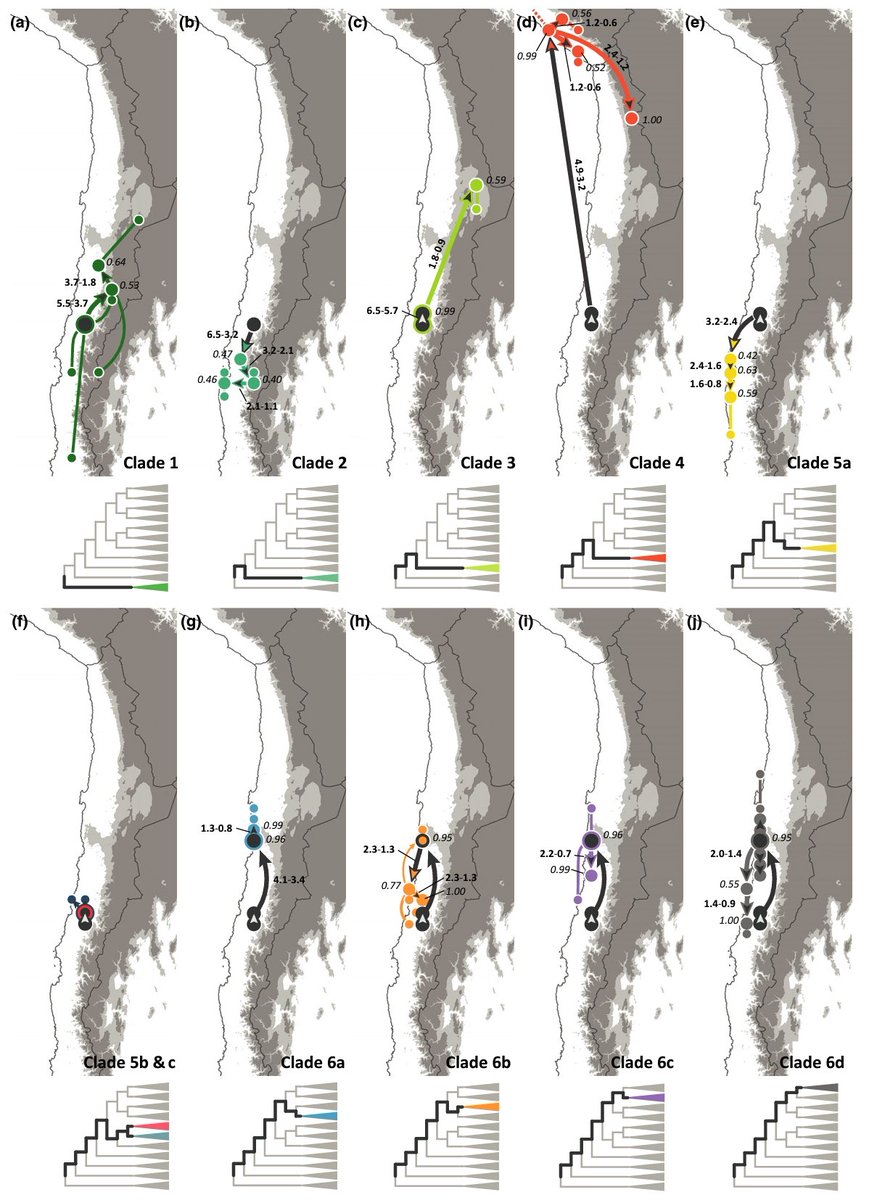
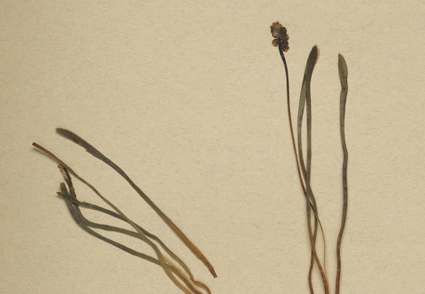
Finally, our paper on the #historicalbiogeography of the #Atacama endemic #Cristaria is published at @NewPhyt We used the BayArea model paired with near-comprehensive sampling across the entire range, unravelling the biogeogr. of a recently diverged species complex @UniBonn 1|3
I had a very productive day in SGO @MNHNcl revising two genera and finding two unrecognized types. The staff was amazingly helpful. Next time I will plan more time to dive deeper into the collection.
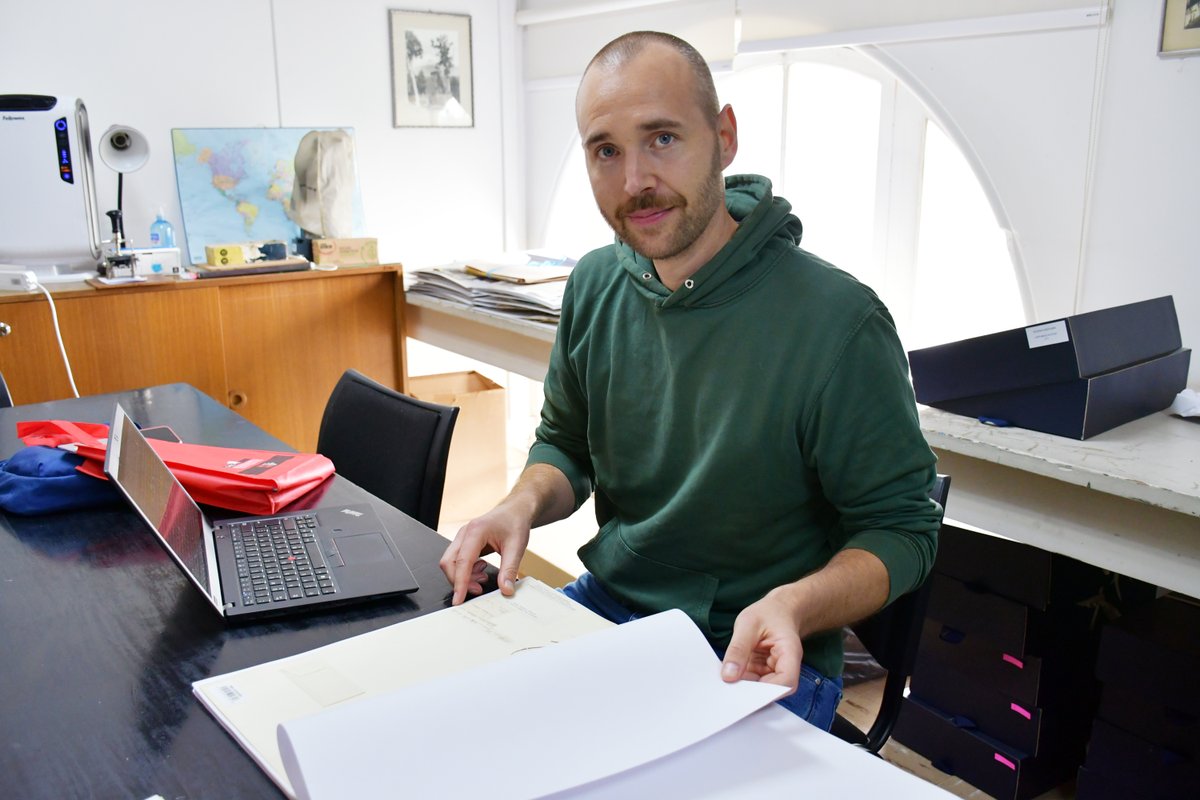
06/10 Nos visitó el Dr. Tim Böhnert, Botánico de la Universidad de Bonn (@UniBonn), Alemania. El Dr. Böhnert estuvo en el Área de Botánica 🌿 revisando ejemplares y tipos de los géneros Oziroe, Cristaria, Atriplex y Cryptantha.
#Plant#taxonomy might not be super exciting to everyone, but it's fundamental for the research I'm doing. I'm super happy to share this lectotypification of the #geophyte#Muscari heldreichii as part of my Flora of #Greece treatment (in rev.) for this genus. @Phytotaxa@UniBonn
With 5,804 taxon names and 136 syntaxon names, VegAndes is the #vegetation database for the Latin American #highlands.
Here's the database report: https://t.co/AYoEm42TYQ
After taking the first samples of #Muscari sl (Asparagaceae) eight years ago @BonnGardens aiming towards a taxonomic revision, I am so happy that after so many years I can finally present an updated classification of the group using #ddRADseq. @UniBonn https://t.co/qKHf7Wqwlf 1|4
Stay tuned, since there is more #Musari coming, incl. a tax. revision for the Flora of Greece as well as several papers concerning lectotypifications, all curr. in rev. I'm curr. working on the biogeographic and evolutionary history of the group with a much larger sampling. 4|4
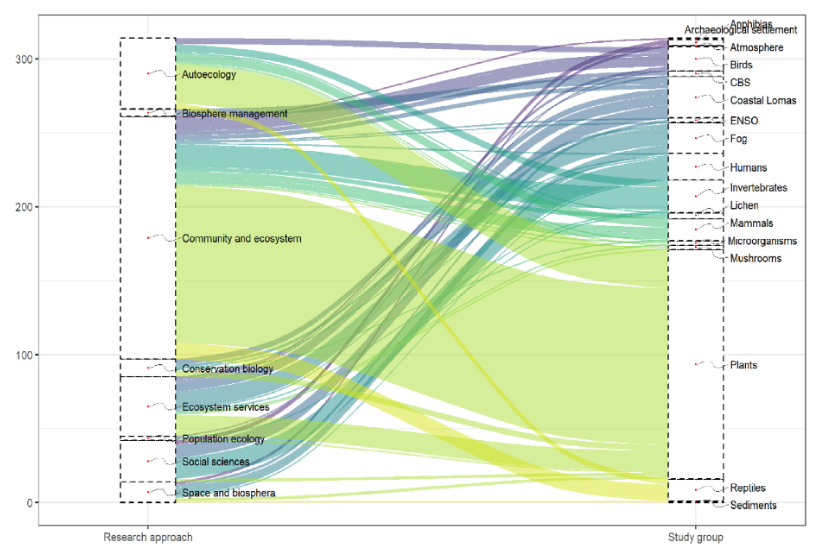
The coastal #Lomas of #Chile and #Peru are just amazing ecosystems with a unique vegetation. Can’t wait to read this review by @DylanJCraven and colleagues …
Are you interested in fog islands? Check out our systematic review of the #CoastalLomas of Chile and Peru! 1/4 https://t.co/yHYU9VyGCC @CEM_UMayor @InvestigaUMayor @AnidInforma
@BioGeoKreft@NewPhyt@lrcai@BioGeoMacro Congratulations to the team. Jens and I are pretty excited and have it already on the list for one of the student presentations during our R course.
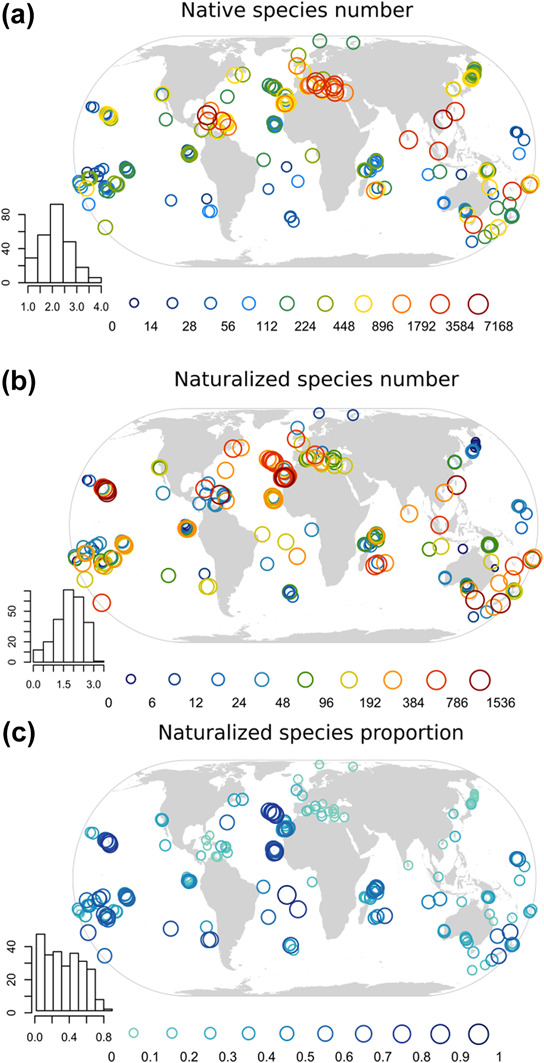
Improved global maps of plant diversity out now in @NewPhyt paper led by amazoning ECR @lrcai@BioGeoMacro.
Global models and predictions of plant diversity based on advanced machine learning techniques
Find paper #OpenAccess here:
https://t.co/PppF1tIWcb 1/
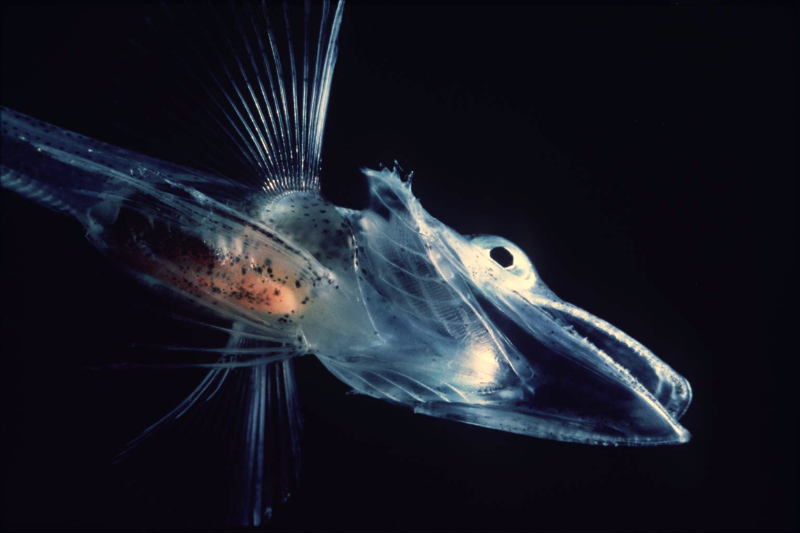
Would you like to work with 500 genomes covering the entire radiation of Antarctic icefishes? Learn #museomics, phylo- and popgenomics? Then come join my group at @NHMOslo_Science as my next PhD student! Deadline 13 January, start ~1 April. Please share! https://t.co/XmCwbYVGBF
Such a pleasure to follow the amazing talk at #BT2022DBG by @SarkinenTiina presenting the extensive work on #Solanum carried out by her and her working group incl. very interesting results from @PassifloraTree
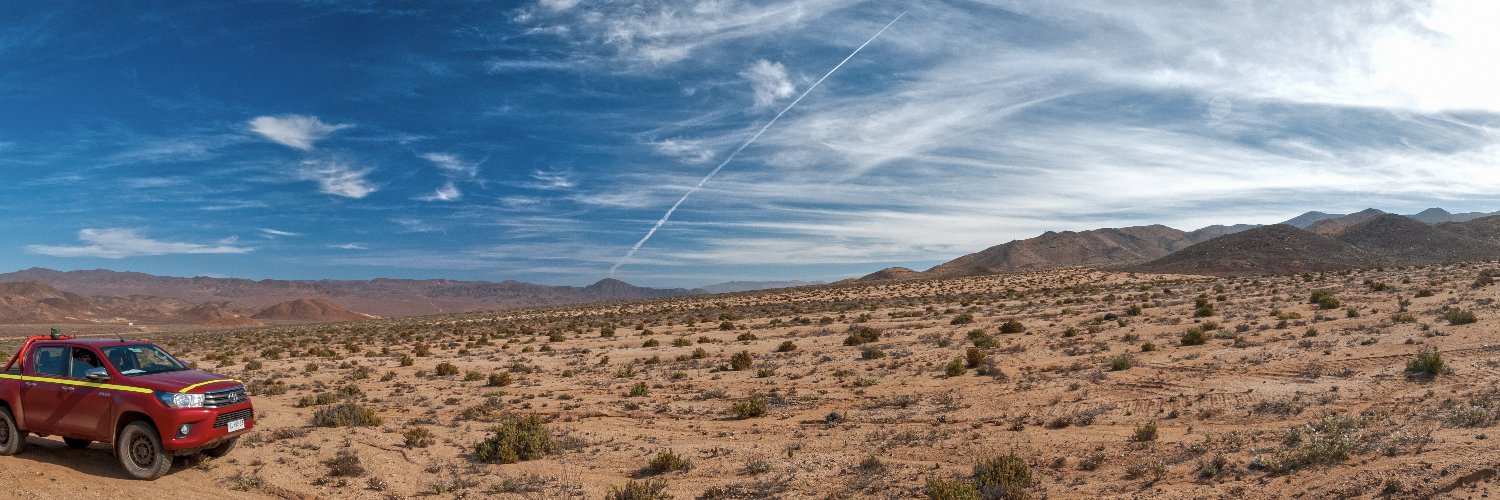
I saw those ralley marks in the Atacama landscape myself and I cannot believe that this is suppose to be happening again. All the distruction just for the fun of a handful of stupid people.
Ahora está ocurriendo el Rally de Tarapacá, destruyendo nuestro patrimonio arqueológico, cultural y natural, atravesando geogrlifos, tillandsiales, oasis de neblina y desierto florido.
Esto no puede volver a ocurrir.
https://t.co/nahLv0LFH4
Trichocereus atacamensis is the high-elevation-occurring cactus in the world. Like a few columnar cacti in Chile, the spines change 8' up the plant. Below 8' they are thick & do well for armor. Above 8' they are more like long hairs & serve as insulation in the cold dry air.