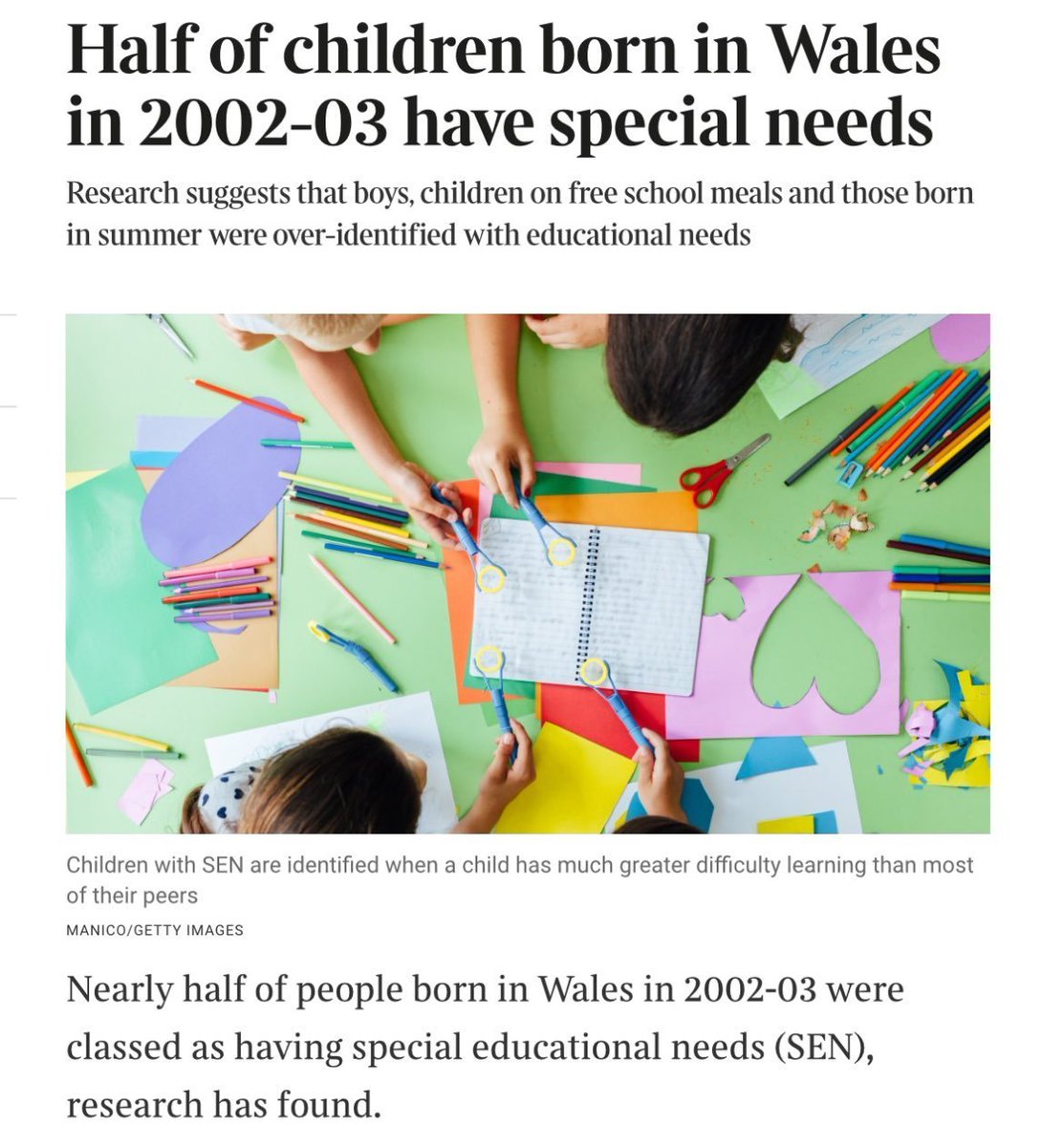
Half of all 2002/3-born Welsh children were granted SEN provision. However, against a backdrop of compounding dysfunction in Scotland and England, Wales turned the ship around.
How 🏴 grasped the nettle and fixed its special needs system: a comprehensive summary.
🧵1/25
Last year I pointed to what 🏴 had done to cut back ALN numbers and what 🏴 and 🏴 could learn from it.
Today I turn to a case study in 🏴 itself: Aberdeenshire.
A long-ish blog post on the changes which saw them cut their ASN rate from 48% to 38%:
https://t.co/6ZcPuuGEaN
Last year I pointed to what 🏴 had done to cut back ALN numbers and what 🏴 and 🏴 could learn from it.
Today I turn to a case study in 🏴 itself: Aberdeenshire.
A long-ish blog post on the changes which saw them cut their ASN rate from 48% to 38%:
https://t.co/6ZcPuuGEaN
Another example of the weirdness of the politics of ALN.
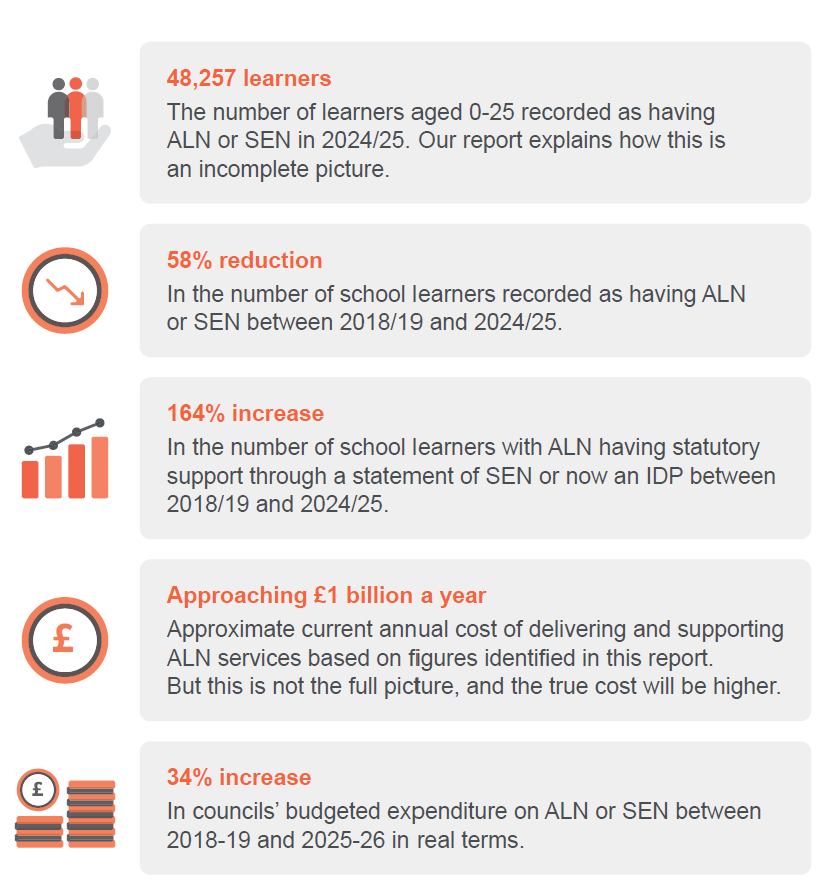
Welsh Lab pushing for more education spending going to ALN despite a 58% drop since 18/19 in number of relevant pupils as a result of their own reforms.
Real spending up 34% in that time and approaching £1bn per year.
@BrianBengal@warriorbadger@IpsosScotland Why are you denying that this was a Scotland-specific poll? No voters from outside Scotland were asked. It's the Scottish branch of Ipsos.
@Joe___Allen@rcolvile Yes, very complex picture. I did a counter-thread on the problems with the reforms - already out of date, sadly - which got a fraction of the attention the main one did... I suppose it's not as good a story!
I'll post it here:
https://t.co/kR0DSpkQlp
In the original thread I was cautious not to make the link that "headline SEN has gone down, therefore outcomes are better" (if I could write it again, I wouldn't have said that the "special needs system was fixed" but that the recording of cases/overrepresentation of SEN had).
Wales has a fascinating story on SEN reform (@Tim_ODoherty and @rcolvile have written on this previously).
But reality of it is complex.
New Audit Wales report confirms that while numbers of ALN/SEN numbers have dropped significantly post-reforms, spending has continued to balloon.
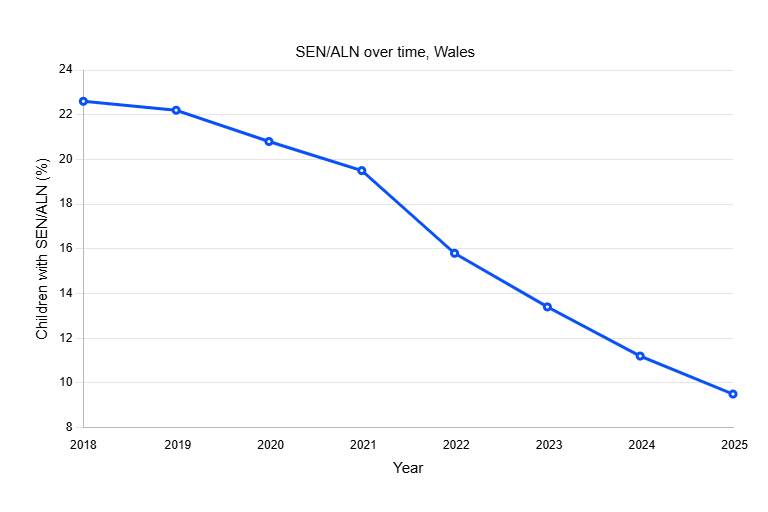
> In 2018 22% of Welsh pupils had SEN provision. Reforms came in 2021. By 2025 that number was down to 9.5%
> Less than half the equivalent number in England. Scotland much higher again.
> Despite this fall in pupils covered, real terms SEN spend in Wales is up *34%* over the same period.
> Audit Wales estimates annual cost is approaching £1bn and adds this is "not the full picture".
So ALN/SEN provision now accounts for 3-4% of total Welsh Government spend.
@Joe___Allen Interesting to see he's improved. Saw bits of the first one + bits of the debate through the campaign and always thought ap Iorwerth was very clumsy at responding to any sort of question. "What does rural resilience mean? It means... rural... resilience".
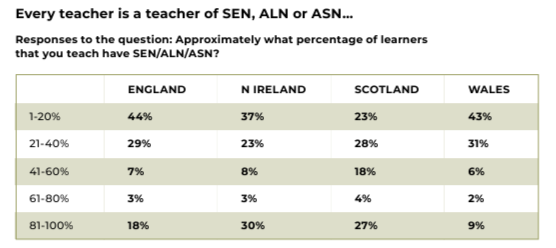
57% of the Scottish respondents saying 81-100% are non-specialist and non-specialist-within-mainstream teachers. This is against 81% in NI. Ie, 15% of regular mainstream classes.
@ferniator My point is that exact representativeness has never been definitely argued to be better (or more important) than eg viability of a Parliament per Lascelles, which IS constitutionally conventional - and parliament is a national body aimed at forming a national government.
@ferniator Why is proportion of votes a better metric than (say) change in vote, or something else? We can measure lots of things in elections. Why not say we start with X no. of seats for a party and take ones off - like old negative marking?
I'm not making a practical case for this, BTW.
@sjejsjejd Yes, 13. SNP were at 10. They won 5 and 9 respectively.
Changes: -McMurdock, -Lowe to 3. +Pochin, +Kruger, +Rosindell, +Braverman, +Jenrick to 8.
SNP lost Flynn and Gethins after their election to Holyrood - dual mandates are no longer allowed. So 7, falling just below Reform.