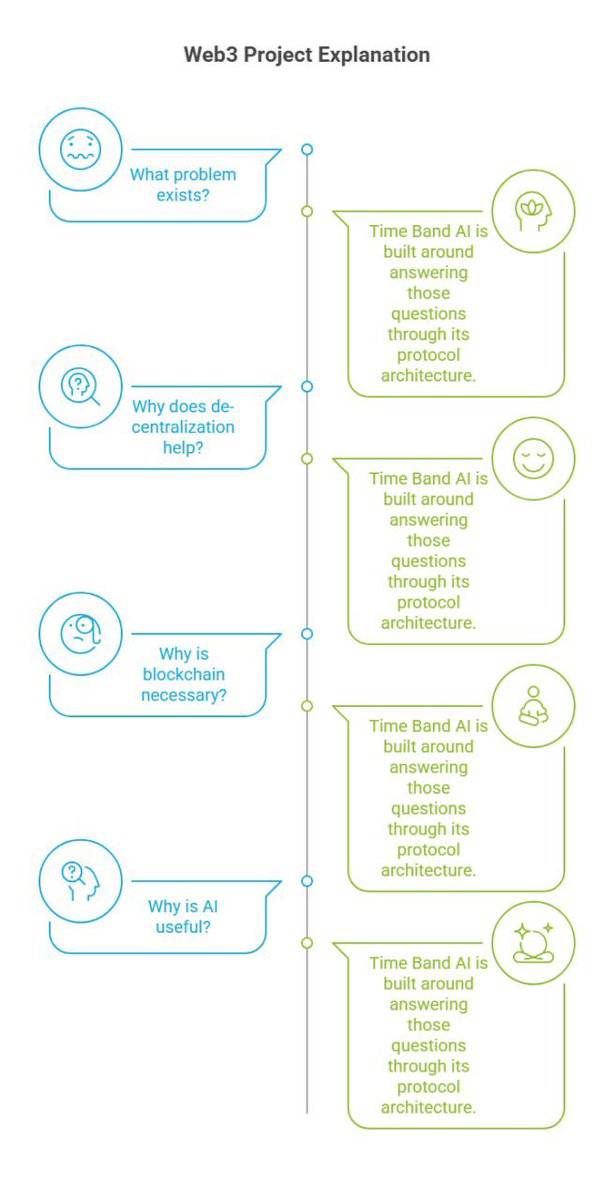
A serious Web3 project should be able to explain:
What problem exists?
Why does decentralization help?
Why is blockchain necessary?
Why is AI useful?
Time Band AI is built around answering those questions through its protocol architecture.
#TimeBandAI
Resilience is not the same as decentralization.
A system can have decentralized components and still have weak operational design.
Time Band SI approaches resilience through multiple layers: communication, nodes, contracts, verification, and governance.
#Web3#Infrastructure
One of the most important design principles in decentralized infrastructure is minimizing unnecessary centralization.
Time Band SI's architecture explores decentralized nodes, smart contracts, and DAO governance as components of a broader resilience model.
#Decentralization
Layered architecture matters because decentralized systems become difficult to scale when every responsibility is concentrated in one component.
Time Band SI's architecture separates interaction, intelligence, transactions, communication, and governance.
#SoftwareArchitecture
The Time Band SI architecture is intentionally layered.
Interface.
SI systems.
Smart contracts.
Communication.
Governance.
Each layer addresses a different part of the coordination problem.
#TimeBandSI#Tech
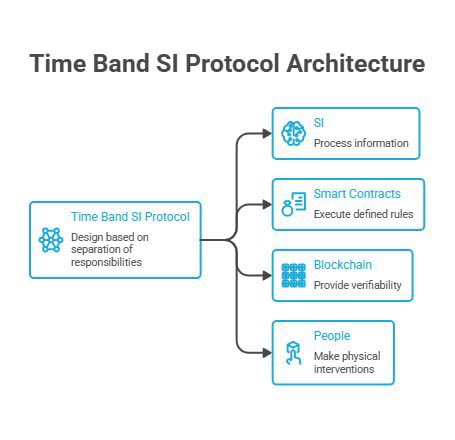
A protocol becomes stronger when technology is assigned the right responsibility.
SI can process information.
Smart contracts can execute defined rules.
Blockchain can provide verifiability.
People can make physical interventions.
Project is designed around this separation
SI does not replace the responder in the Time Band SI model.
SI is designed to support coordination and matching.
The actual response remains human.
That human in the loop structure is important when technology interacts with real world emergencies.
#SI#TimeBandSI
The strongest Web3 applications may not always look like traditional crypto products.
They can look like infrastructure.
Time Band SI explores that direction by combining SI, blockchain, mobile interfaces, communication, and decentralized governance.
#Web3#Infrastructure
Emergency coordination has a unique requirement:
The system must be useful in the physical world.
Time Band SI therefore connects digital infrastructure with real world responders.
This is where Web3 becomes more than a financial technology.
#Web3#RealWorld
Time Band SI treats governance as part of the infrastructure.
Protocol changes, upgrades, and future development can become community governed processes rather than purely centralized decisions.
That is the direction decentralized systems should explore.
#Web3#Governance
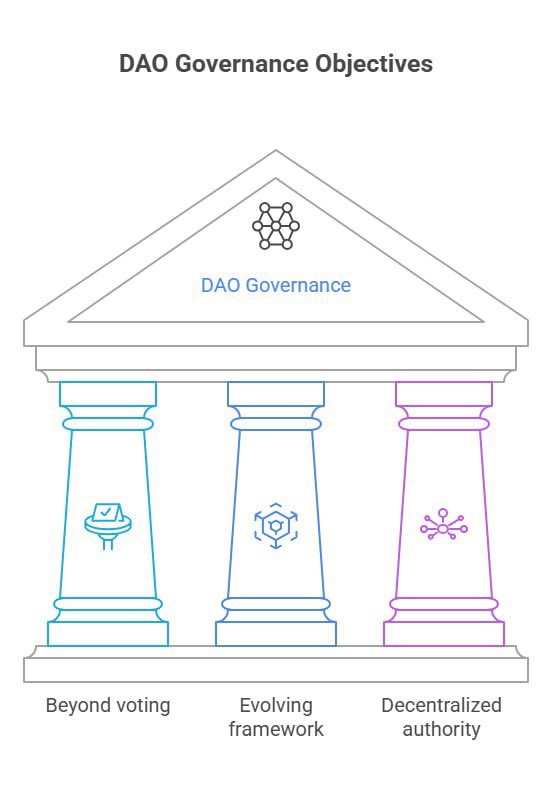
The long term objective of DAO governance is not simply voting.
It is creating a framework through which a protocol can evolve without depending entirely on a single central authority.
That is an important distinction.
#DAO#Decentralization
Governance becomes more meaningful when token ownership connects to actual protocol decisions.
Time Band AI proposes DAO based governance where TBT holders can participate in proposals and voting.
Decentralization requires mechanisms for collective decision making.
#DAO#Web3
Time Band AI proposes a maximum TBT supply of 1 billion tokens.
But supply alone does not define a token economy.
Utility, distribution, participation, incentives, and governance determine how an ecosystem functions.
#TBT#Crypto
Good tokenomics should answer one fundamental question:
What behavior does the token economy encourage?
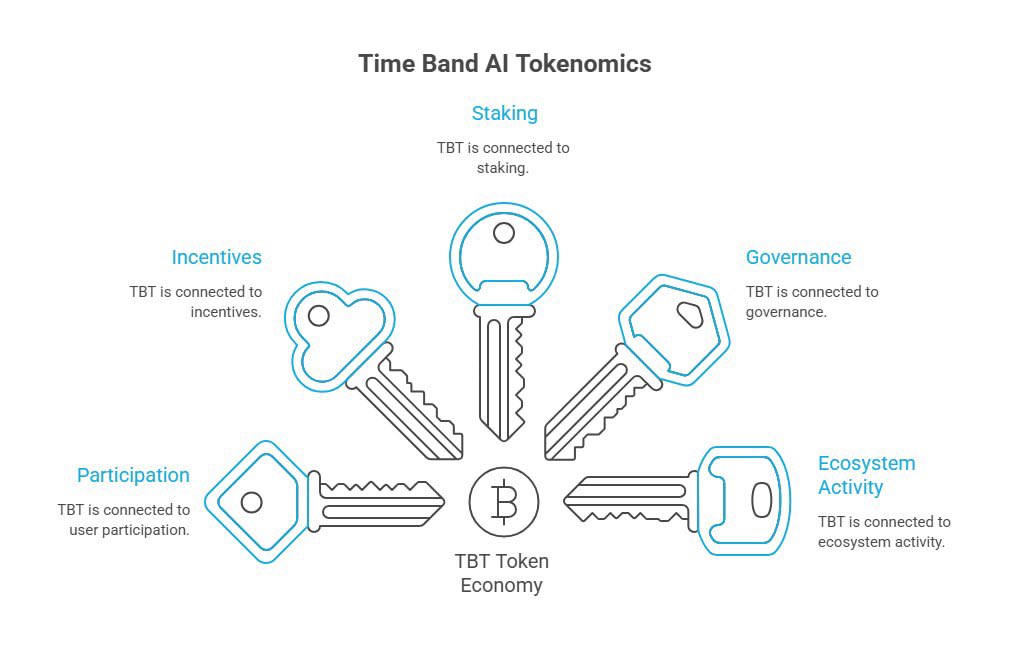
For Time Band AI, TBT is connected to participation, incentives, staking, governance, and ecosystem activity.
Utility comes first.
#Tokenomics#Web3
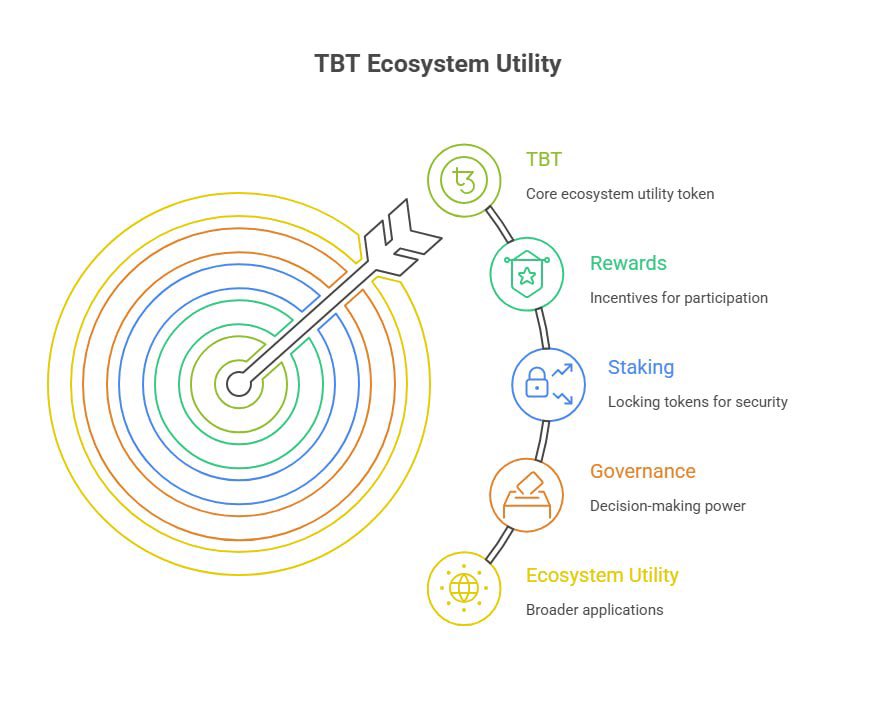
TBT is designed as an ecosystem utility token rather than an isolated asset.
Its proposed roles include rewards, staking, governance, and broader ecosystem utility.
The objective is to connect economic incentives with protocol participation.
#TBT#Tokenomics
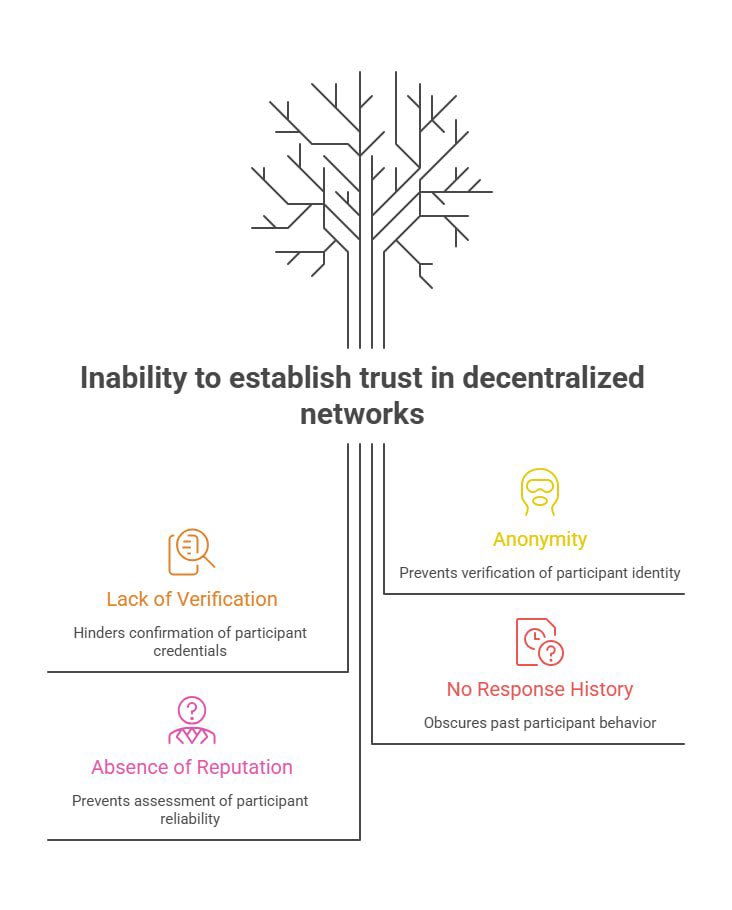
A decentralized network cannot depend entirely on anonymous participation.
Verification, certifications, response history, and reputation can help establish meaningful trust between participants.
That is why identity and performance matter in Time Band AI.
#Web3#Trust
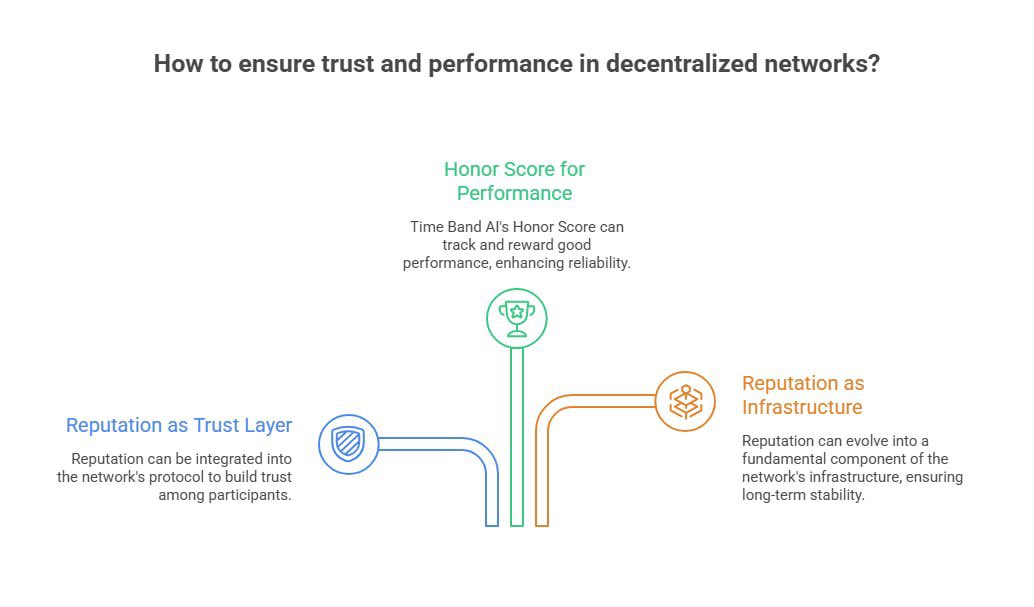
Reputation becomes especially important when decentralized networks depend on human participation.
Time Band AI's Honor Score is designed to make responder performance part of the protocol's trust layer.
Reputation can become infrastructure.
#TimeBandAI#DePIN
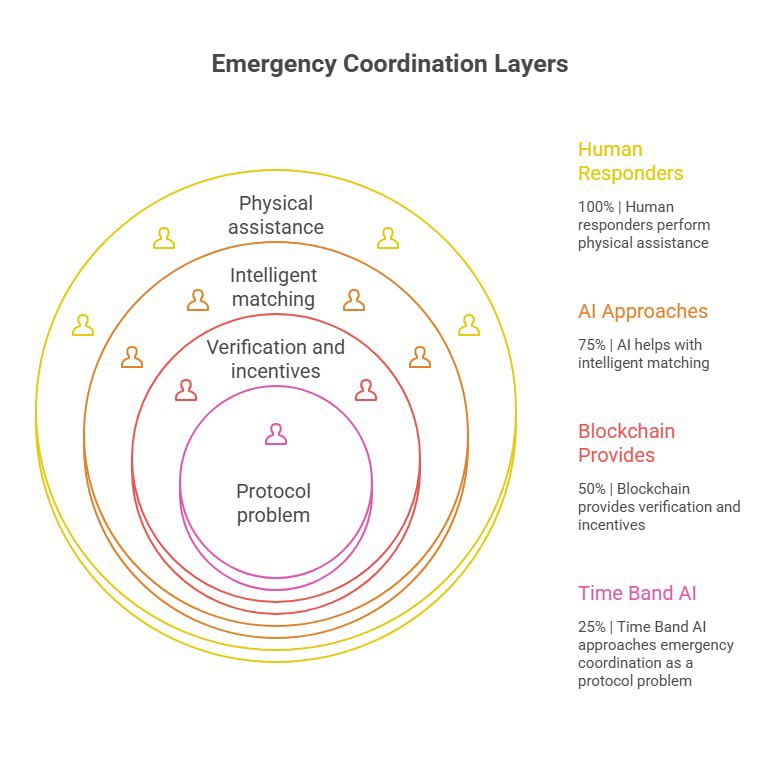
Time Band AI approaches emergency coordination as a protocol problem.
AI helps with intelligent matching.
Blockchain provides verification and incentives.
Human responders perform the physical assistance.
Each layer has a distinct responsibility.
#AI#Web3
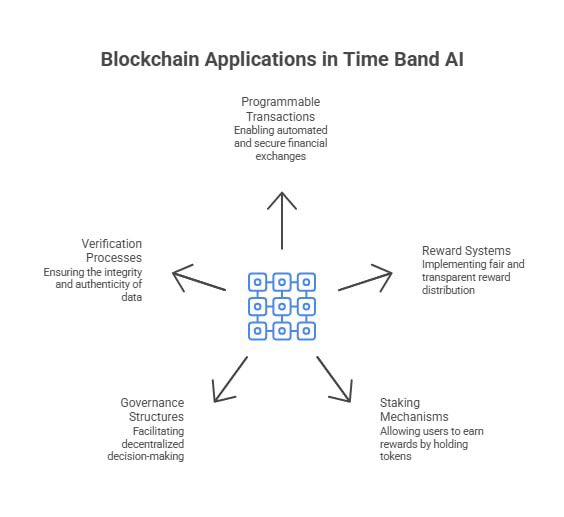
The value of blockchain in Time Band AI is not simply tokenization.
Blockchain provides programmable rules for transactions, rewards, staking, governance, and verification.
The technology is being applied where coordination requires verifiable execution.
#Blockchain#Web3
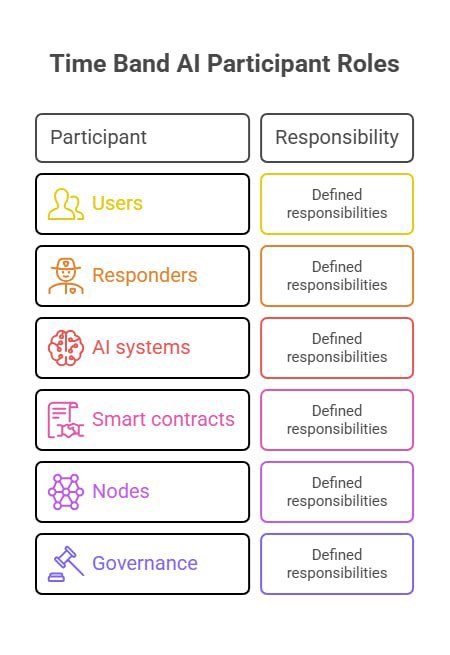
A serious decentralized protocol should define the responsibilities of every major participant.
Time Band AI separates the roles of users, responders, AI systems, smart contracts, nodes, and governance.
Clear responsibilities create clearer system design.
#TimeBandAI
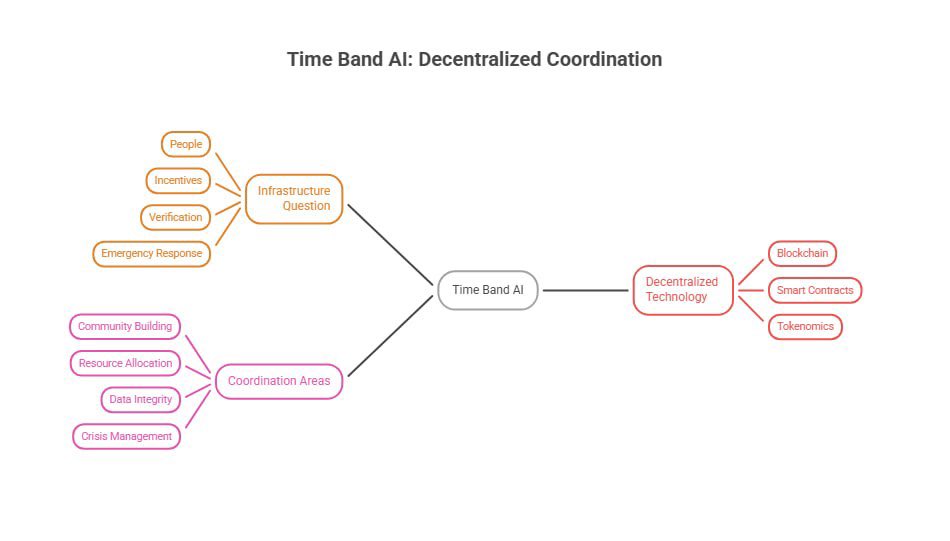
Time Band AI is built around a simple infrastructure question:
How can decentralized technology coordinate people, incentives, verification, and emergency response in one protocol?
The answer requires more than a single application.
#TimeBandAI#Web3