@TimePieChina focuses on aging science & longevity news. We would love to be the bridge to academic circle of aging in China. #aging#longevity#senescence
We’re seeing China’s booming longevity industry & its rapid evolution.
Day 2|#7thTimePieLongevityForum
Beyond understanding why we age, the focus is shifting toward how longevity clinics work, how to integrate with healthcare system, how longevity tech can be part of daily life.
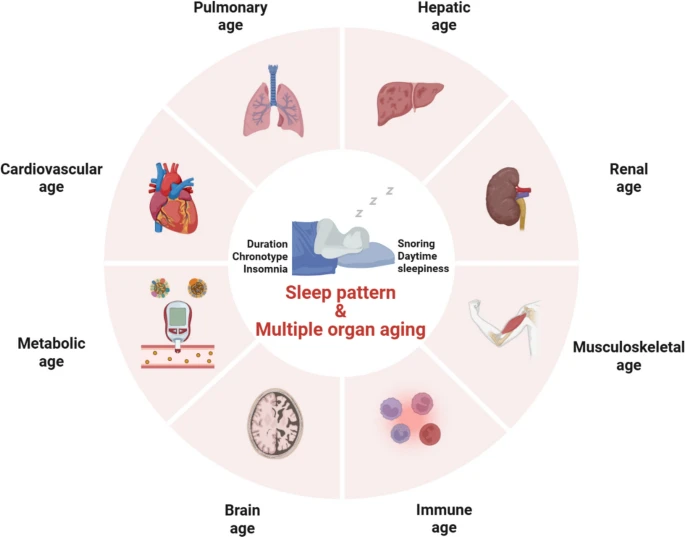
This large community-based study constructed a composite sleep pattern that comprehensively assessed overall sleep patterns across five specific sleep behaviors, underlying the relationship between sleep patterns, organ aging, and health outcomes.
https://t.co/P7MJfLdfBH
Still staying up late?💤
Having a poor #sleep pattern (insufficient/excessive sleep duration, late chronotype, insomnia, snoring, and daytime sleepiness) was significantly related to multiple #organ#aging: pulmonary, hepatic, renal, musculoskeletal, immune, metabolic, and brain.
Evidence has suggested that sleep deprivation elevates levels of pro-inflammatory cytokines, inducing oxidative stress and cellular senescence.
Abnormal sleep duration and insomnia may disrupt circadian rhythms, alter metabolism and stress responses, and thus accelerate aging.
Your gut signals #brain#aging before your blood does.
A new study finds that gut #microbiota-derived ammonia may contribute to early cognitive decline — even before blood ammonia levels rise. Supplementing with an ammonia-assimilating bacterium improved cognitive deficits. #MCI
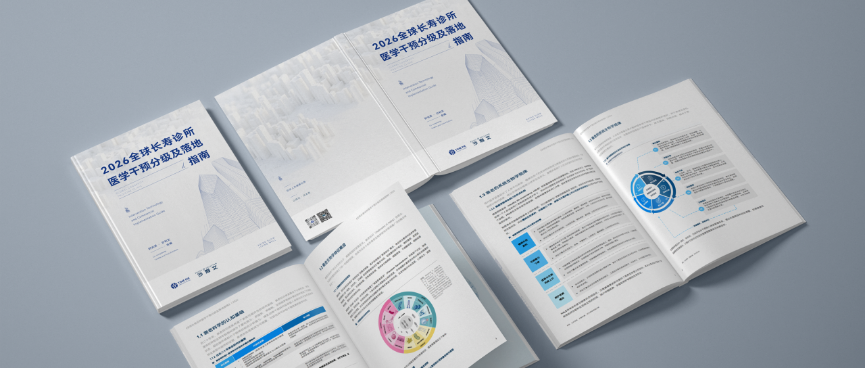
📡Just released: The Global Guide to Longevity Medicine Commercial Pathways, by @TimePieChina & @Frost_Sullivan.
It weighs the evidence behind technologies and tracks the shift from frontier exploration to scaled application in China and worldwide.
https://t.co/wJPkg4mCRm
Mis-splicing is a heritable feature of human ageing which increases in prevalence over time and is associated with age-related disease, according to a study in a cohort of female twins.
By @kerrin_small, et al
https://t.co/QMwe9dYvEB
An international team developed biophysical “digital brain #twins” of nearly 7,000 people to investigate the relationships between #ageing, neurodegenerative disease and the environment.
By Rubén Herzog, @AgustinMIbanez, et al.
Study: https://t.co/NweTi3V91a
Biophysical brain twins are personalized computational models built from real individual brains. By modeling each brain, we explored why people of the same age or with the same dementia diagnosis can show different brain activity patterns and whether the exposome might help explain that variation. In @natBME, we used 6,986 fMRIs across 16 countries and ran 3+ million simulations (https://t.co/kJV25pFJFO). The twins captured differences linked to age, sex, and neurodegeneration (MCI, Alzheimer’s disease, and frontotemporal dementia) and linked brain dynamics to 68 exposome factors (social: socioeconomic status, migration, democracy; physical: air pollution, green spaces, temperature, precipitation/drought, soil/water quality, climate disasters). Aging was linked to a shift toward inhibition and lower entropy. Sex differences were most evident in inhibitory firing rates and entropy. Disease diagnoses & the exposome were associated with distinct combinations of firing rates, and excitatory/inhibitory entropy & balance. Our twins are openly available for in silico exploration of environmental or pharmacological interventions. Congrats to @rherzoga & all our co-authors! @AgustinaLegaz@josecruzat@HernHdezL@NiltonCustodio8@Jescab01_@linazapatamd@joaquin_migeot
Behind the hype, the longevity business is facing a much harder reality.
After waves of market enthusiasm and industry shakeouts, very few clinic owners are actually making money from the business.
What do you think is the key to running a profitable longevity clinic?
Few #longevity#clinics were actually profitable.
We visited the London clinic in May and spoke with its management again in September.
Sadly, it closed before we published the talk, after roughly a year of operation. Appointments reportedly filled through its final week.
Why our bodies become less effective at fighting cancer as we age?
@NicoleLaGruta1 et al. revealed a previously unidentified group of ageing immune cells that not only lose their ability to protect the body against disease but also actively suppress other immune cells.
Our paper is out in @SciImmunology! We mapped chromatin accessibility in CD8 T cells from young and aged mice. Age-related dysfunction was associated with a loss of regulation at 3 distinct levels.....
https://t.co/vjbQOacN0R
Enhancing microbial bile acid deconjugation may counter late-life metabolic decline
Aged mice and human #centenarians show increased microbial BSH activity. Scientists using engineered native bacteria boosted its activity and improved metabolic markers.
https://t.co/sJUlkphf7d
@Wolf_SarahE, @prof_horvath et al. constructed an epigenetic clock using known-age, laboratory-reared wood mice and predicted chronological age with a median absolute error (MdAE) of 5.45 days.
https://t.co/4pVx22dyGc
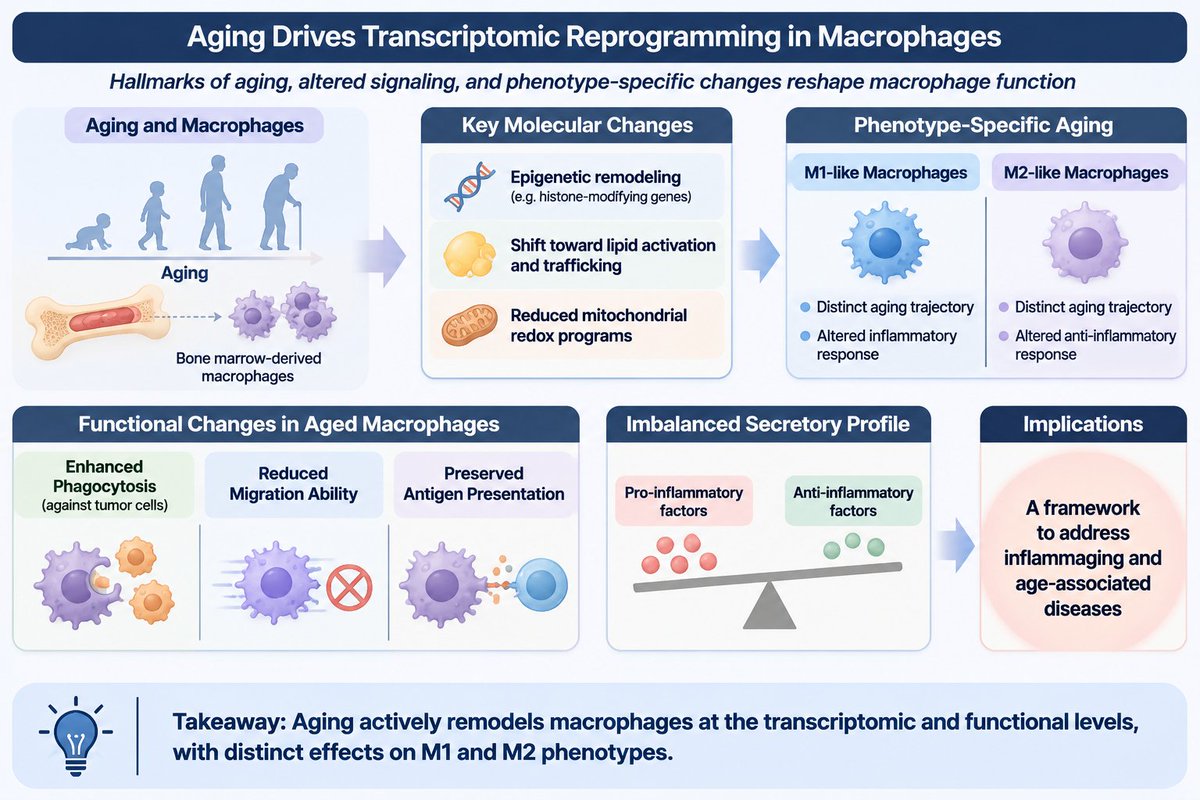
Aging doesn't simply weaken macrophages — it rewires them.
New study reveals a complex picture of #immune#aging. Rather than undergoing a uniform functional decline, macrophages show distinct changes in immune responsiveness, metabolism, and epigenetic regulation.@ManasaSuresh14
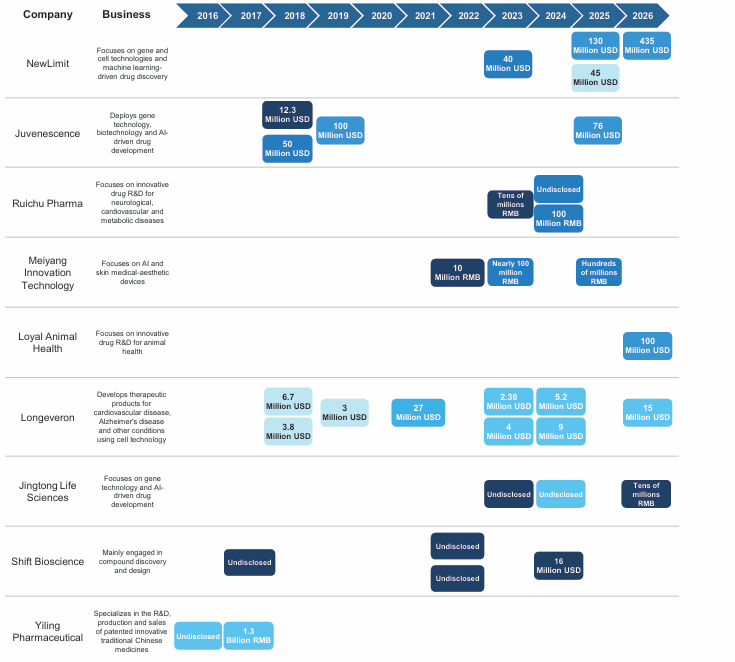
Longevity Investment Deals in China Nearly Match Overseas Total?
The newly released 2026 Guide by TimePie × @Frost_Sullivan takes a closer look at the forces shaping the longevity industry, highlighting key differences in investment focus.
DM us for the bilingual report (EN/CN)
Exposure to #sugar rationing during the first 1000 days of life is associated with lower biological age acceleration, with stronger associations observed among participants with longer exposure durations. The association is more pronounced in females.
https://t.co/Sp7ygSpDBZ
Aging may begin as early as embryonic development, with early-life development and environmental exposures shaping our lifelong #aging trajectory.
A review article by @gladyshev_lab:
https://t.co/VLrydzbCw8
Shinya Yamanaka, Akira Kunitomi and colleagues used a reversible Sendai-OSKM system to investigate #partial#reprogramming across three human cell types, finding that rejuvenation and functional recovery are not always aligned.
preprint: https://t.co/9OzzTvQ2Fi
Aging disrupts sleep-driven brain fluid flow
the liquid that surrounds and protects the brain, cerebrospinal fluid (CSF), reduced flow during sleep in the #aging human brain, due to disrupted #sleep and impaired blood vessel function, a new study finds.
By @lauradata, et al.
Using young and aged mice, @MonashUni scientists showed that Granzyme K was dispensable for the major hallmarks of #immune#aging, including T cell dysfunction, but was a critical driver of age-related tissue decline.
https://t.co/vvg97PNKvs