▶️ Did NATO, once a key anchor in Türkiye’s democratic transition, become a shield for Erdoğan’s authoritarian rule?
▶️ Why does the democratic world continue to support Erdoğan’s government despite its defiance of its own constitution and rulings of the European Court of Human Rights, and despite imprisoning political opponents?
▶️ What makes Erdoğan an untouchable autocrat?
On The Timeline, we speak with Turkey and Middle East expert Steven Cook who says that Turkey is no longer a flawed democracy, but a consolidated autocracy.
Watch here:
https://t.co/QwsDPHE6If
#Strazburg #AdaletBuluşması #JusticeMarch #NATO #ECHR @SecGenNATO@marcorubio
WHY ORBAN LOST?
HOW MAGYAR WON?
Can populist authoritarian regimes be defeated through democratic means? By defeating Viktor Orbán’s 16-year rule at the ballot box, Hungarians have shown that it is possible.
We spoke with Bálint Magyar—former Minister of Education, a renowned sociologist, politician, and one of the leading figures in Hungary’s struggle for freedom since the communist era—about the forces behind this political transformation and the lessons it offers to the world.
Why and how did Orbán’s seemingly invincible regime begin to lose its grip after 16 years in power?
Why did the traditional opposition fail to challenge Orbán effectively for so long? What mistakes did they make?
What strategies did Péter Magyar use to build a new movement against Orbán? How did he communicate with voters and mobilize support in a media environment largely controlled by the government?
What lessons does Hungary’s political transformation offer to societies struggling against similar authoritarian systems?
Why did the support Orbán received from powerful international figures—from Trump and Putin to Netanyahu and Meloni—ultimately fail to secure his political dominance?
Join us for this fascinating conversation on The Timeline.
👉 https://t.co/Mp3VBsxNiQ
✨ Please subscribe to The Timeline youtube channel, turn on notifications and follow @TimelineGlobe on X
not to miss any episodes.
What makes Erdoğan an untouchable autocrat?
On The Timeline, renowned Turkey and Middle East expert Steven A. Cook argues that Turkey is no longer a flawed democracy, but a consolidated electoral autocracy.
• Why is Washington silent about oppression in Turkey?
• Does the U.S. prefer Türkiye as a Middle Eastern autocracy?
• What does US Ambassador Tom Barrack’s praise for “strong leadership” reveal about U.S. policy toward Turkey?
• What should Turkey’s opposition expect from Washington and Europe?
From the takeover of the CHP to the West’s geopolitical silence, we examine how Erdoğan consolidated power over the judiciary, media, and state institutions — and why Turkey’s democratic allies still avoid treating him like other authoritarian leaders.
A sharp conversation on autocracy, fear, nationalism, geopolitics, and the future of Turkey.
Featuring Steven A. Cook (CFR)
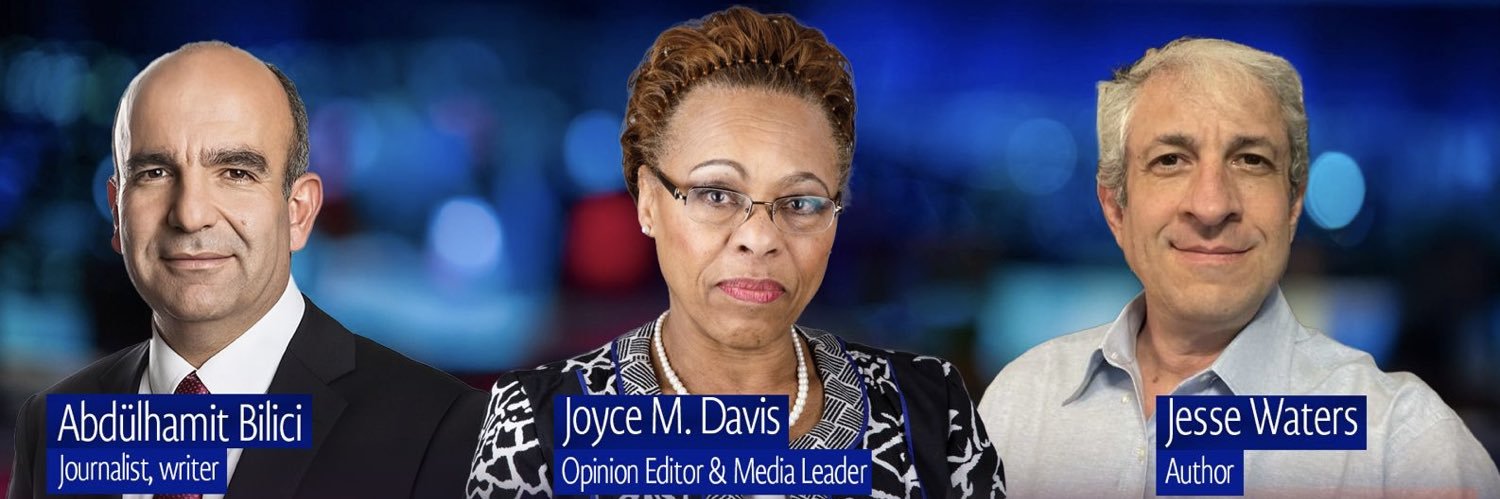
Hosted by Jesse Waters & Abdülhamit Bilici
#Turkey #Erdoğan #CHP #Autocracy #NATO #Democracy #Geopolitics @TimelineGlobe
https://t.co/v8bv6vJnd7
Did the war weaken Iran’s regime or radicalized it?
Who really makes the decisions in Tehran? What is the role of new supreme leader Mojtaba Khamenei?
Where are the negotiations deadlocked? And how close is a deal?
We spoke with Dr. Mehdi Noorbakhsh, a political activist and professor at Harrisburg University, whose analyses of the Iran war proved strikingly accurate.
Watch here:
https://t.co/5VyWbeMd6d
▶️ How is Maduro doing in New York jail? What changed in Venezuela after his capture?
▶️ Is there progress in economy and oil sector?
▶️ As Cuba loses Venezuelan support, could it be next?
We speak with Beatriz García Nice about Venezuela after Maduro.
👉 https://t.co/NoQ7eyGC0Z
- What changed after Maduro in Venezuela?
-Is there any progress regarding democracy and human rights? Is there still a future for María Corina Machado, the leader of opposition and the winner of Nobel peace prize, or she is already sidelined?
-What is happening to Venezuela’s economy and oil?
-How are President Maduro and his wife doing in New York detention center?
And as Cuba loses Venezuelan support, could Havana be the next?
In this episode of The Timeline, we speak with Beatriz García Nice from the Stimson Center about the dramatic changes unfolding in Venezuela after Maduro was captured on January 3.
Watch the new episode:
https://t.co/vfNg7cJQCb @TimelineGlobe
In this episode of The Timeline, we explore the enduring legacy of Al-Andalus and its impact on modern Spain, Europe, and the wider world.
Joining us from Granada is Prof. Jaime Flaquer — a Jesuit priest, Director of CANDIR, an institute dedicated to advancing interfaith understanding, and a scholar of Islamic thought who earned his PhD on Ibn Arabi from Sorbonne University.
Together, we tackle some of today’s most pressing questions:
👉 If it weren’t for Al-Andalus, would there have been a Spanish Golden Age?
👉 Why is Spain often more pro-Palestine than other European countries?
👉 Is convivencia — coexistence among Muslims, Christians, and Jews — still possible today?
👉 How does Andalusian heritage continue to shape Spanish identity and foreign policy?
👉 And why is America’s image increasingly broken across Europe?
From the legacy of Franco to rising nationalism, migration debates, and the philosophy of Ibn Arabi, this conversation examines how history, religion, and politics continue to collide in today’s Europe.
Watch the new episode here:
https://t.co/ZzA6FpHDFy
Is Israel losing America?
-Why are young Americans and Europeans turning against Israel?
-What is the distinction between criticizing Israel's policies and antisemitism?
-Is Tucker Carlson antisemitic?
-How do October 7, the wars in Gaza, Lebanon, and Iran, and the Epstein case affect Jews in the diaspora?
-What is the biggest mistake of American Jews?
-Why is AIPAC losing influence?
In the new episode of The Timeline, we speak with Walter Ruby to explore these tough questions.
Walter Ruby is a social activist and senior journalist who has written for American Jewish and Israeli publications, including the Jerusalem Post, the London Jewish Chronicle, Maariv, and the New York Jewish Week. His articles have also appeared in the New York Times, the Wall Street Journal, USA Today, the Los Angeles Times, and the Christian Science Monitor.
He has held leadership roles at the Foundation for Ethnic Understanding and Jews, Muslims, Allies Acting Together. He is the co-author of We Refuse to Be Enemies.
Watch the new episode here:
https://t.co/ll41yRyA6c
From 9/11 to October 7: What does it mean to be Muslim in America?
In this episode of The Timeline, we speak with writer and academic Haroon Moghul to discuss how Muslim identity in America.
•How has the place of Muslims in America changed?
•Why does anti-Muslim bias persist?
•How do 9/11 and October 7 compare in their impact?
•What roles do media and politics play?
•Is the U.S. becoming more inclusive—or more divided?
• What is the significance of Mamdani’s election in New York?
From campus life to civic engagement, and from interfaith dialogue to politics, Moghul offers a nuanced view of identity, belonging, and faith in a polarized era.
Watch the new episode here:
https://t.co/ttCB6M44AY
Subscribe to The Timeline youtube channel, turn on notifications and follow @TimelineGlobe on X
not to miss any episodes.
“I think the United States has squandered much of the moral authority it once possessed.”
In the new episode of The Timeline, our guest is Doug Bandow, an experienced foreign policy expert who once served as a special assistant to U.S. President Ronald Reagan.
•Why did Trump go to war with Iran despite his pre-election promises?
•What role did Netanyahu play in this decision?
•Do U.S. and Israeli priorities align when it comes to Iran?
•As the world’s leading power, is the U.S. in a lasting decline, or is this a temporary phase?
Watch the full episode here:
👉🏾 https://t.co/7VDYYEmKrU
Is America in a permanent decline?
This week on The Timeline, which we co-produce with Joyce Davis and Jesse Waters, our guest is foreign policy expert Doug Bandow, who once served as a special assistant to President Ronald Reagan. Currently a senior fellow at the Cato Institute, Bandow offers important insights on the Iran war, current decision making style in Washington, the future of the United States, and the increasingly debated relationship with Israel.
•Why did Trump go to war with Iran despite his campaign promises?
•What role did Netanyahu play in this decision?
•Are U.S. and Israeli priorities aligned when it comes to Iran?
•Is the United States, still the world’s leading power, in permanent decline—or is this only a temporary phase?
Watch the new episode here: https://t.co/oeIMlIVwa5
Subscribe to The Timeline youtube channel, turn on notifications and follow @TimelineGlobe on X
not to miss any episodes.
The reporter who lost an eye in Afghanistan warns about Iran
For the new episode of The Timeline, we sat down with Carmen Gentile—who covered Iraq, Afghanistan, Syria wars and was permanently wounded on assignment—to unpack the growing risk of Iran war.
▶️ Why did the U.S. start another war despite the painful lessons of Afghanistan and Iraq wars?
▶️ What does this mean for Donald Trump and a MAGA base that once rallied behind promises of finishing “endless wars”?
▶️ What does he think about the resignation of Trump's counterterror chief Joe Kent, saying Iran is not an imminent threat and America joined war under Israeli pressure?
▶️ Does he expext a ground operation in Iran? If yes, what would be the chance of success?
▶️ And why are war reporters paying an ever higher price—129 killed in 2025 alone?
A conversation on war, politics, and the cost of ignoring history. Watch the new episode:
https://t.co/TxOfySgYc7
From a Catholic American upbringing to jihadist frontlines—and back again. A story of radicalization, prison, and redemption you won’t forget.
In Episode 2 of The Timeline, Ismail Royer—formerly known as Randall Royer—traces his extraordinary path: raised in a Catholic family, converting to Islam at 19, fighting in Bosnia, and later joining Lashkar-e-Taiba in Kashmir—a group designated as a terrorist organization by the UN.
Convicted in the U.S. and sentenced to over a decade in prison, Royer takes us inside the mindset of extremism—and the turning point that changed his life.
He recounts his prison encounters with infamous terrorists like The Shoe Bomber, (Richard Reid) and Unobomber (Ted Kaczynski), offering rare insights into how radical ideas are formed, reinforced, and sometimes broken.
•How Salafi and Islamist ideologies can evolve into violent extremism
•The hidden role of prisons and social media as incubators of radicalization
•Why modern Islamic revival movements sometimes lose their moral compass
•His deep regret for ignoring the warnings of Fethullah Gülen and Ali Ünal before heading to war
•And his concerns that conflicts involving the U.S., Israel, Palestine, and Iran could fuel a new wave of extremism
Since his release, he has rebuilt his life—writing for major outlets like The Washington Post and working across faith lines to counter radicalization. In 2025, he was appointed to the U.S. Commission on International Religious Freedom.
Do not miss the new Timeline episode which is not just a personal story—it’s a rare, insider warning about how extremism grows—and how it can be stopped:
https://t.co/dWA6qGyOIi
Subscribe to The Timeline youtube channel, turn on notifications and follow @TimelineGlobe on X
not to miss new episodes.
How a former militant became an advocate for the religious freedom?
• How did he encounter Islam while growing up as the leftist, atheist child of a Catholic family in America?
• Which armed groups did he join in conflict zones like Bosnia, Kashmir?
• Why was he imprisoned in the U. S.?
• How did he come to realize the flaws of the radical Salafi ideology he once embraced?
• What is his new role on the Religious Freedom Commission he was appointed to by Trump?
Watch the new episode here:
https://t.co/5gdp1OHz93
Subscribe to The Timeline youtube channel and turn on notifications not to miss any episodes.
@TimelineGlobe
Kathleen Kennedy Townsend, the first woman Lieutenant Governor of Maryland and the niece of John F. Kennedy, shared important insights on the new episode of The Timeline:
•Why did Democrats lose the 2024 presidential election?
•What is the impact of having a female candidate?
•Is she alarmed about the future of American democracy?
•What does she think about the war with Iran?
•Why did Donald Trump agree to release the Jeffrey Epstein files?
•What could be the global impact of withdrawing from the World Health Organization and shutting down United States Agency for International Development?
@TimelineGlobe
▶️ Watch the full episode:
https://t.co/KEWAPWm422
🔔 Don’t forget to subscribe to our YouTube channel and turn on notifications for weekly deep-dive conversations.
🎧 You can also follow The Timeline on Spotify and Apple Podcasts so you don’t miss new episodes.
• Why did Trump attack Iran after promising to end wars?
• Will the U.S.–Israel attack lead to regime change in Iran?
• Would the intended “Venezuela model” work in Iran following the killing of Supreme Leader Ali Khamenei?
• Does Reza Pahlavi have real support inside Iran?
• How are Iranians who dance while bombs fall on Tehran being perceived?
We discuss these questions on The Timeline with Dr. Mehdi Noorbaksh, one of the leading international relations and Iran experts. @TimelineGlobe
👉🏾 https://t.co/5LinSlGoK4
Did the media fail on Epstein?
Epstein owned Manhattan’s largest townhouse, just a mile from major newsrooms. He partied with presidents, royals, supermodels, and billionaires — while abusing children in plain sight. How did the press miss it?
Meanwhile, a newly appointed CBS editor pulled a critical story at the last minute on Trump’s migrant deportations to CECOT prison.
So how can journalism survive political and corporate pressure?
In the new episode, we speak with Peter Klein — an Emmy Award–winning journalist, filmmaker, professor, founder of the Global Reporting Centre, and director of Bribe, Inc.
Watch the full episode:
👉🏾 https://t.co/I2gUDGlL3E
🔔 Follow us on your favorite podcast platforms and subscribe to The Timeline YouTube channel for weekly insights on global affairs and critical issues.
⏰ Broadcast Times
New York — 1:00 PM
London — 7:00 PM
Berlin — 8:00 PM
Cape Town — 8:00 PM
Istanbul — 9:00 PM
Cairo — 9:00 PM
Moscow — 9:00 PM
Beijing — 2:00 AM (Feb 13)
Tokyo — 3:00 AM
Sydney — 4:00 AM
#MediaCensorship #Epstein #ElSalvador #CBS #PressFreedom #Journalism #PoliticalInfluence #Corruption #MediaEthics #FreePress #HumanRights #GlobalPolitics #Accountability #TheTimeline
New Episode
How did the media fail on Epstein?
Epstein owned Manhattan’s largest townhouse, just a mile from major newsrooms. He socialized with presidents, royals, supermodels, and billionaires — while abusing children in plain sight. How did the press miss it?
Now, with reports of a new CBS boss pulling critical coverage on migrant deportations to El Salvador’s CECOT prison, another question arises: How can journalism survive political and corporate pressure?
We speak with award-winning journalist Peter Klein, director of Bribe, Inc.
👉🏾 https://t.co/jvJTrbG3J2
New Episode I Did America Betray the Kurds in Syria?
In this episode, we speak with Bassam Ishak, Syrian Democratic Council’s representative in Washington.
- Why did Arab tribes side with Ahmad Sharaa?
- Will the deal between Damascus and Kurds hold?
👉🏾 https://t.co/w3T5Nx0Lxp