When intelligence and physical labor become abundant, they stop being leverage.
Capital becomes the last moat.
If you can’t outcompete the machines, own them — or own what they run on.
Hard money is step one.
While building Timeswap V3, I kept thinking about DAWs and video timelines.
In editing software, every sound or frame lives on a precise time segment.
Time Bound Tokens work the same way:
Instead of “how much do you own?”
We ask: “how much do you own between t₁ and t₂?”
Capital becomes programmable across time.
That’s the primitive behind V3.
@mrmikeMTL Confusing income with wealth.
Wealth is deferred consumption turned into capital —
then risked on producing something others value.
That part is hard, uncertain, and uncomfortable.
So most people just consume.
Hard money doesn’t make people richer.
It makes them patient.
Bitcoin turns short-term optimization into a losing strategy —
and rewards those who think in decades.
I’ve spent years trying to design a game-theoretically sound voting mechanism for DAOs.
Recently, studying math and physics, I had a realization: voting might be fundamentally unsound.
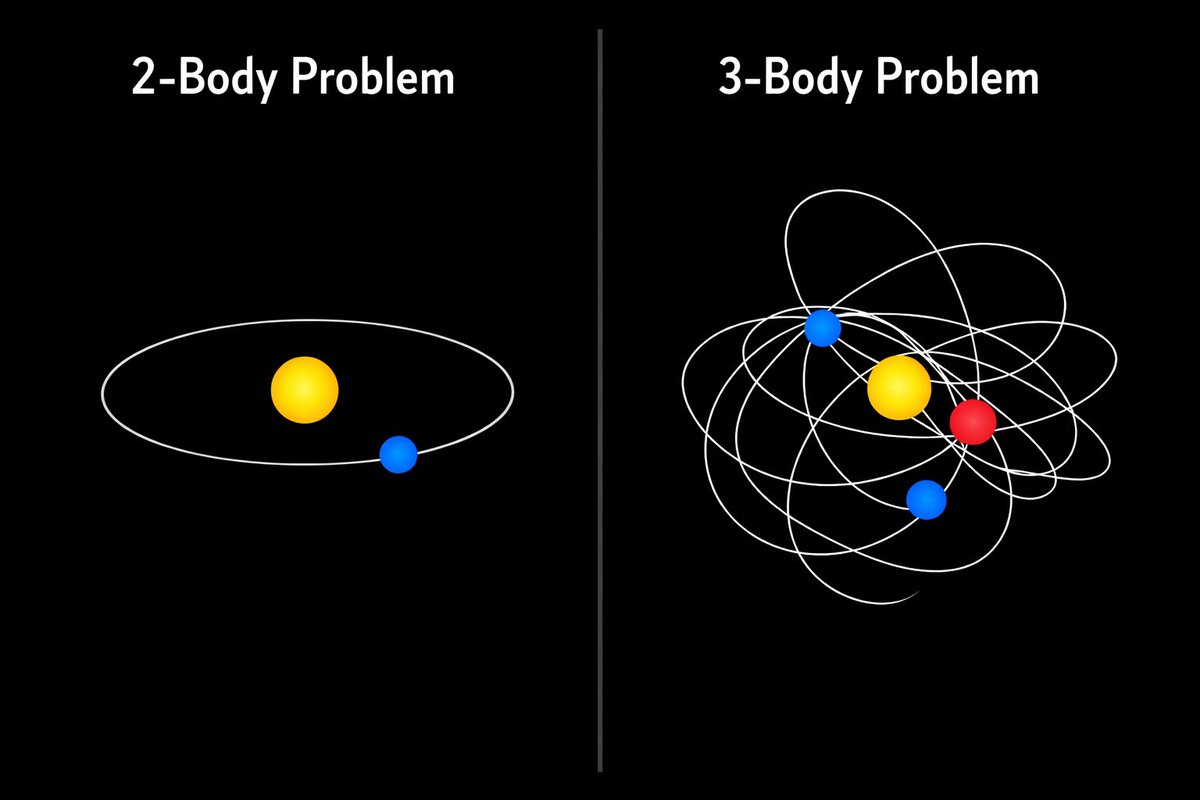
Like the 3-body problem, multi-agent to binary decisions are chaotic.
Maybe the answer isn’t better voting—but breaking DAOs and organizations into smaller two-agent market interactions.
@PortfolioXpert Hard money makes leverage blowups inevitable.
Question: does a long-term DCA investor actually benefit from these boom-bust cycles, or would BTC-denominated returns be higher in a world without fractional synthetic leverage?
@CryptoNobler No one is forced to sell BTC held in self-custody.
Price volatility just creates opportunity for those with patience.
The fractional leverage game is unsustainable by design.
When it unwinds, it’s brutal—but only for the ones who chose to play it.
Derivatives can distort price discovery, not ownership.
Anyone holding BTC in self-custody will still own the same sats at the end.
Fractional leverage games work in fiat because losses get socialized and bailed out.
Hard money removes that escape hatch.
When rehypothecation chains break, it’s not key holders who pay — it’s the ones playing the leverage game.
Notre-Dame, Cologne Cathedral, Roman aqueducts—
built to last longer than their builders.
No rolling debt.
Just accumulated savings in a hard-money world.
A market trade is two agents making one binary decision.
A governance vote is many agents making one binary decision.
Physics already told us how this ends:
2-body vs 3-body problem.
This is why markets scale and voting becomes chaos.