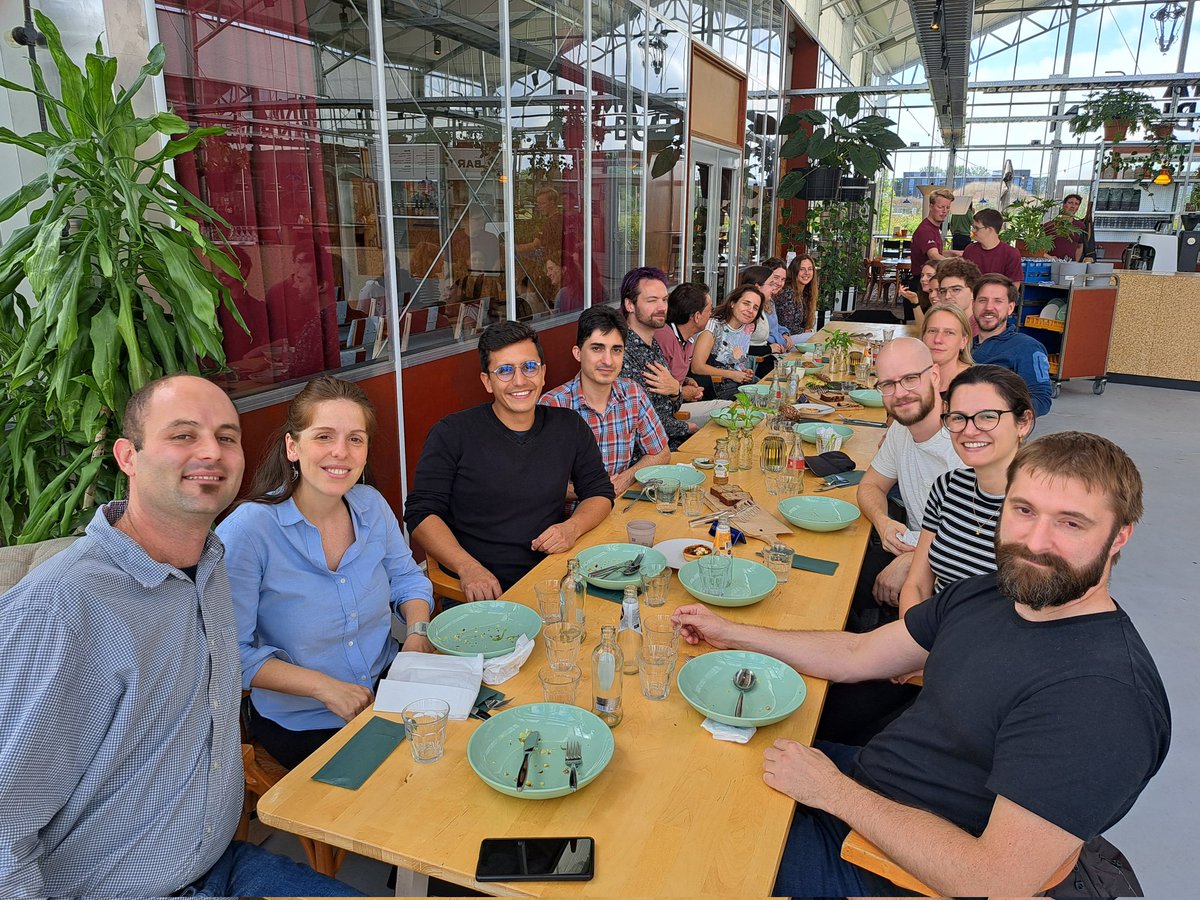
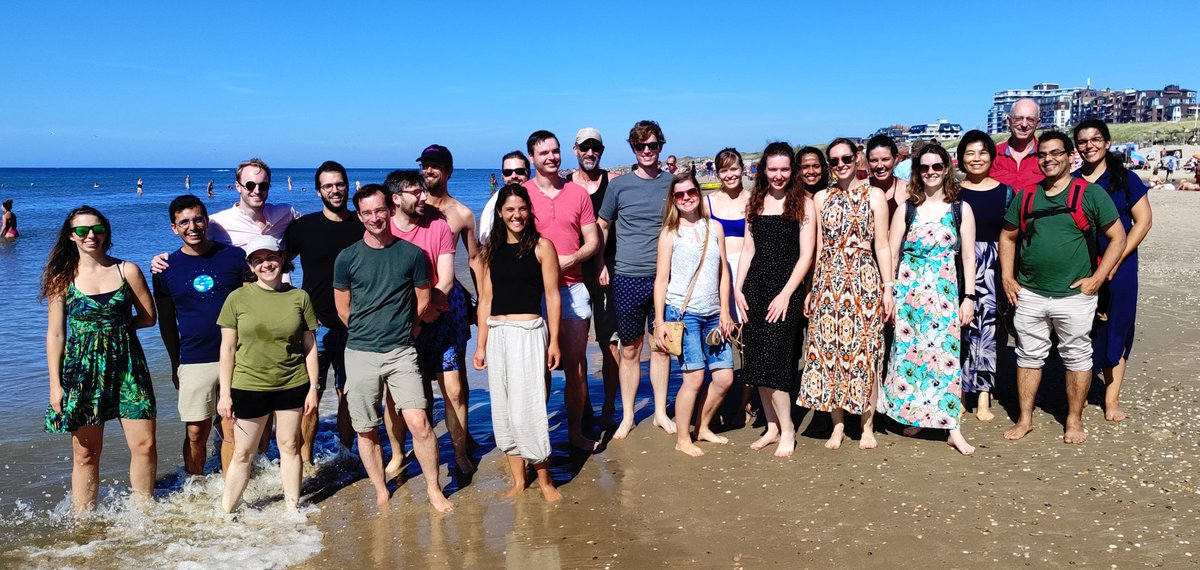
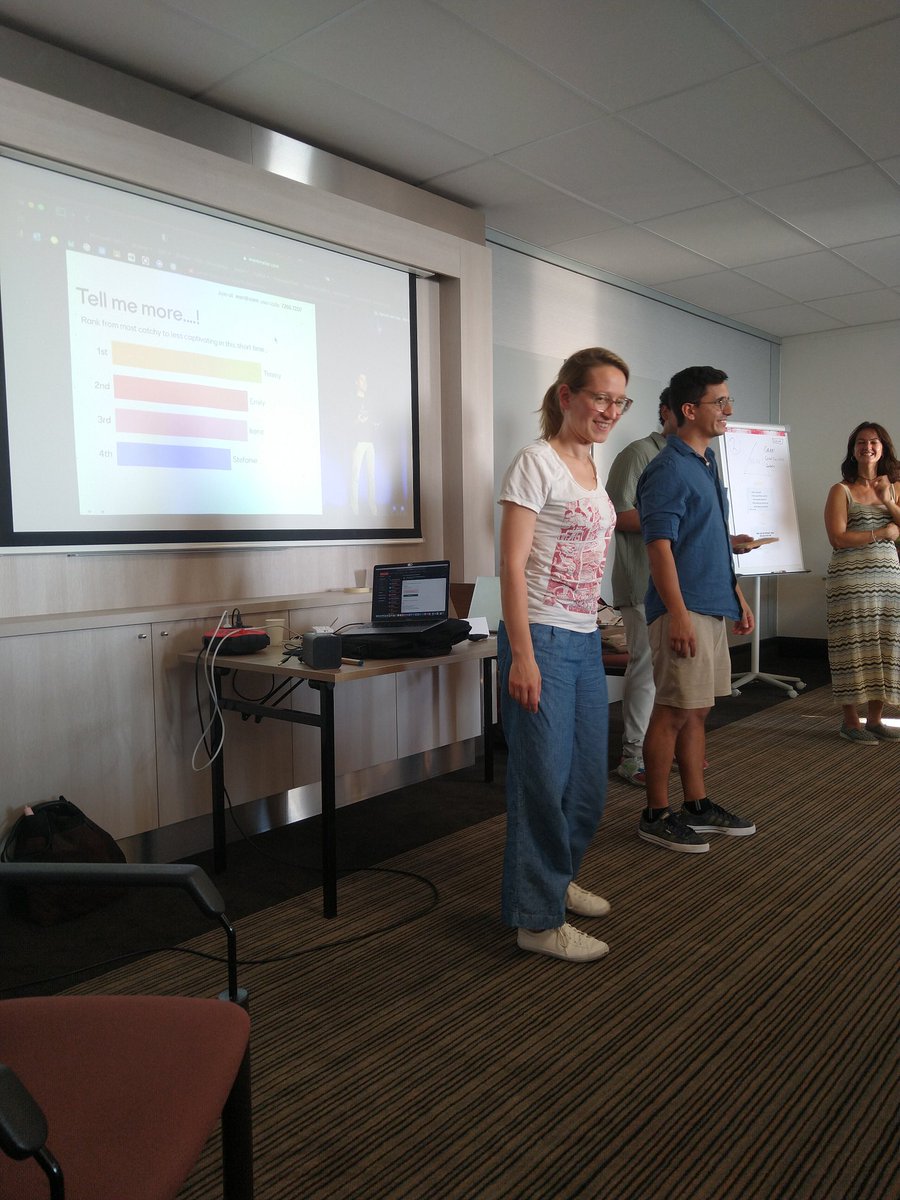
Very happy to share this news! I’m grateful to be recognized by my teaching - a strong passion I’ve had all my life. Thanks @MarkvLoosdrecht for supporting me!
@TimmyPaez has been elected as educator of the #TUDelft Life Science and Technology BSc/MSc program.
A great achievement as PhD student to be elected as best teacher in the program; Congratulations!
Friday in this theatre the PhD defence of @TimmyPaez with Timmy as the star and @AljoschaWahl and me as directors. Want to read the script? see "The pulse of metabolism" https://t.co/m63ar1WDe4
Working in microbial ecology? We’ve got the perfect tool for you!
Check out our user-friendly, open-access cFBA toolbox to predict metabolic optimality in cyclic dynamic conditions. 🔬🚀
@MarkvLoosdrecht@ricardo_heme@AljoschaWahl
Vamos, @RafaelNadal!
As you get ready to graduate from tennis, I’ve got a few things to share before I maybe get emotional.
Let’s start with the obvious: you beat me—a lot. More than I managed to beat you. You challenged me in ways no one else could. On clay, it felt like I was stepping into your backyard, and you made me work harder than I ever thought I could just to hold my ground. You made me reimagine my game—even going so far as to change the size of my racquet head, hoping for any edge.
I’m not a very superstitious person, but you took it to the next level. Your whole process. All those rituals. Assembling your water bottles like toy soldiers in formation, fixing your hair, adjusting your underwear... All of it with the highest intensity. Secretly, I kind of loved the whole thing. Because it was so unique—it was so you.
And you know what, Rafa, you made me enjoy the game even more.
OK, maybe not at first. After the 2004 Australian Open, I achieved the #1 ranking for the first time. I thought I was on top of the world. And I was—until two months later, when you walked on the court in Miami in your red sleeveless shirt, showing off those biceps, and you beat me convincingly. All that buzz I’d been hearing about you—about this amazing young player from Mallorca, a generational talent, probably going to win a major someday—it wasn’t just hype.
We were both at the start of our journey and it’s one we ended up taking together. Twenty years later, Rafa, I have to say: What an incredible run you’ve had. Including 14 French Opens—historic! You made Spain proud... you made the whole tennis world proud.
I keep thinking about the memories we’ve shared. Promoting the sport together. Playing that match on half-grass, half-clay. Breaking the all-time attendance record by playing in front of more than 50,000 fans in Cape Town, South Africa. Always cracking each other up. Wearing each other out on the court and then, sometimes, almost literally having to hold each other up during trophy ceremonies.
I’m still grateful you invited me to Mallorca to help launch the Rafa Nadal Academy in 2016. Actually, I kind of invited myself. I knew you were too polite to insist on me being there, but I didn’t want to miss it. You have always been a role model for kids around the world, and Mirka and I are so glad that our children have all trained at your academies. They had a blast and learned so much—like thousands of other young players. Although I always worried my kids would come home playing tennis as lefties.
And then there was London—the Laver Cup in 2022. My final match. It meant everything to me that you were there by my side—not as my rival but as my doubles partner. Sharing the court with you that night, and sharing those tears, will forever be one of the most special moments of my career.
Rafa, I know you’re focused on the last stretch of your epic career. We will talk when it’s done. For now, I just want to congratulate your family and team, who all played a massive role in your success. And I want you to know that your old friend is always cheering for you, and will be cheering just as loud for everything you do next.
Rafa that!
Best always, your fan,
Roger
"Write the paper you would have liked to read when you started your PhD" said @MicheleLaureni.
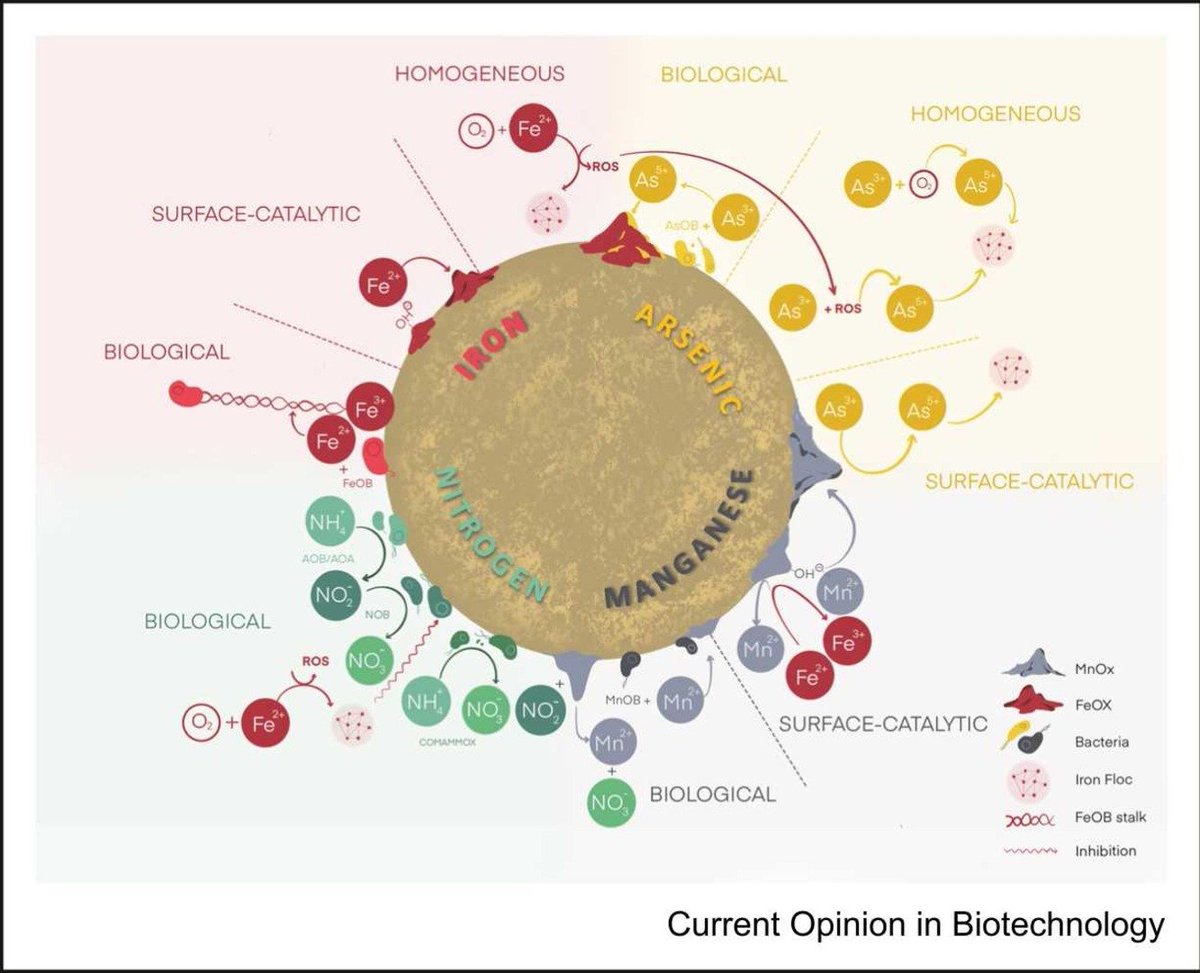
And here it is. After 4 years working on the intricacies of nitrogen, iron and ammonia removal with biotechnologists and engineers, academics and practitioners, our* opinion
1/2
I think some of the birthrate decline can be attributed to two forces happening everywhere: increasing complexity, and decreasing hardship. Life is too complex and too 'good.' I'll try to explain
Does DNA (or RNA) hold all the secrets about life and its fundamentals? What better place to learn more than at #LRUA24 in Upasala, a conference on long read sequencing at such a fancy location!
From metagenomes to metabolism: Systematically assessing the metabolic metabolic flux feasibilities for “Candidatus Accumulibacter” species during anaerobic substrate uptake by @TimmyPaez et al. @tudelft
https://t.co/UXdWJ33e5n
From metagenomes to metabolic potential by @TimmyPaez
Illustrating the metabolic flexibility of the anaerobic conversions by Accumulibacter sp. @SIAMmicrobes@TNWTUDelft#EBPR https://t.co/DOVC7ZjlgG
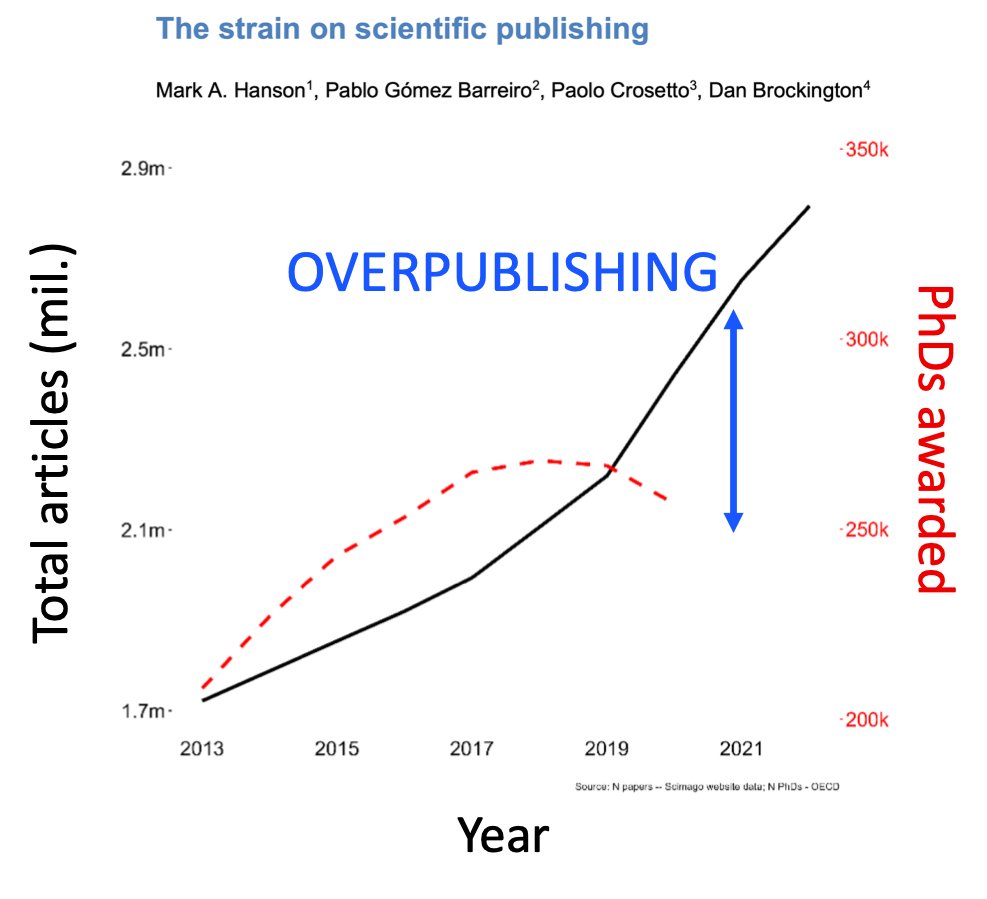
Overpublishing puts enormous stress on students and PIs.
And brings tons of money to publishers in STEM.
A new study shows that the number of papers is increasing FASTER than the number of #PhD graduates.
It’s an amazing work with very useful statistics. Huge kudos to the authors!
▫️
Main outcomes:
1️⃣ In 2022 the number of articles is 47% higher than in 2016. The amount of writing, reviewing and editing workload per scientist is increased enormously.
2️⃣ “Special issues” is a strategy for publishing lots of papers with reduced review time. This is possible due to the “publish or perish” pressure and clearly benefits the publishers.
3️⃣ The publishing time varies widely!
MDPI = 37 days. Frontiers = 72 days. Elsevier = 134 days. Springer = 157 days. Nature = 185 days.
4️⃣ The article rejection rates do not seem to correlate with publisher growth. However, rejection rates decline with increased use of special issue publishing.
5️⃣ Certain for-profit gold-open-access publishers create an increasing number of special issues, with uniquely reduced turnaround times, and in specific cases, high impact inflation and reduced rejection rates.
6️⃣ The authors suggest a new metric - Impact Inflation, which is reflected in self-citation within the same journal. For example, MDPI has a high impact inflation due to excessive self-citation compared to other publishers.
Conclusions and my opinion:
- Scientists have to spend a lot more time on reviewing and writing than before (on average).
- The more papers are published, the more the quality is compromised.
- Scientific progress has become partially bound to the business models of publishers and their revenue (a sad reality today).
- There is a huge lack of transparency. Much of these data had to be ‘web-scraped’ from numerous sources in order to get a full picture. We clearly need regulators to mandate open access to publisher’s statistics.
- Reduce the number of special issues! Those typically have low standards.
▫️
Science, publishing and funding make a trio that is very hard to disentangle.
However, research quality is controlled by the community.
This is why preprint + community review can make a big difference.
#AcademicTwitter #AcademicChatter
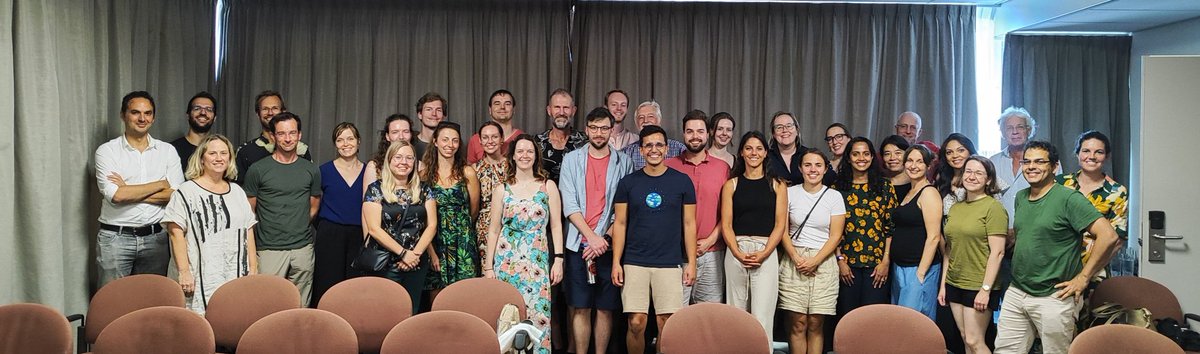
Cool day with people working on quantitative microbial ecology in the NL! Thanks @metaboli3am and Rebeca Gonzalez Cabaleiro for organizing the symposium and @GerbenStouten and @RKleerebezem for showing us the @UnlockMicrobes facilities!