AI agents can write code, send emails, and make phone calls. But they still can't transact.
Today we're fixing that. Releasing a new set of tools that give agents native access to the Lightning Network: lnget for automatic L402 payments, MCP for node operations, remote signing for key isolation, and scoped credentials for spending control.
The machine-payable web starts now. And bitcoin makes it possible. โก๐ฆ
https://t.co/B0KW01l6ZD
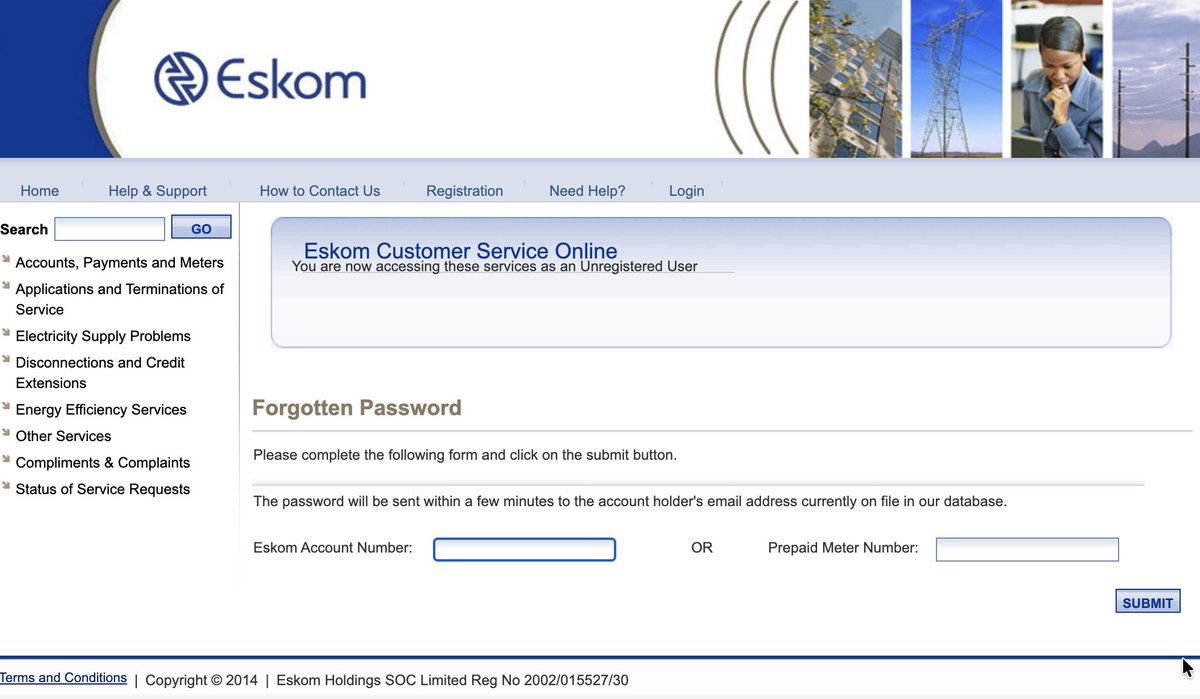
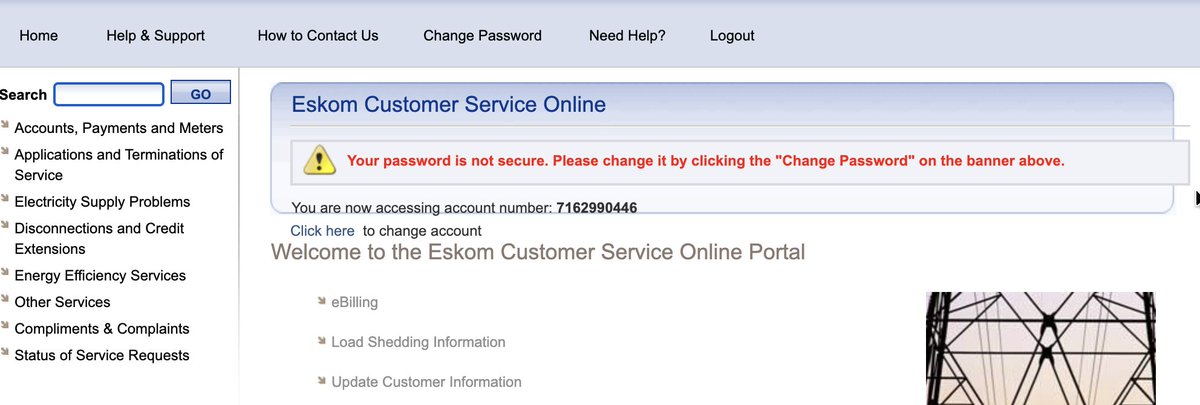
I have a client who registered their domain on @Afrihost - I want to change the DNS settings as a technical contact, but thats not possible. The official support's solution is that I log in with the client's username and password and change it ๐คฆโโ๏ธ
Pakistan's rupee has lost 85% of its value against the dollar since 1990. The IMF keeps calling this progress.
The International Monetary Fund has approved Pakistan's 24th bailout package since 1958. Twenty-four separate "rescue" programs in 65 years. Each time, the IMF arrives with the same prescription: devalue your currency, raise taxes, cut spending, liberalize imports. Each time, Pakistan gets poorer and the rupee gets weaker.
Free market economists call this the IMF trap. The Fund lends dollars to governments that cannot pay their debts, then demands policy changes that make repayment even less likely. Currency devaluation makes imports more expensive, driving up inflation and making ordinary Pakistanis poorer. Higher taxes crush domestic businesses. Import liberalization floods the country with foreign goods that local producers cannot compete with.
The real winners are the politically connected importers who get cheap access to dollars, and the Western exporters who gain market access. Pakistan's middle class watches their savings evaporate while the government celebrates each new IMF agreement as economic reform.
The rupee traded at 9.9 per dollar in 1990. Today it trades above 280. Pakistani families need 28 times more rupees to buy the same goods from abroad. This represents systematic monetary destruction disguised as economic stabilization.
Pakistan's government could end this cycle tomorrow by refusing new IMF loans and fixing the rupee to gold or adopting the dollar entirely. But that would require giving up the ability to print money to fund government spending. The IMF trap keeps both the Pakistani government and the Fund in business while ordinary Pakistanis pay the price.
The situation in South Africa ๐ฟ๐ฆ only seems to be getting worse.
I wrote it about it last weekend in my newsletter (link follows), but the update via the thread below illustrates that the government seems to be getting quite desperate, and what follows that sort of desperation tends to not be good.
I shared what you can do to help at the link in the comments.
I am frankly dumbstruck by the news out of South Africa ๐ฟ๐ฆ that newly proposed regulations would upend self custody in that country.
South Africa's National Treasury has published draft Capital Flow Management Regulations (https://t.co/72NEvhnM1f) to replace its 1961 exchange-control regime, and the proposal extends sixty-five-year-old capital controls designed for gold bullion and foreign banknotes directly onto self-custodied crypto.
The result is one of the most invasive treatments of non-custodial wallets proposed anywhere in the world.
The mechanics are clear and severe. Any purchase, sale, loan, or transfer of crypto above a Treasury-set threshold must run through a licensed "authorised crypto asset service provider." Cross-border movement of crypto requires permission. Holdings above the threshold must be declared within thirty days, and Treasury can compel their sale at market price. Crypto can be attached by administrative order, without prior judicial process, on reasonable suspicion of contravention. Penalties run to R1 million, five years in prison, or the full value of the crypto involved.
The provision that is the real showstopper is Regulation 25(5). Where crypto has been forfeited to the state, the owner must "furnish full particulars in writing of all and any passwords, personal identification numbers or codes" necessary to give Treasury access.
That seems to be a statutory compelled disclosure of seed phrases and private keys.
There is no carve-out, no judicial check inside the regulation itself, no recognition that the keys are not separable from the user's right against self-incrimination or right to privacy under the South African Constitution.
The reason that provision appears to exist is Treasury understands that, without it, the rest of the framework cannot reach a self-custody user. Exchange-control logic depends on gatekeepers โ banks, dealers, intermediaries that the state can appoint and command. Self-custody removes the gatekeeper by design. So the regulation reaches the only places it still can: the on-ramp, the holder's declaration, and ultimately the holder's body and devices at the border. Regulations 4 and 5 give enforcement officers the power to search travelers entering or leaving the country, demand they "produce" any crypto in their possession or control, and seize it on suspicion alone.
As you well know, this is not how most of the rest of the world is approaching self-custody. The EU's Markets in Crypto-Assets framework regulates issuers and crypto-asset service providers and explicitly leaves self-custody alone. The UK's financial services regime regulates exchanges and custodians and treats unhosted wallet software as out of scope. The US has spent the last two years walking back its most aggressive theories โ the SAB 121 reversal, the broker-dealer rule rollback, the IRS DeFi broker rule rescission โ precisely because policymakers across both parties recognized that you cannot regulate non-custodial software the way you regulate a bank. FATF's own guidance distinguishes wallet software publishers from custodial intermediaries.
South Africa's draft does the opposite. It very much intends to reach through the software to the user.
The technical reality the draft ignores is that a non-custodial wallet is a key-management tool, not a financial intermediary. @MetaMask does not hold user funds. It does not see private keys. It cannot freeze, seize, or surrender anything to a regulator. Compelling its users to declare, surrender, or hand over keys does not make Treasury more effective at managing capital flows. It makes ordinary South Africans criminally liable for using software the rest of the world treats as legitimate self-custody infrastructure.
Treasury has opened a public comment period, and anyone with a dog in the fight should ask that the compelled-key provision be struck. The cross-border search-and-seizure regime should not extend to self-custodied wallets. And the framework should distinguish โ as nearly every other major jurisdiction now does โ between intermediated services and the user's own software.
A guy built a fake band, put it on Spotify, and 80,000 people had no idea.
Then it got even weirder and the tech behind this is wild:
- Used Suno AI to generate every song sounded completely real.
- Created AI music videos with fake members and faces.
- Built fake bios and a Tokyo address to sell the story.
- 80,000+ monthly listeners, fans had it in their Spotify Wrapped top 5, merch was sellingโ.
- Community sleuths exposed it and the AI-generated hands in the videos gave it away, creator traced to Europe, not Japanโ
But here's where it gets insane:
Instead of running, the creator flew to Tokyo and recruited 7 real musicians to perform the AI songs liveโ.
they've played multiple shows, more are bookedโ.
the creator's response: "In an age where AI is taking everyone's jobs, this has actually created jobs. It's done the complete opposite."โ
This is the first time ever an AI fake band became a real touring act and it worked.
Nobody in the music industry knows what to do about itโโ.
One of the most grounded Bitcoin podcasts I've heard in a while. Not about price. About financial independence through low time preference. @stephanlivera@ts_hodl
Study ๐ Bitcoin
For those who missed it, you can catch the ABCT26 @MoneyBadgerPay talk by Carel Van Wyk here, on becoming a MoneyBadger and the benefits of Bitcoin: https://t.co/xuC4fqkRI3 @abcptza Thanks for an awesome event and all the positive feedback! #bitcoinadoption#southafrica
how to build a bootstrapped startup without funding:
1. pick a problem you personally have. if you don't use your own product daily, quit now
2. skip the pitch deck. open your code editor. ship something ugly in a weekend
3. charge money from day 1. free users give you nothing but support tickets
4. use boring tech. PHP, SQLite, vanilla JS. frameworks are a trap that mass waste your time
5. host on cheap VPS ($5-20/mo). not AWS. you don't need kubernetes for 1,000 users
6. do customer support yourself. it's the fastest product feedback loop that exists
7. automate everything you do more than twice. cron jobs > employees.
8. grow on Twitter/X by building in public. your journey IS the marketing
9. keep your burn rate near zero so you never need to raise. ramen profitable > series A
10. say no to investors, cofounders, and "advisors" who want equity for intros
i've been doing this for 10+ years now. no employees, no funding, no board meetings
the entire VC game is designed to make you think you need permission to start
you don't