Protecting Every Vote. Winning 2027. Together.
My fellow Nigerians at home and abroad,
Over the past months, wherever I go and in your many messages, two questions keep coming up: How will our votes be protected in 2027? And how will we win?
These are fair questions, and you deserve direct answers.
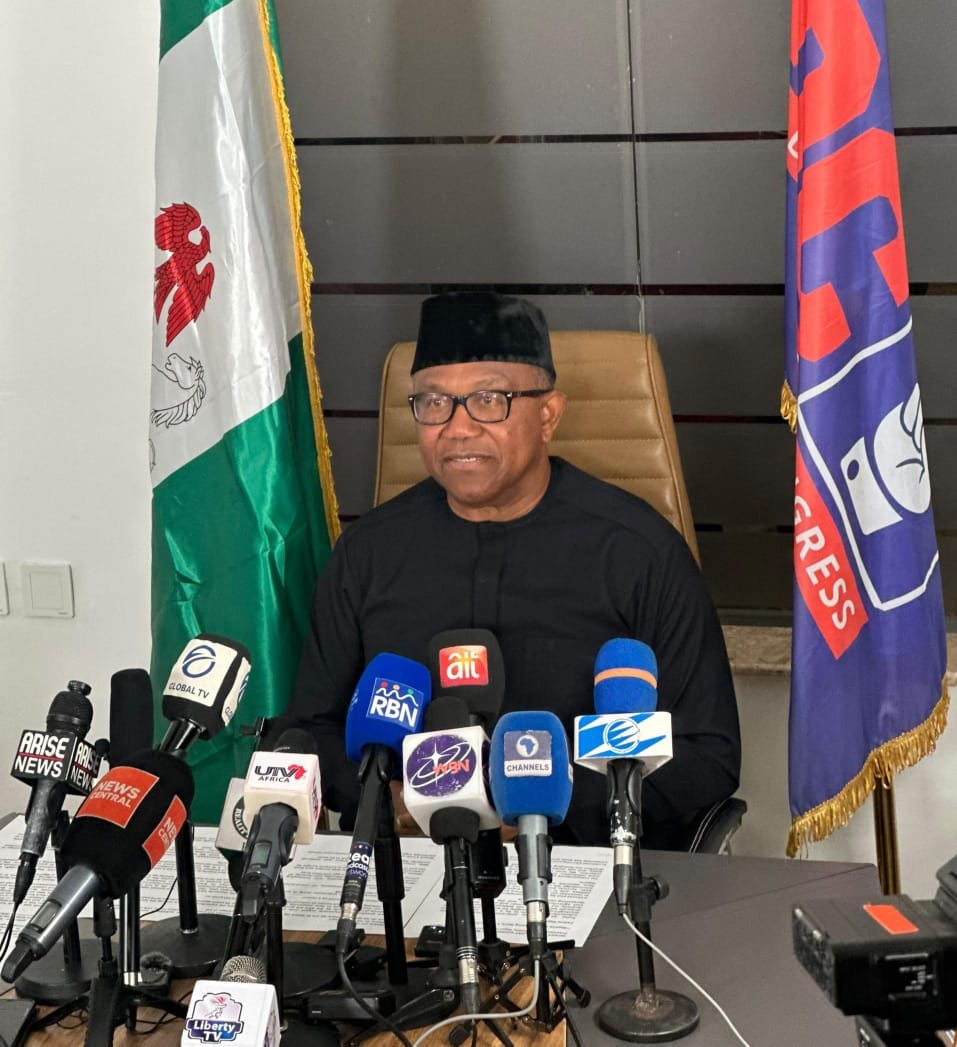
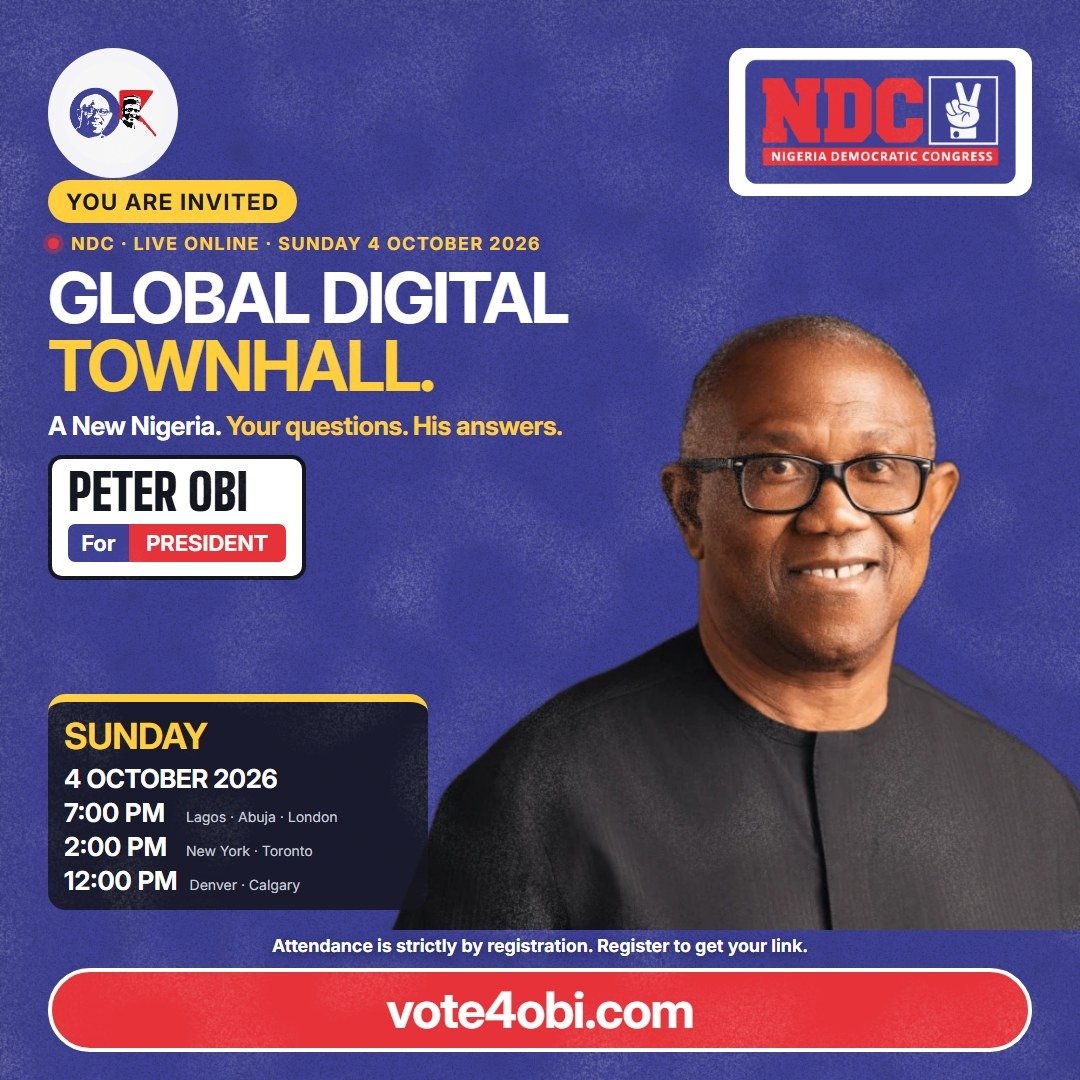
This Sunday, I will answer you directly, and more importantly, listen to you. I will join you for A New Nigeria Global Digital Townhall. We will speak plainly about protecting every vote and the path to victory.
But this is not only about speaking to you. It is about listening to you. I want to hear your concerns, your insights and your strategies. This movement has always been built by you, and your ideas will shape what we do next.
Sunday, October 4, 2026
7:00 PM WAT/GMT | 2 PM EST | 12 PM MST
Attendance is by registration: https://t.co/tBtGQWtcun
Let us continue this conversation together. A New Nigeria is POSSIBLE. -PO
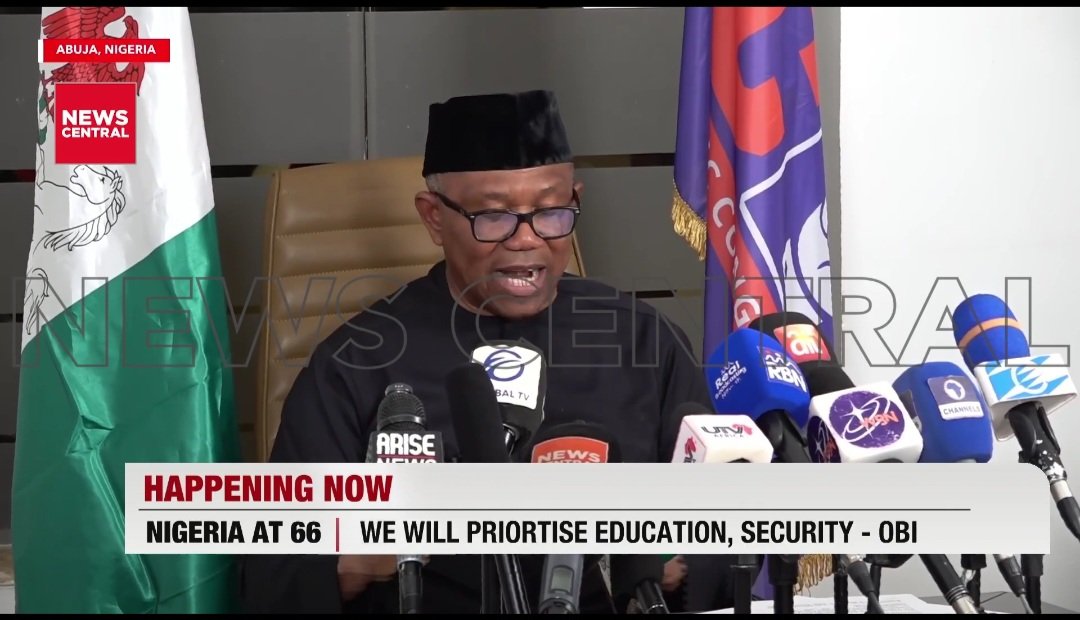
Nigeria at 66: Looking Back, Looking Forward
Fellow Nigerians,
Today we mark the sixty-sixth anniversary of our independence. It ought to be a day of celebration and thanksgiving to God Almighty for the gift of life and for the immense blessings He has bestowed on our nation—our diversity, our abundant human and natural resources, our vast agricultural potential, and the relative absence of devastating natural disasters.
It should also be a day of appreciation and patriotism: a day to remember our founding fathers and all those who made selfless, and in many cases supreme, sacrifices for the birth, survival and growth of our dear nation. We must acknowledge the efforts of past and present leaders who have laboured, however imperfectly, to build a better Nigeria.
Yet independence anniversaries must never be reduced to mere celebration. They are moments for honest national reflection. We must look back, examine where we stand today, and ask ourselves whether we are moving in the direction our founding fathers envisioned.
In national planning and strategy, every serious nation must continually ask three fundamental questions:
Where are we today?
Where do we want to be?
How do we get from where we are to where we want to be?
These questions are especially urgent now. Despite the enormous promises made by the APC-led government in 2023, our nation continues to face deepening challenges across virtually every critical sector of national life.
Today we stand before the world as a nation:
With an extraordinarily large population living in poverty and severe hardship; over 140M
With one of the largest populations of out-of-school children in the world; over 18M
Where insecurity, terrorism, banditry and kidnapping continue to threaten lives and livelihoods, just recently 37 young Nigerians in their productive age lost their lives
Where millions of Nigerians struggle with hunger and food insecurity; over 40M Nigerians will be in extreme hunger by the end of 2026.
With unacceptably high rates of infant and maternal mortality; Nigeria today is the worst place to be born.
Where youth unemployment and underemployment remain alarmingly high; over 35M
Where drug abuse and substance misuse increasingly threaten our young population; today 14% as against global average of 6%
Where life expectancy remains among the lowest globally, today 54 years against global average of 74 years
And the list goes on.
This reality demands serious, sober and honest reflection. Socrates taught that “the unexamined life is not worth living.” By the same principle, an unexamined nation cannot successfully chart its future. We must therefore ask ourselves: Are we cursed, or have we become the curse through the choices we have made and the failures we have tolerated?
The answer cannot be that Nigeria is cursed. We are a nation immensely endowed and blessed. Our greatest problem is not a lack of resources; it is the failure to convert our enormous resources into human development, productivity, security and shared prosperity.
Only yesterday, Senator Rabiu Kwankwaso and I returned from a two-day visit to Sokoto State. We held extensive consultations with people from different parts of the state on insecurity, out-of-school children, poverty, youth unemployment, drug abuse and other challenges confronting our people.
In concluding the visit, we went to the Internally Displaced Persons camp at Ramin Kura within Sokoto metropolis. What we saw was deeply troubling. Thousands of women and children live in deplorable conditions, displaced from their homes and deprived of the basic necessities of life. Many of the children have no access to education. Mothers and children have limited access to basic healthcare. These are Nigerians who should be living in their communities, going to school, farming their land, conducting their businesses and contributing to the economy. Instead, they live as displaced persons in their own country.
ON THE ANAMBRA DEBT QUESTION
I have remained silent over the past few days because I have been grieving the loss of my very dear elder brother and friend, Chief Okey Ezeibe. However, the time has come for me to address some of the matters that have occupied public discussion in recent days.
I respectfully urge everyone to concentrate on the existential challenges confronting Nigeria and the hardships endured by its citizens, rather than on the needless distractions that have become widespread in our politics.
I wish to assure the public that I have no disagreement with my dear elder brother, Governor Soludo, or with any governor in Nigeria. I am not seeking the office of governor in any state, and I will not seek that position again, even if the Constitution is amended.
Accordingly, I appeal to governors to support whichever presidential candidate they choose while also permitting and assisting other presidential candidates and contenders for other offices to campaign freely and without interruption in their states. Ultimately, voters should be allowed to determine whom they wish to serve them.
Regarding the multilateral funding inaccurately described as “debt owed by Peter Obi” in Anambra State, I wish to state unequivocally:
As Governor of Anambra State, I did not approach any financial institution to borrow funds or issue a bond on behalf of the state. Indeed, at his farewell ceremony, the then Director-General of the DMO, Abraham Nwankwo, appointed me chairman and declared that, during his 10 years in office, I was the only state governor who had not approached him for a loan facility.
When I left office, the Anambra State Government owed no unpaid salaries, gratuities, or pensions. Neither did it owe any contractor or supplier who had completed work that the government had verified and certified.
Regarding development financing from the World Bank, these are concessionary development-support funds secured by the Federal Government for states selected by it to address specific needs. Repayment is spread over 25 to 30 years.
The Anambra State Government must therefore differentiate among three separate figures: the total amount approved for the multiyear development program; the amount Anambra State actually drew during my tenure; and the funding balance outstanding when I handed over on 17 March 2014.
The government has combined these distinct categories, added them together, and described the resulting US$123.77 million as “loans left by Peter Obi.” That is an incorrect application of public-sector accounting.
The eight facilities identified were primarily World Bank and IFAD development programs negotiated by the Federal Government, with participating states receiving access to the funds through subsidiary arrangements. They were not conventional commercial loans that I personally secured during my tenure.
This does not suggest that Anambra had no repayment responsibilities; rather, each facility must be examined in light of its approval, effectiveness, drawdown, and repayment record.
The clearest contradiction appears in the government’s own figures. It states that the original facilities amounted to approximately US$123.77 million and that US$92.35 million remained outstanding in June 2026. However, the DMO’s published records showed Anambra’s total external debt at approximately US$18 million when I began my tenure in March 2006, about US$30 million in March 2014, when I left office, and approximately US$45.15 million as of 31 December 2014, nine months after my departure.
The Anambra State Government must therefore clarify how a state whose recorded external debt was about US$30 million in March 2014 and US$45.15 million in December 2014 could supposedly have inherited US$123.77 million from Peter Obi, who left office in March of that same year.
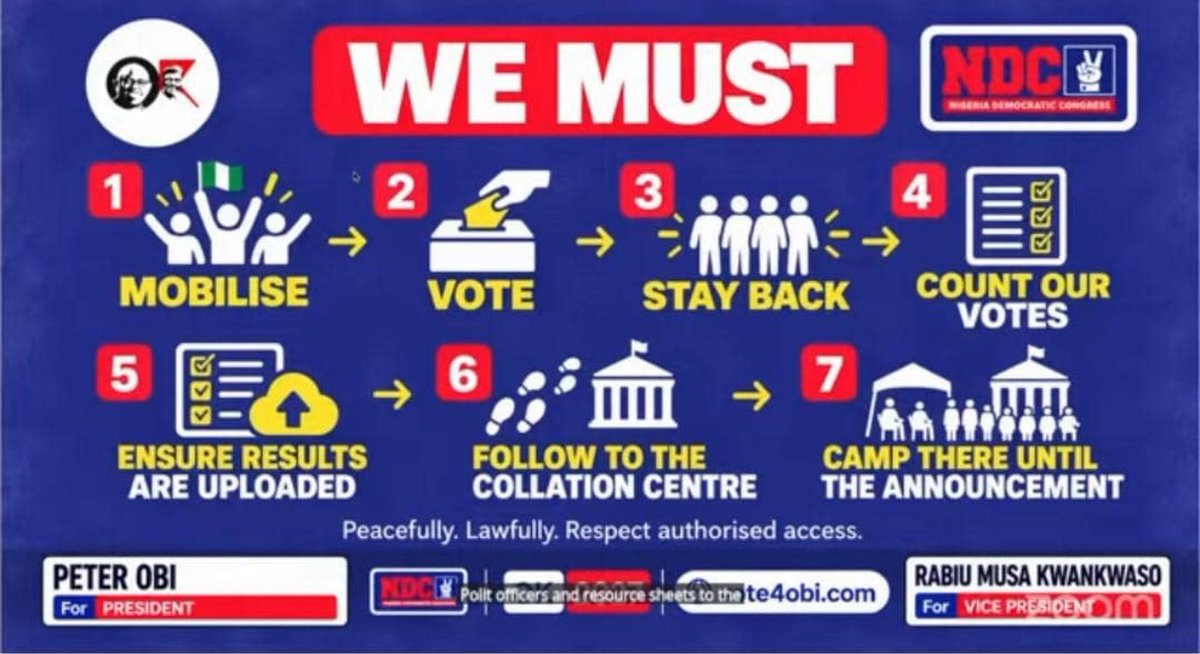
THIS IS HOW NIGERIANS MUST STOP WIKE AND INEC RIGGING 2027; 'OPERATION LAUNCH YOUR BAG'
Save this, share, and let everyone know this is the safest and cheapest way to secure your votes 🗳️
2027 is a BALLOT REVOLUTION!
PETER OBI DID NOT APPLY FOR OR DREW DOWN ANY USD$30MILLION EXTERNAL LOAN THROUGHOUT HIS 8 YEARS TENOR AS GOVERNOR OF ANAMBRA STATE...[MAR 17, 2006 TO MARCH 17, 2014]
According to the records at the DMO office, Anambra State's external debt profile as at March 31,2006 was approximately $18.87 million
The DMO records as at December 31, 2013 shows Anambra Debt Profile to be $30m
So, total of what PO actually drew down from the USD$123m multilateral funds was actually less than $10m
Peter Obi need to overhaul his media team and beef it up with very smart Development Economists and Investment Bankers
Some of these guys around him as his spokesperson are not that too vast on Financial and Economic Matters
Do your Research always...STUDY TO ALWAYS SHOW YOURSELF APPROVED
OBIARAERI, Nnaemeka Onyeka
08134441140
When Peter Obi tells you what he will do as a commander in chief, you don’t have any reason to argue.
This man is a Yoruba man, listen to his experience with Peter Obi in issue of security and discipline!
As the incumbent SSG of Anambra under @PeterObi at the time he left office on 17 March, 2014, I had the honour of personally being present when Peter Obi signed the attached handover letter. I was also present, when Gov. Willie Obiano received and signed an acknowledgement for his own copy of the letter, complete with the annexed certified bank statements, related documents and the Handover Report. The letter listed assets and liabilities - in black and red.
During the nationally televised Anambra 2017 governorhip debate on Sunday 12, November, 2017, organized by Channels Television, Gov. Willie Obiano asserted surprisingly that there were no funds left by the Obi Administration. I recall asking him on national television, how as a certified accountant and auditor he would sign off and accept financial documents, for which he now was expressing reservations. He then publicly acknowleged for the first time that some specified funds were in place and asked what was the use of saving money, when there was work to be done. As Gov. Darius Ishaku of Taraba would later confirm to members of the Nigerian press corps, Gov. Obiano had disclosed to him that his predecessor (Gov. Obi) had indeed left huge sums, which enabled him to independently build the Anambra Airport at Umueri.
If Gov. Obiano to whom Peter Obi handed over to in 2014 would eventually acknowledge -implicitly and explicitly - that Gov. Peter Obi indeed left the stipulated funds; a fact that was also publicly corroborated by Gov. Alex Otti, in his capacity as an ex- banker, what then, one may ask, is the beef and grouse of the incumbent Anambra State Government?
Go Figure!
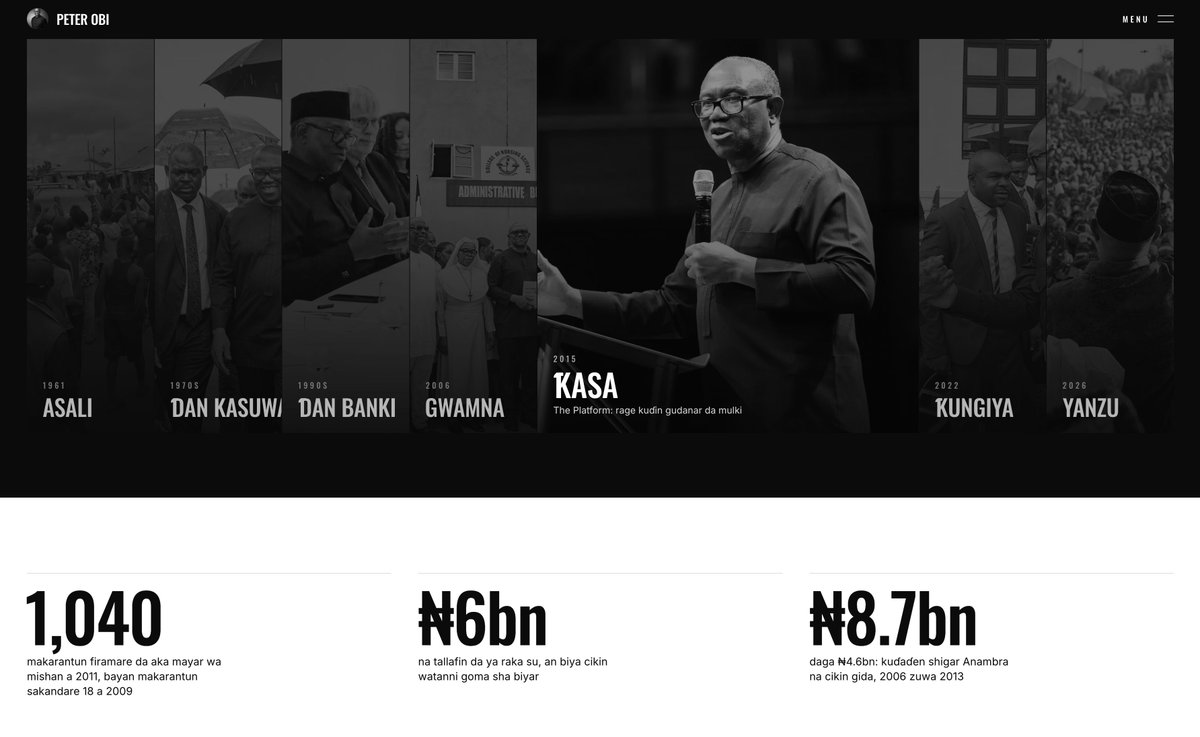
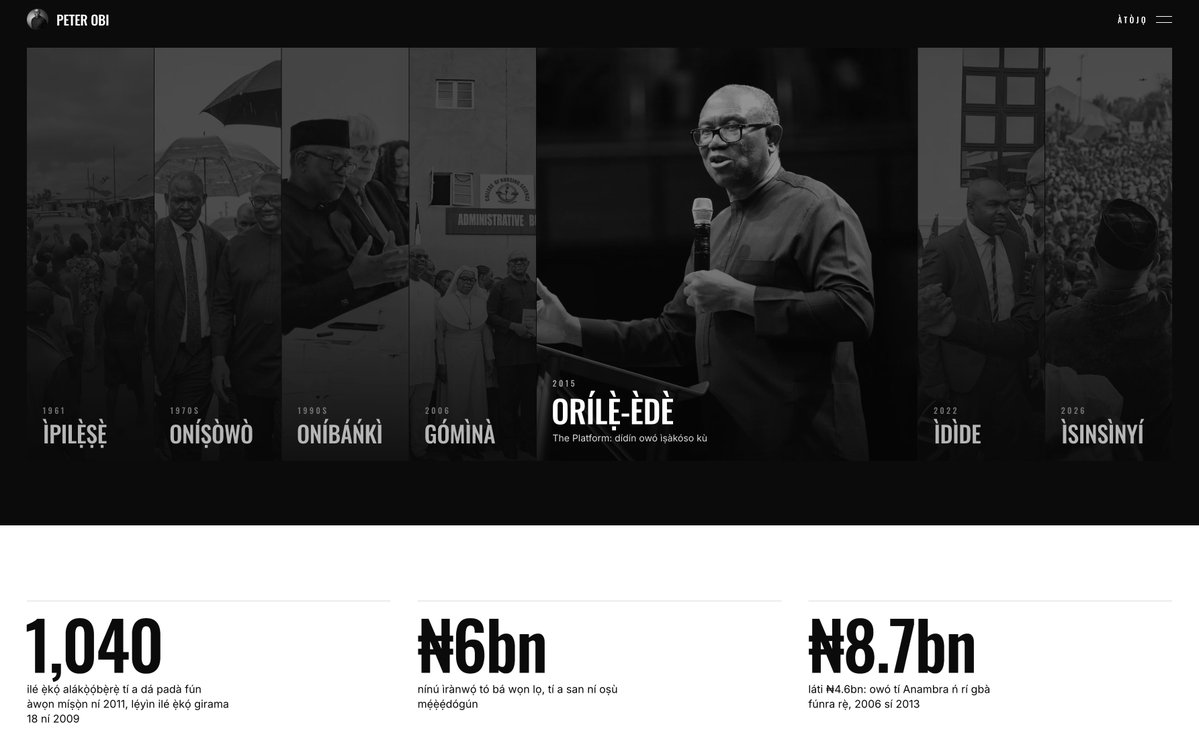
Translations are live!
https://t.co/MJy4SuUuXH now served in the following languages:
Yoruba: https://t.co/8Ejk9q7f4H
Igbo: https://t.co/cCRwOJqowC
Hausa: https://t.co/vUCnQWXlGz
Pidgin: https://t.co/UvJoa61xnB
Retweet 🚀
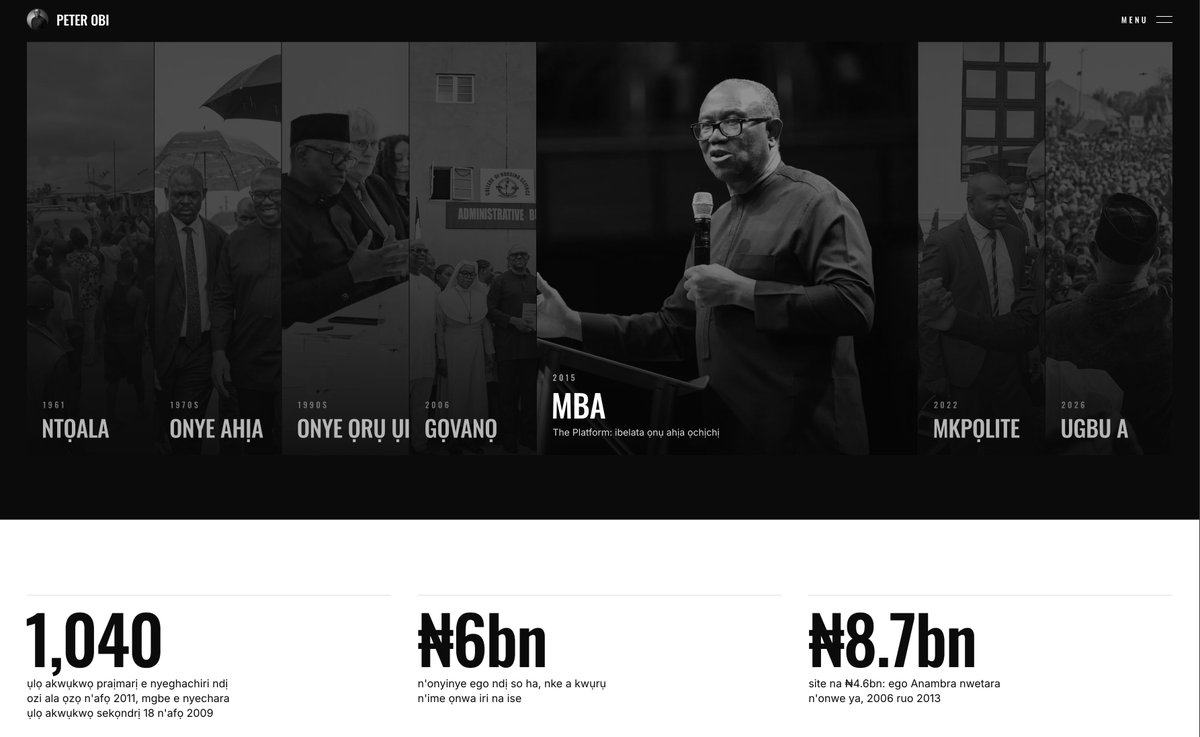
I made a website about @PeterObi. It details his entire life, his roots, offices held, source of wealth, documented donations, achievements as a governor, and more.
When they ask you what Peter Obi did as governor, send them https://t.co/MJy4SuUuXH
Retweet this to get it far!
Just when I thought Donald Trump was badass.
Poland 🇵🇱 is the only European country with Zero terrorist attacks.
They used Nigeria as example.
We are always found in bad examples 😢
This Is The Complete Story Of Peter Obi. From His Early Life As The Son Of An Onitsha Trader, To His Journey Into Business And Politics, His Rise To Becoming The Governor Of Anambra State, And His Fight To Remain In Office.
Discover How He Challenged The Political Godfather System In Anambra, Transformed The State’s Education And Healthcare Sectors, And Built a Reputation For Accountability And Frugality.
The Story Continues To His 2023 Presidential Campaign, Where He Became a Major Political Force And Challenged The Official Election Result, And His Journey Toward The 2027 Presidential Election.
Watch Peter Obi’s Journey From Beginning To End. 👀🇳🇬
Having crypto is one thing. But being able to turn it into Naira when you need it is another.
I tested ZendWallet’s Quick Sell and you can convert USDT/USDC to Naira and withdraw directly to your bank account in 2 minutes or less.
And with ZendFX, you can make cross-border payments securely and seamlessly to over 140 countries.
Click the link to get started
https://t.co/15gpsfvalZ
The campaign season has began and our work starts with taking the message directly to the people. Through door-to-door campaigns, we must sensitise Nigerians about Peter Obi’s new political home, the NDC, the party’s name and its logo, and where to find it on the ballot.
This election is bigger than any individual. It is about the future we are leaving for our children and the kind of Nigeria we want to build: a country where education and healthcare work, where there are jobs and opportunities, where people can live in security and dignity, and where leadership is accountable to the people.
No voter should walk into a polling unit confused about the party or the symbol to look for. We must reach every street, home and community, educate, mobilise and organise our people.
Less talk, more work.
#NigeriaWillBeOk