Ben Horowitz: "Don't follow your passion; follow your contribution."
When offering career advice, Ben Horowitz gave a counterintuitive perspective:
"Don't follow your passion," he states. "You're probably thinking that's a really dumb idea because everybody who's successful, if you poll a thousand people who are successful, they'll all say that they love what they do."
But Ben challenges this conventional wisdom:
"We're engineers and we know that might be true. But it also might be the case that if you're successful, you love what you do. You just love being successful and everybody loves you."
He outlines several problems with the "follow your passion" approach. First, passions are hard to prioritize:
"Which passion is it? Are you more passionate about math or engineering? Are you more passionate about history or literature? Are you more passionate about video games or K-pop? These are tough decisions. How do you even know? On the other hand, what are you good at? Are you better at math or writing? That’s a much easier thing to figure out."
Second, passions change over time:
"What you're passionate about at 21 is not necessarily what you're going to be passionate about at 40. This is true for boyfriends, as well as career choices."
Third, you might not be talented in your area of passion:
"Just because you love singing doesn't mean you should be a professional singer."
Finally, and most importantly:
"Following your passion is a very me-centered view of the world. When you go through life, what you'll find is what you take out of the world over time — be it money, cars, stuff, accolades — are much less important than what you put into the world."
His alternative recommendation?
"Follow your contribution. Find the thing that you're great at. Put that into the world, contribute to others, help the world be better. And that is the thing to follow."
Thanks for reading!
Found this valuable?
Follow @TimothySolinger for more content about founders, for founders.
P.S. — You can watch the full interview here: https://t.co/fRSHP3EvYX
Jeff Bezos's personal framework for dealing with high-stress:
"Stress primarily comes from not taking action over something that you can have some control over."
He explains that when he feels stressed about something, he treats it as a warning signal:
"If I find that some particular thing is causing me to have stress, that's a warning flag for me. What it means is there's something that I haven't completely identified, perhaps in my conscious mind, that is bothering me and I haven't yet taken any action on it."
Simply beginning to address a stressful situation dramatically reduces the Bezos's stress levels:
"I find as soon as I identify it and make the first phone call or send off the first email message, or whatever it is that we're going to do to start to address that situation, even if it's not solved... The mere fact that we're addressing it dramatically reduces any stress that might come from it."
Bezos believes many people misunderstand the relationship between hard work and stress:
"People get stress wrong all the time in my opinion, stress doesn't come from hard work, for example. You know, you can be working incredibly hard and loving it, and likewise, you can be out of work and incredibly stressed over that."
NVIDIA CEO Jensen Huang: "I'd rather torture you into greatness than give up on you."
When asked about his reluctance to fire employees, Jensen Huang explains why he prefers to help people improve rather than let them go.
"When you fire somebody, you're kind of saying, 'Well, I made the wrong choice,'" Jensen explains. "But there are very few jobs that I believe you can't learn."
Drawing from his own experience, he continues:
"Look, I used to clean bathrooms and now I'm the CEO of a company. I think you could learn it. I'm pretty certain you can learn this."
He continues:
"I had the benefit of watching a lot of smart people do a lot of things. I'm surrounded by 60 people doing smart things all the time, and they probably don't realize it, but I'm learning constantly from every single one of them."
Which leads to his leadership philosophy:
"I'd rather torture you into greatness because I believe in you. And I think coaches that really believe in their team torture them into greatness. Greatness kind of comes all of a sudden one day like 'I got it.' That feeling that you didn't get it yesterday and all of a sudden one day something clicked. Could you imagine you gave up that moment right before you got it?"
Jensen concludes:
"So, I don't want you to give up on that. So, I'll just keep torturing you."
Thanks for reading!
Found this valuable?
Follow @TimothySolinger for more content about founders, for founders.
P.S. — You can watch the full interview here: https://t.co/Vfrj2U9hvh
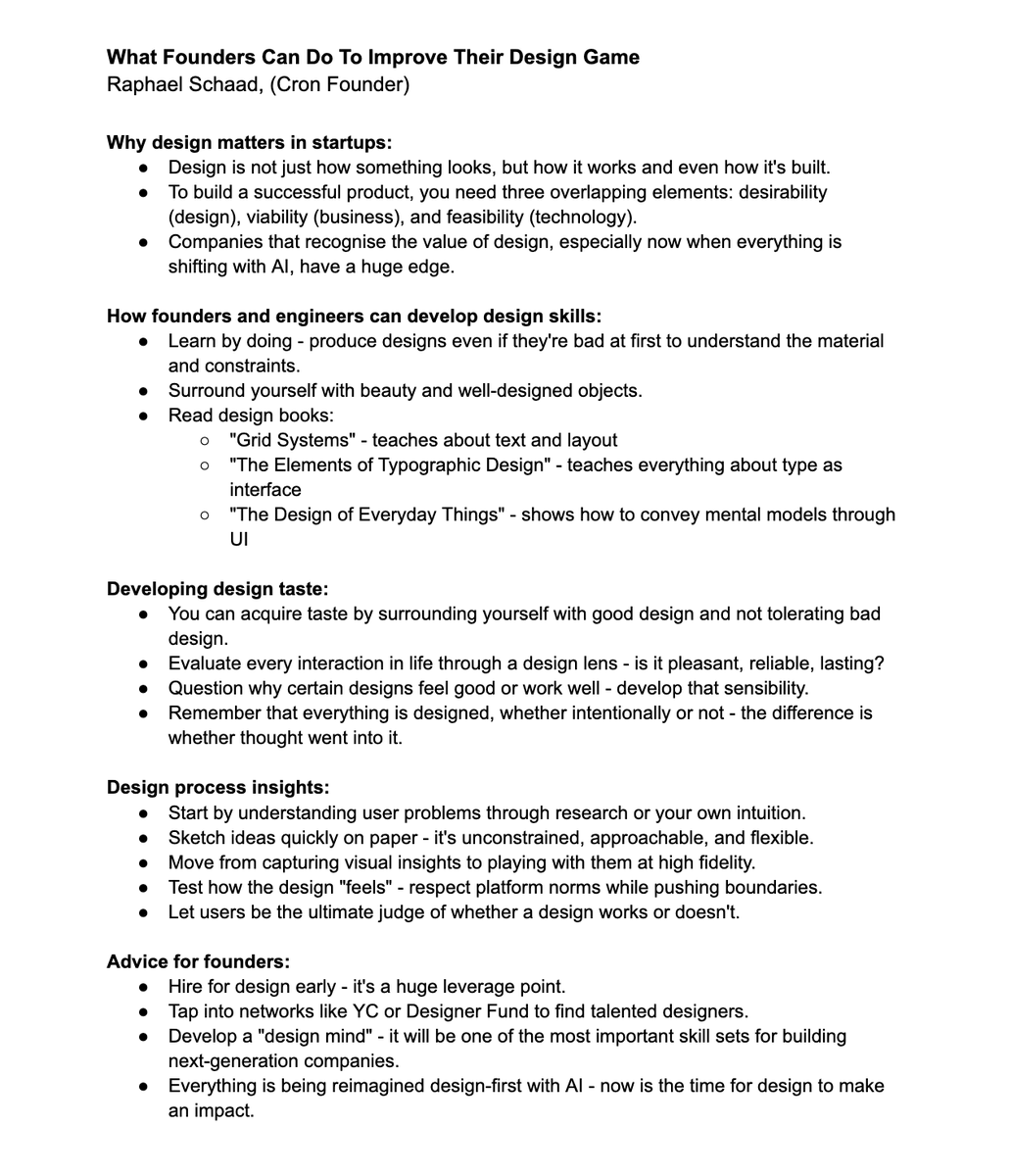
@raphaelschaad Full video: https://t.co/puePuGerJi
Thanks for reading!
Found this valuable?
Follow @TimothySolinger for more content about founders, for founders.
The way Steve Jobs became a billionaire is insane:
• Sold 99% of his Apple stock
• Lost $50 million over 9 years
• Then sold a side project to Disney for $7.4 BILLION
Here's how the genius revival of a dying tech company made Jobs a billionaire before Apple did: