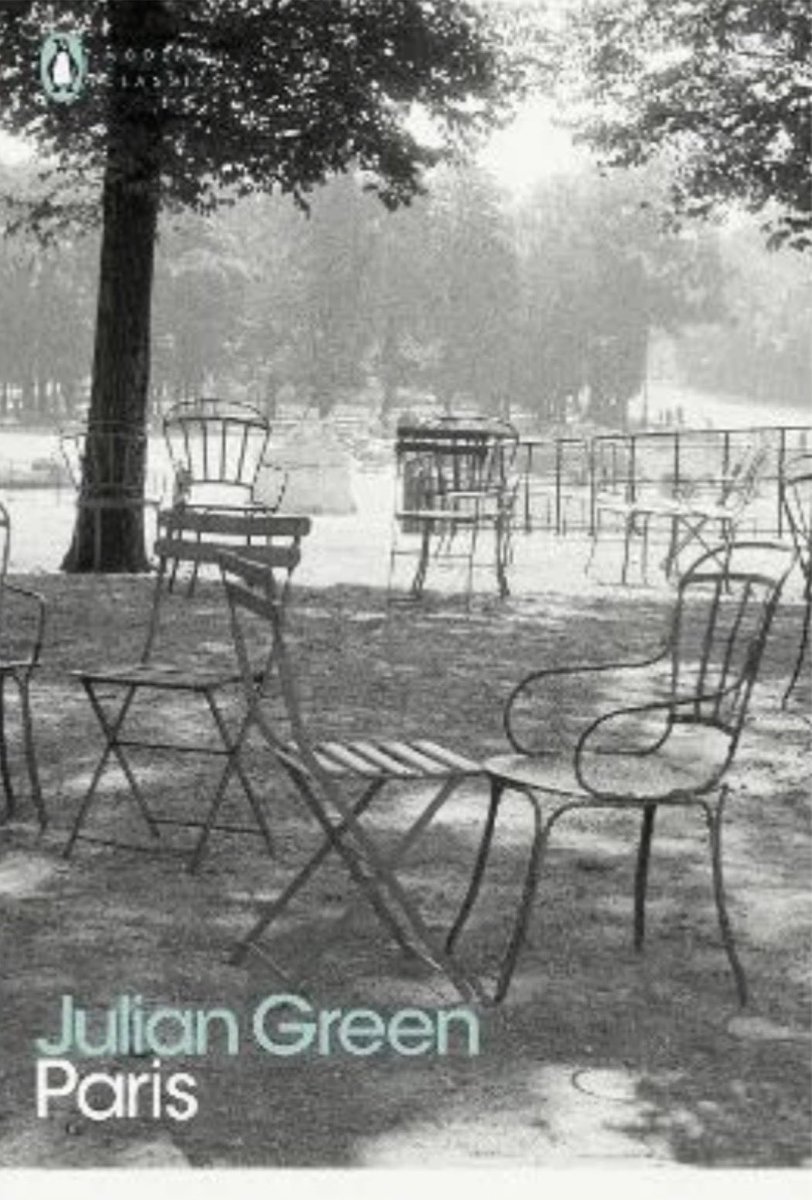
Julian Green’s Paris is far more than a portrait of a city; it is a deeply personal meditation on memory, history, and the enduring spirit of one of the world’s great capitals. Written with elegance, sensitivity, and remarkable insight, Green captures Paris not merely as a collection of streets and monuments but as a living presence that has shaped generations of artists, writers, dreamers, and ordinary citizens.
What makes this book particularly captivating is Green’s ability to blend historical observation with intimate reflection. He guides the reader through the city’s neighbourhoods, churches, gardens, and hidden corners with the eye of both a historian and a poet. Familiar landmarks take on new significance, while lesser-known places emerge with equal fascination. Throughout, Green conveys an abiding affection for Paris without ever descending into sentimentality.
The prose is graceful and evocative, creating a vivid sense of atmosphere. Whether describing the changing light along the Seine, the quiet beauty of a forgotten courtyard, or the echoes of history lingering in ancient streets, Green writes with a rare ability to make the reader feel present within the city itself.
What lingers most after finishing the book is Green’s profound understanding of Paris as a place where past and present constantly intertwine. His reflections remind us that cities are not merely physical spaces but repositories of human experience, memory, and imagination.
Paris is an absorbing and beautifully crafted work that will appeal to lovers of travel, history, literature, and culture alike. It is both an affectionate tribute and a thoughtful exploration of a city that continues to inspire the world. A timeless and rewarding read.
@TripFiction@TippLib@CashelPalace
Joseph O’Connor’s My Father’s House is a beautifully crafted historical novel that combines meticulous research with deeply human storytelling. Set in Nazi-occupied Rome during the Second World War, the novel follows a courageous network of priests, diplomats, refugees, and ordinary citizens who risk everything to save lives in the shadow of tyranny.
What makes this book particularly compelling is O’Connor’s ability to bring history to life without ever losing sight of the individuals at its heart. The characters are richly drawn, complex, and believable, making their acts of bravery all the more powerful. Rather than focusing solely on grand historical events, O’Connor explores the moral choices faced by ordinary people confronted with extraordinary circumstances.
The writing is elegant and atmospheric, capturing both the beauty of Rome and the constant tension of life under occupation. There is a cinematic quality to the narrative, yet it never sacrifices emotional depth for action. The story unfolds with quiet intensity, building suspense while offering moments of compassion, hope, and humanity.
At its core, My Father’s House is a tribute to courage, conscience, and the enduring power of kindness in dark times. It is a moving and thought-provoking novel that lingers long after the final page. For readers who enjoy historical fiction grounded in real events and exceptional storytelling, this is a remarkable achievement and one of Joseph O’Connor’s finest works.
@CashelPalace@TippLib@TripFiction
A Sherlock Holmes Locked Room mystery – with a difference
Set near CORFU
https://t.co/yqg28YBI7V
The Final Problem by Arturo Pérez-Reverte
TR: Frances Riddle
@AtlanticBooks#ADPR
You know how detectives in fiction have backstories and quirks? Well this one - Saul Anguish - has a gross habit....🤢
but it's a good read nevertheless
https://t.co/99ODWknBh0
Some of Us Are Liars by Fiona Cummins
Set on the ESSEX Coast
Readers!
Would anyone in the Cashel area be interested in meeting for a couple of hours to chat about favourite books, authors, and great reads?
There’s no membership fee and no obligations — just pleasant company, interesting conversation, and a shared love of books.
If there’s enough interest, I’ll happily arrange a date and location.
Please let me know if you would like to join!
Look forward to hearing from you
Jorg Mille
@TippLib@CashelPalace@TipperaryCoCo@VisitTipp
Sebastian Junger’s The Perfect Storm is a gripping and deeply atmospheric account of man versus nature at its most unforgiving. Blending investigative journalism with vivid storytelling, Junger reconstructs the tragic fate of the fishing vessel Andrea Gail with remarkable intensity and respect.
What makes this book truly compelling is not just the storm itself, but the people at its heart. Junger brings the crew to life with empathy and nuance, portraying them not as distant figures in a disaster story, but as real individuals—driven, flawed, and courageous. Their motivations, the harsh realities of the fishing industry, and the risks they willingly face add a powerful human dimension to the narrative.
The storm, of course, is the central force—described with almost cinematic precision. Junger’s ability to explain complex meteorological phenomena in an accessible yet dramatic way is one of the book’s greatest strengths. You don’t just read about the storm—you feel its scale, its chaos, and its inevitability.
What lingers long after the final page is the quiet respect the book commands. There is no sensationalism here, only a sober reflection on the dangers of the sea and the fragile line between survival and tragedy. It’s a story of courage, but also of humility in the face of forces far beyond human control.
A powerful and haunting read, The Perfect Storm is as much about the sea as it is about the people who dare to make their living from it—and the price that sometimes must be paid.
Highly recommended!@TripFiction @TippLib@CashelPalace
Tsundoku is a mesmerising exploration of the psychology, culture, and poetry behind the urge to collect and cherish books - making it the perfect present for all bibliophiles - showing why you should never feel guilty about expanding your personal library: https://t.co/dvTVe2YluV
This fantastic book might well become a classic Scottish novel in the vein of Trainspotting or Shuggie Bain...
#TheOssians by @doug_johnstone
https://t.co/aVDQR1XBoZ set across #Scotland@OrendaBooks
Woohoo! Here’s the cover of the new Matthew Venn, which will be published on October 8th. More on the background to the book in my newsletter. Check out my author Facebook page!
The Ghosts of Rome by Joseph O’Connor is a beautifully crafted and deeply atmospheric novel that lingers long after the final page.
Set against the haunting backdrop of wartime Rome, O’Connor brings the city to life with extraordinary richness—its shadows, its secrets, and its quiet acts of resistance. What stands out most is his ability to weave historical detail with human emotion. The story feels both intimate and expansive, capturing not just events, but the inner lives of those caught within them.
O’Connor’s prose is, as always, elegant and evocative without ever feeling heavy. There is a musical quality to his writing—subtle, measured, and deeply immersive. He has a remarkable gift for creating tension not through dramatic spectacle, but through atmosphere, silence, and the weight of unspoken fear.
The characters are complex and vividly drawn. None feel purely heroic or villainous; instead, they inhabit that fascinating grey space where morality is tested by circumstance. Their choices feel real, often difficult, and sometimes heartbreaking.
At its core, The Ghosts of Rome is a novel about memory, courage, and the unseen forces that shape history—the “ghosts” not just of the past, but of conscience, loss, and resilience. It’s a thoughtful, intelligent read that rewards patience and reflection.
An exceptional novel—quietly powerful, richly textured, and unmistakably the work of a master storyteller.
@TripFiction@TippLib@CashelPalace