Five moon bears which have spent decades living in cages in South Korea have been cleared by vets to be moved to Suffolk.
Jimmy's Farm & Wildlife Park near Ipswich and its charity Space for the Wild are working on the Bears Behind Bars campaign to transport the animals 5,500 miles (8,850km) to their new forever home.
The bears had been kept at one of South Korea's last bear bile farms – sites which have now been banned in the country.
Jimmy Doherty, founder of the Ipswich wildlife park, said the bears would soon be able to "finally feel real grass beneath their feet".

I'll never forget meeting these bears for the first time," he said.
"After decades trapped in tiny cages, it was heartbreaking to see what they'd endured.
"But even then, you could see a spark in them that was worth fighting for."
At the end of last year, South Korea announced it would ban the breeding and possession of bears and the extraction of their bile.
The bile would be used in medicines while the bears themselves were often kept in poor conditions and spent their lives in small cages.
While the practice has been phased out, there are still believed to be about 200 bears living in cages at the former farms.
Of the five coming to Suffolk, one has been kept at a farm since 1998, according to the wildlife park.
The wildlife park has started to work on a reserve for the bears.
Park director Stevie Sheppard said there was still no timeline for the bears' arrival, as a campaign to raise money for the project continues.
"No moon bears have ever come to the UK from South Korea. This is a brand new corridor we're opening for them to find a new home," he explained.
"We're not too sure on the full timeframe. We need to raise the money.
"Once we've got the money we can get the bears here."
The campaign has raised more than £50,000 but is aiming for £200,000.
Sarah Dawson, chief operating officer for Space for the Wild, said the flights for the bears were expected to be expensive.
"It's a long way here from South Korea and they've had a very difficult life. We want to make sure they're as comfortable as possible on the flight here," she said.
"Plus the crates, plus people to look after them on the flights, veterinary care, even the forklift trucks to lift the crates up on to the plane are expensive, so it all adds up."
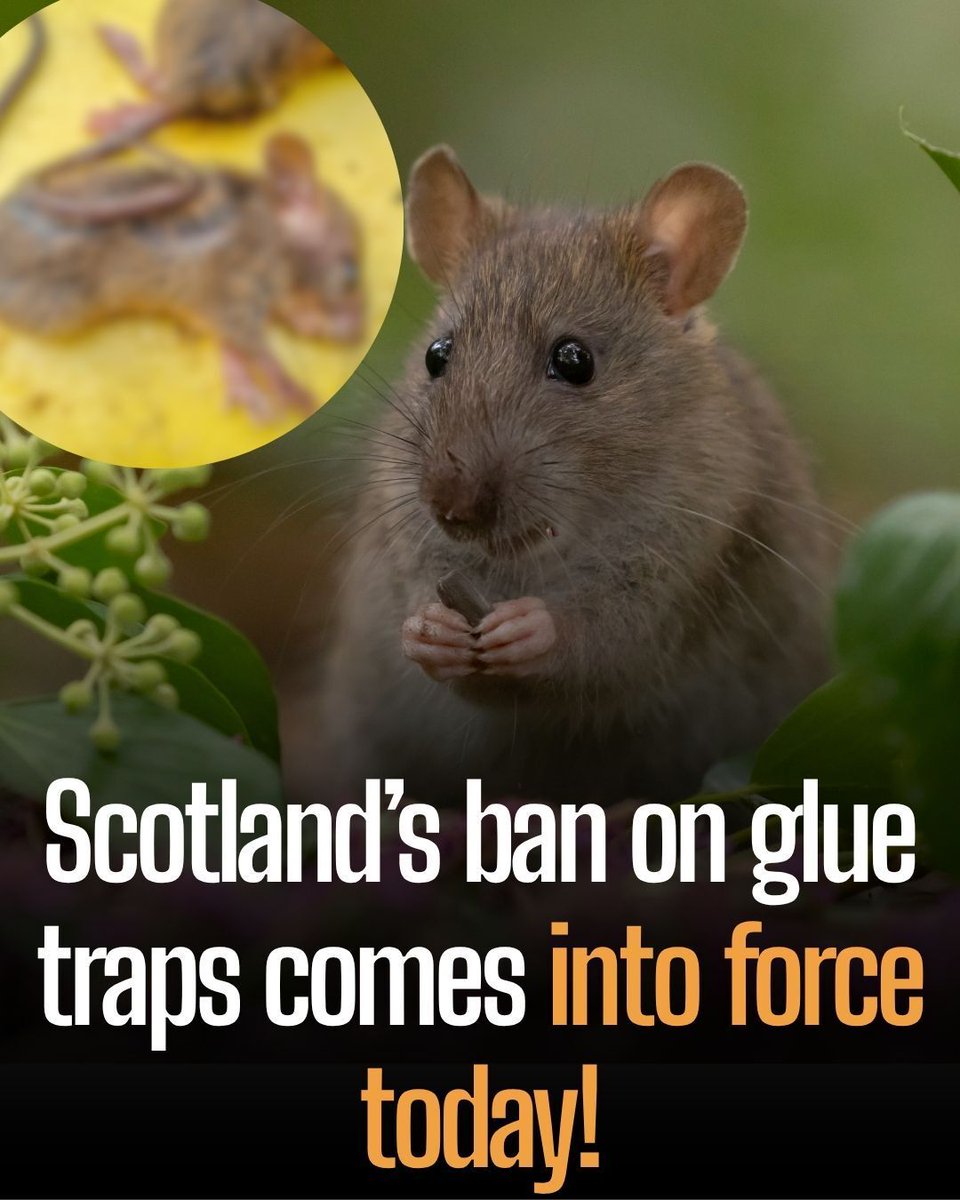
From today, July 1st, it will be a criminal offence to use, supply or possess a glue trap for use on vertebrate animals in Scotland. Offenders face a fine of up to £40,000 or up to 12 months in prison. These vile traps should be banned everywhere.
😡 John Major, angry after 10 years of Brexit
“What made me angry was the way the vote was perverted… What was said implied the land of milk and honey. We were going to be stronger and more sovereign. None of those things have actually come about.”
“People have lost out. The cost to the British nation has been extraordinary… and it hasn’t delivered measurable gains in our lifestyle.”
Photographed in colour exactly 98 years ago this month - June 1928 - this beautiful Autochrome study of a German garden in Baden is a wondrous riot of colour. I love the 'Twenties flapper outfit with cloche hat and aqua marine scarf! It is original colour, taken by Wilhelm Tobien using an early colour glass-plate process. It isn't colourised. 😍
The mole is the most persecuted animal in British gardens. And nearly always over a misunderstanding. 🐾
What the mole actually eats: earthworms, grubs, leatherjackets, slugs and small invertebrates. Never roots. Never.
The damage it gets blamed for — dead plants with their roots destroyed — almost always comes from voles, which are a completely different animal. The mole digs, but it doesn't eat your plants. The vole is the one that really does.
What the mole actually does in your garden:
It aerates and loosens the soil with its tunnel system, working as deep as 70cm down. It clears out beetle grubs and leatherjackets — the ones that really do eat roots. And it helps keep soil invertebrate numbers in natural balance.
The soil from molehills is quality stuff — fine, already worked, ideal as compost for pots and seed trays. Don't throw it away; collect it.
Worth knowing: Britain has just one mole species, the European mole, found right across the mainland. So if you've got molehills, this is your gardener underground.
Before you act, identify the problem properly. If the roots are being eaten, it's voles. If the lawn has molehills but the roots are intact, it's a mole. The remedies are different — and confusing the two means treating the wrong problem.
The mole works for you. Beneath your feet, every night 🌱
#wildlifegardening #moles #soilhealth #gardenwildlife
We’re working with Sunly to deliver 490MWh of large-scale battery storage across 4 sites in Latvia. By utilising our proven mtu EnergyPack, we’re helping ensure grid stability across the Baltic region. Read more: https://t.co/eYSXJbfHDG #mtuSolutions#BESS#RenewableEnergy
In January 2023, the wonderful Esther Rantzen announced she had stage 4 lung cancer. Today she celebrates her 86th birthday. This example of hope is yet another way in which that magnificent woman has been a force for good in the world. Here's an interview I did with her in 2017, where she shines like a sunflower.
https://t.co/JdeYNge03O
Daddy rabbit heroically stops traffic to save his trapped family from a fishing net. Kind stranger helps free mom and they all hop away happy... Pure love and kindness 🐰❤️
Incredible footage from a rescue boat captures a mother raccoon with her kits trapped on a pole amidst rising floodwaters. She takes a leap of faith to save them all.
Looking into those eyes, anyone could feel the despair the little fox was going through. Fortunately, a miracle arrived just in time, giving it a second chance at life and hope once again. 🦊💖
“We cannot be anything less than courageous and revolutionary in our approach to tackling climate change.”
As the international climate community gathers @london_climate to work towards solutions to climate change, we look back on some of His Majesty’s key speeches on the subject.
📽️ from Amazon’s ‘Finding Harmony: A King’s Vision’.
#LCAW2026
Jonathan the tortoise is officially a Guinness World Records ICON ✨
Believed to have been born c. 1832, Jonathan is the oldest living land animal at the grand old age of 194 years. He is a Seychelles giant tortoise and the average life expectancy of his species is 150.