The definitive source for Boardrooms & C-suites on corporate governance, AI, leadership, strategy, quality, value and sustainability.
Informed insight.
🙌 Ten years after Brexit, the tone in Brussels is changing.
MEPs across political groups are openly talking about Britain “correcting the mistake” … from a special partnership all the way to full EU membership.
The door isn’t shut. Britain now has to decide whether it wants to walk back through it.
An MIT professor gives a student $5 and says: send any amount to a stranger in this room. Whatever you send triples. The stranger decides how much comes back.
Rational answer: send nothing. You lose every dollar you trust.
Most students send almost everything. Most strangers return more than half. The math says keep it. The room says otherwise.
Then the professor runs a different game. Same cash. Same room. One student splits. The other can only accept. No rejection. No consequences.
The offers collapse. Not to zero. But enough to see the line between generosity and strategy.
One year a student got Swiss chocolate instead of cash. She was lactose intolerant. Gave away 100%. The professor noted it. The class laughed. Nobody noticed the point.
She had zero cost of generosity. The moment giving costs nothing, everyone is generous. The moment real money hits the table, the room divides into the same two groups every semester. People who send first. People who wait.
Labor, capital, arbitrage, insurance. Four ways to make money. All four require the same opening move.
You send value before you see a return. A paycheck after the work. A deposit before the interest. A bet before the edge. A premium before the claim.
The lecture is free. MIT filmed it years ago. The game runs every semester. The split barely changes.
Sending first is free. Knowing if it comes back is the part that costs something.
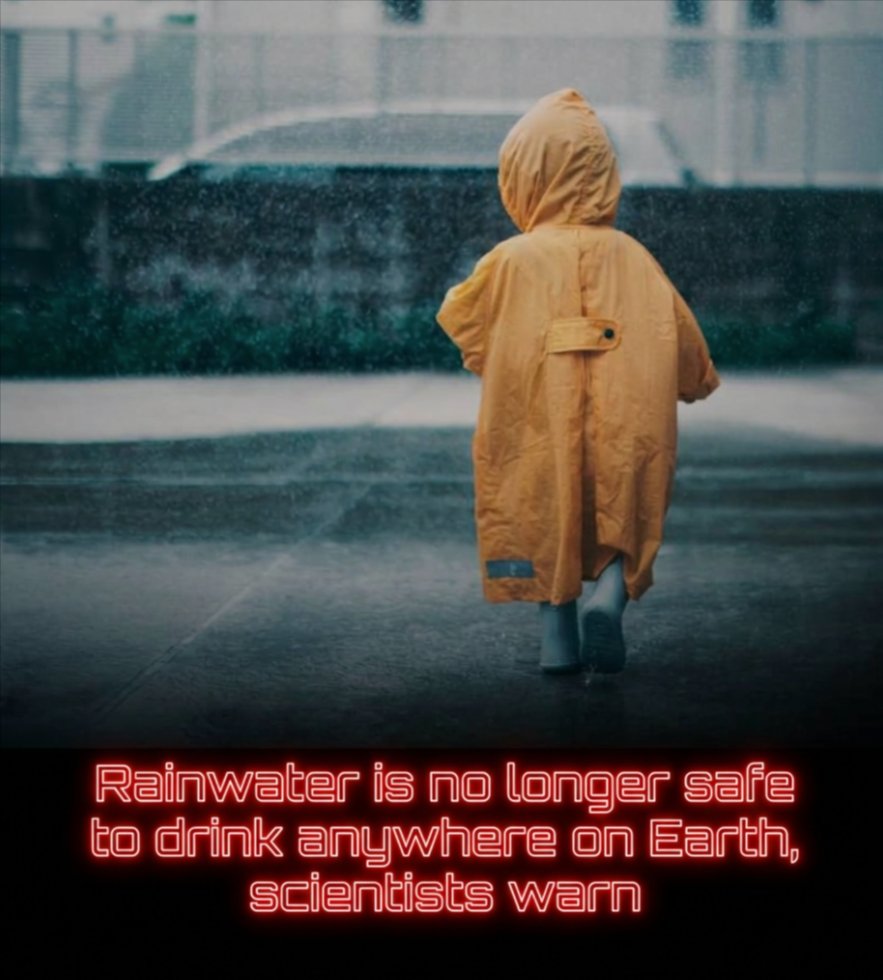
A comprehensive environmental study led by researchers at Stockholm University warns that rainwater across every geographic region of Earth is now heavily contaminated with toxic synthetic pollutants. Analytical testing reveals that global precipitation consistently contains per- and polyfluoroalkyl substances (PFAS) at concentration levels that vastly exceed the lifetime drinking water health advisories established by major global regulatory agencies.
Commonly referred to as "forever chemicals" due to the exceptionally strong carbon-fluorine bonds that make them virtually immune to natural environmental degradation, these substances have integrated entirely into the Earth's hydrologic cycle. Because they cycle continuously between the oceans and the atmosphere via marine aerosols, they have successfully contaminated even the most isolated locations on the planet, including the remote ice sheets of Antarctica and the high-altitude Tibetan Plateau. This global saturation means that untreated rainwater everywhere on Earth is now unsafe for human consumption.
For decades, industrial manufacturing sectors have used PFAS compounds extensively to produce everyday consumer goods, including nonstick cookware, stain-resistant fabrics, waterproof outerwear, and specialized aqueous film-forming firefighting foams. Over time, these chemicals leached out of landfills and industrial wastewater streams, permanently infiltrating primary aquatic systems and cycling upward into the upper atmosphere.
Biomedical research has definitively linked chronic exposure to these persistent pollutants with a wide array of severe, long-term health anomalies. These risks include the development of specific malignancies, compromised immune function, decreased fertility rates, elevated cholesterol, and notable developmental delays in children.
As international regulatory bodies actively work to lower permissible drinking water thresholds, environmental health experts warn that humanity has crossed a critical planetary boundary. Because these persistent chemicals are already distributed globally throughout the atmosphere and water cycles, reversing this widespread contamination is practically impossible using current remediation technologies.
[Cousins, I. T., Johansson, J. H., Salter, M. E., Sha, B., & Scheringer, M. (2022). Outside the safe operating space of a new planetary boundary for per- and polyfluoroalkyl substances (PFAS). Environmental Science & Technology, 56(16), 11172-11179]
Since 1997, hospital boards have been accountable for the quality of care. Five foundations follow, in order: board accountability, prevention, the patient voice, system-wide governance, and finally AI for safety, once the other four hold.
Most boards have endorsed social value as a commitment. Held as a single phrase, it has no owner. It becomes governable in three places: the supply chain, procurement and the boardroom, each with its own owner and kind of accountability.
Leaders seeking a more engaged team often start by listing what the team does poorly. In our coaching work, the more useful starting point is what each person already does well. Teams focusing on their strengths are 12.5% more productive.
Directors often speak of "the NHS board" as one thing. Our clients mostly fall into three forms: NHS trust, foundation trust and clinical commissioning group. Governance architecture is read well only against the form a board serves.
A board that governs clinical care and AI well starts with five convictions, in a deliberate order. It owns its information basis first. Artificial intelligence for safety becomes a realistic prospect only once the other four hold.
Good governance rests on foundations a board deliberately builds. It cannot assume them because its members are capable. Charlie Helps co-authored Foundations of Good Governance: A Compendium of Best Practice (NHS Providers, 2015).
Every economy that has boards has a word for governance: gouvernance, gobernanza, bolagsstyrning, 公司治理, utawala. Boards in very different jurisdictions are working on recognisably the same problem.
Commissioning external advice is a governance decision in its own right. The proposal, the specification and the pricing basis each shape what the board can later hold the work to. All three should exist in writing before the work starts.
AI governance developments do not all ask the same thing of a board. Strategy sets direction, a standard guides conduct, sector guidance addresses one field's risks. Each reaches the board differently, so each needs its own scrutiny.
When a trust board considers automating its administration, the first useful question concerns its own reading. If automation returns time, where will it go, and which section of the pack do directors read without challenge?
Integrated reporting has a name in many languages: rapport intégré, integrierte Berichterstattung, informe integrado, 統合報告. In each, it asks a board the same question: how does the organisation create value over time?
When a figure, forecast or assurance is about to pass into the board's settled understanding, any director can ask:
"Before we treat this as known: how strongly may we rely on it, what remains uncertain, and whose authority supports it?"
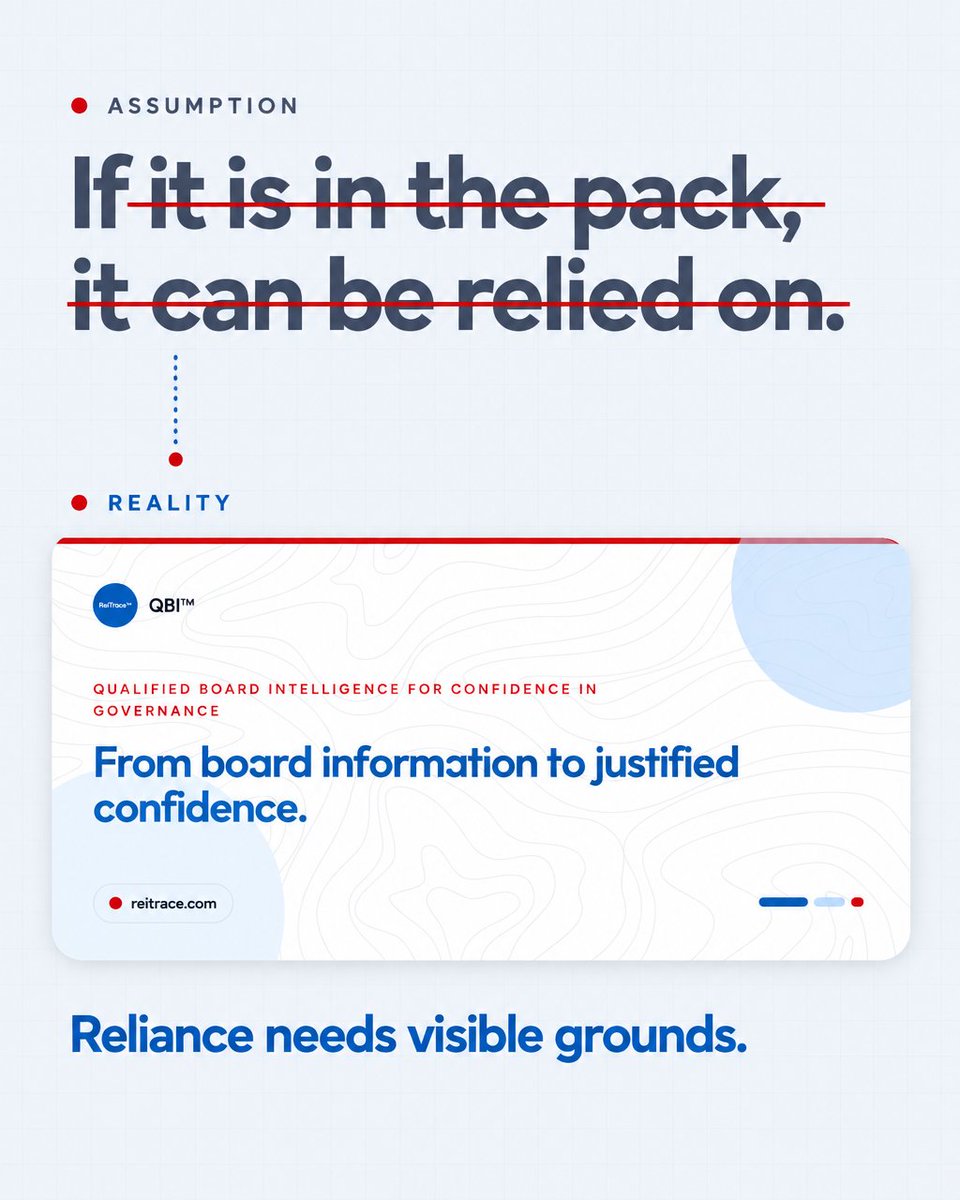
Many boards carry a quiet assumption: if information has reached the board pack through the proper channel, it can be relied on.
The more useful question is on what basis the Board may rely on it. That basis must be visible.
For a board paper that opens with its recommendation, one line a director can say:
"Before we discuss the recommendation, can we separate what the source says, what has been interpreted, what is assumed, and what is ours to judge?"
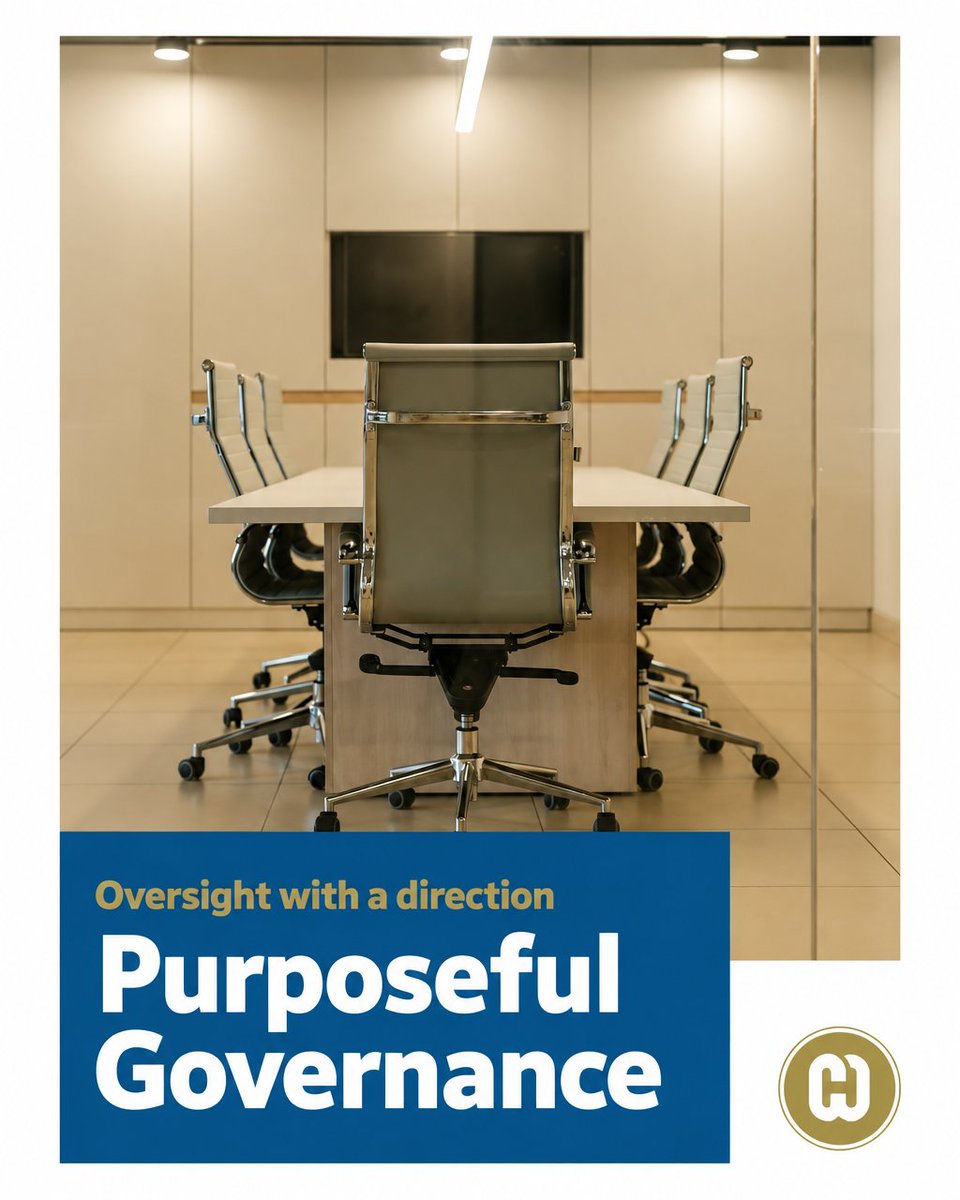
Governance that only confirms compliance tells a board what has already happened. Purposeful governance asks what the board's oversight is for, and holds every decision to that answer.
Could directors state that answer clearly?