“And this is the testimony: that God has given us eternal life, and this life is in His Son. He who has the Son has life; he who does not have the Son of God does not have life.” (1 John 5:11-12)
He told his students to go to the windows.
Get out. Jump if you have to.
Then Liviu Librescu walked to the classroom door and pressed his body against it.
He was 76 years old. He weighed 140 lbs
The gunman was in the hallway.
It was April 16, 2007. A Monday morning. Solid mechanics class at Virginia Tech, Room 204. Twenty-two students, most of them 19 or 20 years old.
At 9:45 AM, gunshots echoed through Norris Hall. Room by room, the shooter was working his way down the corridor.
Liviu heard it. He understood immediately.
He had survived the Holocaust. He had survived a labor camp. He had spent decades living under Communist oppression. He knew exactly what evil sounded like.
He told his students to escape through the windows. Second floor — it was a drop, but they'd survive. Then he walked to the door and held it shut with his body.
The shooter tried to force it open. It wouldn't move.
He fired through the door. Wood splintered. Bullets came through.
Liviu stayed.
Behind him, students were climbing out the windows. Dropping to the ground. Running. One by one, all twenty-two of them got out.
The shooter kept firing through the door.
Liviu held it shut until every student was safe.
Then the bullets killed him.
When police arrived, they found his body at the door.
All 22 of his students survived. Not one was injured.
Liviu Librescu was born on August 18, 1930, in Ploiești, Romania.
He was Jewish. In 1941, when he was eleven years old, Romanian authorities sent him and his family to a labor camp. His father died there. Liviu survived. When the war ended, he was fifteen.
He went back to school. Studied engineering. Earned a doctorate from the University of Bucharest.
But Communist Romania had no interest in allowing a Jewish intellectual to succeed. He was blocked from academic positions. Passed over for jobs he deserved. He applied to emigrate. The government kept refusing.
Finally, in 1978 when Liviu was 48 years old — Israeli Prime Minister Menachem Begin personally intervened. Romania let him go.
He had spent most of his adult life trapped in a country that didn't want him.
In Israel, he taught at Tel Aviv University. Published over 300 papers. Became an international expert in aeroelasticity — the science of how air flows over aircraft wings.
In 1985, Virginia Tech offered him a position. He moved to Blacksburg, Virginia. He taught there for 22 years. His students loved him — demanding but kind, high standards, genuine care.
He was still teaching full-time at 76. Still publishing research. Still showing up every Monday morning for solid mechanics.
April 16 was the first day of Passover — the Jewish holiday celebrating liberation from slavery and oppression.
Liviu Librescu died on the day his tradition sets aside to celebrate freedom.
He spent his entire life escaping death and oppression by luck, by persistence, by the intervention of others. And on his last morning, he chose to stand at a door so that twenty-two young people could have the future he had fought so hard to reach.
He could have run. He could have hidden. He could have climbed out a window with his students.
He chose to stay.
The Virginia Tech shooting killed 32 people that day — the deadliest school shooting in American history at the time.
Room 204 had zero casualties.
Because a 76-year-old Holocaust survivor held a door with his body until every student behind him was gone.
His funeral was held in Israel. Students from Virginia Tech flew across the ocean to honor him. The Israeli government awarded him the Star of David Medal posthumously. Virginia Tech named a scholarship in his memory.
His son said his father died the way he lived — protecting others.
A man who survived everything evil threw at him for 76 years.
On his last day, he made sure 22 kids survived too.
Professor Liviu Librescu. August 18, 1930 — April 16, 2007.
Holocaust survivor. Labor camp survivor.
302 published papers. 22 years at Virginia Tech.
22 students out the window.
He held the door.
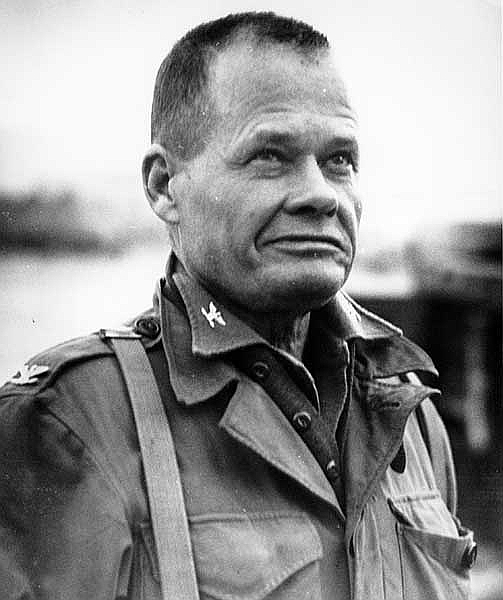
Somebody ran up to Colonel Chesty Puller at the Chosin Reservoir to tell him the terrible news that his Marines were completely surrounded by the Chinese army. Puller looked at him and said, more or less, good. Now we can shoot at them in every direction.
Lewis Puller, called Chesty because of his barrel chest and his bulldog walk, was already a living legend before Korea. He is still the most decorated Marine in the history of the Corps, a man who would end his career with five Navy Crosses, and there are Marines to this day who end their night with the words good night Chesty, wherever you are. He was the old breed, a Marine who believed in the rifle, the bayonet, and never, ever leaving a man behind.
In late November 1950, at a frozen lake in the mountains of North Korea called the Chosin Reservoir, everything went wrong. Around thirty thousand UN troops, most of them Marines, suddenly found themselves cut off and encircled by something like a hundred and twenty thousand Chinese soldiers who had poured across the border in secret. The temperature dropped to thirty and forty degrees below zero. Weapons froze. Blood froze. Rations froze solid. The Marines were outnumbered, surrounded, and stuck at the far end of a single narrow mountain road with the enemy dug in on every hill above it.
Most units in that spot break. Chesty Puller's did not. His attitude, and it spread to every man in the regiment, was that being surrounded was not a disaster, it was an opportunity. He is supposed to have said it plainly. We are surrounded. That simplifies our problem. And the other line his Marines loved. They are in front of us, behind us, and on both flanks. They cannot get away from us now.
So the Marines did not surrender and they did not panic. They turned around and fought their way out, attacking in a new direction, as Puller and the other commanders put it. They came down that one frozen road through seventy miles of ambush and roadblock, hauling their gear, and this is the part that mattered most to men like Chesty, bringing their wounded and their dead with them. They refused to leave their people behind.
They fought their way clean out of the trap and did enormous damage to the Chinese armies that tried to destroy them. For his part in it Puller earned that fifth Navy Cross, and the breakout from Chosin became one of the most legendary fighting retreats in the history of the United States military.
Chesty Puller spent his whole life proving a simple idea. It is not the numbers against you that decide a fight. It is whether the men will stand. His men always stood.
Darryl Strawberry says World Series rings, All-Star success and fame still couldn't fill what he calls the "empty void" in his life.
The MLB legend shares how his mother's prayers and his wife, Tracy, led him back to church, where he says he found new life through faith in Jesus Christ.
"Jesus is the way. All these other ways that we go, we find ourselves in darkness. We find ourselves trying to fill the empty void with all this stuff, and it just does not fill it."
@HQNewsNow Hope he never plays in this country again. Not for his decision to attend the White House, but for his disrespect when he gives his figure to this country.
Wish they could deport him.
In April 1967, a 20-year-old farm boy from South Dakota did something that would change the Vietnam War—he fell off his ship.
Seaman Douglas Hegdahl was standing on the deck of the USS Canberra when the recoil from a five-inch gun knocked him overboard into the Gulf of Tonkin. He treaded water for five hours, then swam for seven more. When fishermen finally pulled him from the sea, they handed him to North Vietnamese forces.
The interrogators didn't believe his story. They thought he was a spy, a commando, someone important. They beat him and threw him into the Hanoi Hilton—the most notorious prison of the war.
But Hegdahl made a choice that would save hundreds of lives. He became "The Incredibly Stupid One."
He played up his country accent. He stared wide-eyed at things he'd never seen before. When they ordered him to write a confession, he claimed he couldn't read or write. The guards, used to illiterate peasants in their own country, believed him completely. They even assigned someone to teach him—who eventually gave up, convinced Hegdahl was hopeless.
What they didn't know was that Hegdahl had a photographic memory and the discipline of a soldier.
Because they thought he was harmless, the guards let him sweep the prison yards. He walked between cellblocks. He memorized the layout of the camp and the route into Hanoi. He even sabotaged enemy trucks by adding dirt to their fuel tanks.
But his real mission was gathering intelligence.
With the help of fellow prisoner Joe Crecca, Hegdahl set out to memorize something impossible: the names, ranks, Social Security numbers, and personal details of over 250 fellow American prisoners. How do you remember 250 names under torture, starvation, and the constant threat of death?
He used "Old MacDonald Had a Farm."
Every day, Hegdahl repeated the names to the tune of the children's song. Over and over. Names became melodies. Data became memory. While the guards laughed at the "stupid" American humming in the prison yard, he was conducting one of the most important intelligence operations of the war.
When North Vietnam offered early release as a propaganda tool, Hegdahl initially refused—prisoners had sworn an oath to leave together or not at all. But his commanding officer, Captain Dick Stratton, ordered him to go. "You're carrying the names," Stratton told him. "Their families need to know they're alive."
On August 5, 1969, Hegdahl walked out of the Hanoi Hilton.
When he returned to the United States, he recited every single name. Every rank. Every identifying detail. His memory transformed 250+ missing men into confirmed prisoners of war. At the Paris Peace Talks in 1970, he confronted North Vietnamese negotiators with firsthand accounts of torture—and the pressure he brought helped secure the eventual release of all American POWs.
That farm boy who "fell off a ship" had just freed an entire army.
Decades later, in 1998, Hegdahl stood before an audience of veterans and families at the Richard Nixon Library. Thirty years after his release, he stood and sang—to the tune of "Old MacDonald Had a Farm"—the names of 256 men he'd memorized in captivity.
Not one name forgotten.
Sometimes the most dangerous people are the ones your enemy thinks are harmless. Sometimes genius wears the mask of stupidity. And sometimes, a child's lullaby becomes the most powerful weapon of all.
Ever know anyone that smart that could play that dumb for that long?
Amazing!
You don't need the right words. You don't need to tidy up the feelings first. Prayer means coming exactly as you are, unloading the whole weight, and finding that God hears, understands, and renews. He isn't waiting for eloquence. He's just waiting for you.
This is real footage of Zeros taking off from the deck of the Akagi.
For half a year, this single ship was the most successful aircraft carrier on Earth. Its planes struck Pearl Harbor, Darwin, and Ceylon, and it never lost.
Then, in a few minutes, she was doomed.
This is the story of the Akagi..
⠀
From Battlecruiser to Flagship
The Akagi, named after Mount Akagi in Japan, was not even meant to be a carrier. She was laid down as a massive battlecruiser, but a naval treaty in the 1920s halted her construction. Rather than scrap the enormous hull, Japan rebuilt her into an aircraft carrier, one of the largest in the world.
By 1941 she had become the flagship of the Kido Butai, the First Air Fleet. This was the most powerful concentration of naval air power on the planet, six aircraft carriers operating together as a single striking fist, something no other navy had ever done.
From her deck, Admiral Chuichi Nagumo commanded the whole force. When Japan decided to open the war with a knockout blow against the United States, it was the Akagi that led the way.
The Carrier That Led Japan's Offensive
On the morning of December 7 1941, the Akagi sat in the dark waters north of Hawaii, and launched her aircraft toward Pearl Harbor.
Her torpedo bombers helped tear apart the American battleship fleet as it lay at anchor. The man who led the entire air attack, Mitsuo Fuchida, flew from her deck. The Akagi was, quite literally, the ship from which America's war began.
And she was just getting started.
Over the next several months, the Akagi and her sister carriers went on a rampage across a third of the globe. In January they struck Rabaul. In February they fell upon the Australian city of Darwin, launching a devastating surprise raid that sank eight ships and became known as Australia's Pearl Harbor.
⠀
Across the Indian Ocean
Then they turned west, into the Indian Ocean.
In the spring of 1942 the Kido Butai swept toward Ceylon, hunting the British Eastern Fleet. Akagi's aircraft helped sink British warships, including the heavy cruisers Cornwall and Dorsetshire, and sent the Royal Navy reeling out of the eastern Indian Ocean entirely.
In just half a year, the aircraft launched from that deck had struck Hawaii, the Dutch East Indies, Australia, and Ceylon. They had helped sink American, British, and Australian ships across thousands of miles of ocean.
The Akagi had not lost a single battle. She was the most successful and most feared aircraft carrier in the world, the flagship of a force that seemed unstoppable.
It would all end on one morning in June.
The Battle of Midway
In June 1942, the Akagi led the Kido Butai toward a tiny American outpost called Midway. The plan was to seize the island and destroy what was left of the American carrier fleet.
But the Americans had broken the Japanese codes. They knew the Akagi and her sisters were coming, and they were waiting.
On the morning of June 4, the battle turned into chaos. The Japanese carriers had just fought off waves of American attacks, and below the flight deck the Akagi's hangars were packed with aircraft being frantically rearmed and refueled, fuel lines and bombs lying everywhere.
It was the most dangerous possible moment to be caught. And at that exact moment, American dive bombers rolled in out of the sky, unseen until it was too late.
⠀
One Bomb
A lookout screamed a warning. Then the bombs fell.
The Akagi was struck by a single bomb from an American dive bomber, dropped by Lieutenant Richard Best, while near misses battered her hull and jammed her rudder. Just one direct hit. But it struck in the worst possible place, punching down into the hangar deck packed with armed, fueled aircraft.
The explosion set off a chain reaction. Fires roared through the ship, feeding on the fuel and detonating the bombs stacked among the planes. Within minutes the pride of the Japanese fleet was doomed, a spreading inferno no one could control. The flagship that had conquered half an ocean was mortally wounded by one well-aimed bomb.
Admiral Nagumo was forced to abandon his burning flagship and transfer his command to another ship. The Akagi was left blazing, unnavigable, circling helplessly.
The End of the Akagi
The Akagi burned all day and into the night. Unable to save her, and unwilling to let her fall into American hands, the Japanese ordered her own destroyers to sink her. In the early hours of June 5 1942, torpedoes from her escorts sent her to the bottom. She went down bow first. 267 of her crew died with her.
She did not go alone. All four Japanese carriers at Midway, every one of them a veteran of Pearl Harbor, were sunk in the same battle, taking with them their irreplaceable aircraft and elite crews. It was the turning point of the entire Pacific war. Japan would never recover the initiative.
For over 75 years, the Akagi lay lost in the dark. Then in 2019 her wreck was finally found, more than 17,000 feet down, and in 2023 a robot submarine descended to look upon her for the first time since she sank.
The most successful carrier in the world, resting in the deep, where a few fatal minutes sent her.
This was the story of the Akagi.
I post a story like this every single day. Most people never see them. Follow so you don't miss the next one.
Two air forces started the Pacific war.
One trained its pilots, then kept them fighting until they died. The other trained its pilots, then often pulled many of its experienced combat pilots out to teach everyone else.
This is one of the reasons America won the Pacific air war, let's dive in..
Japan's Elite Aviators
At the start of the war, Japan had some of the finest fighter pilots in the world.
The aviators who attacked Pearl Harbor were elite. Many had hundreds of hours in the cockpit and real combat experience from the fighting in China. Flying the nimble A6M Zero, they cut through Allied opposition in the early months of the war and earned a fearsome reputation.
But Japan made a fateful choice about these men. It kept them in combat, more or less indefinitely. Japanese pilots flew mission after mission with no real system to rotate them home. They fought until they were shot down, crippled, or killed.
It seemed ruthless and efficient. In reality, it was a slow-motion disaster.
The Difference in Philosophy
Because every time Japan lost one of those veterans, everything he knew died with him.
America did the opposite. It regularly rotated many of its experienced combat pilots back home once they had done their share of fighting. There, they became instructors, pouring everything they had learned in real air combat directly into the next generation of pilots.
So the two systems pulled in opposite directions. Japan's pool of skill drained away with every ace it buried. America's pool of skill grew, as each returning veteran multiplied his knowledge across hundreds of students.
One nation was teaching. The other was simply dying.
The Training Gap
The gap became a chasm, and it was made worse by sheer scale.
By 1944, the United States was training around 8,000 new aviators every month, each of them getting well over a year of instruction and hundreds of hours in the air before they ever saw combat.
Japan could not come close. As its veterans vanished, its training program collapsed, and it was crippled by something else, too. Fuel. Japan was running so short of it that many trainees could barely fly enough hours to learn their trade. By the later part of the war, Japanese pilots were being rushed into battle with barely 100 hours of flying time, and sometimes far less. They were teenagers with almost no training, being sent up against American veterans who had been taught by the best combat pilots in the fleet.
The outcome was no longer a contest. It was a slaughter.
The Great Marianas Turkey Shoot
Nowhere was that clearer than in the skies over the Mariana Islands in June 1944.
When the Japanese launched hundreds of aircraft against the American fleet, they flew into a wall of Hellcat fighters, guided by radar and expert fighter direction that positioned the Americans at the perfect height and moment to strike. The green Japanese pilots in their now outdated Zeros never had a chance.
In and around that battle, Japan lost nearly 480 aircraft, while the Americans lost only a few dozen. It was so one-sided that the American aviators nicknamed it the Great Marianas Turkey Shoot.
Japan's naval air power, once the terror of the Pacific, was broken in a matter of days.
Better Aircraft, Better Technology
It was not only the pilots. It was the machines too.
America kept producing better and better aircraft, like the tough, heavily armed F6F Hellcat, designed after studying a captured Zero and built to beat it. It could take punishment, out-dive and out-gun its opponent, and it was forgiving enough that even a less experienced pilot could survive his first fights and become a veteran. Over the war, Hellcat pilots claimed more than 5,000 enemy aircraft for a tiny fraction of that in losses.
Japan, meanwhile, kept sending men up in the aging Zero, a plane that had been revolutionary in 1941 but was now underpowered, fragile, and outclassed. It was fast and agile, but a single burst of American fire could tear it apart, because it had traded armor and protection for maneuverability.
Better pilots, in better planes, backed by better technology. The advantages stacked on top of one another.
The Spiral Ends
By the end, Japan had reached the final, desperate stage of the spiral.
With almost no trained pilots left, and no way to make more in time, it turned to the kamikaze. A pilot did not need 500 hours of training to crash his aircraft into a ship. He only needed to take off, aim, and die. It was the last resort of an air force that had run out of the one thing it could never mass produce. Experienced men.
America won the Pacific air war for many reasons. Its factories out-built the enemy. Its radar and intelligence gave it eyes the Japanese lacked. Its aircraft grew deadlier every year.
But underneath all of it was something simpler. America treated its best pilots as a resource to be protected and passed on. Japan treated them as fuel to be burned. One of those choices built an air force that kept getting stronger. The other burned brightly, and then burned out.
This was why America won the Pacific air war.
I post a story like this every single day. Most people never see them. Follow so you don't miss the next one.
McDonald’s has Happy Meals—but I can tell them how they can bring happy customers back! It’s a pretty simple recipe. Forget all the consultants and GO BACK to the things you used to do. Dump the kiosk-only ordering and have real people behind the registers welcoming customers with a smile and taking orders. A kiosk is cold—the customer becomes just a number. I don’t want to be a number, I want to be a person!
Go back to focusing on fresh, hot hamburgers with melted cheese that make customers want to come back again and again.
Go back to FRIED apple pies—permanently, not just for a limited-time promotion. We love them. And tell the world the best-kept secret that the fried pies are actually lower in fat, saturated fat, and calories than your baked apple pies! Who knew?!
That’s it @McDonalds—advice from a hopeful, lifelong customer.
When it comes to reading the Bible, it’s better to start small and be consistent than to try to read too much and burn out. Find an amount that you can read consistently and try to stick with it as much as possible. The more consistent you are with reading the Bible, the more you’ll grow in godliness.