X (Twitter) vs. Kaito – From Chaos to Real Value
Introduction
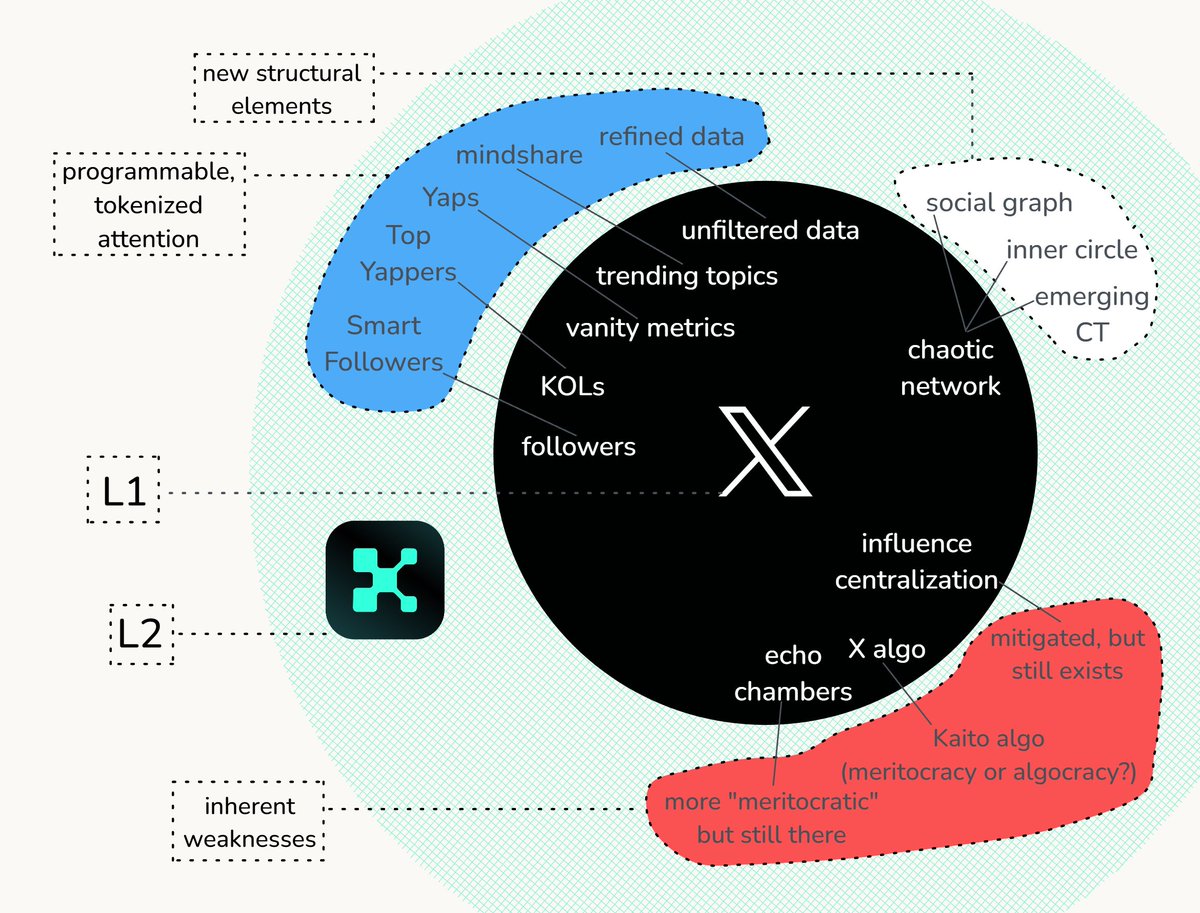
Social networks like X (Twitter) have become an indispensable part of modern life. However, their current structure is revealing many limitations: from chaotic networks and hard-to-control information to the concentration of influence in just a handful of accounts. As a result, phenomena like echo chambers have become more apparent users mostly hear opinions that reinforce their own and the race for vanity metrics (likes, followers) overshadows the quality of discussions.
In response, a new approach is emerging with platforms like Kaito. This new model promises a fundamentally different social network structure, with layered architectures (L1/L2), smart followers, tokenized attention, and a more meritocratic way to distribute attention.
Below is a deep comparison of the two ecosystems the current X network and a new model like Kaito to spark a thoughtful discussion about how we interact in digital spaces.
The current X ecosystem: Chaotic network & centralized influence
On X, some prominent characteristics shape user experience:
• Chaotic network:
Information flows almost randomly and without order; anyone can post anything at any time. Trends rise and fall unpredictably, and users can easily feel overwhelmed by the sheer amount and dispersion of content. Without clear structure, X becomes a chaotic network, where important voices can be drowned out in the noise.
• Centralized influence:
Influence on X tends to concentrate in a very small group of accounts with massive followings (KOLs, celebrities). Statistics show that only about 0.06% of X users have more than 1,000 followers, forming an elite group that holds most of the platform’s influence. This means the majority of users are often drowned out, while a few KOLs dominate the discourse. This reality also fuels a culture of follower worship, where users chase follower counts rather than improving the quality of their content reinforcing influence concentration even further.
• Echo chamber effect:
Due to following patterns and recommendation algorithms, users often interact only with those who share similar views. Studies show that X users are mostly exposed to opinions that align with their own biases, leading to one-sided amplification of beliefs. In other words, X unintentionally creates echo chambers, where similar opinions bounce around with little diversity or critical challenge.
• Vanity metrics & the race for appearances:
X encourages users to care about public metrics like likes, comments, shares, and follower counts superficial benchmarks of “success.” This focus incentivizes clickbait or crowd-pleasing content rather than meaningful contributions. Many feel pressured to “perform” online, measuring success by visible numbers, creating an environment where form trumps substance and real value risks being overlooked.
The new ecosystem (Kaito): Layered structure & value driven attention
The emerging model represented by Kaito offers fundamental improvements in structure and operation:
• Programmable attention:
Instead of letting a black-box algorithm decide what you see, the new system allows attention to be directed intentionally and programmatically. Users gain more control over their feeds and can even tokenize their attention — turning it into a digital asset they can stake or use to reward valuable content. This makes attention a resource that can be managed purposefully, rather than fully manipulated by algorithms. In other words, attention is “programmed” to reward quality content and incentivize meaningful contributions instead of cheap engagement.
• Smart followers:
Not all followers are created equal. Kaito emphasizes quality over quantity. The Smart Follower metric measures engagement from followers who are knowledgeable and actively contribute in the field. Instead of just amassing numbers, users are motivated to attract the right audience — engaged and informed followers. Influence is thus measured by who follows you and interacts with you (credible, smart people), not just how many.
• Mindshare & refined data:
Kaito introduces the concept of mindshare to measure how much community attention and mental energy a topic or project is capturing online. Rather than relying on raw interactions (likes, shares), mindshare looks deeper at the “mental space” the community devotes to an issue by aggregating data and measuring meaningful discussions. At the same time, the platform prioritizes refined data: filtering out fake interactions, bots, and noise. With machine learning and specialized social graphs, Kaito can clean the data, ensuring that metrics like mindshare or smart followers reflect reality more accurately than unchecked numbers on X.
• Layered structure (L1/L2):
Instead of having all content and users operate on the same level (leading to chaos), Kaito introduces a layered structure (L1/L2) to organize the network. Think of L1 as the base layer where everyone can post and interact (raw data is collected here), and L2 as the refined layer where curated, high-quality content is promoted and distributed more widely. This structure reduces noise at the base level while ensuring valuable information reaches the right audience.
• Meritocratic attention distribution:
All of the above innovations aim at a system where attention is distributed based on merit rather than popularity. Quality content and valuable contributions have the chance to stand out even from new or small accounts if they attract enough smart followers or tokenized attention from respected peers. This rewards genuine value and fresh ideas rather than letting a few established names dominate just because of their follower count.
Limitations that still remain
• Echo chambers can still form:
Even with a better structure, people still tend to cluster with like-minded individuals. Without deliberate mechanisms to diversify content exposure, users can remain in their comfort zones and form their own echo chambers.
• Algorithmic bias is still possible:
Any system that relies on algorithms (including Kaito) can still harbor bias or be manipulated. If the algorithm favors the wrong signals, or if tokenized attention is concentrated among a few wealthy players, they could still control information flow. Transparency and community oversight of algorithms are essential to keep the meritocratic ideals intact.
Conclusion
The contrast between today’s X and the new approach embodied by Kaito shows that social media is ripe for change. A healthier and more enriching digital space would reduce chaos, echo chambers, and the pursuit of superficial metrics instead fostering valuable, diverse conversations.
Of course, no solution is perfect from the start even new models like Kaito will need continuous adjustment and learning. What matters most is that the community is open to change and willing to discuss it, because we all help shape the future of social networks.
What do you think?
Is it time to rethink how social media works?
Let’s listen, share, and start the conversation.
The big picture parallel: Kaito is Twitter’s L2.
All L2s naturally inherit systemic pathologies, but they exist to optimize and this one is revolutionary because it turns influence into structured, tokenized economy.
Kaito's essentially infra for programmable attention.
Deep.
@pmjohann Why was my message deleted and my account blocked when I was simply asking a legitimate question about the project’s products and QANX?
I’ve been holding QANX for over 6 years, so I believe I have the right to ask about the project’s progress and the token’s utility.
@pmjohann Hi team, I’ve held QANX for 6+ years. How is the project progressing?
QANX has been sideways for a long time — is this mainly due to limited product adoption or token demand?
How important is QANX to the ecosystem, and could its utility change with wider product adoption?
@QANplatform Hi team, I’ve held QANX for 6+ years. How is the project progressing?
QANX has been sideways for a long time — is this mainly due to limited product adoption or token demand?
How important is QANX to the ecosystem, and could its utility change with wider product adoption?
@PerleLabs Middle.
The tilt looks slightly overemphasized, surface texture feels too uniform, and lighting appears evenly distributed without natural shadow variation. Left and Right show more realistic atmospheric depth and detail.
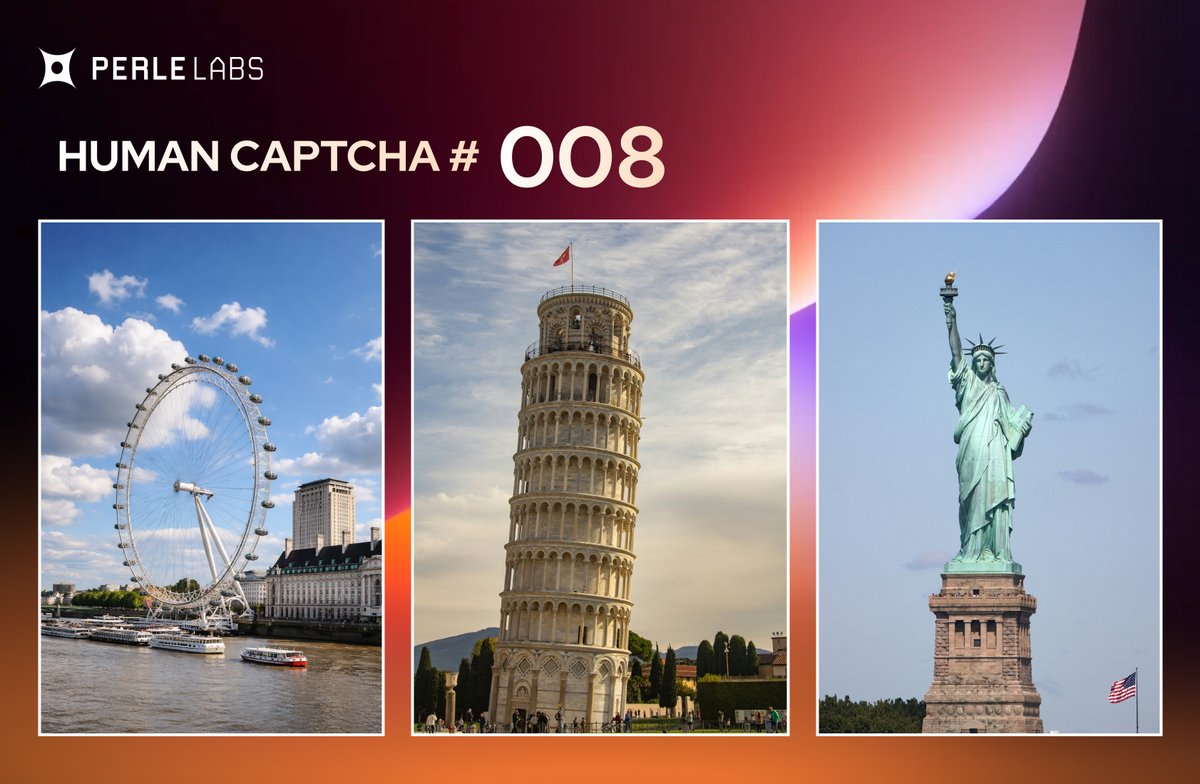
Alright… this is it. Final Human CAPTCHA challenge 👉👉
We saved the best for last. There are 3 images. Only ONE is AI-generated.
Your job is to tell us if it's the one on the Left, Middle, or Right.
Submit your guesses by Sat, Feb 28 at 11:59pm UTC. As usual we'll be revealing the answers on Sunday!
If you got 3+ right, we’ll share how to claim your reward next week.
@PerleLabs Left.
The sky gradient, atmospheric haze, and scale of the distant balloons look naturally captured. Lighting on the basket and subtle shadow falloff feel realistic, while the others appear slightly over-saturated and too perfectly patterned.
It's the final week of Human CAPTCHA: Round 7
You made it this far… but we’re not going easy on you. One of these is a real photograph of a hot air balloon, the rest is AI-generated. Can you tell which one it is?
Respond with Left, Middle, or Right and tell us why below!
Submissions close Sat, Feb 28 at 11:59pm UTC. Answers revealed Sunday.
⚡ PHASE 1 TESTNET WHITELIST IS NOW OPEN ⚡
Whitelist registration is open for 48 hours.
Experience zero-slippage execution firsthand.
Complete Phase 1 testing → receive an exclusive NFT + special rewards 🏛️
Register: https://t.co/p29oCgqzoE
It all starts now ✨
@PerleLabs I’m going with right.
The lighting and depth look more consistent with a real camera shot. The fur detail and motion feel more naturally imperfect, while the environment interaction (shadows, ground texture) looks physically accurate.
Curious to see the reveal.
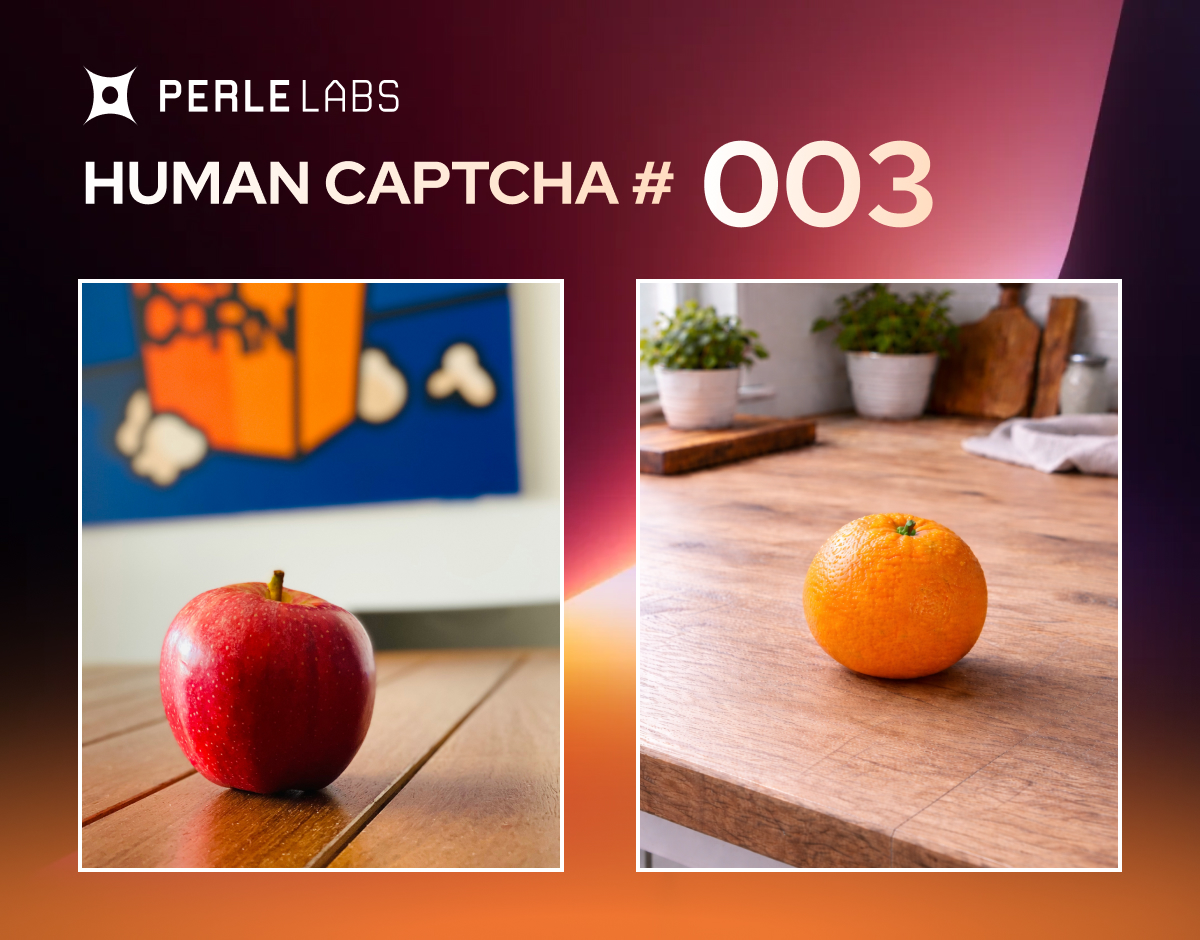
Perle Human CAPTCHA #3 📷
One of these images of fruit is a real photograph, one was generated by AI.
Which one is real? Reply "left" or "right" and why 👇
You have until Sat, Feb 14th at 11:59pm UTC. This week's answers will be revealed on Sunday.
Perle Human CAPTCHA #4
It's time to put your human judgement to the test again. One of these images of a tiger is a real photograph, one was generated by AI.
Which one is real? Reply "left" or "right" and tell us why ↓
This week's submissions close Sat, Feb 14th at 11:59pm UTC. Both answers will be revealed on Sunday 👀
@PerleLabs Going with right.
The lighting interaction with the surface looks more physically consistent, and the peel texture shows natural randomness rather than pattern like uniformity. The depth and background blur also feel more camera authentic.
Curious to see the reveal .
Most people discover great projects when the early entry is already gone. Getting to know UnitFlow Finance at this stage feels like a real edge.
@UnitFlowFinance#ArcFlowFinance