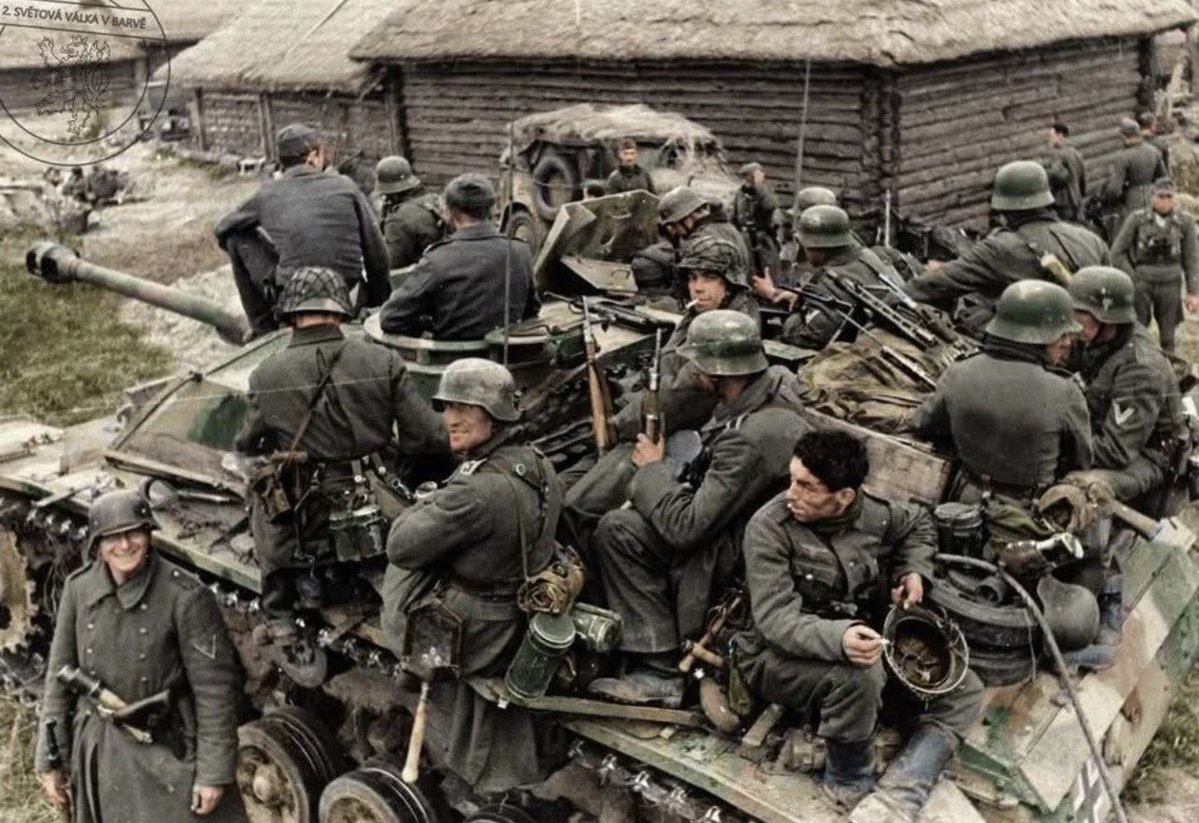
A Wehrmacht Feldwebel, or sergeant smiles into the camera in a Soviet village in Army Group South’s sector.
Soviet Union, 1943.
He’s dressed in an M40 summer field tunic with the earlier M36 bottle green collar, which would fade after long use and exposure into a pale grey-khaki tone.
He has also earned the; Iron Cross Second Class and the Silver Infantry Assault Badge and the black Wounded Badge
Ludwig Kübler (* 2. September 1889 in Unterdill, heute München; † 18. August 1947 in Ljubljana) war ein deutscher General der Gebirgstruppe im Zweiten Weltkrieg. Er gilt als Organisator der Gebirgstruppe
Wehrmacht infantry ride atop a Stug III Ausf.G or Sturmgeschütz III assault gun while traversing through a Russian village.
Eastern Front, Summer, 1943.
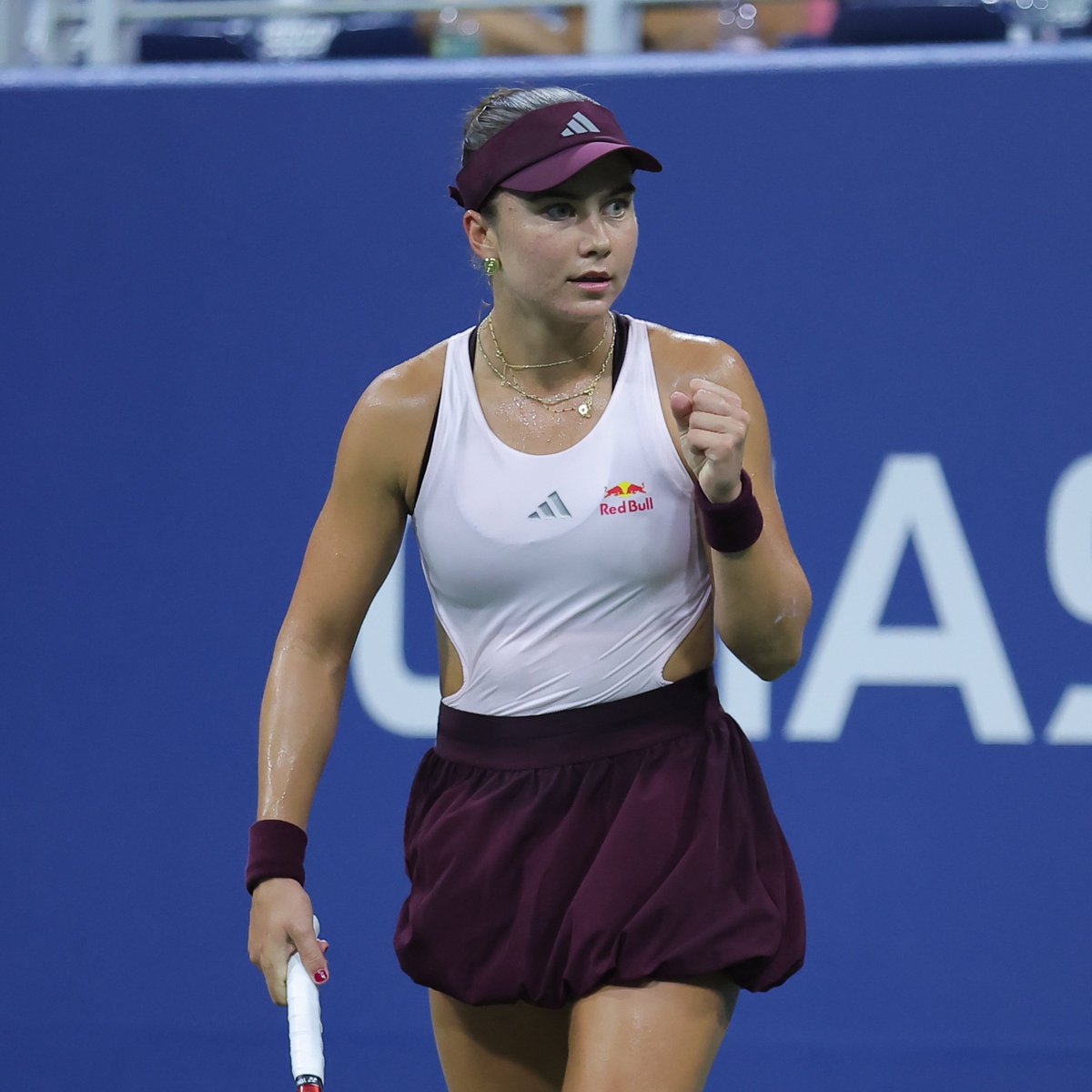
Iva Jovic on facing Alex Eala next at the U.S. Open
“I’m super excited. The atmosphere is gonna be amazing. She’s been playing some great tennis. It’s nice to be playing each other 3rd round, deeper into the Slam. Hopefully we can all keep going on runs like this” ❤️
From 'bring your Dad to work day' during Fan Week to now facing each other for a spot in the #USOpen 2026 fourth round - we are here for this wholesome, fiery, Jovic vs Eala clash 💪💙
Jovic d. Frech 7-5 6-3 at US Open
One of the most impressive teenagers in tennis gets the job done
She went down 0-3 when this match first started yesterday, but got back on track quickly
She came back today & took care of business
It’s what she does
✅32nd win of 2026
🇺🇸❤️
Here is where things stood in Poland on September 2, 1939, the second day of the war.
By the second day, the shape of the disaster was already becoming clear. The German blitzkrieg was not stalling, it was accelerating. The panzer spearheads that had crossed the border the previous dawn were now driving deep, and in several places the Polish forward defenses, strung out along that impossibly long frontier, were being cracked open.
The most important breakthrough was happening in the south. On the night of the 1st into the 2nd, the German 10th Army, the strongest of the invading forces with the bulk of the armor, punched clean through the Polish lines in the Częstochowa region. This was the hinge. The 10th Army's tanks were now pouring through the gap and beginning the drive that would take them, in a matter of days, toward the Warta River and on toward Warsaw itself. Around Częstochowa the fighting was fierce, Polish divisions being battered and outflanked by massed panzers and infantry, one Polish division shattered on the 2nd and its survivors falling back into the forests. The road into the heart of Poland was being levered open.
In the north, the Germans were fighting to close the Polish Corridor, the strip of Polish territory that separated the main body of Germany from East Prussia. Much of that fighting centered on the Tuchola Forest, where Army Group North was crushing the Polish Army Pomorze, and by these days the Germans were breaking through to link up their two halves and cut the Corridor off. It was in this northern fighting, the day before, that the famous cavalry engagement at Krojanty had happened, the one later twisted into the myth of horsemen charging tanks. On the 2nd the Poles in the Corridor were being encircled and destroyed.
Overhead, the Luftwaffe still owned the sky. It went on bombing Polish airfields, rail junctions, and towns, hunting the roads, which were now clogged with columns of refugees fleeing east, and strafing them. The systematic wrecking of Poland's ability to move troops, communicate, and resist was well underway.
There were pockets of stubborn defiance holding out against the tide. On the Baltic, the tiny garrison at Westerplatte was into its second day and still fighting. The old battleship Schleswig-Holstein resumed its bombardment on the morning of the 2nd, and German marines went in again to storm the depot, and again the handful of Polish defenders threw them back with bloody losses. That little garrison, expected to fall in hours, would hold for a week. In Danzig itself, the defenders of the Polish Post Office had already been overwhelmed the first day after a hard fight, and were about to be shot as francs-tireurs, one of the first war crimes of the war. And out on the Hel Peninsula and along the coast, other small Polish forces dug in for sieges that would run for weeks.
Behind the front, the darker thing had already begun. As the army advanced, the SS killing squads came behind it, and civilians, especially Poland's leaders, priests, teachers, and Jews, were already being rounded up and shot. Częstochowa itself was about to suffer a massacre, "Bloody Monday," within two days. The murder of the nation had started with the invasion.
And on the diplomatic front, the wider war was one day from breaking open. On the 2nd, with Poland reeling, the British Prime Minister Chamberlain finally delivered an ultimatum to Germany: withdraw from Poland, or a state of war would exist between Britain and Germany. France issued a similar ultimatum the same day. There was a last, futile flurry, an Italian proposal for a conference, brief hesitation in London and Paris that infuriated many. But the ultimatums had a deadline, and Hitler had no intention of withdrawing. The next morning, September 3, the deadline would pass, and Britain and France would declare war, turning the invasion of Poland into a world war.
So on September 2, 1939, the situation in Poland was this: the front already breaking in the south with panzers pouring through toward the capital, the Corridor being severed in the north, the air lost, the roads full of fleeing and dying civilians, isolated garrisons fighting heroic doomed stands at Westerplatte and Hel, the killing of civilians beginning behind the lines, and the great powers of the West one day away from entering the war that Poland was already, visibly, losing. The country had two more weeks before the Soviets would invade from the east and seal its fate, and about four weeks before Warsaw fell. But the outcome, on day two, was already being written in the breakthrough at Częstochowa.