New #cancer research from @UofSC, Decreased skeletal #muscle intramyocellular #lipid droplet-mitochondrial contact contributes to #myosteatosis in cancer #cachexia (Thomas D. Cardaci et al.):
https://t.co/XRFi7OLghH
7️⃣
🧩 Take-home:
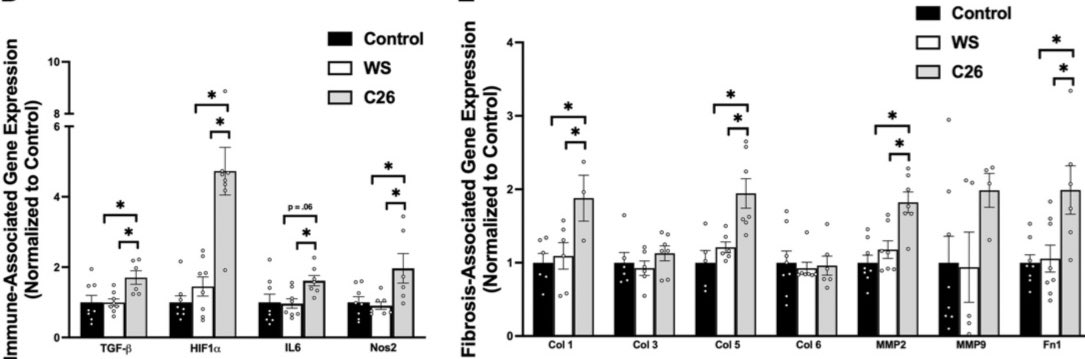
Muscle fibrosis is not a consequence of tumor presence but a distinct pathological feature of cancer cachexia.
Cachexia promotes a profibrotic microenvironment, where immune cells + FAPs contribute to ECM remodeling and worsen muscle dysfunction beyond atrophy.
Excited to share our recent paper “Pro-Fibrotic Immune Cells & FAPs Contribute to Skeletal Muscle ECM Remodeling and Fibrosis in Cancer Cachexia”
🧵 Summary of our findings below.
👇
https://t.co/Z92HZWnauL
@b_veen17@UofSCSOMC@UofSC@AJPCellPhys@USCResearch#myotwitter
5️⃣
Our SEM & TEM images caught the culprits in action—FAPs, macrophages, & neutrophils clustering within the fibrotic ECM.
This spatial organization suggests cell-to-cell immune–stromal crosstalk contributing to fibrosis and ECM expansion.
There's new #fibrosis info in this #ArticleinPress, Pro-Fibrotic Immune Cells and Fibro-Adipogenic Progenitors Contribute to Skeletal Muscle Extracellular Matrix Remodeling and Fibrosis in Cancer Cachexia (Thomas D. Cardaci et al. @UofSCSOMC):
https://t.co/l1WTMtMspp
New paper from the lab reviewing ‘Diversity in Chemotherapy-Induced Cachexia’ @ljnovinger | American Journal of Physiology-Cell Physiology https://t.co/je4XaX3xgA
Congrats to Thomas D. Cardaci et al. for the #APSselect paper "Decreased skeletal muscle intramyocellular lipid droplet-mitochondrial contact contributes to myosteatosis in cancer cachexia" in @ajpcellphys@TomCardaci@UofSCSOMC
https://t.co/fTVWn5WDMs