Is the ‘reset’ really worth 0.5% of GDP?
I've taken a closer look at the government's claim that the UK-EU 'reset' will boost UK GDP by 0.5% in the long run.
⚠️ Spoiler – it won’t. In fact, I think they have got the sign wrong... 🧵(1/12)
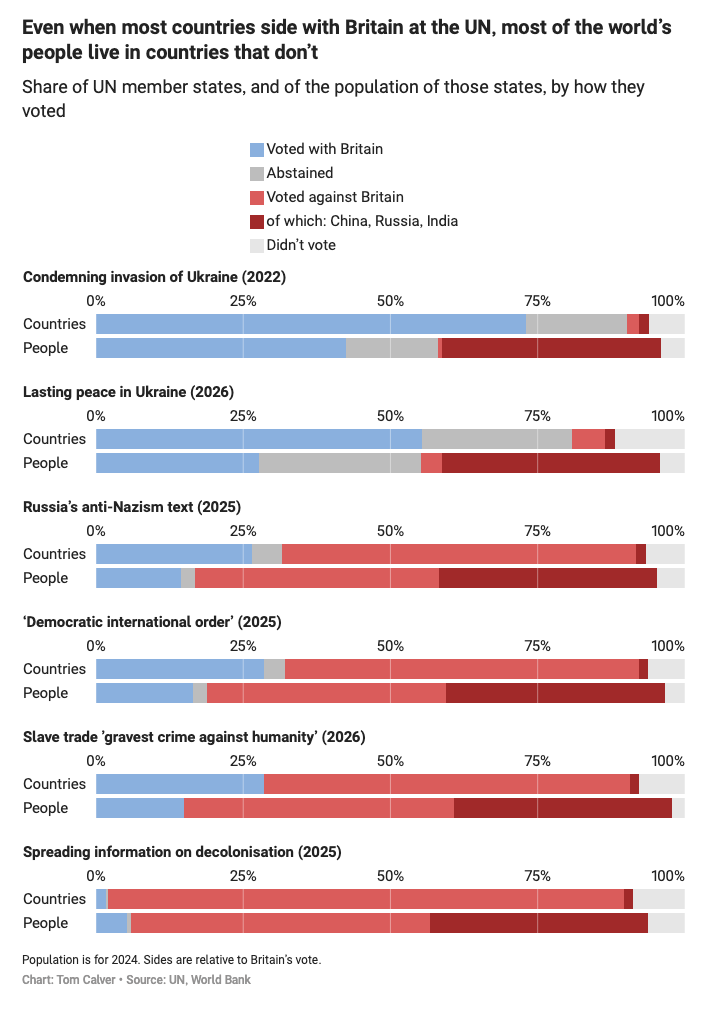
I'm also struck by how often Britain and its allies are now on the losing side of UN votes.
Our diplomatic view of the world is increasingly a global outlier - especially so when we weight each country's vote by their population
More in my column https://t.co/usldBXSI3i
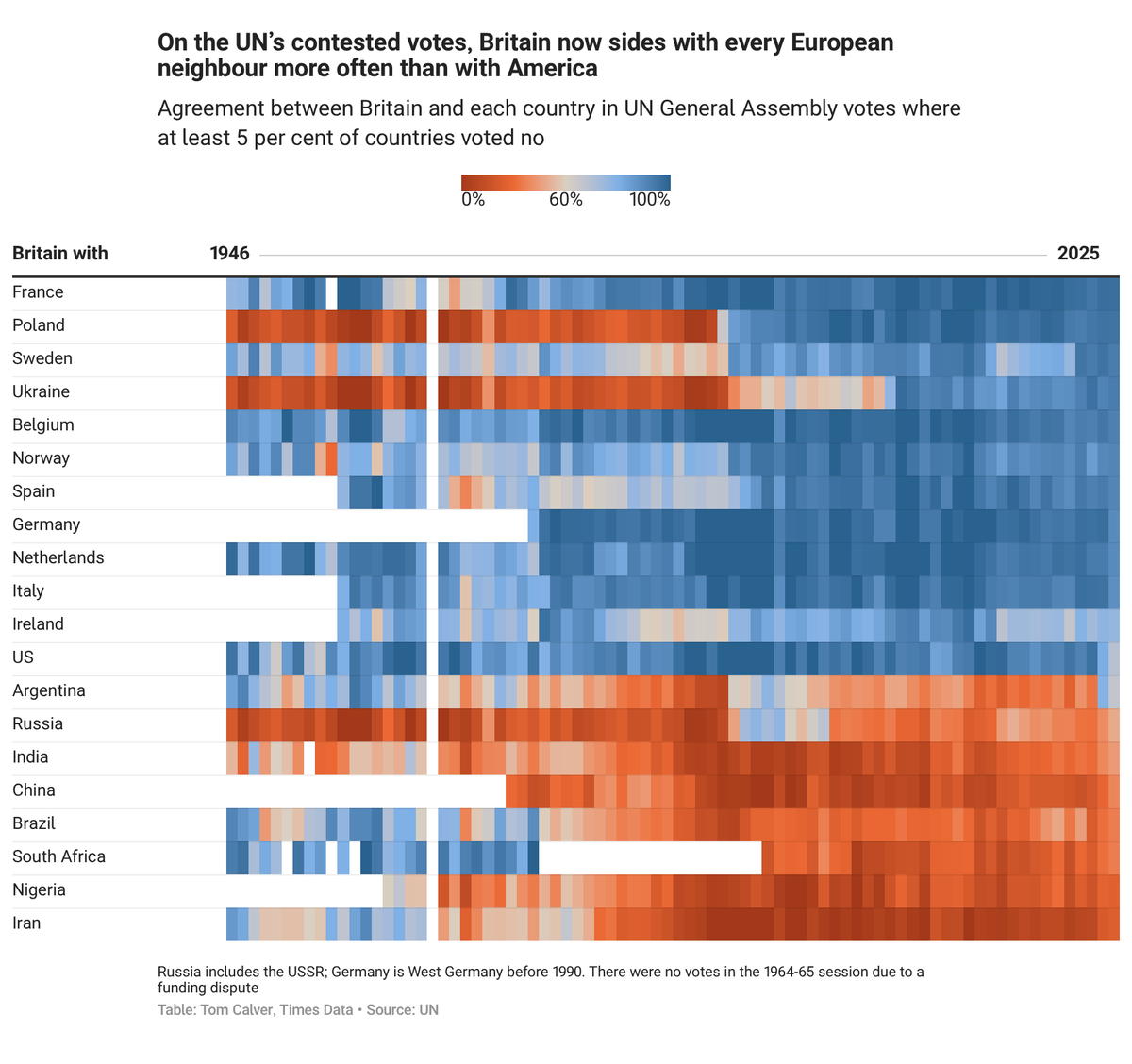
This week's column is on the collapse of the old world order. I looked at 80 years of UN votes to see who is friends with whom, and how that has changed.
The US no longer votes with its European allies at the UN. But it's not really moving towards China and Russia either
1/3
Here's the 80-year view of UN vote agreement with Britain (note I've only included votes that were "contentious", ie had more than 5% disagreement).
The US went from being one of our closest allies, to to no closer than the Argentinians
2/3
A thought on the productivity revamp - if the big problem is not working enough hours (vs output during those hours), doesn’t it make tackling tax/benefit cliff edges even more important? Artificially constraining hours worked all over the place.
What a strange, snooty response!
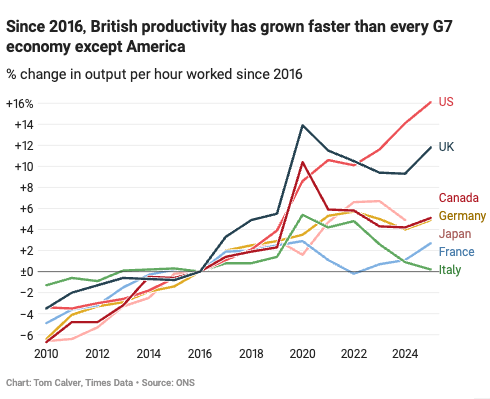
a) I made the chart; it shows cumulative change in productivity since 2016. I purposely rebased ONS data to show this
b) Productivity is indeed lower than the probably artificial high of 2020 - a combination of 2020 being artificially high, plus the subsequent energy crisis which affected lots of other countries but us particularly badly
c) Productivity is still 12% higher than 2016, which is the year most "Brexit impact" studies use as their reference point!
Like most 22-year-olds I voted Remain in 2016, but I'm fed up with this blinkered attempt to blame Brexit on all of Britain's problems
I voted Remain, but these counterfactuals are nonsense - British growth has been going down since 2008 due to structural problems with the economy that have gone unaddressed and have frequently been worsened by government policy.
This week's column: closer EU alignment may be worth doing if it genuinely makes a tangible difference to people's lives.
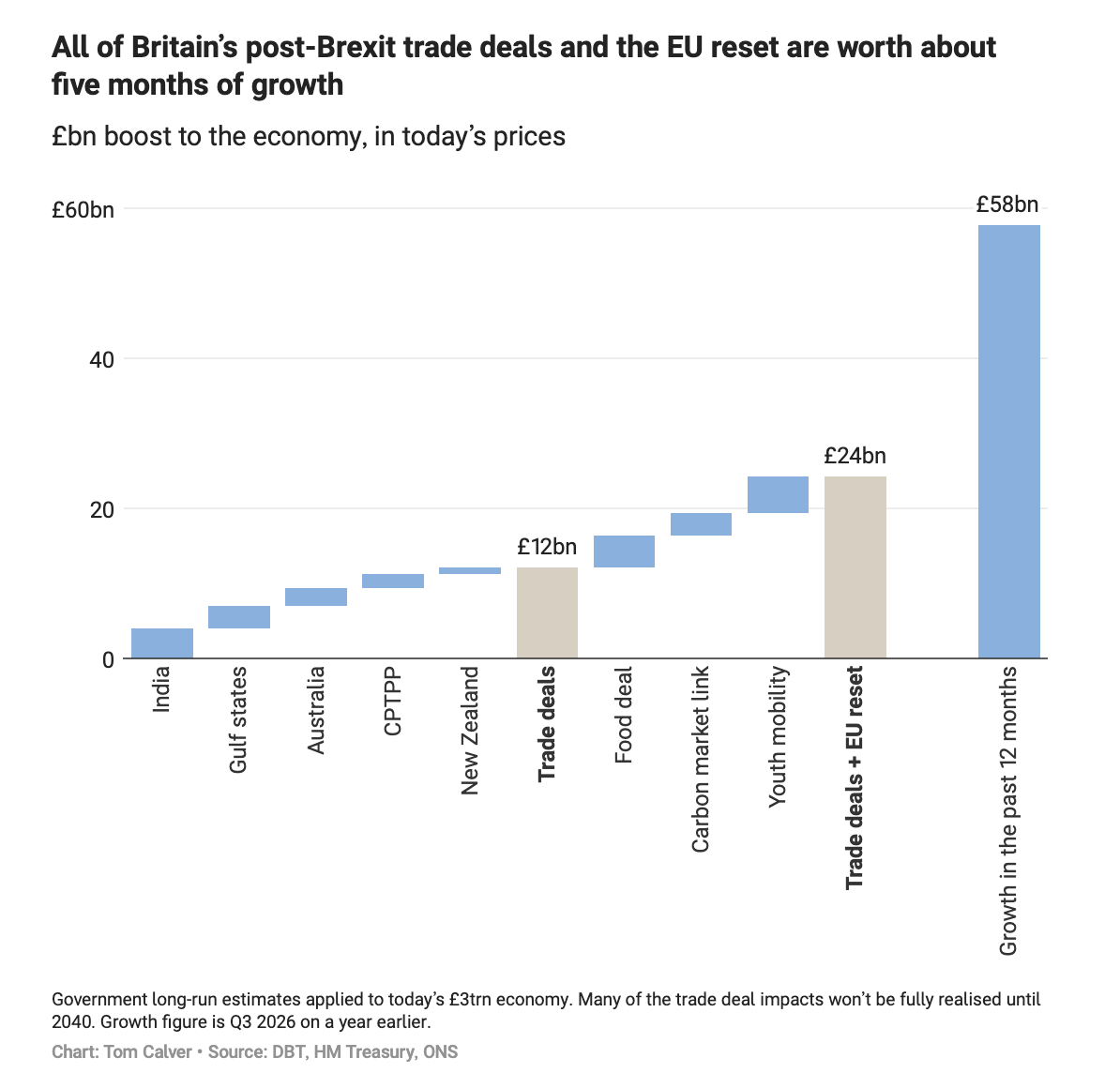
But let's not kid ourselves: the economic impacts of doing so are tiny. Every trade deal and proposed realignment measure to date will lift the economy by about 0.8% by 2040 – equivalent to about five months of growth!
1/3
There's more. New ONS data published today shows Britain has actually experienced the second-fastest growth in productivity of any G7 country since 2016!
We spend endless time debating the economic impact of Brexit. But look at the chart.
If you think Britain should have grown like the US after Brexit, the impact seems huge.
If instead you think we would've grown like the other big European nations, the impact is negligible.
Brexit is a real inconvenience to holidaymakers and business owners, and steps to mitigate this hassle is good. But it seems silly to sell closer alignment along purely economic lines. Brexit isn't the real reason your taxes are rising and you can't get a pay rise.
2/3
@RichardBentall Let's go one better and look at change in output per hour worked. Remarkably, Britain has the second-fastest growth in productivity of any G7 nation since 2016!
We spend endless time debating the economic impact of Brexit. But look at the chart.
If you think Britain should have grown like the US after Brexit, the impact seems huge.
If instead you think we would've grown like the other big European nations, the impact is negligible.
Brexit is a real inconvenience to holidaymakers and business owners, and steps to mitigate this hassle is good. But it seems silly to sell closer alignment along purely economic lines. Brexit isn't the real reason your taxes are rising and you can't get a pay rise.
2/3
Thread 🧵
Ahead of the Milburn report, I spent a few days talking to young people who are or have recently been “NEETs”
I found it a worrying but also moving experience, listening to how they are navigating a dizzying array of challenges. Here is some of what they had to say:
We spend endless time debating the economic impact of Brexit. But look at the chart.
If you think Britain should have grown like the US after Brexit, the impact seems huge.
If instead you think we would've grown like the other big European nations, the impact is negligible.
Brexit is a real inconvenience to holidaymakers and business owners, and steps to mitigate this hassle is good. But it seems silly to sell closer alignment along purely economic lines. Brexit isn't the real reason your taxes are rising and you can't get a pay rise.
2/3
✍️ I'm starting a newsletter!
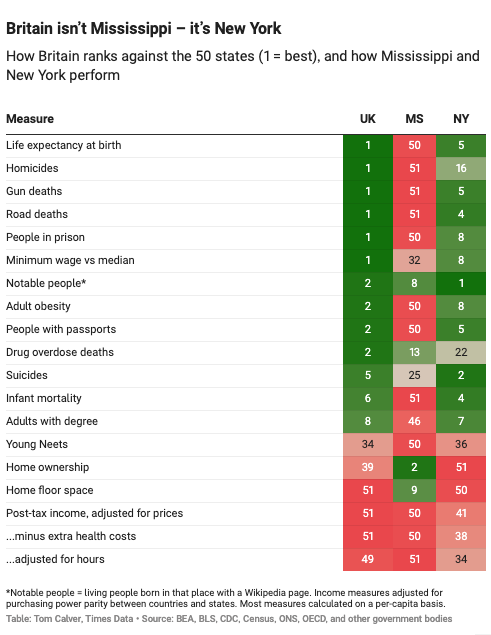
In the first weekly issue of Trendline, launching this afternoon, I compare life in Britain with life in the US.
The UK is often compared with Mississippi, America's poorest state. I argue that we're much more like New York instead.
You can sign up for free here: https://t.co/fl2KQ2YbfP