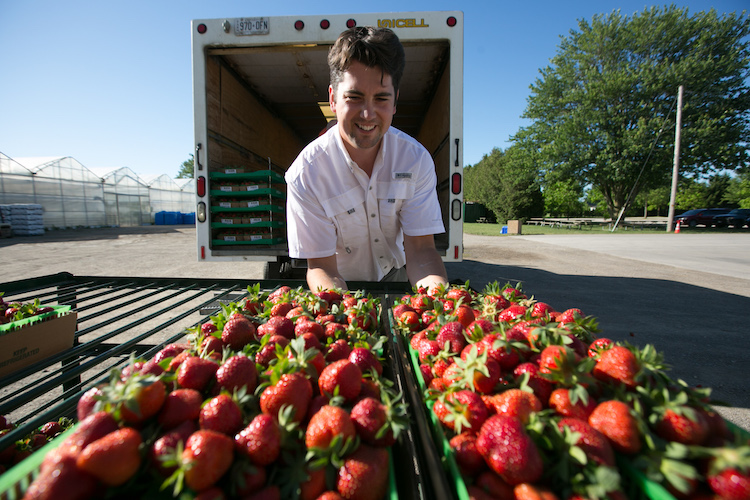
Congrats to Tom Heeman, recipient of Berry Growers of Ontario Award of Merit for not only 6 years on the board of directors but leadership in numerous organizations. @OntarioBerries@TomHeeman@Heemans
https://t.co/KQ7FuAhztU
Why All Political Parties Now Agree That the Grocer Code of Conduct Is Necessary
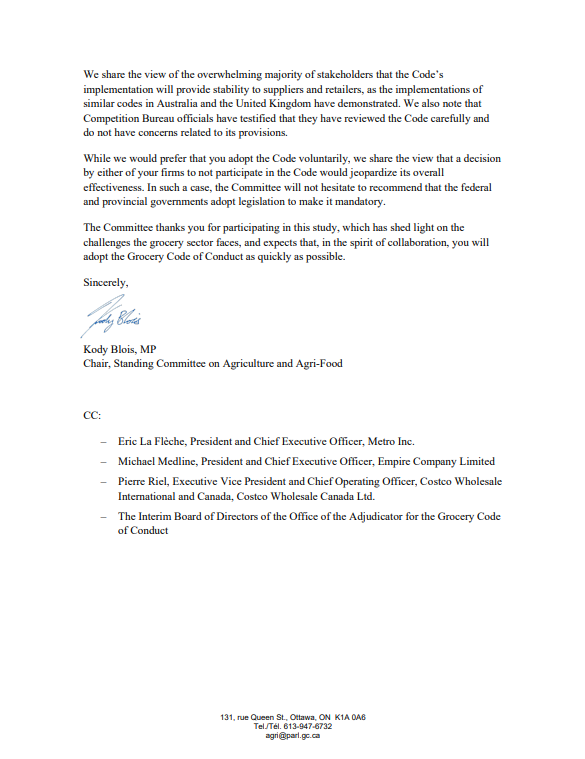
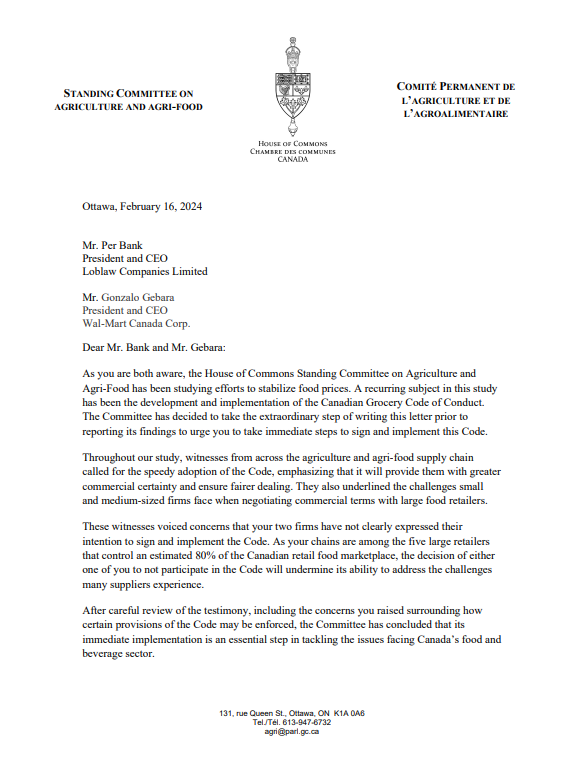
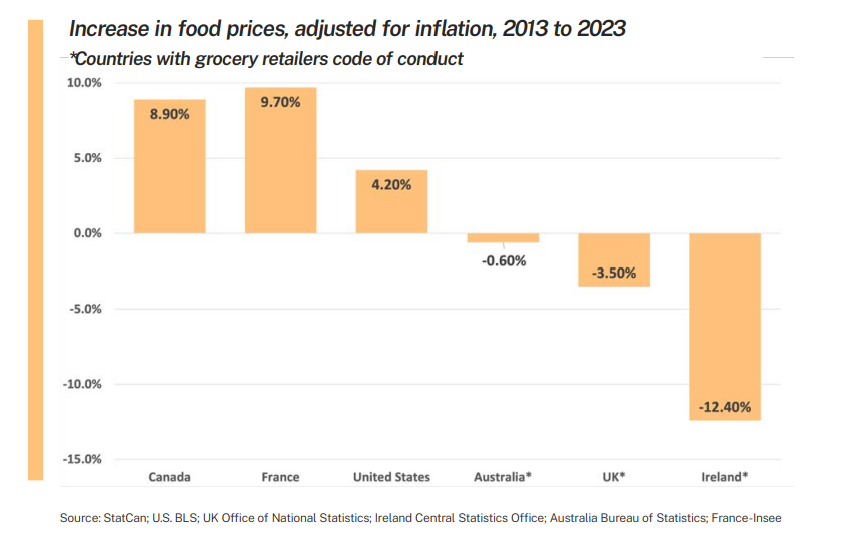
The Parliamentary Committee in Agriculture (@OurCommons, @HoCChamber) in Ottawa has embarked on a mission to address the rising food prices, extending an invitation to both @LoblawsON and @WalmartCanada. In a letter from the committee to both @LoblawsON and @WalmartCanada sent on Friday, Ottawa urges both retailers to voluntarily comply with the proposed grocer's code of conduct or risk facing legislative action. In other words, Canada is on the verge of adopting a government-coordinated, industry-led mandatory code—a development that heralds good news for Canadians, though many may not yet realize its significance.
Unprecedented unity among all political factions underscores the grocer's code of conduct as a pivotal tool for stabilizing food prices over time. This code aims to furnish food companies with a safe harbour for dispute resolution through a designated secretariat, offering an alternative to the current norm where companies have no recourse but to endure unfavourable conditions. Its focus is not on dictating prices but on ensuring fair contractual practices for all entities involved, including startups, farmers and small family-owned food processors, thereby offering much-needed financial predictability to suppliers.
The industry, plagued by unilateral decisions and broken agreements by grocers, stands to gain from the equitable playing field this code promises.
The code's introduction might seem paradoxical to staunch free-market advocates and Conservatives who typically view government intervention with skepticism. Companies like Walmart and Loblaw, having achieved their market dominance through strategic decisions, are often celebrated for their success. However, the issue at hand transcends their accomplishments.
The food industry is distinct for two primary reasons: Firstly, it operates on razor-thin margins across the entire supply chain, necessitating meticulous planning and coordination. Secondly, the power dynamics are skewed, with suppliers needing to pay substantial fees to grocers for the privilege of doing business with them. It doesn’t work that way in other sectors. This dynamic has bestowed upon grocers’ significant gatekeeping power, influencing the market to their advantage.
This dominance has not only stifled competition but has also marginalized independent grocers, particularly affecting Canadians in smaller towns by limiting their access to nearby stores. The upward trend in grocery fees, primarily driven by Loblaw and Walmart, exacerbates the challenges for suppliers and independent grocers alike.
It's crucial to understand that the code's goal is not to reduce prices—such expectations would be fanciful—but to mitigate price volatility, a pervasive issue that overshadows the more fundamental problem of food inflation. While higher prices are concerning, it's important to recognize food inflation as a normal economic phenomenon, essential for businesses to thrive and ensure the safety of food products. Achieving a food inflation rate of 1.5% to 2.5%—a range last seen in the summer of 2021 and anticipated to return by year's end according to Canada’s Food Price Report forecast—is ideal.
Price volatility, exacerbated by increased grocery fees and the manipulation of prices around blackout periods, remains a significant concern if the aim is to reduce price volatility. Although the code may not eliminate these practices, it is poised to reduce their impact on retail food prices significantly.
Moreover, the code promises greater transparency within the food chain. An annual report by the secretariat, detailing compliant companies and highlighting those failing to adhere, introduces an unprecedented level of accountability in Canada's food industry.
While the grocer's code of conduct may initially seem counterintuitive to some, its benefits for consumers, suppliers, and the overall market cannot be overstated. It represents a step towards a more equitable and stable food industry in Canada.
"We need to set aside the profit-driven debate in the grocery industry to prioritize what I consider to be far more pressing issues: supply chain bullying and the appearance of collusion." https://t.co/Rzv0rUaU1A
🌾 Millets aren't just grains; they're a pathway to a resilient and nourished future! 🌱Explore the economic, sustainable, and nutritional benefits of these underutilized crops in transforming Asia's agriculture.
Read more from @IFPRI: https://t.co/XYrzKS36gj
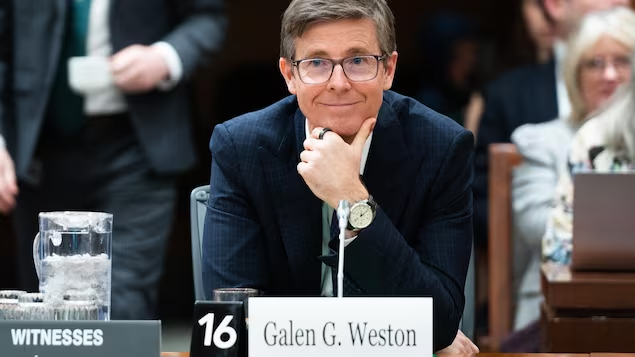
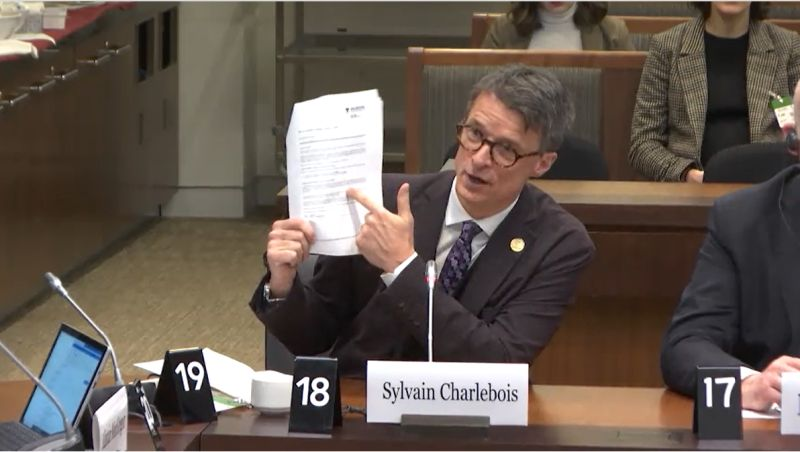
Had the privilege of returning to the Parliamentary Committee on Agriculture to testify this week in Ottawa, where I highlighted three crucial points.
1) Profiteering is not the primary issue; it's price volatility that demands our attention.
2) We must address the industry's culture of price-fixing.
3) Urgently, we need to establish a mandatory code of conduct for grocery retailers.
It was an honour to be part of this discussion with @Dalagrifood's StaceyTaylor, MBA, CPA, CMA, ACMA, @loveretail, Karl Littler, and @curb1961.
Please take a moment to listen to the testimonies. https://t.co/jeOqxrI1ed
Pollinators 🐝🦋🐞 are a fundamental part of ecosystems, critical for food production and human livelihoods and directly link wild ecosystems with agricultural production systems.🌏🐝
More facts here 👉https://t.co/EzRXabL9mY
Feeling incredibly privileged to join the @hlpe_cfs to work with an outstanding international community on ways of addressing issues such as equity and sustainability in the food system.
Kraft confirmed in October that it has reduced its size (to 200g) in response to inflationary pressures related to ingredients, labour, and transportation, and to "maintain quality products at an affordable price."
Thank you to everyone who came out this morning for the return of our Annual Mayor’s Breakfast! It was a great morning with our feature speakers from Generations Cider Co. , Community Futures Middlesex and Carolyn Martin, Life & Wellness Coach. See you next year!
Ontario is investing in the Ontario Agricultural Sustainability Initiative to make its agricultural sector more productive and sustainable.
#OntAg#SustainableCdnAg
We are pleased to welcome back the Honourable Minister Lawrence MacAulay as the Minister for Agriculture and Agri-Food Canada (AAFC) #CdnAg! We look forward to working with you again!
Planning in progress for OMAFRA Soil Management Field Day - August 23rd - N of London. Hands on learning and workshop - Stay tuned for details. Lots of action and importance below the top 6”… and yea I let someone else do the digging.
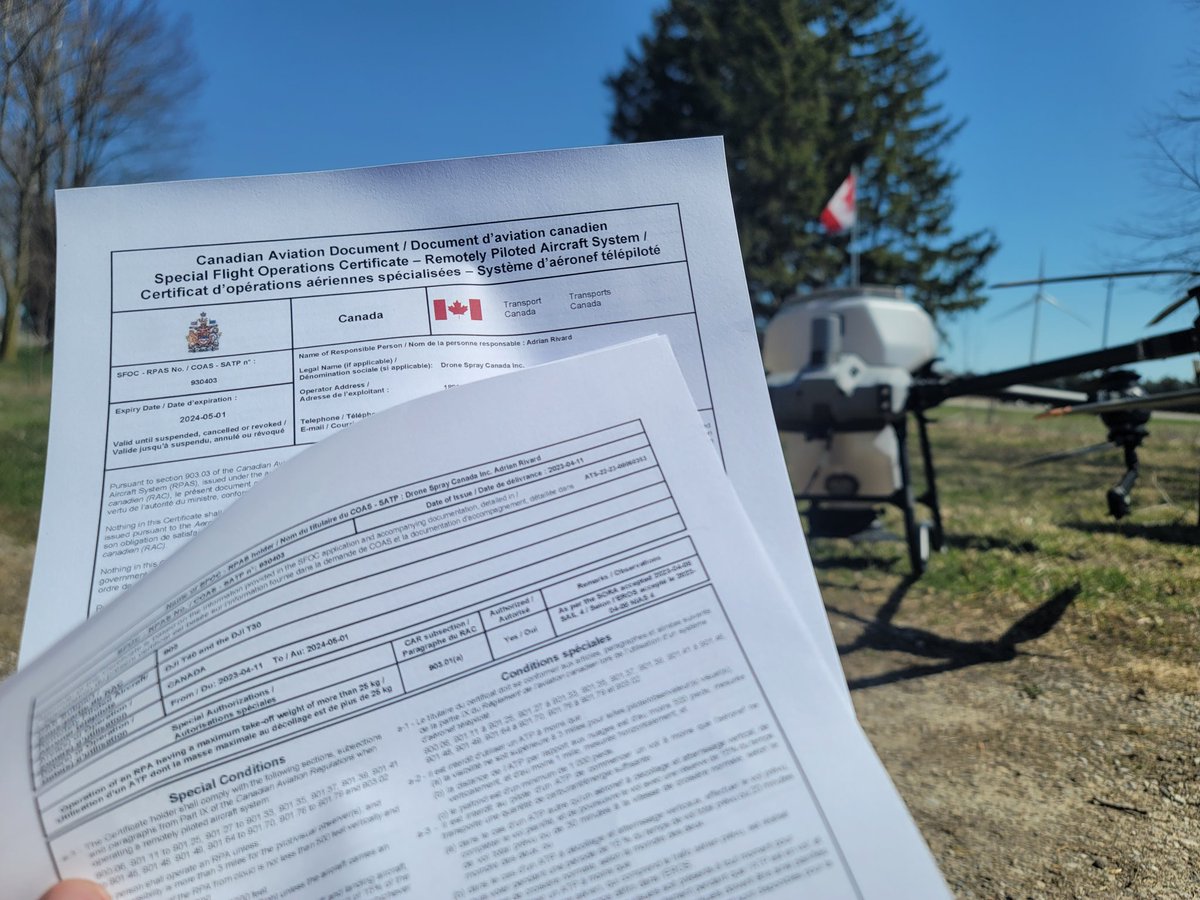
Big milestone! We received our Canada wide, Standing SFOC from @Transport_gc for our @DJIAgriculture T30 and T40. Many compliance requirements for us to safely and legally operate, but a huge step forward for the industry. I believe we are the first in Canada to be issued this.
@FJTardif @scressma Jethro Tull was definatly a highlight, that and Roman's salting fields and sulfuric acid used as a herbicide genuinely came up in conversation today (acid as herbicide) might start making my own vinegar as organic herbicide 200 year old tech but hey surfactants are better now 😋