#Mariners kept it 0-0 thru the 5th vs Baltimore
Then Kirby gives up 3 in 6th
In 7th, Bullpen loads bases & gives up 4 on a grand slam 💥💥💥💥
So, down 7-0 still in 7th
M’s with only 2 Hits
Can’t Hit/Can’t Score
Bullpen remains a mess 🤷🏼♂️🤦🏽
From Kirkland to Montlake, Salvon Ahmed @AhmedSalvon never had to leave home to make history. 🐺
1,020 yards as a junior. 2,016 and 21 TDs for his career. And that 89-yard dash vs. USC, still the 5th-longest run in school history. A hometown Dawg for life. Bow Down. 🙌
A mathematician coined the term "artificial intelligence" in 1955, built the language that dominated AI research for 30 years, and predicted cloud computing 40 years before AWS existed and almost nobody outside the field knows his name.
His name was John McCarthy.
He was born in Boston in 1927, earned his PhD in mathematics from Princeton in 1951, and spent the next 55 years working on a single question that most of his peers considered either impossible or insane.
Can a machine think?
In the summer of 1955, McCarthy sat down and wrote a two-page proposal for a workshop at Dartmouth College. The proposal opened with one sentence that changed everything: "every aspect of learning or any other feature of intelligence can in principle be so precisely described that a machine can be made to simulate it."
He needed a name for the field he was proposing. He chose "artificial intelligence." Before that document, no such field existed. After it, every researcher working on thinking machines had a name for what they were doing, a home discipline to publish in, and a founding document to point to. McCarthy did not just contribute to AI. He created the container it lives in.
The Dartmouth Conference ran for eight weeks in the summer of 1956. It was the moment AI became a real scientific discipline.
McCarthy kept building.
In 1958 he invented LISP, the second oldest high-level programming language still in use today, older only than FORTRAN by one year. LISP was designed for a specific purpose: symbolic reasoning. It could manipulate ideas, not just numbers.
It became the language every serious AI researcher wrote in for the next three decades. From 1958 through the late 1980s, if you were working on AI, you were almost certainly working in LISP.
Inside LISP he invented garbage collection in 1959, the technique that automatically frees up memory a program no longer needs. Java uses it. Python uses it. JavaScript uses it. Every modern language that manages memory automatically is using the idea McCarthy worked out while building LISP.
In 1961 he stood at a centennial celebration at MIT and said something that everyone in the room thought was science fiction. He proposed that computing would one day be delivered as a public utility, the same way electricity or water is delivered to a home. You would not own the computer. You would pay for access to it over a network.
AWS launched in 2006. Azure launched in 2010. Google Cloud launched in 2011. What McCarthy described in 1961 is now a trillion-dollar industry. He was 45 years early.
In 1962 he founded the Stanford Artificial Intelligence Laboratory, SAIL, which became one of the most important research centers in the history of the field. The researchers who trained there shaped the next 40 years of AI.
He won the Turing Award in 1971. The National Medal of Science in 1990. The Benjamin Franklin Medal in 2003.
He retired from Stanford in 2000. He died on October 24, 2011, at his home in Stanford, California. He was 84.
The researchers at OpenAI, Google DeepMind, and Anthropic building the models you use today are working in a field McCarthy named in 1955, using memory management he invented in 1959, inside an industry structure he predicted in 1961, toward a goal he spent his entire career insisting was not only possible but inevitable.
He was right about all of it.
He just did not live to see the part where the rest of the world finally believed him.
'I believe that men are here to grow themselves into the best good that they can be - at least, this is what I want to do.' - John Coltrane
#jazz#art#quote
@Mitch_Seattle@StevePhillipsGM Steve Phillips knows: TNSSAAPP
“There’s no such thing as a Pitching Prospect” - cause when they are ready, you can’t waste their Talent & Arm… it’s too precious ⚾️
#Mariners have some fine talent & tough choices
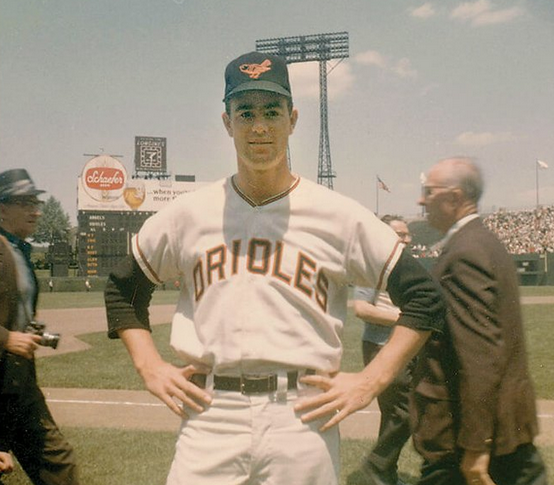
"My first roommate was Robin Roberts, who had 270-some wins, and I didn’t have any.
My first game, at Fenway, I came in with the bases loaded to face Tony Conigliaro, the first guy I ever faced in the big leagues.
Hank Bauer was the manager, and he said:
“Are you nervous?”
I said:
“Well, I’ve never done this before,” because I was a starting pitcher in A-ball the year before.
I said:
“What do I do with this warm-up ball?”
I had brought the warm-up ball in with me because I was so nervous.
But I struck out Conigliaro, and 3,948 innings later I had never given up a grand slam.
That could have happened with the first guy I ever faced.
I struck him out on three pitches.
He swung at two high fastballs and John Flaherty called him out on a knee-high fastball low and away.
Not that I meant to do that, it just went there."
Jim Palmer.
Nick Davila earned his first MLB save after a gutsy 10th inning in Baltimore, less than 24 hours after he had to cancel anniversary plans mid-dinner with his girlfriend back in Seattle.
"I couldn't believe I was in the game. ... I kind of blacked out."
https://t.co/kHlTiNXGAD
“Jazz, R&B, soul, rock and roll — it’s all just the BLUES, man!”
Remembering one of my favourite guitarists, Grant Green, born June 6th 1935 in St Louis, Missouri.
“Let every man remind their descendants that they also are soldiers who must not desert the ranks of their ancestors, or from cowardice fall behind.”
— Plato
Former Mets GM @StevePhillipsGM is always terrific on our show but this week (EP 385) he threw a curveball that I hadn't thought of...
Kade Anderson cutting his teeth in the #Mariners bullpen as a way of controlling his innings & potentially getting some big help in the pen.
@ihtesham2005 You didn't explain WHY "C" was invented. Unix was written in Assembly Language which any decent programmer knows is NOT portable at all. So, in order to get Unix to run on other systems, a portable systems language was needed and "C" was that language.