#VNL2026 🇫🇷 France had the perfect start.
Poland had the perfect finish. 😮💨🇵🇱
After dropping the opening set, the reigning champions flipped the script 3-1. 🔥
Replays on VBTV 📺https://t.co/eNNv78ifzJ
🏐 #BePartOfTheGame#Volleyball
Sytuacja polskiej nauki nie wynika tylko z braku funduszy. To systemowa katastrofa rozwojowa, która spycha Polskę na margines innowacyjnego świata.
Kilka miesięcy temu, w The Economist ukazała się analiza dotycząca tzw. „brain circulation”, a w niej zdanie: „Poland is the biggest loser from this scientific migration” (Polska jest najbardziej stratna z powodu migracji naukowców).
Jesteśmy krajem, który daje światu talenty, które później rozwijają innych, dają bezpieczeństwo innym.
@3procentnanauke
Last quarter I rolled out Microsoft Copilot to 4,000 employees.
$30 per seat per month.
$1.4 million annually.
I called it "digital transformation."
The board loved that phrase.
They approved it in eleven minutes.
No one asked what it would actually do.
Including me.
I told everyone it would "10x productivity."
That's not a real number.
But it sounds like one.
HR asked how we'd measure the 10x.
I said we'd "leverage analytics dashboards."
They stopped asking.
Three months later I checked the usage reports.
47 people had opened it.
12 had used it more than once.
One of them was me.
I used it to summarize an email I could have read in 30 seconds.
It took 45 seconds.
Plus the time it took to fix the hallucinations.
But I called it a "pilot success."
Success means the pilot didn't visibly fail.
The CFO asked about ROI.
I showed him a graph.
The graph went up and to the right.
It measured "AI enablement."
I made that metric up.
He nodded approvingly.
We're "AI-enabled" now.
I don't know what that means.
But it's in our investor deck.
A senior developer asked why we didn't use Claude or ChatGPT.
I said we needed "enterprise-grade security."
He asked what that meant.
I said "compliance."
He asked which compliance.
I said "all of them."
He looked skeptical.
I scheduled him for a "career development conversation."
He stopped asking questions.
Microsoft sent a case study team.
They wanted to feature us as a success story.
I told them we "saved 40,000 hours."
I calculated that number by multiplying employees by a number I made up.
They didn't verify it.
They never do.
Now we're on Microsoft's website.
"Global enterprise achieves 40,000 hours of productivity gains with Copilot."
The CEO shared it on LinkedIn.
He got 3,000 likes.
He's never used Copilot.
None of the executives have.
We have an exemption.
"Strategic focus requires minimal digital distraction."
I wrote that policy.
The licenses renew next month.
I'm requesting an expansion.
5,000 more seats.
We haven't used the first 4,000.
But this time we'll "drive adoption."
Adoption means mandatory training.
Training means a 45-minute webinar no one watches.
But completion will be tracked.
Completion is a metric.
Metrics go in dashboards.
Dashboards go in board presentations.
Board presentations get me promoted.
I'll be SVP by Q3.
I still don't know what Copilot does.
But I know what it's for.
It's for showing we're "investing in AI."
Investment means spending.
Spending means commitment.
Commitment means we're serious about the future.
The future is whatever I say it is.
As long as the graph goes up and to the right.
Last quarter I rolled out Microsoft Copilot to 4,000 employees.
$30 per seat per month.
$1.4 million annually.
I called it "digital transformation."
The board loved that phrase.
They approved it in eleven minutes.
No one asked what it would actually do.
Including me.
I told everyone it would "10x productivity."
That's not a real number.
But it sounds like one.
HR asked how we'd measure the 10x.
I said we'd "leverage analytics dashboards."
They stopped asking.
Three months later I checked the usage reports.
47 people had opened it.
12 had used it more than once.
One of them was me.
I used it to summarize an email I could have read in 30 seconds.
It took 45 seconds.
Plus the time it took to fix the hallucinations.
But I called it a "pilot success."
Success means the pilot didn't visibly fail.
The CFO asked about ROI.
I showed him a graph.
The graph went up and to the right.
It measured "AI enablement."
I made that metric up.
He nodded approvingly.
We're "AI-enabled" now.
I don't know what that means.
But it's in our investor deck.
A senior developer asked why we didn't use Claude or ChatGPT.
I said we needed "enterprise-grade security."
He asked what that meant.
I said "compliance."
He asked which compliance.
I said "all of them."
He looked skeptical.
I scheduled him for a "career development conversation."
He stopped asking questions.
Microsoft sent a case study team.
They wanted to feature us as a success story.
I told them we "saved 40,000 hours."
I calculated that number by multiplying employees by a number I made up.
They didn't verify it.
They never do.
Now we're on Microsoft's website.
"Global enterprise achieves 40,000 hours of productivity gains with Copilot."
The CEO shared it on LinkedIn.
He got 3,000 likes.
He's never used Copilot.
None of the executives have.
We have an exemption.
"Strategic focus requires minimal digital distraction."
I wrote that policy.
The licenses renew next month.
I'm requesting an expansion.
5,000 more seats.
We haven't used the first 4,000.
But this time we'll "drive adoption."
Adoption means mandatory training.
Training means a 45-minute webinar no one watches.
But completion will be tracked.
Completion is a metric.
Metrics go in dashboards.
Dashboards go in board presentations.
Board presentations get me promoted.
I'll be SVP by Q3.
I still don't know what Copilot does.
But I know what it's for.
It's for showing we're "investing in AI."
Investment means spending.
Spending means commitment.
Commitment means we're serious about the future.
The future is whatever I say it is.
As long as the graph goes up and to the right.
Kurczę takie podejście do inwestorów indywidualnych szanuję i pochwalam. Zadajemy pytanie #Text i dostajemy odpowiedź, możemy miło podyskutować 👍🏼 o taką komunikację na #FinX mi chodzi.
Text robicie to dobrze.
👉Czyli OpenAI nie mając pieniędzy, najpierw podpisał z BigTechami grube, wzajemne umowy, co mocno podkręciło ich wyceny na rynku, a teraz mówi do nadwrażliwego na rynek kapitałowy rządu US, albo dacie gwarancje kredytowe, żebyśmy mogli się wywiązać z umów, albo rynek będzie miał kłopoty…
Branie z rynku zakładnika, to jest coraz popularniejsza, bo wcześniej skuteczna, taktyka negocjacyjna z Trumpem..
🦔Meta is hiding $30 billion in AI infrastructure debt off its balance sheet using special purpose vehicles, echoing the financial engineering that triggered Enron's collapse and the 2008 mortgage crisis. Morgan Stanley estimates tech firms will need $800 billion from private credit in off-balance-sheet deals by 2028. UBS notes AI debt building at $100 billion per quarter "raises eyebrows for anyone that has seen credit cycles."
The Structure
Off-balance-sheet debt through SPVs or joint ventures is becoming the standard for AI data center deals. Morgan Stanley structured Meta's $30 billion in an SPV tied to Blue Owl Capital, making it easier to raise another $30 billion in corporate bonds. Musk's xAI is pursuing a $20 billion SPV deal where its only exposure is paying rent on Nvidia chips via a 5-year lease. Google backstops crypto miners' data center debt, recording them as credit derivatives.
My Take
This is 2008-style financial engineering repackaged for AI. The key difference from the dot-com era is growth was financed with equity then. Now there's rapid capex growth driven by debt kept off balance sheet. When chips estimated to last five to six years may be obsolete in three, and companies structure deals where their only exposure is short-term leases, that's hidden leverage creating the opacity that preceded past crises. Meta keeping $30 billion off its balance sheet while UBS warns about $100 billion quarterly AI debt buildup shows the pattern I've been documenting where leverage accumulates outside traditional visibility.
Hedgie🤗
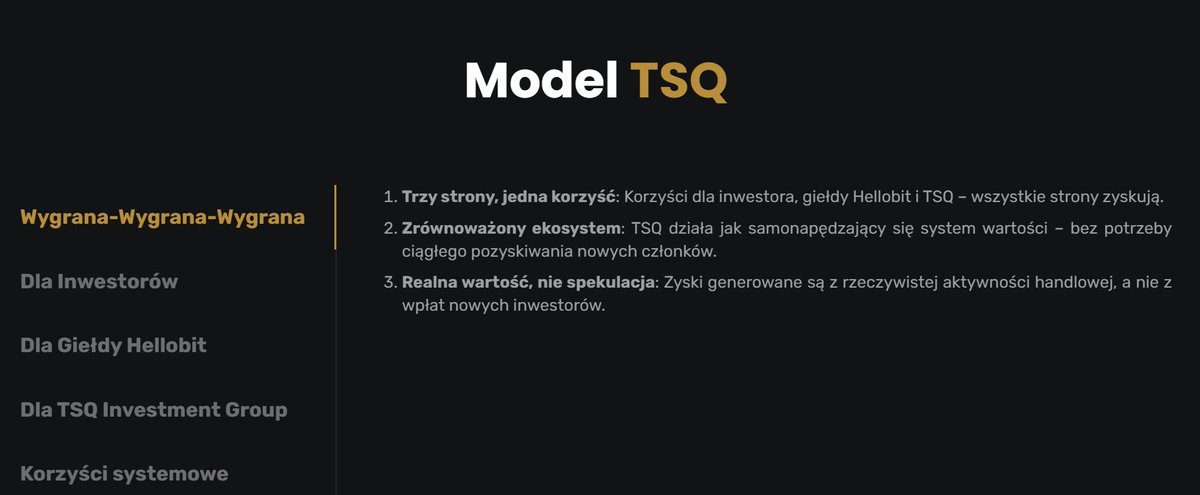
(1/2) Grupa sygnałowa na kryptowalutach, mechanizm piramidy (nagrody rekomendacyjne i udział w polecajkach), bonus za zespół, szkolenia na Cyprze i sprzedawca w garniturze.
Oburzająca historia, którą poznałem poprzez moich znajomych. Kilka suchych faktów poniżej, które szokują mnie że mogą mieć miejsce w takiej skali, a co gorsza skutecznie namawiają społeczeństwo.
Anno Domini 2025 - wystarczy napisać, że grafiki mają charakter wyłącznie informacyjny i nie stanowią oferty w rozumieniu kodeksu cywilnego i nie są rekomendacją inwestycyjną...
1. Kapitał gwrantowany, zyskaj 100% zwrotu w 35 dni. To własnie oferuje sprzedawca w garniturze na indywidualnych spotkaniach z potencjalnymi klientami.
Grupa docelowa całkiem prosta - drobne oszczędności u osób, które planują większe wydatki. Wystarczy zatem obiecać jedynie 100% zwrotu kapitału w 35 dni.
2. Jak działa model? Klasyczny schemat, czyli atrakcyjne nagrody za rozbudowę społeczeności, bonusy za aktywność i oczywiście wynagrodzenie od wolumenu swojego zespołu. Przypomina Wam to coś?
3. Model oczywiscie jest oparty o członkostwo w grupach, gdzie grupy sygnałowe 3 razy w ciągu dnia wysyłają informacje na temat "mitycznych i pewnych" zagrań, które na mało płynnych instrumentach zagwarantują zwrot.
4. Nie słyszeliście jeszcze o mechanizmie TRIPLE WIN?
Dalsza część wątku niżej z uwagi na ograniczenia zdjęć:
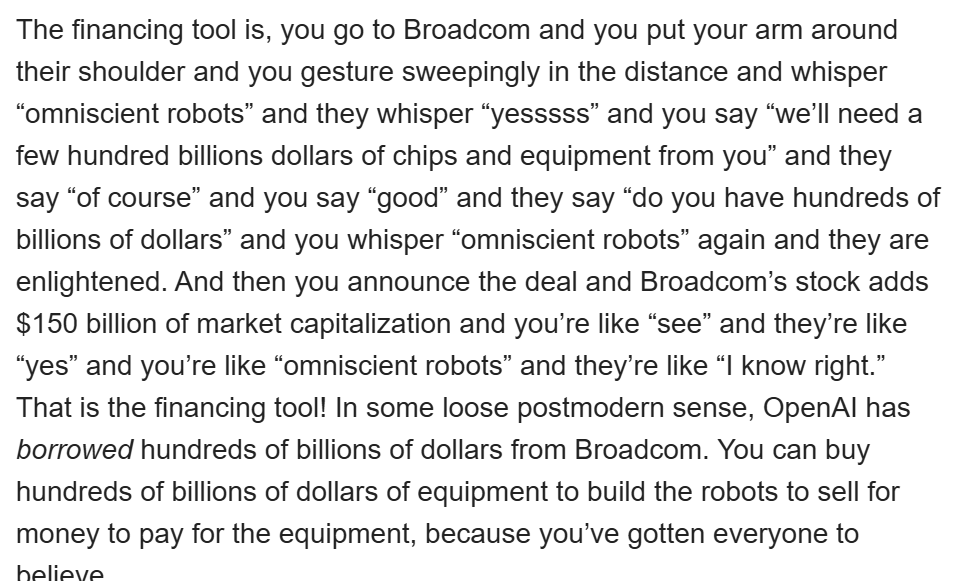
Matt Levine o strategii pozyskiwania finansowania przez spółkę, która planuje do 2033 roku wydać 10 bln USD na centra danych, mimo że na razie nie ma drogi do zyskowności.
Coś nieprawdopodobnego
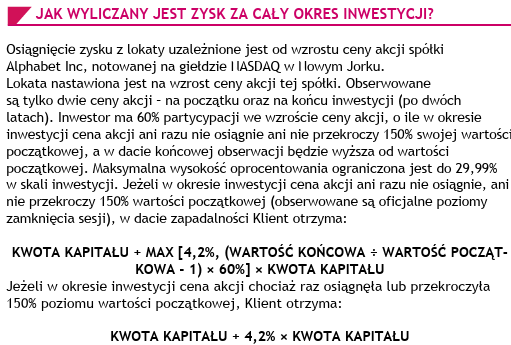
Millenium oferował lokatę uzależnioną od wzrostu kursu akcji spółki Alphabet (Google)
Lokata miała dawać od 4,2% do 29,99% zysku - w zależności od tego, o ile wzrosną akcje Alphabeta
Akcje wzrosły o 86%, więc klient dostał... 4,2% :D
(6/n)
…czy też wykupienie euro, natomiast należy zauważyć, że zakres wahań w ostatnich latach był mały toteż i poziomy wykupienia/wyprzedania nie są skrajne.