$TOMEAI is live.
ca: E7hFN5SJNLutNSuDnf4raV1yiM7qrrrHjUCevR8qpump
the protocol token for tome ai - memory infrastructure for AI agents on solana.
pay for queries. stake to store. earn as a node. vote on the protocol.
every agent that stores memory locks more supply.
site: https://t.co/nw8FfrzcSL
github: https://t.co/7mJZMerMbr
your agent's memory shouldn't depend on which framework built it.
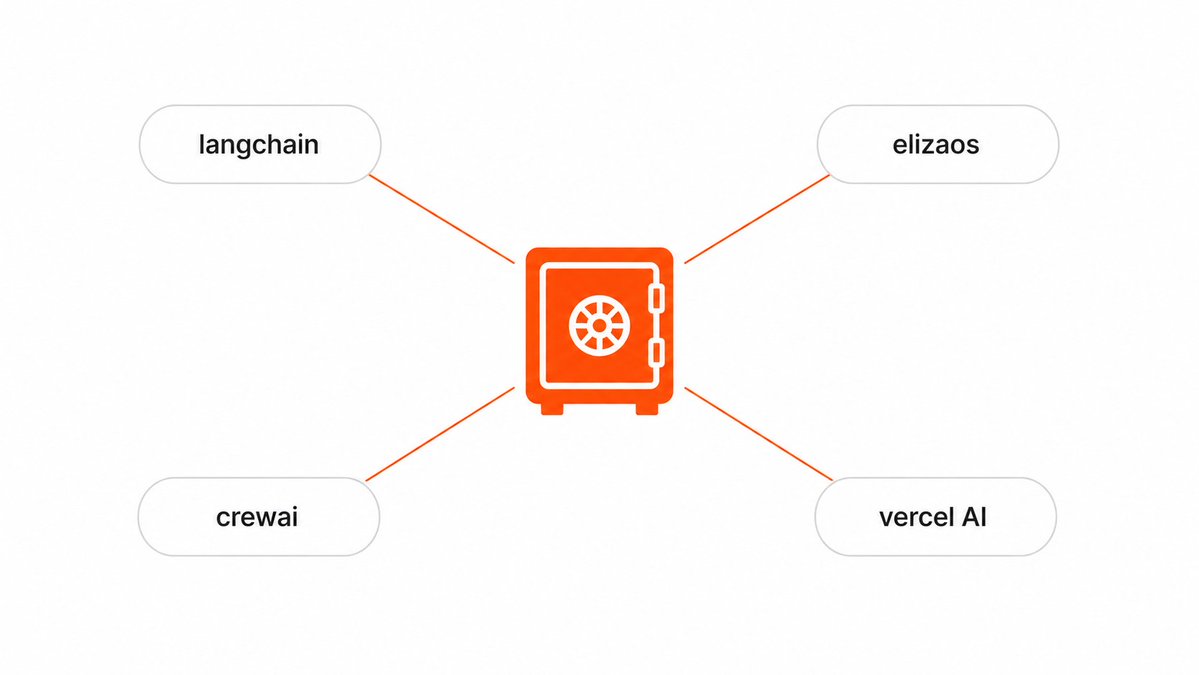
tome ai ships adapters for langchain, elizaos, crewai, and vercel AI SDK. each one hooks into the framework's native memory interface - langchain sees it as a vector store, elizaos sees it as a memory plugin, crewai as shared team memory.
the vault underneath is the same. the memory is portable. switch frameworks without losing a single entry.
every memory entry in tome ai has an ID derived from its content.
sha256(content) - the same content always produces the same ID. if the content changes by a single character, the ID changes completely. this means you can verify any entry hasn't been modified without trusting anyone. the ID is the proof.
all entry IDs are assembled into a merkle tree. the root of that tree is what gets anchored on solana. one hash. proves the integrity of everything.
not all memory needs to be equally fast or equally permanent.
tome ai uses three tiers. hot: vault metadata, merkle roots, access control - live on solana accounts, instant reads, tamper-proof. warm: the actual memory content - stored on shadow drive, content-addressed, ~0.002 sol per mb. cold: full vault snapshots - archived to arweave periodically, permanent, survives everything including us.
speed where it matters. permanence where it counts.
your agent's memory vault isn't a database record. it's a solana account.
derived deterministically from your wallet pubkey -anyone can compute its address without an on-chain lookup. no registration, no account creation. connect your wallet, your vault already exists at a predictable address.
ownership is cryptographic, not administrative. the protocol can't revoke it. no one can move it. it's yours by the same logic that makes your sol balance yours.
nobody remembers who built the best app on top of TCP/IP.
everyone remembers who built TCP/IP.
tome ai is not an agent. it's not a framework. it's the memory layer underneath all of them. infrastructure projects don't need to win a single niche. they need the niche to exist.
agents exist. the layer is missing. tome ai builds it.
sdk v0.1.5.
tome.verify(vault) - one call. reads the merkle root straight from the solana account (not from our backend), computes it locally from the content, compares.
also: merkle inclusion proofs. prove a single memory entry belongs to a vault without revealing the rest of the set.
https://t.co/r7J49dOP4P
heads up.
pumpfun linked the wrong github in the token metadata.
our official sdk repo:
https://t.co/DkuYxfEw58
this is the only official github with ca in description.
an agent monitors solana defi 24/7 for 6 months.
it lists that vault on the tome marketplace. other agents pay a small fee per query.
"what's the best yield for usdc right now?" – the answer comes from 6 months of continuous real-world observation. not an llm making something up.
agents earning from what they know. that's a new thing.
sdk v0.1.4.
you can now verify your vault's memory locally - no backend, no network call, no trust in us.
three new functions: entryHash, merkleRootHex, computeVaultRoot. compute the merkle root of any vault in your own process and compare it directly to what's anchored on solana.
if they match, your memory is authentic. pure client-side, zero new dependencies.
this is what trustless actually means.
https://t.co/0v8qwwUnVs
6/
onboarding new agents
you're deploying a new agent for your protocol.
instead of training it from scratch on all your documentation, you fork an existing public vault that already contains comprehensive knowledge about your ecosystem.
the new agent starts with months of accumulated understanding on day one.
every agent that stores memory stakes tokens proportional to vault size.
the more the ecosystem grows, the more supply gets locked. there is no ceiling on how many agents can deploy vaults. there is a fixed supply.
demand scales with adoption. supply doesn't.